Navigating US Data Privacy Laws: 5 Practical Steps for Tech Compliance by Q4 2026
The landscape of US data privacy laws is constantly evolving, presenting significant challenges and opportunities for technology companies. With new regulations emerging and existing ones being strengthened, achieving and maintaining compliance by Q4 2026 is not just a legal obligation but a strategic imperative. Failure to adapt can lead to hefty fines, reputational damage, and a loss of customer trust. This comprehensive guide will walk you through 5 practical steps to ensure your tech company is fully compliant with the intricate web of US data privacy laws, focusing on actionable strategies and future-proofing your operations.
The Shifting Sands of US Data Privacy Laws
Before diving into the practical steps, it’s crucial to understand the dynamic nature of US data privacy regulations. Unlike the European Union’s unified GDPR, the United States operates under a patchwork of sector-specific and state-specific laws. This fragmented approach makes achieving holistic US data privacy compliance a complex endeavor, especially for tech companies operating across state lines or nationally.
Key Regulations to Watch
While many laws exist, some stand out due to their broad applicability and stringent requirements:
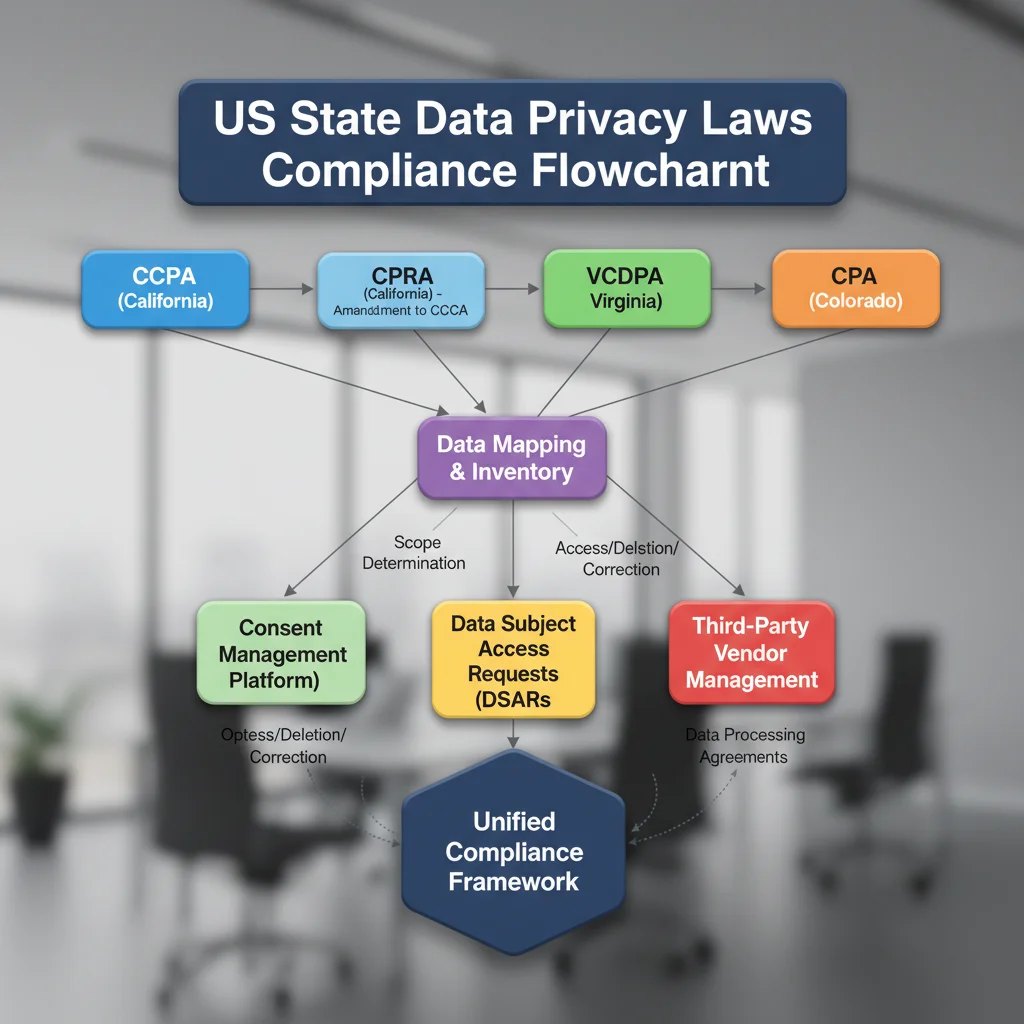
- California Consumer Privacy Act (CCPA) and California Privacy Rights Act (CPRA): Often considered the most comprehensive state-level privacy laws, CCPA and its amendment CPRA grant California consumers extensive rights over their personal information, including the right to know, delete, and opt-out of the sale or sharing of their data. CPRA also established the California Privacy Protection Agency (CPPA) to enforce these provisions.
- Virginia Consumer Data Protection Act (VCDPA): Effective January 1, 2023, the VCDPA grants similar consumer rights to those found in CCPA/CPRA, focusing on transparency, control, and data security.
- Colorado Privacy Act (CPA): Also effective July 1, 2023, the CPA provides Colorado consumers with rights comparable to those in California and Virginia, emphasizing opt-out rights for targeted advertising and data sales.
- Utah Consumer Privacy Act (UCPA): Effective December 31, 2023, the UCPA is generally considered more business-friendly than its counterparts, with a higher revenue threshold for applicability and less stringent consent requirements.
- Connecticut Data Privacy Act (CTDPA): Effective July 1, 2023, the CTDPA closely mirrors VCDPA and CPA, offering consumers rights to access, delete, and opt-out of the sale or sharing of their personal data.
- Other Emerging State Laws: Several other states are actively considering or have recently passed their own privacy laws, including Iowa, Indiana, Montana, Tennessee, and Delaware, among others. Keeping track of these evolving regulations is paramount for maintaining robust US data privacy compliance.
The trend is clear: more states are enacting their own privacy laws, each with unique nuances. This necessitates a proactive and adaptable strategy for tech companies aiming for US data privacy compliance by Q4 2026. The goal is not just to comply with current laws but to build a framework that can absorb future legislative changes without constant overhauls.
Step 1: Conduct a Comprehensive Data Inventory and Mapping Exercise
The foundational step for any effective US data privacy compliance program is to thoroughly understand what data your company collects, where it stores it, how it processes it, and with whom it shares it. This involves a detailed data inventory and mapping exercise.
What to Inventory:
- Types of Personal Data: Identify all categories of personal information collected, including names, email addresses, IP addresses, browsing history, location data, biometric data, financial information, and sensitive personal information (e.g., health data, racial or ethnic origin).
- Sources of Data: Document where the data originates (e.g., website forms, mobile apps, third-party integrations, customer service interactions).
- Locations of Storage: Pinpoint all systems and databases where personal data is stored, both internally and with third-party vendors (e.g., cloud platforms, CRM systems, marketing automation tools).
- Processing Activities: Detail how the data is used, for what purposes, and by which departments or applications (e.g., marketing, analytics, product development, customer support).
- Data Sharing: Map out all internal and external recipients of personal data, including affiliates, service providers, advertisers, and data brokers. Understand the legal basis for each sharing activity.
- Data Retention Policies: Document current retention schedules for different data types to ensure data is not held longer than necessary.
How to Conduct the Exercise:
- Cross-Functional Team: Assemble a team comprising representatives from legal, IT, security, marketing, and product development.
- Questionnaires and Interviews: Use structured questionnaires and conduct interviews with key stakeholders to gather information on data practices.
- Automated Tools: Leverage data discovery and classification tools to identify and categorize personal data across your systems, particularly for large and complex environments.
- Data Flow Diagrams: Create visual data flow diagrams to illustrate how personal data moves through your organization, from collection to deletion.
This data inventory will serve as the bedrock for all subsequent US data privacy compliance efforts. Without a clear picture of your data landscape, it’s impossible to accurately assess risks, implement appropriate controls, or respond effectively to data subject requests. Aim to complete this step and establish an ongoing review process well before Q4 2026.
Step 2: Implement Robust Consent and Preference Management Systems
A cornerstone of many US data privacy laws, particularly CCPA/CPRA, VCDPA, and CPA, is the requirement for transparent consent and consumer control over their personal data. Tech companies must move beyond generic privacy policies and implement sophisticated systems for managing user preferences.
Key Components of a Robust System:
- Clear and Granular Consent: Provide users with clear, unambiguous options to consent to specific data processing activities, especially for non-essential cookies, targeted advertising, and data sharing with third parties. Avoid pre-checked boxes.
- Opt-Out Mechanisms: Offer easily accessible and functional mechanisms for users to opt-out of the sale or sharing of their personal information, as required by CCPA/CPRA. This often involves a ‘Do Not Sell or Share My Personal Information’ link on your website and applications.
- Preference Centers: Develop user-friendly privacy preference centers where individuals can review, update, and manage their consent choices at any time. This includes preferences for communication, data usage, and cookie settings.
- Cookie Consent Banners: Implement compliant cookie consent banners that allow users to accept, reject, or customize cookie preferences before non-essential cookies are placed on their devices. Ensure these banners are geo-targeted to comply with state-specific requirements.
- Record Keeping: Maintain accurate records of all consent and opt-out decisions, including the date, time, and specific choices made by the user. This is crucial for demonstrating US data privacy compliance to regulators.
- Global Privacy Control (GPC) Recognition: Many state laws, including CCPA/CPRA, require businesses to recognize and honor universal opt-out signals, such as the Global Privacy Control (GPC). Ensure your systems are configured to detect and respond to these signals automatically.
Implementing effective consent and preference management systems is not just about avoiding penalties; it’s about building trust with your users. Transparency and control empower individuals, fostering a positive relationship that can lead to increased loyalty. This is a critical area for tech companies to focus on for US data privacy compliance by Q4 2026.
Step 3: Establish Robust Data Subject Access Request (DSAR) Processes
A core tenet of US data privacy laws is empowering individuals with rights over their data. This translates into the need for tech companies to establish efficient and compliant processes for handling Data Subject Access Requests (DSARs).
Common DSAR Types:
- Right to Know: Individuals can request information about the personal data collected about them, the sources of that data, the purposes for its collection, and the categories of third parties with whom it’s shared.
- Right to Delete: Consumers can request the deletion of their personal data, subject to certain exceptions (e.g., necessary for a transaction, legal obligations).
- Right to Correct/Rectify: Individuals can request the correction of inaccurate personal data.
- Right to Opt-Out: As discussed in Step 2, consumers have the right to opt-out of the sale or sharing of their personal information.
- Right to Data Portability: The right to receive their personal data in a portable, readily usable format.
Building an Effective DSAR Process:
- Designated Request Channels: Provide clear and easily accessible channels for submitting DSARs, such as dedicated web forms, email addresses, or toll-free phone numbers.
- Identity Verification: Implement robust, yet reasonable, identity verification procedures to ensure that only authorized individuals are accessing or modifying personal data.
- Internal Workflows: Develop clear internal workflows and assign responsibilities for receiving, tracking, fulfilling, and responding to DSARs within the legally mandated timeframes (e.g., 45 days, with a possible 45-day extension under CCPA/CPRA).
- Automated Tools: Consider using DSAR management platforms to streamline the process, automate identity verification, facilitate data discovery, and ensure timely responses.
- Training: Regularly train employees who handle DSARs on relevant policies, procedures, and legal requirements.
- Documentation: Maintain detailed records of all DSARs received, the actions taken, and the responses provided. This documentation is vital for demonstrating US data privacy compliance.
Effectively managing DSARs is not just a compliance checkbox; it’s a critical customer service function. A smooth and transparent DSAR process enhances user trust and demonstrates your commitment to data privacy. Tech companies should prioritize developing and testing these processes well in advance of Q4 2026 to ensure seamless operations.
Step 4: Strengthen Data Security Measures and Incident Response Plans
Data privacy and data security are inextricably linked. Even the most robust privacy policies are meaningless without strong security measures to protect personal data from unauthorized access, loss, or disclosure. US data privacy laws, including CCPA/CPRA and others, often include explicit requirements for reasonable security practices.
Key Data Security Measures:
- Encryption: Implement strong encryption for personal data both in transit and at rest.
- Access Controls: Enforce strict access controls based on the principle of least privilege, ensuring that only authorized personnel have access to personal data necessary for their roles.
- Regular Security Audits and Penetration Testing: Conduct periodic security assessments, vulnerability scans, and penetration tests to identify and remediate weaknesses in your systems.
- Employee Training: Provide continuous security awareness training to all employees, covering topics like phishing, social engineering, and secure data handling practices.
- Vendor Security Assessments: Vet third-party vendors and service providers carefully to ensure they meet your security standards and have adequate data protection clauses in contracts.
- Data Minimization: Collect and retain only the personal data that is strictly necessary for your stated purposes, reducing the attack surface.
Developing a Robust Incident Response Plan:
Despite best efforts, data breaches can occur. Having a well-defined and regularly tested incident response plan is crucial for mitigating damage and ensuring US data privacy compliance with breach notification requirements.
- Formation of an Incident Response Team: Establish a dedicated team with clear roles and responsibilities, including legal, IT security, communications, and executive leadership.
- Detection and Containment: Define procedures for promptly detecting security incidents and containing their spread to prevent further damage.
- Eradication and Recovery: Outline steps for removing the cause of the incident and restoring affected systems and data.
- Notification Procedures: Understand and document the varying breach notification requirements across different US states and federal laws (e.g., HIPAA for health data). This includes timelines for notification to affected individuals, regulatory bodies, and potentially law enforcement.
- Post-Incident Analysis: Conduct a thorough review after each incident to identify root causes, improve security posture, and update the incident response plan.
Prioritizing data security is fundamental to achieving and maintaining US data privacy compliance. Tech companies must invest in both technology and processes to protect sensitive information, ensuring their readiness for any potential security event by Q4 2026.

Step 5: Appoint a Privacy Officer and Foster a Culture of Privacy
While the previous steps focus on technical and procedural aspects, achieving sustainable US data privacy compliance requires a dedicated human element and a pervasive organizational culture that values privacy. This involves appointing a privacy officer and embedding privacy-by-design principles throughout your operations.
The Role of a Privacy Officer (or Equivalent):
Depending on the size and complexity of your organization, this role might be a dedicated Chief Privacy Officer (CPO), a Data Protection Officer (DPO), or a privacy lead within the legal or compliance department. Their responsibilities typically include:
- Oversight of Compliance: Monitoring adherence to all applicable US data privacy laws and internal policies.
- Policy Development: Developing, implementing, and updating privacy policies and procedures.
- Risk Management: Conducting Privacy Impact Assessments (PIAs) and Data Protection Impact Assessments (DPIAs) for new products, services, or data processing activities.
- Training and Awareness: Educating employees on privacy best practices and legal requirements.
- DSAR Management: Overseeing the handling of data subject access requests.
- Liaison with Regulators: Acting as a point of contact for privacy regulators and managing investigations.
- Internal Advocacy: Championing privacy-by-design and privacy-by-default principles within the organization.
Fostering a Culture of Privacy:
Compliance is not just the responsibility of one person; it’s a collective effort. Tech companies must cultivate a privacy-aware culture through:
- Privacy-by-Design and Default: Integrating privacy considerations into the design and development of all new products, services, and systems from the outset. This means building in privacy protections rather than adding them as an afterthought.
- Regular Training: Providing mandatory and ongoing privacy training for all employees, tailored to their specific roles and access levels.
- Clear Internal Policies: Developing accessible and understandable internal policies and guidelines for data handling, security, and privacy.
- Leadership Buy-in: Ensuring that senior leadership actively champions privacy as a core organizational value, allocating necessary resources and demonstrating commitment.
- Continuous Monitoring and Improvement: Regularly reviewing and auditing privacy practices, staying informed about legislative changes, and continuously improving your US data privacy compliance program.
By appointing a dedicated privacy lead and embedding privacy into the organizational DNA, tech companies can build a resilient and ethically sound framework for US data privacy compliance that will endure beyond Q4 2026 and adapt to future regulatory shifts.
Looking Beyond Q4 2026: The Future of US Data Privacy
While Q4 2026 serves as a crucial benchmark for current and emerging state-level US data privacy compliance, the regulatory landscape will continue to evolve. Federal privacy legislation remains a possibility, and international frameworks like GDPR will continue to influence US approaches, especially for companies with global operations. The key to long-term success lies in building an agile and scalable privacy program.
Key Considerations for the Future:
- Interoperability: Design your privacy program to be interoperable across different state laws, focusing on the highest common denominator of protection to simplify compliance.
- AI and Emerging Technologies: Stay abreast of how privacy laws apply to artificial intelligence, machine learning, and other emerging technologies, particularly concerning data bias, transparency, and automated decision-making.
- Data Ethics: Beyond legal compliance, consider the ethical implications of your data practices. Building an ethical data culture can preempt regulatory issues and enhance brand reputation.
- Cross-Border Data Transfers: For tech companies operating internationally, understanding the interplay between US data privacy laws and global regulations (e.g., GDPR, CCPA’s impact on international transfers) is crucial.
Achieving US data privacy compliance by Q4 2026 is an ongoing journey, not a destination. By proactively implementing these five practical steps, tech companies can not only mitigate risks but also build a competitive advantage rooted in trust, transparency, and responsible data stewardship. Embrace the challenge, and position your organization as a leader in the privacy-first era.
Conclusion: Your Roadmap to US Data Privacy Compliance
The imperative for US data privacy compliance among tech companies has never been greater. With a complex and expanding array of state-level regulations, a strategic and proactive approach is essential. By Q4 2026, companies must demonstrate robust practices across all facets of data handling.
The five practical steps outlined in this guide provide a clear roadmap:
- Conduct a Comprehensive Data Inventory and Mapping Exercise: Understand every piece of data, its journey, and its purpose within your organization.
- Implement Robust Consent and Preference Management Systems: Empower users with granular control over their data, respecting their choices and maintaining clear records.
- Establish Robust Data Subject Access Request (DSAR) Processes: Build efficient, transparent, and compliant systems for handling consumer requests regarding their data rights.
- Strengthen Data Security Measures and Incident Response Plans: Protect personal data with advanced security, and prepare for potential breaches with a well-tested response strategy.
- Appoint a Privacy Officer and Foster a Culture of Privacy: Lead with dedicated expertise and embed privacy principles into your company’s core values and operations.
Navigating US data privacy laws is a continuous effort that requires vigilance, adaptation, and a deep commitment to protecting consumer information. By diligently following these steps, your tech company can not only meet the Q4 2026 compliance deadline but also build a resilient, trustworthy, and future-proof data privacy program that will serve as a foundation for sustained growth and customer loyalty in an increasingly privacy-aware world. Start your compliance journey today to secure your tomorrow.