Rural Digital Divide 2026: Financial Impact & Access Updates

The year is 2026, and despite significant technological advancements and governmental initiatives, a stark reality persists: approximately 15% of rural Americans still lack adequate high-speed internet access. This isn’t merely an inconvenience; it’s a profound digital divide with far-reaching financial, educational, and social consequences. The promise of universal connectivity, a cornerstone of modern development, remains unfulfilled for millions, leaving them on the wrong side of a rapidly evolving digital landscape. Understanding the magnitude of this issue, its recent updates, and its ongoing financial impact is crucial for anyone concerned with equitable progress in the United States.
The Persistent Problem: 15% Still Unconnected
The statistic that 15% of rural Americans remain without adequate rural internet access in 2026 is a sobering reminder of the complex challenges involved in bridging the digital divide. While the percentage has decreased over the past decade, the rate of progress has slowed, and the remaining unserved areas often represent the most difficult and expensive to connect. These are typically areas with low population density, rugged terrain, and limited existing infrastructure, making the business case for private investment less appealing.
Adequate internet access, as defined by current standards, goes beyond basic dial-up or slow DSL. It typically refers to broadband speeds capable of supporting modern online activities – telework, online education, telehealth, and streaming services – which are now considered essential for full participation in society. For many rural residents, their internet connection is either non-existent, prohibitively expensive, or so slow that it’s functionally useless for these critical applications.
This deficit in rural internet access creates a two-tiered society, where access to information, opportunities, and services is unevenly distributed. The urgency of this issue has only been amplified by global events, which have underscored the indispensable role of reliable internet in daily life.
Defining ‘Adequate’ Internet Access in 2026
What constitutes ‘adequate’ internet access is a moving target, constantly evolving with technological advancements and societal demands. In 2026, the benchmark has shifted considerably from earlier definitions. Historically, the Federal Communications Commission (FCC) defined broadband as 25 Mbps download and 3 Mbps upload. However, this standard is increasingly seen as insufficient for the demands of a modern digital economy and household.
Many experts and policymakers now advocate for a minimum standard of 100 Mbps download and 20 Mbps upload as truly adequate for typical household needs, especially in multi-user environments. For businesses and institutions, even higher symmetrical speeds (e.g., 100/100 Mbps or 1 Gbps symmetrical) are often required. The 15% of rural Americans lacking adequate internet access are often those who fall significantly below even the older 25/3 Mbps standard, let alone the more robust speeds necessary for full digital inclusion.
The discrepancy in speed and reliability directly translates into a disparity in opportunity. Students cannot participate fully in online learning, entrepreneurs cannot launch or grow businesses effectively, and individuals cannot access critical telehealth services. This gap in rural internet access is not just about speed; it’s about fundamental access to the resources of the 21st century.
Recent Updates and Policy Landscape (2023-2026)
The period between 2023 and 2026 has seen a flurry of activity aimed at addressing the digital divide, building upon previous legislative efforts. The Bipartisan Infrastructure Law (BIL), enacted in 2021, allocated significant funding – primarily through the Broadband Equity, Access, and Deployment (BEAD) program – to states for broadband infrastructure deployment. By 2026, many of these state-level programs are in various stages of implementation, from planning and mapping to initial construction.
Key updates include:
- BEAD Program Rollout: States have submitted and received approval for their initial proposals, outlining how they plan to use BEAD funds. The focus has been on prioritizing unserved and underserved areas, with an emphasis on fiber-optic deployment where feasible. However, the sheer scale of the projects and regulatory hurdles have meant that deployment is slower than many initially hoped.
- Mapping Improvements: The FCC’s broadband maps, crucial for identifying unserved locations, have undergone significant improvements. More granular data helps ensure that funding is directed to where it is most needed, though challenges in data collection for remote areas still exist.
- Affordability Programs: Beyond infrastructure, efforts to address affordability have continued, such as the Affordable Connectivity Program (ACP). While highly effective, its long-term funding remains a subject of debate, threatening to leave many newly connected households unable to afford their service.
- Technological Diversification: While fiber remains the gold standard, there’s been increased recognition of the role of other technologies, such as fixed wireless access (FWA) and satellite internet (e.g., Starlink), in reaching the hardest-to-serve locations. Policies are evolving to integrate these solutions more effectively into broader deployment strategies, particularly for areas where fiber is economically unviable.
Despite these efforts, the 15% figure indicates that the final mile problem, or rather, the final 15% problem, is proving to be incredibly stubborn. Bureaucratic delays, supply chain issues, workforce shortages, and the inherent difficulties of construction in remote areas continue to impede rapid progress for rural internet access.

The Financial Impact: A Multi-faceted Burden
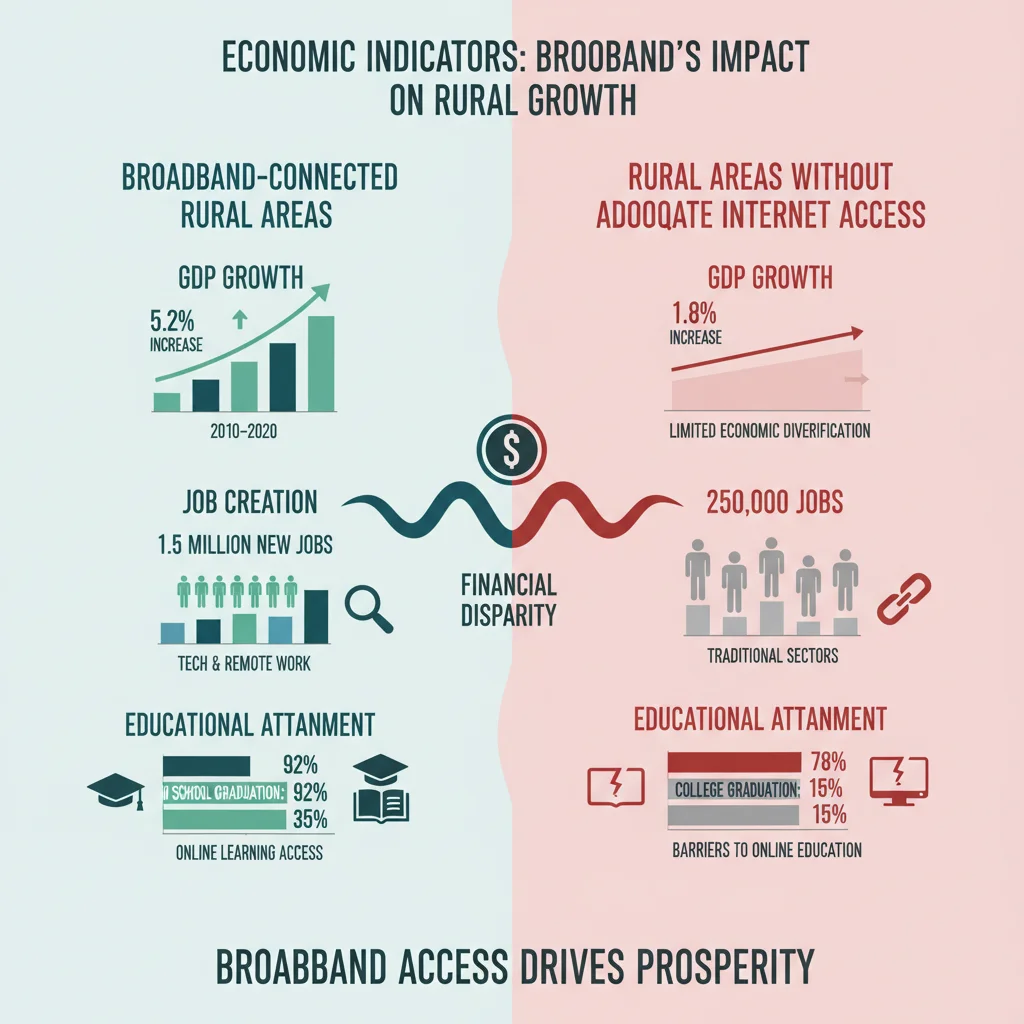
The lack of adequate rural internet access imposes a significant and multi-faceted financial burden on individuals, businesses, and entire communities. This impact extends far beyond simple inconvenience, actively hindering economic growth and perpetuating inequality.
Economic Development Stifled
For rural communities, reliable broadband is a prerequisite for economic development in the 21st century. Without it, attracting new businesses and retaining existing ones becomes incredibly difficult. Companies seeking to establish or expand operations require robust connectivity for everything from daily transactions and cloud computing to remote work capabilities and digital marketing. The absence of such infrastructure often means these communities are overlooked for investment, leading to job losses and a declining tax base.
Small businesses, the backbone of many rural economies, are particularly vulnerable. They struggle to compete with urban counterparts that have seamless access to online marketplaces, digital tools for inventory management, and efficient communication channels. E-commerce, a vital lifeline for many small enterprises, is severely hampered by slow or unreliable connections, limiting their reach and potential revenue.
Reduced Agricultural Productivity and Innovation
Agriculture, a cornerstone of many rural areas, is increasingly reliant on precision farming techniques, IoT sensors, and data analytics to optimize yields, manage resources, and improve efficiency. These technologies demand high-speed internet. Farmers without adequate rural internet access are unable to leverage these innovations, putting them at a competitive disadvantage and potentially leading to less efficient operations and lower profits. The financial impact here is direct, affecting the bottom line of individual farms and the overall productivity of the agricultural sector.
Educational Disadvantage and Workforce Readiness
The COVID-19 pandemic starkly illuminated the educational disparities caused by the digital divide. Students in rural areas without reliable internet struggled with remote learning, often falling behind their peers. Even in 2026, with a return to predominantly in-person schooling, the internet remains crucial for homework, research, and accessing supplementary educational resources. This persistent disadvantage affects academic performance, limits access to higher education opportunities, and ultimately impacts the future workforce readiness of rural youth.
For adults, the lack of internet access hinders participation in online training programs, skill development courses, and job searches, further limiting their economic mobility and perpetuating cycles of poverty. The financial cost here is both individual and societal, as a less skilled workforce reduces a region’s economic potential.
Healthcare Disparities and Increased Costs
Telehealth has emerged as a critical tool for providing healthcare services, especially in rural areas where access to specialists and medical facilities can be limited. However, without adequate rural internet access, telehealth appointments are impossible, forcing residents to travel long distances for medical care. This incurs significant costs in terms of travel expenses, lost work time, and delayed treatment, leading to poorer health outcomes and higher overall healthcare expenditures for individuals and the healthcare system.
Furthermore, remote patient monitoring, a technology that can improve chronic disease management and reduce hospital readmissions, relies heavily on consistent internet connectivity. The inability to deploy such solutions due to poor infrastructure translates into less efficient care and higher long-term health costs.
Real Estate Values and Community Decline
In today’s world, internet access is often as important as utilities like water and electricity when it comes to real estate value. Properties in areas without reliable broadband can fetch lower prices, impacting homeowners’ equity and the overall wealth of a community. This can lead to a downward spiral, as lower property values reduce the local tax base, hindering a community’s ability to fund essential services and further deterring investment.
The inability to attract and retain residents who increasingly rely on remote work or digital services can lead to population decline, aging demographics, and a loss of vitality in rural towns. The financial implications are profound, affecting everything from local businesses to public services.
Challenges and Obstacles Ahead
Despite the ongoing efforts and substantial funding, several significant challenges continue to impede the goal of universal rural internet access:
- Cost of Deployment: Laying fiber in sparsely populated areas is inherently expensive, with costs often exceeding tens of thousands of dollars per mile. The return on investment for private companies is often insufficient without substantial public subsidies.
- Geographic Barriers: Mountains, forests, and other natural obstacles make infrastructure deployment difficult and costly, requiring specialized equipment and techniques.
- Permitting and Bureaucracy: Navigating complex local, state, and federal permitting processes can cause significant delays and increase project costs.
- Workforce Shortages: There is a nationwide shortage of skilled labor for broadband infrastructure construction, including fiber splicers and tower climbers, which slows down deployment timelines.
- Digital Literacy: Even when infrastructure is available, a segment of the population lacks the digital skills to effectively use the internet, or the devices to access it. This ‘adoption gap’ is a crucial, often overlooked, aspect of the digital divide.
- Sustainability of Funding: While current funding is substantial, ensuring long-term maintenance and upgrades of rural networks requires ongoing financial commitment, which is always subject to political will and economic cycles.
Strategies for Bridging the Remaining Gap
To finally bridge the digital divide for the remaining 15% of rural Americans, a multi-pronged and sustained approach is necessary. This includes:
- Targeted Funding Mechanisms: Future funding initiatives must be even more precisely targeted at the hardest-to-reach locations, perhaps with higher per-household subsidies where necessary.
- Innovative Technologies: A pragmatic approach that combines fiber with advanced fixed wireless and satellite solutions (e.g., low-Earth orbit constellations) will be essential for cost-effective deployment in ultra-rural areas.
- Public-Private Partnerships: Encouraging greater collaboration between government entities, local communities, and private internet service providers (ISPs) can streamline projects and share risks.
- Workforce Development: Investing in training programs to create a skilled broadband workforce is critical for accelerating deployment and maintaining infrastructure.
- Digital Inclusion Initiatives: Alongside infrastructure, programs that address digital literacy, provide affordable devices, and offer technical support are vital to ensure that once connected, people can actually utilize the internet effectively.
- Streamlined Regulation: Efforts to simplify permitting processes and reduce bureaucratic hurdles at all levels of government can significantly speed up deployment.
- Community-Led Solutions: Empowering local communities to identify their specific needs and develop tailored solutions, potentially through community-owned networks or co-operatives, can be highly effective.
The goal should not just be to connect homes, but to empower communities. Bridging the gap in rural internet access means fostering economic resilience, improving educational outcomes, enhancing healthcare, and ensuring that no American is left behind in the digital age.
Conclusion: The Imperative of Universal Connectivity
The fact that 15% of rural Americans still lack adequate internet access in 2026 is a testament to the enduring complexity of the digital divide. While progress has been made, the remaining challenges are significant, and the financial impact on these communities is profound and far-reaching. From stifled economic growth and reduced agricultural productivity to educational disadvantages and healthcare disparities, the cost of inaction continues to mount.
Achieving universal rural internet access is not merely a technical undertaking; it’s a societal imperative. It requires sustained political will, innovative technological solutions, robust funding, and a commitment to digital inclusion that extends beyond simply laying cable. Only by addressing these multifaceted issues comprehensively can the United States truly ensure that all its citizens, regardless of where they live, have the opportunity to participate fully and equitably in the digital future. The financial and social returns on such an investment would undoubtedly outweigh the costs, creating a more prosperous and connected nation for everyone.