Mastering US Data Privacy: Your 2026 Action Plan for Tech Companies
Building a Robust Data Privacy Framework: A 4-Step Action Plan for US Tech Companies in 2026 (PRACTICAL SOLUTIONS)
The digital landscape is constantly evolving, and with it, the complexities of data privacy. For US tech companies, 2026 is shaping up to be a pivotal year, with an increasing patchwork of state and potential federal regulations demanding a proactive and comprehensive approach to US data privacy. The days of simply hoping for the best are long gone. Companies that fail to adapt risk not only hefty fines and legal battles but also irreparable damage to their brand reputation and customer trust. This article provides a practical, 4-step action plan designed to help US tech companies build a robust data privacy framework, ensuring compliance and fostering a culture of data protection.
Understanding the current and anticipated regulatory environment is the first critical step. While the US lacks a single, overarching federal data privacy law akin to Europe’s GDPR, a growing number of states have enacted their own comprehensive privacy statutes. California’s CCPA and CPRA, Virginia’s VCDPA, Colorado’s CPA, Utah’s UCPA, and Connecticut’s CTDPA are just a few examples. These laws share common principles but often differ in their specifics, creating a complex compliance challenge for businesses operating nationwide. Furthermore, discussions around a potential federal privacy law continue to gain momentum, making future-proofing your data privacy strategy essential.
The objective of this action plan is not merely to avoid penalties but to transform data privacy from a compliance burden into a competitive advantage. Companies that demonstrate a strong commitment to protecting user data can build deeper trust with their customers, differentiate themselves in the market, and ultimately foster long-term growth. Embracing a privacy-by-design philosophy, where privacy is integrated into every stage of product development and service delivery, is no longer optional; it’s a strategic imperative for navigating the intricate world of US data privacy.
Step 1: Conduct a Comprehensive Data Inventory and Mapping
Before you can protect data, you must know what data you have, where it resides, and how it flows through your organization. This foundational step is often overlooked but is absolutely crucial for any effective robust data privacy framework. Without a clear understanding of your data assets, it’s impossible to assess risk, implement appropriate controls, or respond effectively to data subject requests.
1.1 Identify All Data Sources and Types
Begin by meticulously identifying every source from which your company collects personal data. This includes customer relationship management (CRM) systems, marketing automation platforms, internal HR systems, website analytics tools, mobile applications, third-party integrations, and even physical documents. For each source, categorize the types of personal data collected. This could range from basic identifiers like names and email addresses to more sensitive information such as health data, financial details, biometric data, or geolocation data. Be granular in your identification; for example, distinguish between direct identifiers and pseudonymous identifiers.
1.2 Map Data Flows and Lifecycle
Once you’ve identified your data sources and types, the next critical task is to map the entire lifecycle of this data within your organization. This involves documenting how data is:
- Collected: How is data obtained? Is it directly from users, through third-party vendors, or via public sources?
- Processed: What operations are performed on the data? This includes storage, retrieval, consultation, use, disclosure by transmission, dissemination, or otherwise making available, alignment or combination, restriction, erasure, or destruction.
- Stored: Where is the data stored? Is it on-premises servers, cloud platforms (AWS, Azure, Google Cloud), or third-party data centers? What are the retention periods for each data type?
- Transferred: Is data shared with third parties, such as vendors, partners, or service providers? If so, what mechanisms are in place for secure transfer and what contractual obligations govern these transfers?
- Used: For what specific purposes is the data utilized? Is it for marketing, product improvement, customer support, or internal analytics?
- Archived/Disposed: How is data securely archived or permanently deleted when it’s no longer needed or when a data subject requests its erasure?
Tools like data flow diagrams, data inventories, and process maps can be invaluable for visualizing these complex data journeys. This mapping exercise will highlight potential vulnerabilities, identify areas of non-compliance, and reveal opportunities for data minimization – collecting only the data absolutely necessary for a specific purpose.
1.3 Document Data Ownership and Responsibilities
For each dataset and data processing activity, clearly define who is accountable. Assigning data ownership and responsibility ensures that there is a designated individual or team responsible for its protection, compliance, and lifecycle management. This involves:
- Identifying data owners (e.g., department heads for specific datasets).
- Defining roles and responsibilities for data stewards, privacy officers, and security teams.
- Establishing clear lines of communication and escalation procedures for data privacy incidents.
A well-documented data inventory and mapping exercise provides the bedrock for all subsequent US data privacy efforts. It’s an ongoing process, not a one-time event, and should be regularly reviewed and updated as your company’s data practices evolve.
Step 2: Implement Robust Data Protection Measures and Controls
Once you understand your data landscape, the next step is to implement technical and organizational measures to protect it. This goes beyond basic cybersecurity and delves into the specifics of privacy-enhancing technologies and practices. A comprehensive approach ensures confidentiality, integrity, and availability of personal data.
2.1 Technical Security Controls
Technical controls are the safeguards implemented within your systems and infrastructure to prevent unauthorized access, use, disclosure, disruption, modification, or destruction of data. Key measures include:
- Encryption: Implement strong encryption for data both in transit (e.g., using TLS/SSL for web communications) and at rest (e.g., encrypting databases, hard drives, and cloud storage).
- Access Controls: Enforce strict access controls based on the principle of least privilege. Only individuals with a legitimate need should have access to specific data, and their access should be limited to what is absolutely necessary for their role. Regularly review and revoke access as roles change or employees leave.
- Anonymization and Pseudonymization: Where possible, anonymize or pseudonymize data, especially for analytical or testing purposes. Anonymization renders data irreversibly unidentifiable, while pseudonymization replaces direct identifiers with artificial ones, making re-identification difficult without additional information.
- Intrusion Detection and Prevention Systems (IDPS): Deploy IDPS to monitor network and system activities for malicious activity or policy violations and respond accordingly.
- Regular Security Audits and Penetration Testing: Conduct regular security assessments, vulnerability scans, and penetration tests to identify and address weaknesses in your systems.
- Secure Development Life Cycle (SDLC): Integrate security and privacy considerations into every stage of your software development life cycle, ensuring that applications are built with security in mind from the ground up.
2.2 Organizational Policies and Procedures
Technical controls are only as effective as the policies and procedures that govern their use and the human behavior surrounding them. Organizational controls are essential for a holistic US data privacy protection strategy:
- Data Minimization Policies: Establish policies that mandate the collection and retention of only the absolute minimum amount of personal data required for a specific, stated purpose.
- Data Retention and Deletion Policies: Define clear data retention schedules based on legal requirements, business needs, and user consent. Implement automated processes for secure data deletion or anonymization once retention periods expire.
- Incident Response Plan: Develop and regularly test a comprehensive data breach incident response plan. This should outline procedures for detection, containment, eradication, recovery, and post-incident analysis, as well as notification requirements to affected individuals and regulatory authorities.
- Third-Party Vendor Management: Implement a robust vendor management program that includes due diligence on their privacy and security practices, contractual agreements with strong data protection clauses (e.g., data processing addendums), and ongoing monitoring.
- Employee Training and Awareness: Conduct mandatory, regular data privacy training for all employees. This training should cover relevant privacy laws, company policies, best practices for handling personal data, and how to identify and report potential privacy incidents.
- Privacy by Design and Default: Embed privacy considerations into the design and operation of all systems, processes, and products from the outset. This means making privacy the default setting wherever possible, rather than an afterthought.
These measures, both technical and organizational, form the backbone of a resilient robust data privacy framework. They must be continuously reviewed and updated to adapt to new threats, technologies, and regulatory changes in the US data privacy landscape.
Step 3: Establish a Robust Data Governance and Compliance Program
Implementing controls is one thing; ensuring their ongoing effectiveness and demonstrating compliance across a complex regulatory environment is another. This step focuses on establishing the necessary governance structures and processes to maintain compliance with evolving US data privacy laws.
3.1 Appoint a Data Protection Officer (DPO) or Privacy Lead
Depending on the size and nature of your operations, and specific state law requirements (e.g., CCPA for certain thresholds), appointing a dedicated Data Protection Officer (DPO) or a privacy lead is crucial. This individual or team will be responsible for:
- Overseeing the implementation and maintenance of the data privacy framework.
- Monitoring compliance with relevant privacy laws and internal policies.
- Acting as a point of contact for data subjects and supervisory authorities.
- Providing expert advice on data protection impact assessments (DPIAs) and other privacy-related matters.
- Conducting internal audits and ensuring corrective actions are taken.
Even if not legally required, designating a clear internal champion for US data privacy best practices demonstrates commitment and streamlines privacy efforts.
3.2 Develop and Maintain Comprehensive Privacy Policies and Notices
Transparency is a cornerstone of modern data privacy. Your company must clearly and concisely inform individuals about your data practices through:
- Privacy Policy: A publicly accessible document outlining what personal data is collected, why it’s collected, how it’s used, with whom it’s shared, how it’s protected, and individuals’ rights regarding their data. This policy must be easy to understand, comprehensive, and regularly updated.
- Cookie Policy/Notice: If your website uses cookies or similar tracking technologies, a dedicated policy or clear notice explaining their purpose, types of cookies used, and how users can manage their preferences is essential.
- Internal Privacy Policies: Document internal guidelines and procedures for employees regarding data handling, access controls, incident reporting, and data subject request fulfillment.
Ensure these policies are easily accessible on your website and applications, and that users provide clear, affirmative consent where required.
3.3 Implement Data Subject Rights Request Mechanisms
US data privacy laws grant individuals various rights over their personal data, including the right to:
- Access: Request a copy of their personal data.
- Correction/Rectification: Request corrections to inaccurate or incomplete data.
- Deletion/Erasure (“Right to Be Forgotten”): Request the deletion of their personal data under certain circumstances.
- Opt-Out of Sale/Sharing: Opt-out of the sale or sharing of their personal data for targeted advertising.
- Data Portability: Receive their data in a structured, commonly used, and machine-readable format.
Your company must establish clear, user-friendly mechanisms for individuals to exercise these rights (e.g., dedicated web forms, email addresses, or toll-free numbers). Crucially, you must have internal processes and systems in place to efficiently respond to these requests within the legally mandated timeframes (e.g., 45 days under CCPA/CPRA). This often requires cross-functional coordination between legal, IT, and customer service teams.
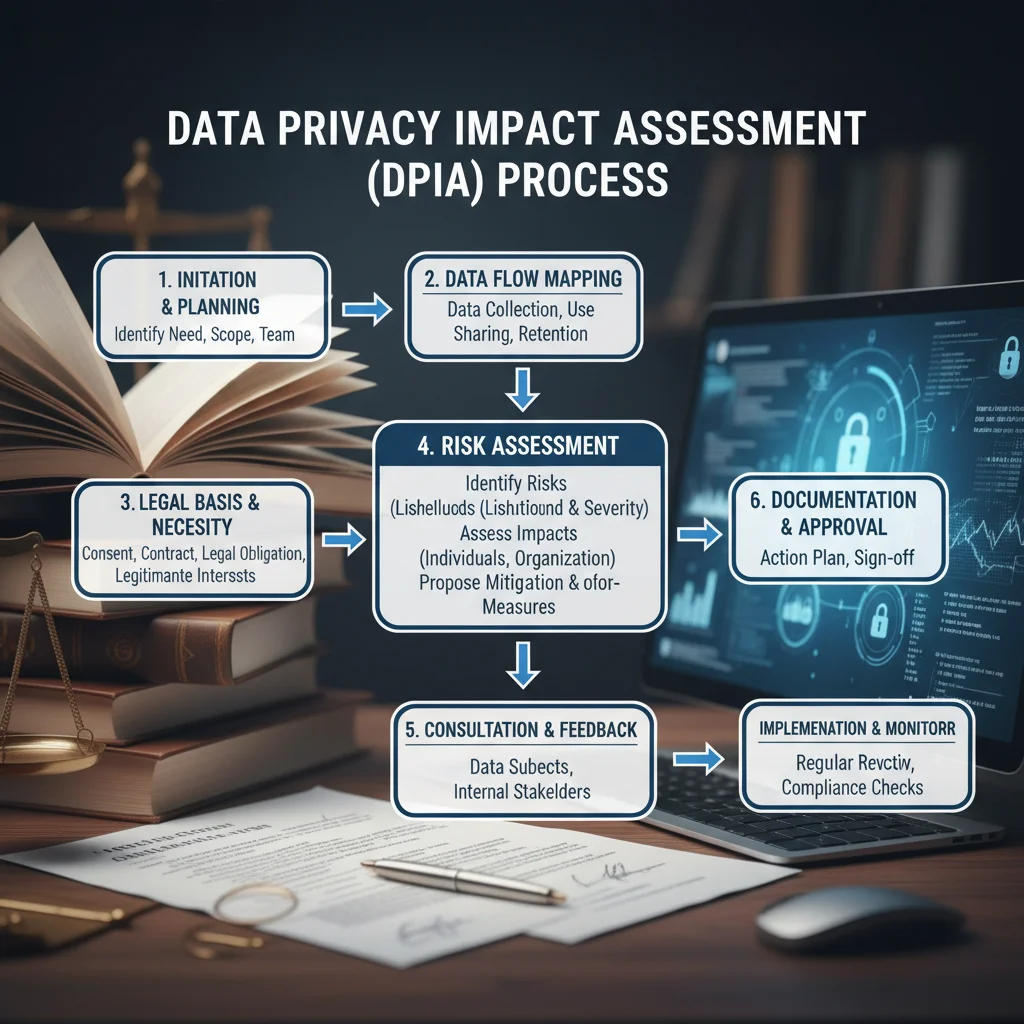
3.4 Conduct Regular Data Protection Impact Assessments (DPIAs)
For new projects, products, or significant changes to data processing activities that are likely to result in a high risk to individuals’ rights and freedoms, conduct a Data Protection Impact Assessment (DPIA). A DPIA is a process designed to identify and minimize the data protection risks of a project. It involves:
- Describing the nature, scope, context, and purposes of the processing.
- Assessing the necessity and proportionality of the processing in relation to the purposes.
- Assessing the risks to the rights and freedoms of data subjects.
- Identifying measures to address those risks, including safeguards, security measures, and mechanisms to ensure the protection of personal data.
DPIAs are a proactive tool for embedding privacy into your development processes and are often a legal requirement under various state laws. They are a critical component of a proactive US data privacy compliance strategy.
Step 4: Foster a Culture of Privacy and Continuous Improvement
A robust robust data privacy framework isn’t a static document; it’s a living system that requires continuous attention and adaptation. The final step emphasizes embedding privacy into your company’s DNA and ensuring ongoing vigilance.
4.1 Ongoing Employee Training and Awareness Programs
As mentioned in Step 2, initial training is vital, but ongoing education is equally important. Data privacy threats and regulations evolve rapidly, and employees are often the first line of defense. Regular refresher training, workshops, and awareness campaigns can reinforce best practices and keep privacy top of mind. This includes:
- Updates on new privacy laws and company policies.
- Training on identifying phishing attempts and social engineering tactics.
- Reminders about secure data handling, password hygiene, and clean desk policies.
- Case studies of real-world data breaches to illustrate the consequences of non-compliance.
Making privacy an integral part of onboarding and continuous professional development ensures that every team member understands their role in protecting US data privacy.

4.2 Regular Internal Audits and Compliance Reviews
To ensure your data privacy framework remains effective and compliant, conduct regular internal audits. These audits should assess:
- Adherence to internal privacy policies and procedures.
- Effectiveness of technical and organizational security controls.
- Compliance with relevant US data privacy regulations.
- The accuracy and completeness of your data inventory and mapping.
- The efficiency of your data subject rights request process.
Based on audit findings, implement corrective actions, update policies, and refine processes. Consider engaging independent third-party auditors for an objective assessment and to provide assurance to customers and regulators.
4.3 Monitor Regulatory Developments and Evolve Your Framework
The US data privacy landscape is dynamic. New state laws are continuously being proposed and enacted, and existing laws are often updated or clarified. Furthermore, federal discussions could lead to significant changes. Your company must have a mechanism in place to:
- Track legislative and regulatory developments at both state and federal levels.
- Participate in industry groups and legal forums to stay informed about emerging best practices and interpretations of privacy laws.
- Proactively assess the impact of new regulations on your data processing activities and adjust your framework accordingly.
- Allocate resources for legal counsel specializing in data privacy to interpret complex regulations and provide guidance.
This continuous monitoring and adaptation ensure that your robust data privacy framework remains current and effective in a rapidly changing environment. It’s about building a resilient system that can flex and grow with the regulatory tide, rather than constantly playing catch-up.
4.4 Integrate Privacy into Business Strategy and Product Development
True privacy excellence comes from integrating privacy considerations into the core of your business strategy and product development cycles. This means:
- Executive Buy-in: Ensure that senior leadership fully understands and champions the importance of data privacy, allocating necessary resources and setting the tone for the entire organization.
- Privacy by Design: As mentioned earlier, this principle means that privacy is considered at the earliest stages of product and service development, rather than bolted on as an afterthought. This includes conducting privacy reviews during design phases, using privacy-enhancing technologies, and minimizing data collection by default.
- Regular Stakeholder Engagement: Foster collaboration between legal, security, product, marketing, and engineering teams to ensure a unified approach to privacy.
- Transparency in Innovation: When developing new technologies or uses for data, ensure that privacy implications are thoroughly assessed and that transparency with users remains a priority.
By making privacy a strategic differentiator, US tech companies can not only meet compliance obligations but also build deeper trust with their user base, leading to stronger customer loyalty and sustainable business growth.
The Road Ahead: Embracing US Data Privacy as a Strategic Advantage
The journey to building and maintaining a robust US data privacy framework for 2026 and beyond is complex and demanding, but it is also an opportunity. For US tech companies, the proactive adoption of comprehensive data privacy measures is no longer just about avoiding penalties; it’s about establishing a competitive edge in a global market increasingly sensitive to data protection.
By diligently executing this 4-step action plan – conducting a thorough data inventory, implementing strong protection measures, establishing solid governance, and fostering a culture of continuous improvement – your organization can transform privacy from a daunting challenge into a core business strength. This commitment signals to customers, partners, and regulators that your company is a responsible steward of personal information, capable of navigating the evolving US data privacy landscape with integrity and foresight.
The investment in robust US data privacy solutions today will pay dividends tomorrow, securing your company’s future, enhancing its reputation, and building an invaluable foundation of trust in an increasingly data-driven world. Start now, stay vigilant, and lead the way in responsible data stewardship.
Key Takeaways for US Tech Companies:
- Proactive Approach: Don’t wait for new regulations; anticipate and prepare.
- Holistic Strategy: Combine technical, organizational, and cultural elements for comprehensive protection.
- Transparency is Key: Clear privacy policies and user consent mechanisms build trust.
- Continuous Adaptation: The privacy landscape is dynamic; your framework must be too.
- Privacy as a Differentiator: Leverage strong privacy practices to gain a competitive advantage.
By embedding these principles into your operations, your US tech company will be well-positioned to thrive in the complex data privacy environment of 2026 and beyond.