Navigating 2026 US Data Privacy: CCPA & Emerging State Laws
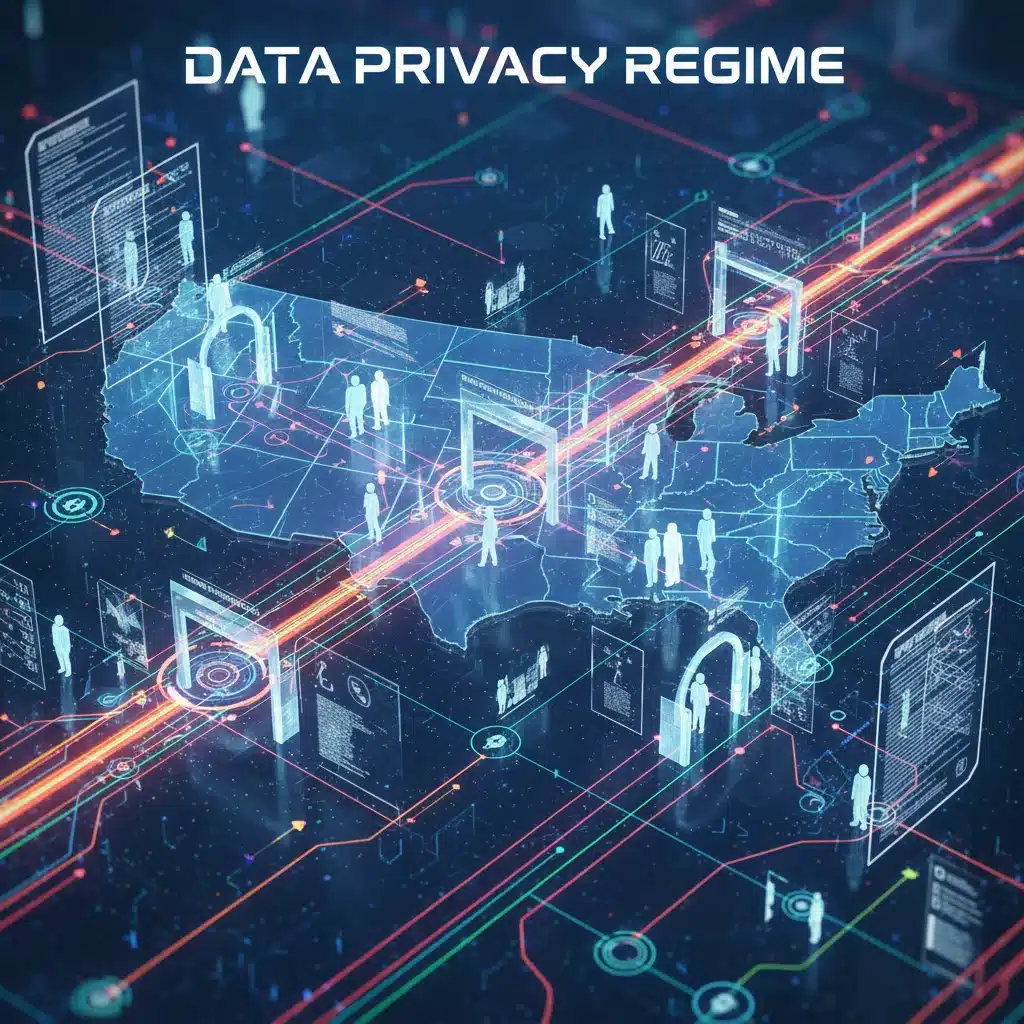
The digital age, while offering unparalleled convenience and connectivity, has also brought forth a complex web of data privacy concerns. As we look towards 2026, the landscape of US data privacy 2026 is not merely evolving; it’s undergoing a significant transformation. Businesses operating within the United States, irrespective of their size or sector, are confronted with an increasingly intricate patchwork of regulations. From the foundational California Consumer Privacy Act (CCPA) to a growing number of state-specific statutes, understanding and complying with these laws is paramount not just for legal adherence but also for maintaining consumer trust and competitive advantage.
The year 2026 marks a pivotal point, with several key developments shaping the future of data protection. The CCPA, significantly amended by the California Privacy Rights Act (CPRA), continues to set a high bar, influencing other states to adopt similar, albeit sometimes divergent, frameworks. This article aims to provide a comprehensive overview of the US data privacy 2026 landscape, delving into the nuances of the CCPA/CPRA, exploring the critical provisions of emerging state laws, and offering actionable strategies for businesses to navigate this challenging environment successfully.
The journey towards robust data privacy compliance is continuous. It demands proactive engagement, strategic planning, and a deep understanding of both current mandates and anticipated changes. By dissecting the legal requirements, identifying common pitfalls, and highlighting best practices, this guide seeks to equip organizations with the knowledge necessary to safeguard personal data, foster consumer confidence, and thrive in an increasingly privacy-conscious world.
The Evolving Foundation: CCPA and CPRA in 2026
At the heart of US data privacy 2026 is the California Consumer Privacy Act (CCPA), now significantly enhanced by the California Privacy Rights Act (CPRA). Effective January 1, 2023, with enforcement beginning July 1, 2023, the CPRA expanded the CCPA’s scope and introduced new consumer rights and obligations for businesses. Understanding these changes is fundamental for any entity dealing with California residents’ data, given California’s economic influence and its role as a trendsetter in privacy legislation.
Key Changes Introduced by CPRA:
- Creation of the California Privacy Protection Agency (CPPA): The CPRA established a dedicated regulatory agency, the CPPA, tasked with enforcing and promulgating regulations under the CCPA. This agency has significantly more resources and authority than the previous enforcement body, leading to more rigorous oversight and enforcement actions. Businesses must be prepared for increased scrutiny and potentially higher penalties for non-compliance.
- New Consumer Rights: The CPRA introduced several new consumer rights, broadening individuals’ control over their personal information. These include:
- Right to Correct Inaccurate Personal Information: Consumers can now request businesses to correct inaccurate personal information held about them.
- Right to Limit Use and Disclosure of Sensitive Personal Information: This is a significant addition, allowing consumers to limit the use and disclosure of their ‘sensitive personal information’ (e.g., racial or ethnic origin, religious beliefs, health information, precise geolocation). Businesses must offer a clear and conspicuous method for consumers to exercise this right.
- Expanded Right to Opt-Out: The right to opt-out of the sale of personal information was extended to include the sharing of personal information for cross-context behavioral advertising, even if no monetary exchange occurs.
- Definition of Sensitive Personal Information: The CPRA introduced a new category of ‘sensitive personal information,’ which includes specific types of data requiring enhanced protection. This distinction necessitates businesses to re-evaluate their data mapping and processing activities to identify and appropriately handle sensitive data.
- Data Minimization and Storage Limitation: The CPRA mandates that businesses only collect personal information that is reasonably necessary and proportionate to achieve the purposes for which it was collected or processed. It also requires businesses to retain personal information only for as long as is reasonably necessary for the disclosed purpose.
- Expanded Definition of ‘Business’: The CPRA lowered the thresholds for businesses subject to the law, bringing more entities under its purview. Businesses that annually buy, sell, or share the personal information of 100,000 or more California consumers or households (up from 50,000) or derive 50% or more of their annual revenues from selling or sharing personal information are now covered.
For businesses, these changes mean a deeper dive into their data practices. It’s no longer sufficient to merely provide an opt-out for sale; a more granular approach to sensitive data and an understanding of ‘sharing’ for advertising purposes are crucial. The CPPA’s active role also signifies a shift towards more proactive enforcement, making compliance a top-tier priority.

Emerging State Data Privacy Laws Beyond California
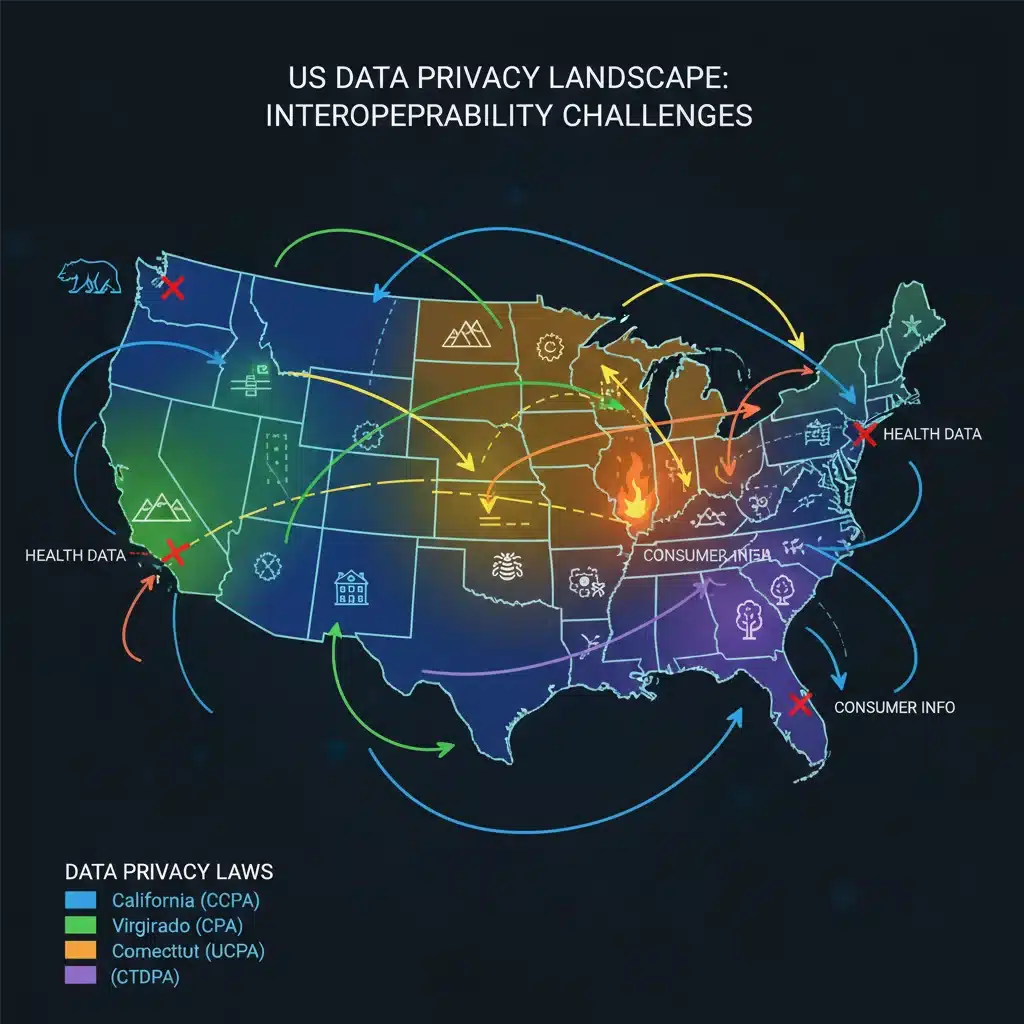
While California led the charge, the trend of state-level data privacy legislation has accelerated, creating a complex, multi-jurisdictional compliance challenge for businesses in 2026. Several states have enacted comprehensive privacy laws, each with its own nuances, definitions, and enforcement mechanisms. Understanding these varied requirements is crucial for national and even regional businesses.
Virginia Consumer Data Protection Act (VCDPA)
Effective January 1, 2023, the VCDPA grants Virginia residents rights similar to those in the CCPA/CPRA, including the rights to access, delete, and opt-out of the sale of personal data. A key distinction is its ‘opt-out’ model for data processing, rather than the ‘opt-in’ often seen in more stringent regulations. It applies to businesses that conduct business in Virginia or produce products or services targeted to Virginia residents and either control or process personal data of at least 100,000 consumers, or control or process personal data of at least 25,000 consumers and derive over 50% of gross revenue from the sale of personal data.
Colorado Privacy Act (CPA)
Also effective July 1, 2023, the CPA is another significant piece of legislation. It grants Colorado residents rights similar to the VCDPA, but with some notable differences, particularly around universal opt-out mechanisms for targeted advertising and the sale of personal data. The CPA applies to entities that conduct business in Colorado or produce products or services intentionally targeted to Colorado residents, and that either control or process the personal data of 100,000 or more consumers annually, or derive revenue from the sale of personal data and control or process the personal data of 25,000 or more consumers.
Utah Consumer Privacy Act (UCPA)
The UCPA, effective December 31, 2023, is generally considered more business-friendly than its Californian, Virginian, and Coloradan counterparts. It focuses on an opt-out model for the sale of personal data and targeted advertising but has fewer provisions for sensitive data and universal opt-out mechanisms. It applies to businesses that conduct business in Utah or produce products or services targeted to Utah residents, and that have annual revenues of $25 million or more, and either control or process the personal data of 100,000 or more consumers, or derive 50% or more of their gross revenue from the sale of personal data and control or process the personal data of 25,000 or more consumers.
Connecticut Data Privacy Act (CTDPA)
Effective July 1, 2023, the CTDPA closely aligns with the VCDPA and CPA, offering similar consumer rights and business obligations. It includes provisions for universal opt-out signals and the processing of sensitive data. It applies to businesses that conduct business in Connecticut or produce products or services targeted to Connecticut residents, and that during the preceding calendar year controlled or processed the personal data of 100,000 or more consumers, or controlled or processed the personal data of 25,000 or more consumers and derived more than 25% of their gross revenue from the sale of personal data.
Other States and Future Trends
Beyond these established laws, numerous other states, including Iowa (Iowa Act Relating to Consumer Data Protection, effective Jan 1, 2025), Indiana (Indiana Consumer Data Protection Act, effective Jan 1, 2026), and Tennessee (Tennessee Information Protection Act, effective July 1, 2025), have enacted or are considering their own comprehensive data privacy legislation. The trend suggests a continued proliferation of state-specific laws, leading to a fragmented regulatory environment. Businesses must monitor legislative developments closely, as new laws and amendments can significantly alter compliance requirements.
The lack of a federal privacy law means businesses must grapple with this mosaic of state regulations. This creates a significant burden, particularly for small and medium-sized enterprises (SMEs) that may lack the resources to track and comply with each state’s unique demands. The challenge for US data privacy 2026 will be to find commonalities and develop scalable compliance strategies that can adapt to these varied requirements.
Key Challenges and Compliance Strategies for Businesses in 2026
Navigating the complex US data privacy 2026 landscape presents several significant challenges for businesses. However, with careful planning and strategic implementation, these challenges can be overcome, transforming compliance from a burden into a competitive advantage.
Challenges:
- Regulatory Fragmentation: The most prominent challenge is the lack of a uniform federal privacy law. Businesses must comply with multiple state laws, each with different definitions, thresholds, rights, and enforcement mechanisms. This fragmentation increases complexity and the risk of non-compliance.
- Operational Complexity: Implementing mechanisms to handle diverse consumer rights requests (access, deletion, correction, opt-out) across different jurisdictions requires robust data governance frameworks, sophisticated technological solutions, and well-trained personnel.
- Data Mapping and Inventory: Many businesses struggle to accurately identify what personal data they collect, where it’s stored, who has access to it, and how it’s processed. This lack of visibility makes compliance efforts difficult and inefficient.
- Third-Party Vendor Management: Data sharing with third-party vendors, partners, and service providers is common. Ensuring that these third parties also comply with relevant privacy laws adds another layer of complexity and risk.
- Evolving Definitions and Interpretations: The definitions of ‘personal information,’ ‘sale,’ ‘sharing,’ and ‘sensitive data’ can vary between laws, and regulatory interpretations can evolve. Staying abreast of these changes requires continuous monitoring and adaptation.
- Enforcement and Penalties: With dedicated agencies like the CPPA and increased enforcement efforts, the financial and reputational risks associated with non-compliance are substantial. Penalties can include significant fines, consumer lawsuits, and reputational damage.
Compliance Strategies:
To effectively navigate the US data privacy 2026 environment, businesses should adopt a proactive and comprehensive approach:
- Conduct a Comprehensive Data Audit and Mapping:
- Identify Data: Catalog all personal data collected, processed, and stored. Understand its source, purpose, and retention period.
- Data Flow Mapping: Visualize how data moves within your organization and with third parties. This helps identify potential vulnerabilities and compliance gaps.
- Develop a Robust Data Governance Framework:
- Privacy Policy Updates: Ensure your privacy policies are clear, comprehensive, and reflect all applicable state laws. They should be easily accessible and regularly updated.
- Consumer Request Mechanisms: Implement clear, accessible, and efficient processes for consumers to exercise their privacy rights (access, deletion, correction, opt-out). This may include dedicated web forms, toll-free numbers, and email addresses.
- Data Minimization and Retention Policies: Adopt practices to collect only necessary data and retain it only for as long as required.
- Strengthen Third-Party Vendor Management:
- Due Diligence: Vet all third-party vendors for their privacy practices and compliance with relevant laws.
- Contractual Obligations: Include robust data protection clauses in all vendor contracts, specifying responsibilities, data usage limitations, and audit rights.
- Implement Robust Security Measures:
- Technical and Organizational Safeguards: Employ appropriate technical and organizational measures to protect personal data from unauthorized access, disclosure, alteration, and destruction. This includes encryption, access controls, and regular security assessments.
- Incident Response Plan: Develop and regularly test a data breach response plan to ensure timely and effective handling of security incidents.
- Employee Training and Awareness:
- Regular Training: Conduct mandatory and ongoing privacy and security training for all employees who handle personal data.
- Culture of Privacy: Foster a company culture where privacy is a core value, not just a compliance checkbox.
- Monitor Legislative Developments:
- Stay Informed: Actively track new privacy laws, amendments, and regulatory guidance at both federal and state levels.
- Legal Counsel: Engage with legal and privacy experts to interpret complex regulations and ensure ongoing compliance.
- Consider a ‘GDPR-Plus’ Approach: While not a direct legal requirement for all US businesses, adopting a ‘GDPR-plus’ mindset—aiming for the highest common denominator of privacy protection—can simplify compliance across multiple jurisdictions and build greater consumer trust.
The Impact of a Potential Federal Privacy Law
As the patchwork of state laws grows denser, the debate around a comprehensive federal privacy law for the US intensifies. While no such law has been enacted, the discussion remains a critical component of the US data privacy 2026 outlook. Should a federal law emerge, it could fundamentally alter the compliance landscape, offering both relief and new challenges.
Arguments for a Federal Law:
- Harmonization: A single federal standard could alleviate the burden of complying with multiple, often conflicting, state laws, simplifying operations for businesses, especially those operating nationally.
- Clarity and Predictability: A unified framework would provide greater legal certainty and predictability, fostering innovation by reducing compliance ambiguities.
- Stronger Consumer Protection: A robust federal law could ensure a consistent baseline of privacy rights for all US citizens, regardless of their state of residence.
- Global Alignment: A federal law could help the US align more closely with international privacy standards, such as GDPR, facilitating cross-border data flows.
Challenges of Enacting a Federal Law:
- Political Division: Reaching consensus on a comprehensive federal privacy law has proven challenging due to differing political philosophies, industry lobbying, and concerns about states’ rights.
- Preemption Debate: A key sticking point is whether a federal law would preempt existing state laws (like CCPA/CPRA). States with strong privacy laws often resist preemption, fearing it would weaken consumer protections.
- Scope and Enforcement: Debates persist over the scope of such a law, including definitions of personal data, covered entities, consumer rights, and the powers of a federal enforcement agency.
Potential Scenarios for 2026:
- Continued Fragmentation: The most likely scenario in the near term is the continued proliferation of state laws without a federal umbrella. Businesses must therefore remain agile in their multi-state compliance efforts.
- Sector-Specific Federal Laws: Congress might opt for sector-specific federal laws (e.g., health data, children’s data) rather than a single comprehensive bill, adding another layer of specialized compliance.
- A ‘Framework’ Federal Law: A less comprehensive federal law might be enacted, setting a baseline but allowing states to pass stricter regulations, thus creating a hybrid system.
Regardless of whether a federal law materializes by 2026, businesses should build their privacy programs with flexibility in mind. Any federal law would likely incorporate many principles already present in leading state laws, meaning that strong compliance with CCPA/CPRA and similar statutes will provide a solid foundation for future federal mandates.
Building Consumer Trust Through Proactive Privacy Practices
Beyond legal compliance, the conversation around US data privacy 2026 is increasingly about trust. Consumers are more aware than ever of their data rights and the potential implications of data misuse. Businesses that prioritize privacy not just as a regulatory obligation but as a core ethical principle stand to gain significant competitive advantages.
The Business Case for Privacy:
- Enhanced Brand Reputation: Companies known for strong privacy practices build a positive brand image, attracting privacy-conscious consumers.
- Increased Customer Loyalty: When consumers trust a business with their data, they are more likely to remain loyal and engage with its services.
- Competitive Differentiation: In a crowded marketplace, robust privacy can be a key differentiator, setting a business apart from competitors.
- Reduced Risk of Breaches and Fines: Proactive privacy measures minimize the likelihood of data breaches and the associated financial and reputational damage, including hefty regulatory fines.
- Improved Data Quality: Implementing privacy-by-design principles often leads to better data governance, resulting in higher quality data for internal analysis and decision-making.
Strategies for Fostering Trust:
- Transparency: Be clear and honest about data collection, use, and sharing practices. Avoid jargon in privacy policies and make them easy to understand.
- Empowerment: Provide consumers with easily accessible and intuitive tools to exercise their data rights. Make it simple for them to opt-out, access, or delete their information.
- Data Security: Invest in robust cybersecurity measures and communicate these efforts to customers. Demonstrate a commitment to protecting their data from threats.
- Ethical Data Use: Go beyond mere compliance. Consider the ethical implications of data processing and strive to use data in ways that benefit consumers and respect their privacy.
- Regular Audits and Assessments: Conduct regular privacy impact assessments (PIAs) and security audits to identify and mitigate risks proactively.
- Privacy by Design and Default: Integrate privacy considerations into the design and development of all new products, services, and systems. Make privacy the default setting wherever possible.
In the evolving US data privacy 2026 landscape, a strong privacy posture is no longer optional; it’s a fundamental pillar of sustainable business growth. By moving beyond a compliance-only mindset and embracing privacy as a strategic imperative, businesses can build enduring relationships with their customers and secure their place in the future digital economy.
Conclusion: Adapting to the Dynamic US Data Privacy Landscape
The US data privacy 2026 landscape is characterized by its dynamism and complexity. With the CCPA/CPRA continuing to evolve and a growing number of states enacting their own comprehensive privacy laws, businesses face an unprecedented challenge in maintaining compliance. The fragmentation of regulations necessitates a highly adaptable and strategic approach to data governance and consumer privacy.
The key takeaway for businesses is the imperative to be proactive, not reactive. Simply waiting for a federal law to harmonize the environment is not a viable strategy. Instead, organizations must:
- Invest in robust data governance frameworks that can accommodate diverse state-specific requirements.
- Prioritize data mapping and inventory to gain complete visibility into their data assets.
- Implement efficient mechanisms for handling consumer rights requests across all applicable jurisdictions.
- Strengthen third-party vendor management to ensure compliance throughout the data supply chain.
- Foster a culture of privacy through ongoing employee training and a commitment to ethical data practices.
- Continuously monitor legislative and regulatory developments to anticipate and adapt to changes.
While the challenges are significant, the opportunities are equally compelling. Businesses that successfully navigate this intricate environment will not only avoid penalties but also build invaluable consumer trust and enhance their brand reputation. In 2026 and beyond, a strong commitment to data privacy will be a hallmark of responsible and successful enterprises, proving that prioritizing consumer data protection is not just good practice, but good business.