Space Economy Innovations: 4 US Startups to Watch in 2026 for Disruptive Technologies
The dawn of a new space age is upon us, characterized not by the Cold War race to the moon, but by a burgeoning commercial sector driven by innovation, accessibility, and an insatiable appetite for new frontiers. The space economy startups are no longer just the domain of government agencies; private enterprises are now at the forefront, pushing the boundaries of what’s possible and redefining our relationship with the cosmos. As we look towards 2026, the landscape of space innovation is set to be profoundly shaped by a new generation of US-based startups, each bringing disruptive technologies and audacious visions to the table. These companies are not merely participating in the space economy; they are actively forging its future, promising advancements that will impact everything from global communication and climate monitoring to resource extraction and interstellar travel.
The global space economy is projected to reach trillions of dollars in the coming decades, fueled by decreasing launch costs, miniaturization of technology, and increasing demand for space-based services. This growth creates fertile ground for entrepreneurial ventures, and the United States, with its rich history of aerospace innovation and robust venture capital ecosystem, remains a global leader. Identifying the key players early is crucial for understanding the trajectory of this dynamic sector. This article delves into four such US space economy startups that are poised to make significant waves by 2026, showcasing their unique contributions and the potential for their disruptive technologies to reshape the industry.
The Resurgence of the Space Economy: A New Frontier for Investment and Innovation
The term ‘space economy’ encompasses a vast array of activities, from satellite manufacturing and launch services to in-orbit servicing, space tourism, and even extraterrestrial resource mining. What was once the exclusive domain of national governments has rapidly commercialized, creating a vibrant ecosystem of private companies vying for a piece of the cosmic pie. This commercialization has been driven by several factors: technological advancements that have made space access cheaper and more reliable, increasing private investment, and a growing recognition of the strategic and economic value of space-based assets. The US, in particular, has seen an explosion of activity, with Silicon Valley’s entrepreneurial spirit merging with traditional aerospace expertise to create a hotbed of innovation. Investors are pouring billions into these ventures, recognizing the long-term potential for exponential returns as humanity expands its presence beyond Earth.
The competitive landscape among space economy startups is fierce, yet collaboration is also a hallmark of this new era. Companies are often working together on various aspects of complex missions, forming partnerships that accelerate development and reduce risk. This cooperative competition fosters an environment where groundbreaking ideas can quickly evolve into tangible solutions. The next few years, leading up to and including 2026, will be critical for many of these emerging companies as they move from proof-of-concept to commercial operation, solidifying their positions within the burgeoning space economy. Understanding their technological differentiators and market strategies provides valuable insight into where the industry is headed.
Startup 1: Orbital Forge – Revolutionizing In-Space Manufacturing and Assembly
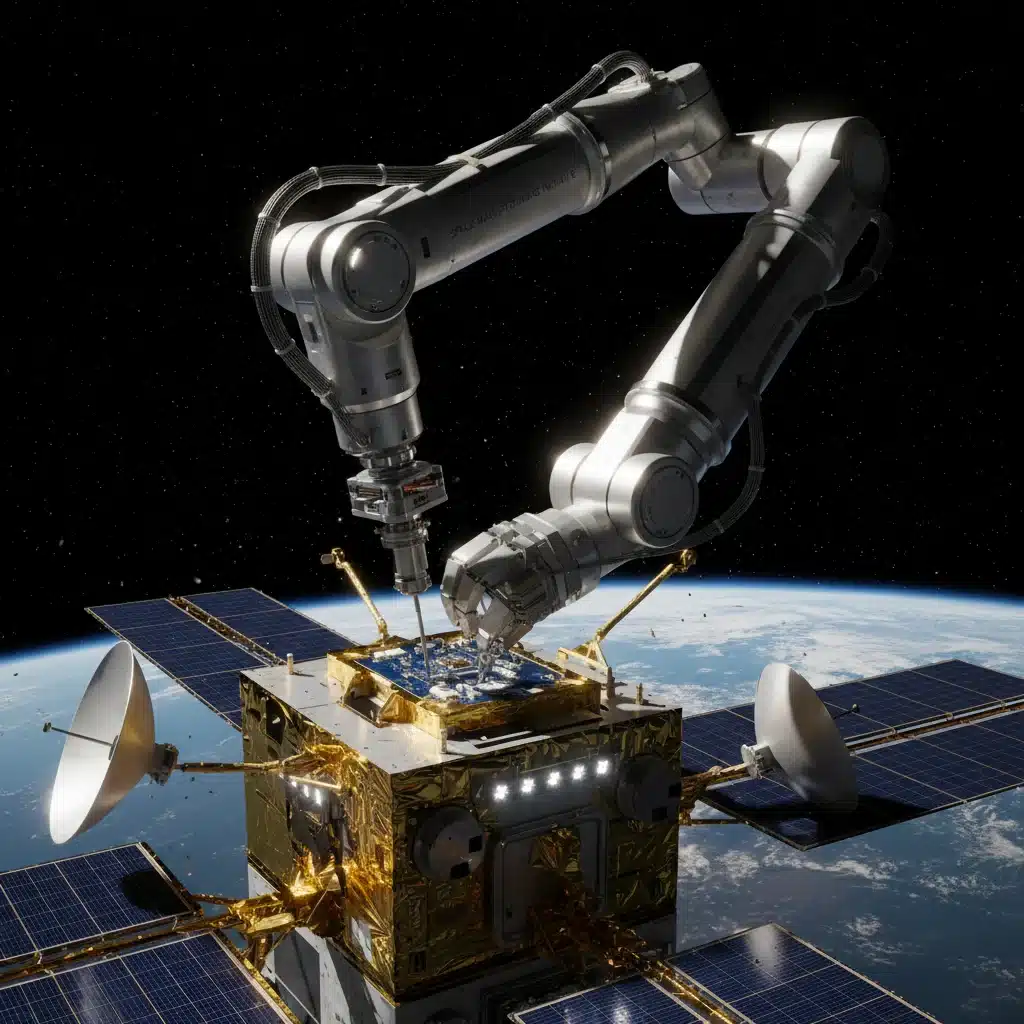
Our first startup to watch is Orbital Forge, a company dedicated to fundamentally changing how we build and deploy structures in space. For decades, the size and complexity of spacecraft have been limited by the payload capacity of launch vehicles. Every component had to fit within the rocket’s fairing and withstand the immense forces of launch. Orbital Forge is disrupting this paradigm with its advanced in-space manufacturing and assembly capabilities. Their vision is to construct large, complex structures – from massive communication arrays to future space stations – directly in orbit, bypassing the constraints of Earth-based manufacturing and launch.
By 2026, Orbital Forge aims to have demonstrated the assembly of significant structural components in low Earth orbit (LEO) using autonomous robotic systems and novel materials. Their technology involves proprietary additive manufacturing processes optimized for the vacuum and microgravity environment, coupled with sophisticated robotic manipulators that can precisely join these components. This approach promises several advantages: reduced launch mass and volume, enabling the construction of structures that are too large or fragile to launch fully assembled; increased design flexibility; and the potential for on-demand repairs and upgrades in space. The implications for the space economy startups are profound, opening doors for more powerful telescopes, larger solar power satellites, and even extensive orbital habitats. Their success could unlock a new era of space infrastructure development, making ambitious missions more feasible and cost-effective.
The challenges for Orbital Forge are significant, including perfecting autonomous robotic operations in a harsh environment, developing robust materials that perform reliably in space, and ensuring the scalability of their manufacturing processes. However, their progress to date suggests they are on a strong trajectory. Their technology has attracted considerable interest from both government agencies, seeking to build next-generation defense and scientific platforms, and commercial entities, looking to deploy vast constellations for various services. As 2026 approaches, Orbital Forge’s advancements in in-space manufacturing will be a critical indicator of the future of large-scale space operations, setting a new standard for how we build beyond Earth.
Startup 2: AstroHarvest – Pioneering Asteroid Resource Utilization
The dream of mining asteroids for valuable resources has long been a staple of science fiction, but AstroHarvest is working to make it a reality. This visionary startup is focused on developing the technologies necessary for asteroid resource utilization (ARU), a field that promises to revolutionize the economics of space exploration and settlement. Asteroids contain vast quantities of water ice, precious metals, and other elements that are crucial for sustaining human presence beyond Earth and for fueling future space missions. AstroHarvest’s strategy involves identifying resource-rich near-Earth asteroids, developing autonomous robotic mining systems, and establishing processing capabilities in space.
By 2026, AstroHarvest anticipates demonstrating key aspects of their ARU technology, potentially including the successful extraction of water ice from a simulated asteroid environment or a small-scale demonstration on a captured asteroid fragment. Their disruptive technology centers on highly efficient, low-power extraction methods and in-situ resource utilization (ISRU) techniques. Water ice, in particular, is a critical resource in space, as it can be converted into breathable oxygen, drinking water, and rocket propellant (hydrogen and oxygen). The ability to source these consumables directly from space rather than launching them from Earth would dramatically reduce the cost and complexity of lunar bases, Mars missions, and deep-space exploration.
AstroHarvest’s long-term vision extends beyond merely extracting materials; they aim to create an entire supply chain in space. Imagine propellant depots in orbit, fueled by asteroid water, enabling spacecraft to refuel on their way to distant destinations. This could fundamentally alter the economic model of space travel, making it more affordable and sustainable. The technical hurdles are substantial, ranging from precise asteroid rendezvous and grappling to developing mining equipment that can operate autonomously in extreme conditions. Regulatory frameworks for space resource ownership are also still evolving. However, AstroHarvest’s innovative approach and strategic partnerships position them as a leading contender in the race to unlock the untold wealth of the solar system, making them a crucial player among space economy startups to watch.
Startup 3: QuantumComm – Securing the Future of Space Communications with Quantum Technology
In an increasingly interconnected world, secure communication is paramount. As more critical infrastructure moves into space, the need for unhackable communication channels becomes even more pressing. QuantumComm is at the forefront of addressing this challenge, developing quantum communication technologies for space-based applications. Their focus is on quantum key distribution (QKD), a method of cryptographic communication that uses the principles of quantum mechanics to guarantee secure data transmission, making it theoretically impossible to eavesdrop without detection.
By 2026, QuantumComm aims to launch and demonstrate a constellation of small satellites capable of establishing quantum-secured communication links between orbital assets and ground stations. Their disruptive technology involves miniaturized quantum entanglement sources and detectors, designed to operate reliably in the harsh radiation environment of space. The current methods of encrypting satellite communications, while robust, are vulnerable to sufficiently powerful future quantum computers. QuantumComm’s solution offers a future-proof alternative, providing an unprecedented level of security for sensitive data, whether it’s classified government information, financial transactions, or critical infrastructure control signals.
The impact of QuantumComm’s success would be transformative for the entire space economy startups landscape. It would establish a new standard for cybersecurity in space, protecting against espionage and cyberattacks that could cripple satellite networks. Furthermore, their technology could enable the development of a global quantum internet, linking quantum computers and sensors across continents with uncompromised security. Challenges include maintaining quantum coherence over long distances, mitigating atmospheric interference, and scaling up their satellite constellation. However, with significant advancements in quantum computing and cryptography, QuantumComm is exceptionally well-positioned to become a foundational pillar of secure space operations, making them an indispensable startup to monitor in the coming years.
Startup 4: TerraForm – Enabling Sustainable Off-World Habitats
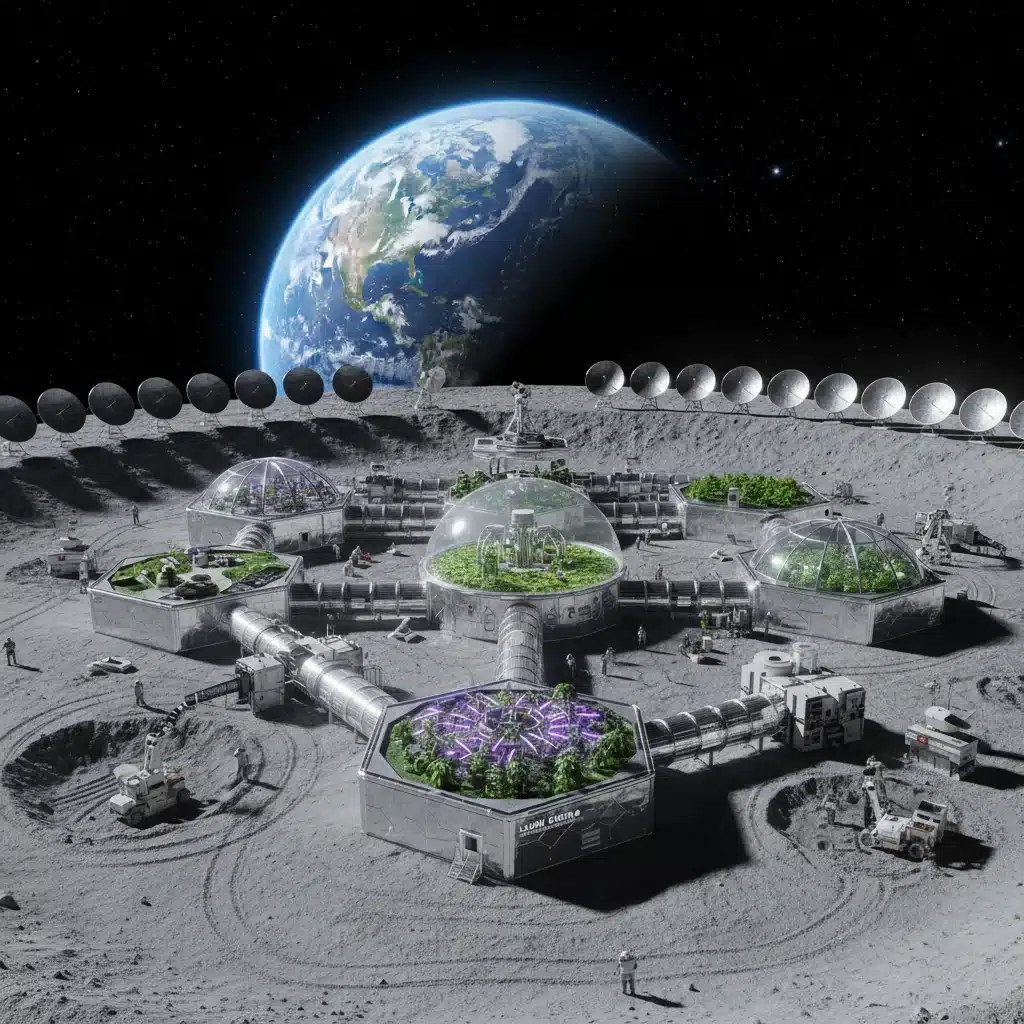
As humanity looks towards establishing permanent outposts on the Moon and eventually Mars, the challenge of creating sustainable, livable habitats becomes paramount. TerraForm is a pioneering startup dedicated to developing innovative solutions for off-world habitat construction and life support. Their approach integrates advanced robotics, in-situ resource utilization (ISRU), and bio-regenerative systems to create self-sufficient and resilient extraterrestrial environments.
By 2026, TerraForm aims to have successfully demonstrated key components of their habitat technology, potentially including the 3D printing of structural elements using lunar or Martian regolith simulants, or the deployment of a closed-loop bio-regenerative life support system in an analog environment. Their disruptive technology focuses on minimizing reliance on Earth-launched supplies, a critical factor for long-duration missions and permanent settlements. This involves robotic construction techniques that utilize local materials, advanced atmospheric processing for oxygen and water recovery, and controlled environment agriculture to grow food within the habitats. Imagine structures built from lunar dust, powered by local solar energy, and sustaining astronauts with recycled air and water, and fresh produce.
TerraForm’s vision is not just about survival; it’s about thriving in space. Their systems are designed to be scalable and adaptable, capable of supporting small research outposts or larger, multi-person settlements. The challenges are immense: developing robotics that can operate autonomously in harsh radiation and temperature extremes, creating reliable and efficient ISRU processes, and ensuring the long-term stability of bio-regenerative systems. However, the potential rewards are even greater – enabling humanity’s expansion into the solar system and establishing a sustainable multi-planetary presence. As the Artemis program and other international initiatives push towards lunar and Martian settlement, TerraForm’s contributions will be vital, solidifying their position as a leading innovator among space economy startups.
The Broader Impact of These Space Economy Startups by 2026
The collective impact of these four space economy startups, and many others like them, will fundamentally reshape the aerospace industry and beyond by 2026. Orbital Forge’s in-space manufacturing capabilities will unlock the potential for truly massive and complex orbital infrastructure, from next-generation telescopes to vast solar power arrays that could beam clean energy back to Earth. This will not only advance scientific discovery but also provide tangible benefits to our planet.
AstroHarvest’s work in asteroid resource utilization promises to transform the economics of space exploration. By making resources available off-world, they will drastically reduce the cost and logistical challenges of deep-space missions, paving the way for more ambitious human endeavors. This could also create entirely new industries focused on processing and distributing extraterrestrial materials, establishing a true off-world economy.
QuantumComm’s advancements in secure space communications will be critical for protecting the integrity and confidentiality of data as our reliance on space-based assets grows. This enhanced security will be vital for national security, commercial operations, and the privacy of individuals, ensuring that the benefits of space technology are not undermined by vulnerabilities.
Finally, TerraForm’s innovations in sustainable off-world habitats are essential for realizing the dream of permanent human settlements beyond Earth. By enabling self-sufficiency, they will make long-duration missions and eventual colonization more feasible, opening up new horizons for humanity’s future. Their work directly addresses the challenges of living and working in extreme environments, providing solutions that could also have applications for sustainable living on Earth.
Challenges and Opportunities for Space Economy Startups
While the future looks bright for these space economy startups, they also face significant challenges. Funding, while abundant, requires continuous fundraising rounds to sustain development. Regulatory hurdles, both national and international, are still evolving for many new space activities, particularly in areas like asteroid mining and in-orbit servicing. The technical complexities are immense, requiring highly specialized talent and rigorous testing. Moreover, the inherent risks of space operations – launch failures, orbital debris, and the harsh space environment – mean that setbacks are almost inevitable.
However, the opportunities far outweigh these challenges. The decreasing cost of access to space, driven by companies like SpaceX and Rocket Lab, provides a more accessible testing ground for new technologies. Government agencies like NASA are increasingly partnering with private industry, offering contracts and expertise that accelerate development. The growing demand for space-based services, from broadband internet to climate monitoring, ensures a robust market for innovative solutions. Furthermore, the potential for entirely new markets, such as space tourism and pharmaceutical manufacturing in microgravity, offers limitless growth potential.
Conclusion: The Future is in Orbit
The year 2026 promises to be a pivotal moment for the burgeoning space economy. The four US space economy startups highlighted here – Orbital Forge, AstroHarvest, QuantumComm, and TerraForm – represent just a fraction of the incredible innovation happening in this sector. Their disruptive technologies in in-space manufacturing, asteroid resource utilization, quantum communication, and sustainable habitats are not just incremental improvements; they are foundational shifts that will redefine what is possible in space.
As these companies mature and their technologies come to fruition, they will not only drive economic growth and create new jobs but also expand humanity’s understanding and capabilities beyond our home planet. Keeping a close eye on these and other emerging players will be essential for anyone interested in the future of technology, investment, and the ultimate destiny of humankind. The future is no longer just on Earth; it’s increasingly in orbit, and these startups are building the pathways to get us there.