2026 US Patent Landscape: Deadlines & Emerging Tech Opportunities
The 2026 US Patent Landscape: Key Deadlines and Opportunities for Emerging Technologies This Quarter
The world of intellectual property is in constant flux, a dynamic arena where innovation meets legal frameworks. As we look ahead to the 2026 US patent landscape, it’s imperative for innovators, entrepreneurs, and established corporations alike to understand the evolving terrain. This quarter, in particular, presents unique challenges and unparalleled opportunities, especially concerning emerging technologies. Navigating the complexities of the United States Patent and Trademark Office (USPTO) requires not just a keen understanding of current regulations but also foresight into future trends and critical deadlines. This comprehensive guide will delve into the essential aspects of the 2026 US patent environment, offering strategic insights to protect and leverage your intellectual assets.
Understanding the Evolving 2026 US Patent Landscape
The 2026 US patent landscape is shaped by a confluence of technological advancements, legislative adjustments, and global economic pressures. The pace of innovation, particularly in sectors like Artificial Intelligence (AI), biotechnology, quantum computing, and sustainable energy, demands a proactive approach to patent protection. The USPTO continues to adapt its examination guidelines and procedures to keep pace with these rapid changes, making it crucial for applicants to stay informed. A key theme in the 2026 US patent environment is the balance between fostering innovation and ensuring the quality and validity of granted patents.
One of the most significant factors influencing the 2026 US patent landscape is the ongoing discussion surrounding patent eligibility under 35 U.S.C. § 101. While there haven’t been definitive legislative changes in recent years, the judicial interpretations continue to evolve, particularly concerning abstract ideas and natural phenomena. This uncertainty underscores the need for robust patent drafting strategies that clearly articulate the technical solution and its practical application, moving beyond mere conceptual descriptions. For businesses operating in software, medical diagnostics, and business methods, understanding the nuances of § 101 is paramount to securing valid patents in the 2026 US patent system.
Furthermore, the America Invents Act (AIA) of 2011 continues to play a pivotal role, particularly with its first-inventor-to-file system. This system emphasizes the importance of early filing, a principle that will remain central to any successful patent strategy in 2026. Delays in filing can lead to forfeiture of rights, especially in competitive fields where multiple entities might be developing similar solutions. Therefore, meticulous record-keeping and a timely application process are non-negotiable for anyone looking to secure their innovations within the 2026 US patent framework.
Key Legislative and Judicial Developments Impacting 2026 US Patents
While major legislative overhauls might not be an annual occurrence, subtle shifts in judicial interpretations and USPTO guidance can significantly alter the 2026 US patent landscape. Recent court decisions, particularly from the Federal Circuit and the Supreme Court, often refine the boundaries of patentable subject matter or redefine standards for obviousness and written description. Staying abreast of these decisions is not merely an academic exercise; it directly impacts the strength and enforceability of patents. Patent attorneys and innovators must regularly review these developments to ensure their strategies align with the current legal precedents. For instance, any new guidance from the USPTO regarding AI-generated inventions or biotechnological processes will be critical for those operating in these cutting-edge fields in 2026.
Moreover, international harmonization efforts, though often slow-moving, can also cast a shadow on the domestic 2026 US patent scene. While the U.S. patent system largely operates independently, global trends in intellectual property law, such as discussions around standard essential patents (SEPs) or cross-border enforcement, can indirectly influence policy discussions and examination practices within the USPTO. Understanding these broader contexts can provide a more holistic view of the challenges and opportunities in the 2026 US patent landscape.
Critical Deadlines in the 2026 US Patent Calendar This Quarter
For innovators and businesses, missing a deadline can be catastrophic, leading to loss of rights or significant delays. The 2026 US patent calendar, like any other year, is punctuated by crucial dates that demand attention. This quarter, several deadlines are particularly noteworthy, impacting various stages of the patent lifecycle, from initial filing to maintenance fees.
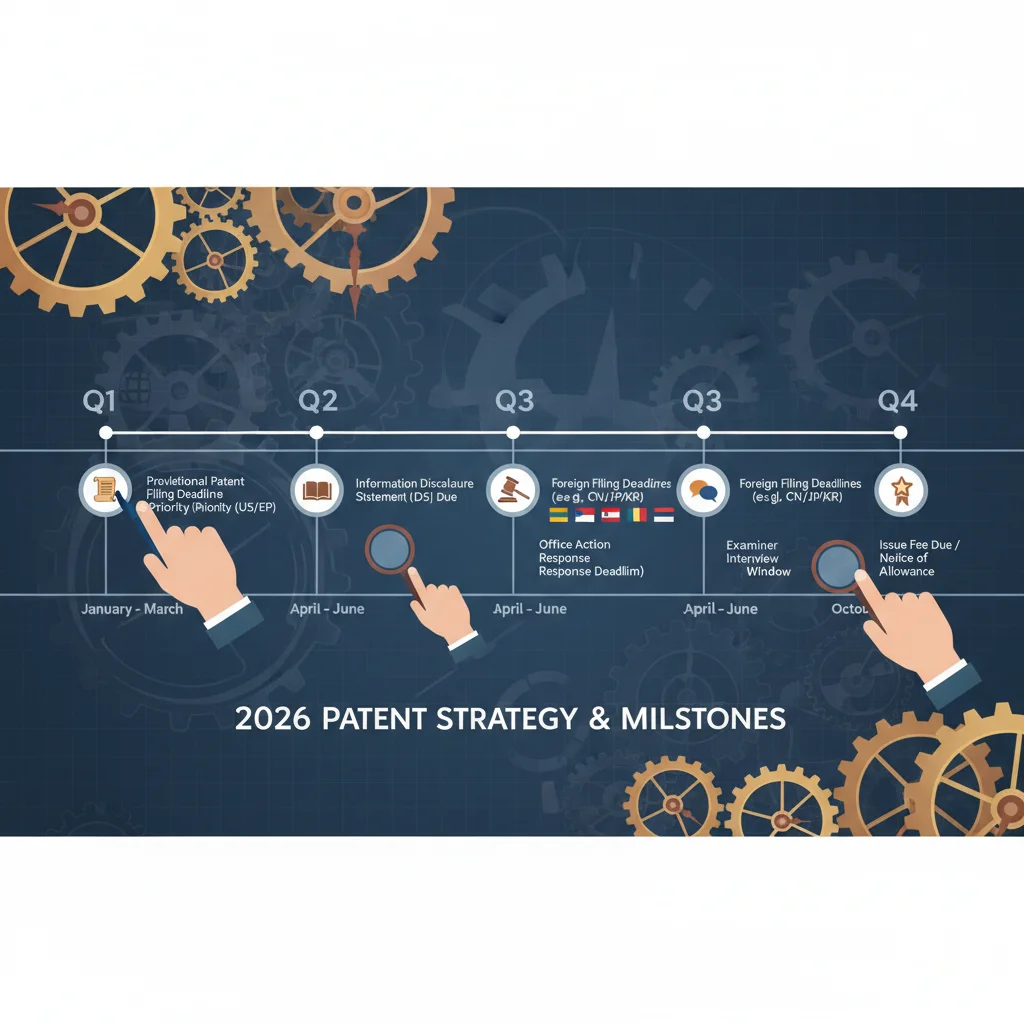
Provisional Patent Applications: For many, the journey to a granted patent begins with a provisional application. These applications establish an early filing date and provide a window of 12 months to file a non-provisional application. If you filed a provisional patent application in late 2025 or early 2026, the corresponding non-provisional filing deadline will fall within this year. Missing this 12-month window means losing the benefit of the earlier filing date, a critical disadvantage in the competitive 2026 US patent environment. It’s essential to use this period wisely to refine your invention, conduct further market research, and prepare a comprehensive non-provisional application.
Non-Provisional Patent Applications: If you are planning to file a new non-provisional application this quarter, ensure all necessary documentation, including detailed specifications, claims, and drawings, are meticulously prepared. The quality of your initial application significantly impacts the examination process and the ultimate scope of your granted patent. For those who filed non-provisional applications in late 2024 or early 2025, expect to receive office actions from the USPTO this quarter. Responding to these office actions within the stipulated deadlines, typically three months with possible extensions, is crucial to keep your application moving forward. Strategic responses, often involving claim amendments or arguments, are vital for overcoming examiner rejections and securing your 2026 US patent.
International Filings under PCT: For innovators eyeing global markets, the Patent Cooperation Treaty (PCT) offers a streamlined approach to international patent filings. If you filed a US application in late 2024 or early 2025 and intend to pursue international protection, the 12-month deadline for filing a PCT application (or national phase applications directly) will be approaching or falling within 2026. This allows you to defer national phase entry into specific countries for up to 30 or 31 months from the earliest priority date, providing valuable time for market assessment and funding. Navigating these international deadlines is a critical part of a global 2026 US patent strategy.
Maintenance Fees: Granted utility patents require maintenance fees to be paid at 3.5, 7.5, and 11.5 years from the issue date to keep them in force. Design patents have a single maintenance fee due 3.5 years from the issue date. Businesses with existing patent portfolios must meticulously track these deadlines to avoid unintentional lapse of valuable patents. Automated reminder systems and professional intellectual property management services are invaluable tools for managing these recurring obligations within the 2026 US patent landscape.

Emerging Technologies: Opportunities for 2026 US Patents
The rapid evolution of technology continues to open new frontiers for patentable inventions. The 2026 US patent landscape is particularly fertile for innovations in several key areas:
Artificial Intelligence (AI) and Machine Learning (ML)
AI and ML continue to dominate the innovation sphere. From advanced algorithms for data analysis to autonomous systems and generative AI, the potential for patentable inventions is immense. The challenge in this sector lies in clearly defining the technical improvements over existing AI systems and demonstrating how the invention solves a specific technical problem, rather than merely presenting an abstract idea. The USPTO has been issuing guidance on AI-related inventions, emphasizing the need for concrete applications and technical effects. Securing 2026 US patents in AI requires a deep understanding of these guidelines and a focus on the practical implementation of AI models.
Biotechnology and Pharmaceuticals
Breakthroughs in gene editing (e.g., CRISPR), personalized medicine, novel drug delivery systems, and advanced diagnostics are transforming healthcare. The 2026 US patent landscape for biotechnology remains robust, albeit with significant legal scrutiny over patent eligibility for natural products and laws of nature. Strategic patenting in this area often involves protecting specific compositions, methods of treatment, or diagnostic tools that demonstrate a clear inventive step and utility. The interplay between regulatory approval processes and patent protection also adds layers of complexity, making early and strategic patent filing crucial.
Quantum Computing
While still in its nascent stages, quantum computing promises revolutionary advancements in computation, cryptography, and materials science. The foundational technologies, including quantum processors, algorithms, and error correction mechanisms, are prime candidates for 2026 US patents. Given the foundational nature of these inventions, early patenting can establish significant market advantages. The complexity of the technology, however, necessitates highly specialized patent counsel who can articulate the inventive concepts clearly to the USPTO.
Sustainable Technologies and Green Energy
With increasing global emphasis on climate change and sustainability, innovations in renewable energy generation, energy storage, carbon capture, and eco-friendly manufacturing processes are experiencing a boom. The 2026 US patent landscape will see continued growth in these areas. Patenting in sustainable technologies often involves protecting novel materials, efficient processes, and integrated systems that offer significant environmental benefits. Government incentives and funding for green technologies further fuel innovation and the need for robust patent protection.
Advanced Materials and Nanotechnology
The development of new materials with enhanced properties, such as stronger alloys, self-healing polymers, and advanced composites, continues to drive innovation. Nanotechnology, which involves manipulating matter at an atomic and molecular scale, offers applications across various industries, from electronics to medicine. Securing 2026 US patents in advanced materials and nanotechnology requires precise descriptions of the material’s structure, properties, and methods of manufacture, along with its specific applications.
Strategic Considerations for Navigating the 2026 US Patent Landscape
To effectively secure and leverage intellectual property in the 2026 US patent environment, a strategic approach is indispensable. This involves more than just filing applications; it requires a holistic view of innovation, market dynamics, and legal precedents.
Early and Continuous Patent Searching
Before investing significant resources into development and patenting, thorough patent searches are critical. These searches help identify existing prior art, assess patentability, and inform the scope of potential claims. Continuous monitoring of competitors’ patent filings and emerging technologies can also provide valuable insights, helping to refine your own R&D and patent strategy. In the context of 2026 US patents, staying ahead of the curve means constant vigilance.
Robust Patent Portfolio Management
For organizations with multiple innovations, a well-managed patent portfolio is an asset. This involves not only securing new patents but also strategically maintaining, licensing, and enforcing existing ones. Regularly reviewing your patent portfolio to identify underutilized assets or those nearing expiration can inform future R&D directions and business strategies. A dynamic portfolio strategy is key to success in the 2026 US patent landscape.
Leveraging Provisional Applications Strategically
Provisional applications are an excellent tool for establishing an early filing date with lower initial costs. However, their strategic value lies in how the subsequent non-provisional application is developed. Use the 12-month period to gather more data, refine your invention, and conduct market analysis. Ensure the non-provisional application fully supports the claims with sufficient detail, benefiting from the earlier provisional filing date. This strategic use of provisionals is crucial for maximizing your advantage in the 2026 US patent system.
Engaging Experienced Patent Counsel
The complexities of patent law, particularly in emerging technology fields, necessitate the expertise of experienced patent attorneys. They can provide invaluable guidance on patentability assessments, claim drafting, responding to office actions, and navigating the often-intricate legal landscape. A skilled patent attorney can help articulate the technical nuances of your invention in a way that satisfies USPTO requirements and withstands potential challenges, making them an indispensable partner for securing 2026 US patents.
Considering International Patent Protection
For innovations with global market potential, considering international patent protection early in the process is vital. The PCT system offers a cost-effective way to defer national filings, allowing businesses to gauge market interest and secure funding before committing to expensive national phase applications in multiple countries. A global intellectual property strategy is becoming increasingly important for businesses aiming to thrive beyond the domestic 2026 US patent market.
The Role of Patent Analytics in the 2026 US Patent Landscape
Patent analytics is rapidly becoming an essential tool for strategic decision-making in the intellectual property realm. By analyzing vast datasets of patent information, businesses can gain insights into technological trends, competitive landscapes, and potential white spaces for innovation. For the 2026 US patent landscape, patent analytics can:
- Identify Emerging Technology Hotspots: Pinpoint areas where patenting activity is rapidly increasing, indicating future growth and investment opportunities.
- Assess Competitive Threats: Understand competitors’ patent portfolios, their R&D focus, and potential infringement risks.
- Discover White Spaces: Identify areas with high market potential but low patenting activity, suggesting opportunities for novel inventions.
- Inform R&D Strategy: Guide research and development efforts by highlighting promising technological avenues and avoiding duplication of existing work.
- Evaluate Patent Strength: Analyze citation data, claim scope, and family data to assess the strength and value of a patent portfolio.
Leveraging these insights will be crucial for any company looking to maintain a competitive edge and make informed decisions about their 2026 US patent strategy.
Challenges and Future Outlook for 2026 US Patents
While opportunities abound, the 2026 US patent landscape also presents several challenges. The ongoing debate surrounding patent eligibility, particularly for software and biotech, creates an environment of uncertainty that can deter innovation or complicate patent prosecution. Furthermore, the increasing cost of patent litigation continues to be a concern, prompting many businesses to seek alternative dispute resolution mechanisms or to focus on building stronger, more defensible patents from the outset.
Looking ahead, the USPTO is likely to continue its efforts to streamline the examination process, potentially incorporating more AI-driven tools for prior art searching and examination assistance. There might also be increased focus on international cooperation and harmonization, although significant legislative changes are typically slow to materialize. The emphasis on quality patents that clearly define and protect novel technical solutions will remain paramount. Innovators who prioritize clarity, technical detail, and strategic planning will be best positioned to thrive in the dynamic 2026 US patent landscape.
Conclusion: Seizing Opportunities in the 2026 US Patent Landscape
The 2026 US patent landscape is a vibrant and evolving ecosystem, brimming with opportunities for those who are prepared. By understanding the critical deadlines, identifying emerging technology hotspots, and adopting a proactive and strategic approach to intellectual property, innovators and businesses can not only protect their valuable inventions but also gain a significant competitive advantage. From the nuanced interpretations of patent eligibility to the rapid advancements in AI and biotech, staying informed and agile is key. Engage with experienced patent counsel, leverage patent analytics, and prioritize early and robust filing to secure your place at the forefront of innovation in the 2026 US patent system. The time to act is now, to transform your ideas into protected assets that will shape the future.