US Tech Innovations Powering Hybrid Work by 2027: An Insider’s Look
The Future is Now: 7 US Tech Innovations Supporting a 30% Hybrid Workforce by 2027 (INSIDER KNOWLEDGE)
The global pandemic irrevocably reshaped the world of work, pushing what was once a niche concept—remote work—into the mainstream. As we navigate the post-pandemic landscape, a new model has emerged as the dominant paradigm: the hybrid workforce. This flexible approach, blending in-office and remote work, is not just a temporary solution but a fundamental shift in how businesses operate. Projections indicate that by 2027, a significant 30% of the global workforce will operate under a hybrid model, a testament to its growing acceptance and efficacy. This transformation is not happening in a vacuum; it’s powered by relentless innovation, particularly from the United States, a global leader in technological advancement. US tech companies are at the forefront, developing sophisticated tools and platforms that make the hybrid workforce not just feasible, but highly efficient and productive.
This article delves into seven critical US tech innovations that are not only supporting but actively driving the expansion of the hybrid workforce. We’ll explore how these technologies are addressing the unique challenges of dispersed teams, fostering collaboration, ensuring cybersecurity, and enhancing overall employee experience. From advanced communication platforms to AI-driven productivity tools and immersive virtual environments, these innovations are laying the groundwork for a more flexible, resilient, and inclusive future of work. Understanding these trends provides invaluable insider knowledge for businesses, employees, and investors alike, highlighting where the significant shifts are occurring and what to expect in the coming years.
The shift to a hybrid workforce isn’t merely about allowing employees to work from home a few days a week; it’s about fundamentally rethinking work processes, organizational culture, and technological infrastructure. It demands solutions that can bridge geographical divides, maintain team cohesion, and ensure equitable access to resources and opportunities, regardless of location. The US tech sector, with its robust ecosystem of startups, established giants, and venture capital, is uniquely positioned to deliver these solutions. Let’s unpack the innovations that are making this future a reality.
1. Hyper-Personalized Collaboration Platforms: Beyond Basic Video Conferencing
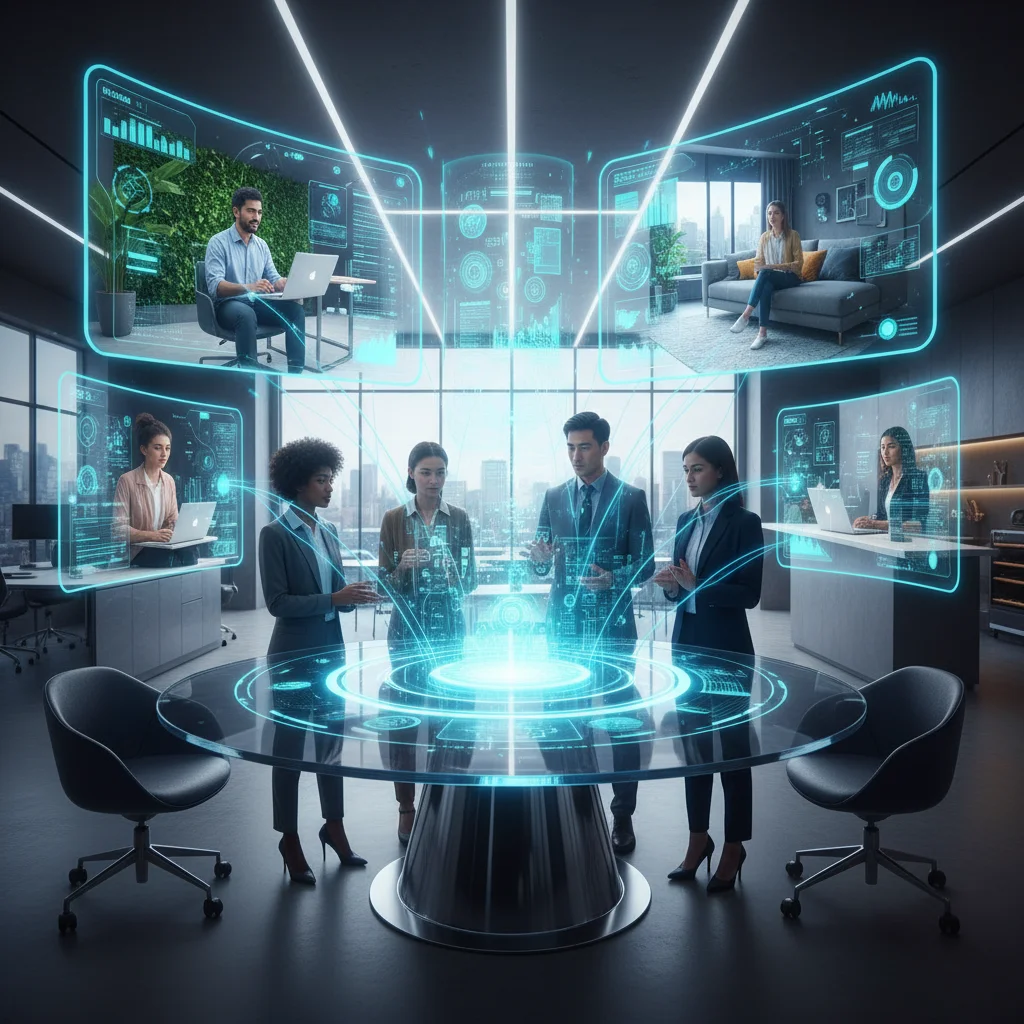
While video conferencing became ubiquitous during the pandemic, the next wave of innovation focuses on creating truly immersive and personalized collaboration experiences. US tech companies are developing platforms that go far beyond simple face-to-face calls, integrating features that mimic the nuances of in-person interaction and optimize for hybrid team dynamics. These platforms leverage AI to offer features like real-time translation, sentiment analysis during meetings, and dynamic background noise suppression that intelligently adapts to different environments. Imagine a meeting where an AI assistant automatically generates summaries, assigns action items, and even identifies potential misunderstandings based on vocal cues and facial expressions. This level of sophistication transforms virtual interactions from mere substitutes for physical meetings into powerful, data-rich collaborative sessions.
Furthermore, these advanced platforms are integrating spatial audio and video, creating a sense of presence that reduces video call fatigue. Some are experimenting with ‘digital twins’ of office spaces, allowing remote workers to navigate a virtual office, drop into colleagues’ ‘virtual desks’ for quick chats, and join spontaneous breakout sessions. This addresses a critical challenge of the hybrid model: maintaining casual interactions and fostering a sense of belonging among a dispersed team. These innovations are crucial for sustaining team morale and productivity within a home office environment.
Companies like Microsoft (with Mesh for Teams) and newer startups are pushing the boundaries of what’s possible, moving towards metaverse-like environments where avatars can interact, brainstorm on virtual whiteboards, and even attend company-wide events. The goal is to minimize the perceived distance between team members, making remote collaboration feel as natural and effective as being in the same room. This evolution is vital for fostering a cohesive and engaged hybrid workforce.
2. AI-Powered Productivity and Workflow Automation Tools
One of the biggest concerns for businesses adopting a hybrid model is maintaining productivity and ensuring seamless workflows across different locations and time zones. US tech innovators are tackling this head-on with AI-powered tools that automate routine tasks, optimize project management, and provide insights into team performance. These tools are designed to reduce administrative overhead, allowing employees to focus on higher-value work, regardless of where they are located.
Consider AI-driven project management software that can intelligently assign tasks based on team member availability and skill sets, predict potential bottlenecks, and even suggest optimal timelines. These systems learn from past project data, continuously refining their recommendations to improve efficiency. Similarly, intelligent automation tools are streamlining everything from expense reporting to customer service inquiries, freeing up employees from repetitive tasks and enabling them to contribute more strategically. This is a game-changer for managing a complex hybrid workforce tech ecosystem, ensuring that operations remain smooth and efficient.
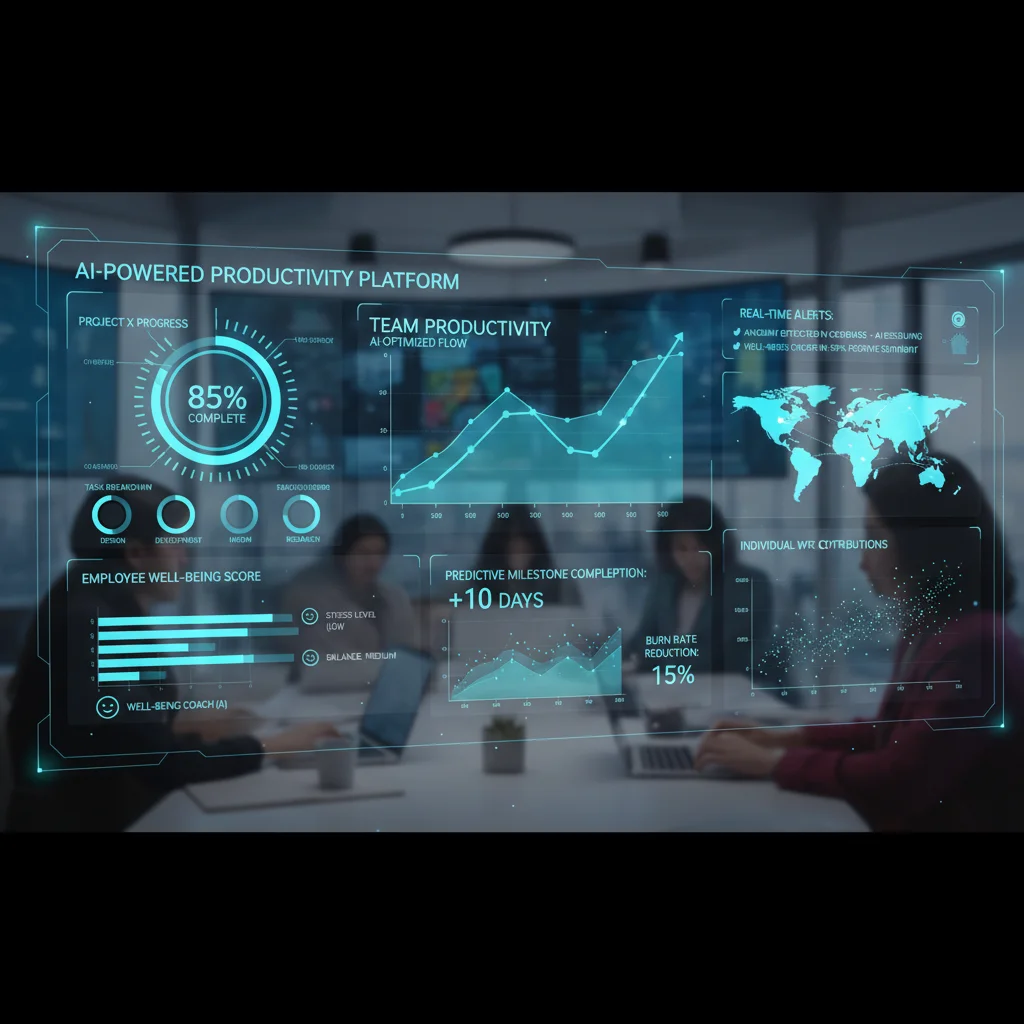
Moreover, AI is being used to personalize work experiences. For example, AI assistants can help employees manage their schedules, prioritize tasks, and even suggest breaks to prevent burnout. By analyzing individual work patterns and preferences, these tools can create a more supportive and productive environment for each team member, whether they are working from home, a co-working space, or the office. This personalized approach is key to maximizing the potential of the hybrid workforce, allowing individuals to thrive in their preferred working style.
3. Advanced Cybersecurity and Secure Access Solutions
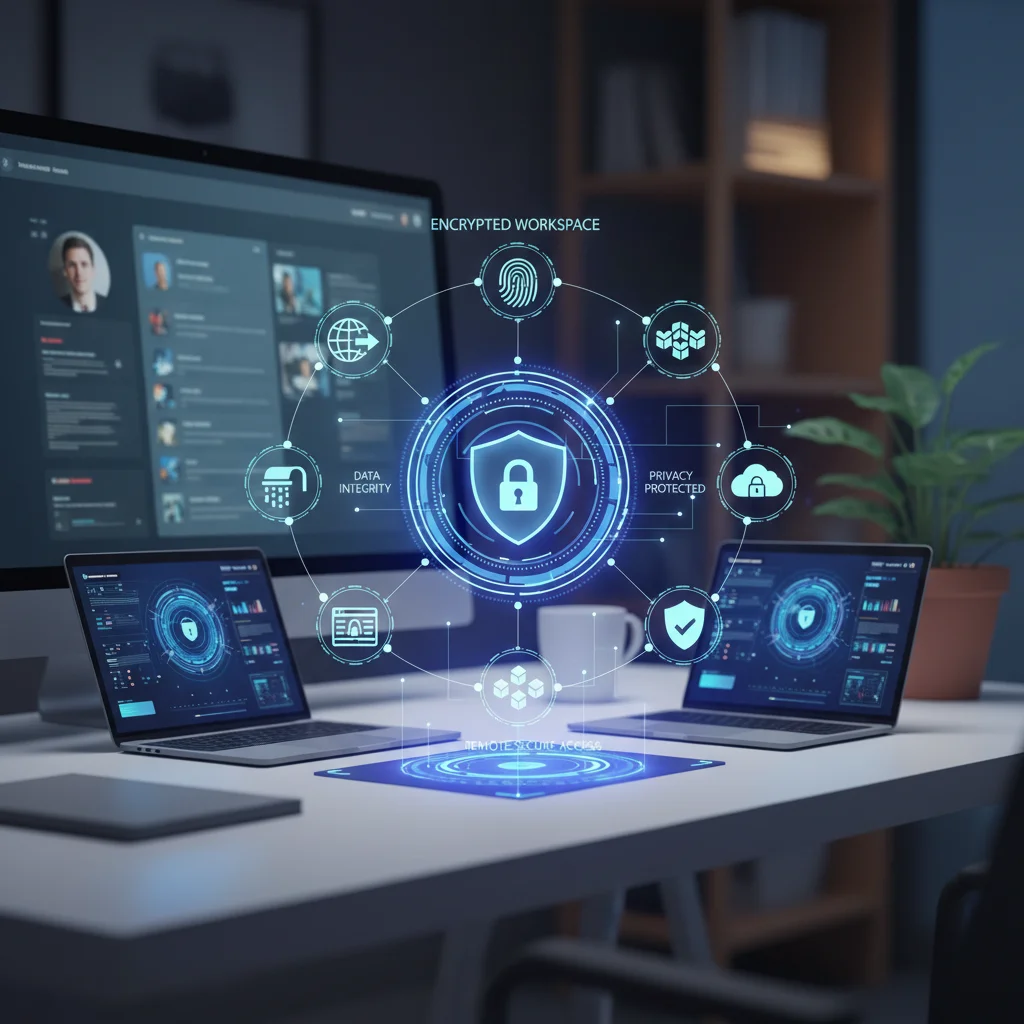
With employees accessing sensitive company data from various locations and devices, cybersecurity becomes paramount in a hybrid work model. The perimeter-based security models of the past are no longer sufficient. US tech companies are leading the charge in developing sophisticated, multi-layered cybersecurity solutions tailored for distributed environments. This includes advancements in Zero Trust Network Access (ZTNA), which verifies every user and device before granting access to corporate resources, regardless of their location. Instead of assuming trust within a network, ZTNA operates on the principle of ‘never trust, always verify,’ making it ideal for the fluid nature of hybrid work.
Beyond ZTNA, innovations in endpoint detection and response (EDR) and extended detection and response (XDR) are providing more comprehensive threat visibility and faster response capabilities. These AI-driven security platforms can identify anomalous behavior and potential threats across an organization’s entire digital footprint, including cloud applications, personal devices, and remote networks. This proactive approach is essential for protecting intellectual property and sensitive customer data when the workforce is distributed. Strong cybersecurity is a non-negotiable component of any successful hybrid workforce tech strategy.
Furthermore, secure access service edge (SASE) frameworks are gaining traction. SASE converges network security functions (like firewalls, secure web gateways, and VPNs) with wide area networking (WAN) capabilities into a single, cloud-native service. This simplifies security management, improves network performance for remote users, and ensures consistent security policies are applied across all access points. As the hybrid workforce becomes more prevalent, these robust and adaptable security solutions from US tech firms will be critical for maintaining trust and operational integrity.
4. Immersive XR Technologies for Training and Collaboration
Extended Reality (XR) – encompassing Virtual Reality (VR), Augmented Reality (AR), and Mixed Reality (MR) – is poised to revolutionize training, collaboration, and even daily work tasks for the hybrid workforce. US tech giants and innovative startups are investing heavily in XR hardware and software, moving beyond gaming applications to practical enterprise solutions. Imagine product design teams collaborating on a 3D model in a shared virtual space, regardless of their physical location, manipulating objects with gestures and discussing changes in real-time. Or field technicians receiving AR overlays on complex machinery, guiding them through repairs step-by-step.
For training, VR offers unparalleled immersive experiences, allowing employees to practice complex procedures in a safe, simulated environment. This is particularly valuable for industries requiring hands-on skills, reducing the need for costly travel and physical equipment. AR, delivered through smart glasses or even smartphone apps, can provide remote assistance and contextual information, empowering employees in the field or on the factory floor with immediate access to expert knowledge. These technologies enhance learning retention and accelerate skill development, a significant advantage for a geographically dispersed hybrid workforce tech.
As hardware becomes more affordable and user-friendly, and software ecosystems mature, XR will play an increasingly vital role in bridging the physical and digital divide in hybrid work. It offers a level of immersion and interactivity that traditional video conferencing cannot match, fostering deeper engagement and more effective communication, especially for tasks that benefit from visual and spatial understanding. The potential for XR to transform how we work, learn, and collaborate is immense, making it a key enabler for the future hybrid workforce.
5. Smart Office Management and IoT Integration
While much of the focus for the hybrid workforce is on remote capabilities, optimizing the physical office space for occasional use by a flexible workforce is equally important. US tech companies are developing smart office solutions that leverage the Internet of Things (IoT) to create more efficient, adaptable, and appealing workspaces. These innovations address challenges like hot-desking, capacity management, and environmental control, ensuring the office remains a valuable resource for employees.
IoT sensors can monitor office occupancy in real-time, allowing employees to book desks, meeting rooms, and parking spaces through an app, thereby preventing overcrowding and ensuring resource availability. Smart HVAC and lighting systems can adjust based on occupancy, saving energy and creating a more comfortable environment. Furthermore, integrated AV systems in meeting rooms automatically connect to collaboration platforms, making the transition from remote to in-person meetings seamless and reducing technical friction. This level of integration is essential for a smooth hybrid workforce tech experience.
These smart office technologies also provide valuable data insights into office utilization patterns, helping organizations optimize their real estate footprint and design spaces that truly meet the needs of their hybrid teams. By understanding when and how employees use the office, businesses can make data-driven decisions about office layouts, amenities, and capacity planning. This strategic approach ensures that the physical office remains a productive and attractive hub for collaboration and innovation, complementing the flexibility offered by remote work.
6. Employee Experience and Well-being Platforms
Maintaining employee engagement, well-being, and a positive company culture is a significant challenge in a hybrid environment. US tech companies are responding with platforms designed to enhance the employee experience, focusing on mental health support, team building, and personalized growth opportunities. These tools go beyond traditional HR software, providing proactive solutions to support a dispersed workforce.
AI-powered well-being apps offer personalized recommendations for stress reduction, mindfulness exercises, and physical activity, often integrating with wearable tech. These platforms can identify potential signs of burnout and connect employees with mental health resources. Furthermore, virtual team-building activities, from online escape rooms to interactive workshops, are being facilitated by specialized platforms, helping maintain social connections and camaraderie among remote and in-office colleagues. This focus on holistic employee support is critical for the long-term success of the hybrid workforce tech model.
Learning and development platforms are also evolving to support hybrid teams, offering on-demand courses, personalized learning paths, and virtual mentorship programs. These platforms ensure that all employees, regardless of location, have equitable access to professional growth opportunities, fostering a culture of continuous learning. By prioritizing employee well-being and development, businesses can cultivate a resilient and motivated hybrid workforce, reducing attrition and boosting overall productivity.
7. Edge Computing and 5G Connectivity for Ubiquitous Access
Underpinning many of these innovations is the advancement of network infrastructure, specifically edge computing and 5G connectivity. US tech companies and telecommunications providers are rapidly deploying and refining these technologies, which are crucial for ensuring seamless, high-performance access to applications and data for a distributed workforce. Edge computing brings processing power closer to the data source, reducing latency and enabling real-time applications, which is vital for AR/VR, AI-powered tools, and critical operational systems.
For hybrid workers, this means faster access to cloud resources, more responsive applications, and improved performance for bandwidth-intensive tasks like video editing, 3D modeling, and large data analysis, regardless of their location. The ability to process data at the ‘edge’ – whether that’s a home office router, a local server, or a mobile device – minimizes reliance on centralized data centers and reduces network congestion. This is particularly important for ensuring equitable access and performance for employees in areas with less robust internet infrastructure.
5G connectivity, with its unprecedented speeds and low latency, acts as the perfect complement to edge computing. It provides the high-bandwidth, reliable connections necessary for a truly mobile and flexible hybrid workforce. Employees can work effectively from virtually anywhere – co-working spaces, cafes, or even while commuting – with the same level of connectivity they would expect in a traditional office. The synergy between edge computing and 5G is a foundational element for the pervasive and high-performing hybrid workforce tech ecosystem envisioned for 2027 and beyond.
The Road Ahead: Navigating the Hybrid Landscape
The trajectory towards a 30% hybrid workforce by 2027 is clear, and these seven US tech innovations are the engines driving this transformation. From hyper-personalized collaboration and AI-driven productivity to robust cybersecurity and immersive XR, the technological landscape is rapidly evolving to meet the demands of a flexible work model. Businesses that embrace these advancements will be better positioned to attract and retain top talent, foster innovation, and build resilient operations capable of adapting to future challenges.
However, the successful implementation of these technologies requires more than just adoption; it demands strategic planning, cultural adaptation, and continuous investment. Organizations must evaluate their specific needs, integrate solutions seamlessly, and prioritize employee training and support. The focus must extend beyond mere tools to the overall employee experience, ensuring that technology empowers rather than overwhelms.
The insider knowledge provided here highlights not just what technologies are emerging but why they are critical. They address fundamental human and operational needs in a distributed environment: the need for connection, efficiency, security, and growth. As we move closer to 2027, the interplay of these innovations will define the contours of the modern workplace, making the hybrid model not just a possibility, but a highly effective and sustainable way to work.
The future of work is hybrid, and US tech is building the infrastructure, tools, and experiences that will make it thrive. Staying abreast of these developments is not just an advantage; it’s a necessity for anyone looking to succeed in this evolving professional landscape.