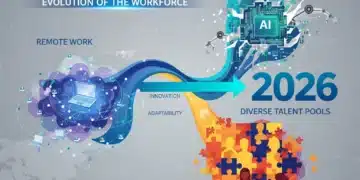
The Great Resignation’s 2026 Evolution: 5 Key Shifts in American Workforce Priorities

The American labor market is a dynamic entity, constantly reshaped by economic forces, technological advancements, and evolving societal values. Over the past few years, we’ve witnessed a seismic shift often dubbed ‘The Great Resignation.’ This phenomenon, characterized by millions of workers voluntarily leaving their jobs, was initially seen as a temporary blip, a post-pandemic anomaly. However, as we approach 2026, it’s clear that what began as a mass exodus has evolved into a profound re-evaluation, recalibrating the fundamental expectations and workforce priorities 2026 will demand from employers.
This isn’t merely about people quitting; it’s about a fundamental reordering of what constitutes a ‘good job.’ Employees are no longer passively accepting the status quo. Instead, they are actively seeking roles and organizations that align with a more holistic view of their lives, encompassing not just financial gain but also personal well-being, professional growth, and a sense of purpose. For businesses, understanding and adapting to these evolving workforce priorities 2026 is not just a matter of competitive advantage; it’s a matter of survival.
The initial wave of the Great Resignation was fueled by a confluence of factors: burnout from demanding pandemic-era workloads, a re-evaluation of life priorities during lockdowns, and a robust job market that offered numerous alternatives. As we move further into the decade, these factors have matured, giving rise to more nuanced and solidified expectations. The power dynamic has undeniably shifted, placing a greater emphasis on employee needs and desires. Companies that fail to recognize this shift risk losing top talent, struggling with recruitment, and ultimately, falling behind in an increasingly competitive landscape.
This article will delve into the five pivotal shifts in American workforce priorities 2026 that are shaping the future of employment. We will explore how these priorities have evolved, what they mean for both employees and employers, and offer insights into how organizations can proactively address these changes to build resilient, attractive, and productive work environments. From the changing face of compensation to the imperative of skill development, understanding these trends is crucial for anyone navigating the modern professional world.
1. The Redefined Value Proposition: Beyond Just a Paycheck
For decades, compensation was often the primary, if not sole, driver of employee satisfaction and retention. While competitive salaries and benefits remain crucial, the workforce priorities 2026 have expanded significantly. Employees are now looking for a more comprehensive value proposition that extends far beyond the numbers on their pay stubs. This shift reflects a broader societal trend towards valuing quality of life, personal growth, and ethical alignment with one’s employer.
Holistic Compensation Packages
The concept of ‘compensation’ itself is broadening. It’s no longer just about base salary and health insurance. Employees are increasingly scrutinizing benefits that contribute to their overall well-being and future security. This includes robust retirement plans, comprehensive mental health support, generous paid time off (PTO) policies, and even tuition reimbursement or professional development stipends. Companies that offer a strong suite of these benefits are proving to be more attractive in the current climate. The emphasis is shifting from merely ‘getting by’ to ‘thriving,’ and compensation packages must reflect this.
Equity and Transparency
Another significant development in compensation is the growing demand for equity and transparency. The rise of online salary aggregators and open discussions about pay on social media platforms has made it easier for employees to compare their compensation with industry benchmarks. This has fueled a demand for fair pay practices and, in many cases, greater transparency around salary bands and promotion criteria. Organizations that are perceived as having opaque or inequitable pay structures risk alienating their workforce and fostering an environment of distrust. Building trust through clear, justifiable compensation policies will be a hallmark of successful employers in 2026.
Performance-Based Incentives and Recognition
Beyond fixed compensation, employees are also seeking meaningful ways to be recognized and rewarded for their contributions. Performance-based bonuses, profit-sharing schemes, and even equity options are becoming more prevalent, particularly in high-growth sectors. However, recognition isn’t solely financial. Non-monetary recognition, such as public acknowledgment, opportunities for leadership, or even a simple ‘thank you’ from a manager, plays a crucial role in making employees feel valued and appreciated. The best companies are integrating both financial and non-financial recognition into their culture to create a truly rewarding work experience.
In essence, the redefined value proposition for workforce priorities 2026 is about understanding that employees invest their time, skills, and energy into an organization. In return, they expect not just financial remuneration but a comprehensive package of benefits, opportunities, and recognition that supports their overall well-being and professional aspirations. Employers who fail to grasp this holistic view will find themselves struggling to attract and retain the best talent.
2. The Imperative of Flexibility: Work-Life Integration Takes Center Stage
The pandemic irrevocably altered our perceptions of where and how work can be done. What started as a necessity quickly became a preference, and now, flexibility has solidified its position as a non-negotiable aspect of workforce priorities 2026. The traditional 9-to-5, in-office model is increasingly becoming a relic of the past, replaced by a demand for work-life integration that empowers employees to manage their professional and personal lives more effectively.
Remote and Hybrid Work Models
The most visible manifestation of this shift is the widespread adoption of remote and hybrid work models. Employees have experienced the benefits of reduced commutes, greater autonomy over their schedules, and the ability to better balance family responsibilities or personal interests. While some companies have attempted to mandate a full return to the office, many have faced significant resistance and even talent loss. The data consistently shows that a majority of employees prefer some form of flexible work arrangement, and organizations that offer this flexibility are seen as more progressive and employee-centric.

Flexible Hours and Asynchronous Work
Beyond location, flexibility also extends to working hours. The rigid 9-to-5 workday is being challenged, particularly in roles where synchronous collaboration isn’t always critical. Employees are seeking the ability to adjust their schedules to accommodate personal appointments, childcare needs, or simply to work when they are most productive. This move towards asynchronous work, where tasks are completed independently of real-time collaboration, is gaining traction. It requires a shift in management philosophy, emphasizing outcomes over hours, and trusting employees to manage their time effectively.
Autonomy and Empowerment
At its core, the demand for flexibility is a demand for greater autonomy and empowerment. Employees want to be treated as responsible adults capable of managing their own workloads and schedules. Micromanagement and rigid policies are increasingly viewed as detrimental to employee morale and productivity. Companies that empower their employees with choice and trust tend to foster a more engaged and motivated workforce. This empowerment extends to how work is done, allowing individuals to select tools and methods that best suit their working style, while still meeting organizational goals.
For organizations, embracing flexibility for workforce priorities 2026 means re-evaluating traditional management structures, investing in technology that supports distributed teams, and fostering a culture of trust and accountability. Those that successfully integrate flexibility will not only attract a wider talent pool but also cultivate a more resilient and adaptable workforce capable of navigating future challenges.
3. Prioritizing Well-being: A Non-Negotiable for Modern Employees
The pandemic exposed the fragility of mental and physical health in the workplace, propelling employee well-being from a ‘nice-to-have’ perk to a fundamental aspect of workforce priorities 2026. Employees are no longer willing to sacrifice their health for their careers, and they expect their employers to play an active role in supporting their holistic well-being.
Mental Health Support
Mental health has emerged as a primary concern. Burnout, stress, anxiety, and depression are prevalent issues, and employees are seeking employers who provide comprehensive mental health resources. This includes access to therapy, counseling services, mental health days, and a culture that destigmatizes mental health discussions. Companies are realizing that investing in mental health support is not just an ethical imperative but also a strategic business decision, leading to reduced absenteeism, improved productivity, and higher retention rates.
Physical Health and Wellness Programs
Beyond mental health, physical well-being remains crucial. Employees are looking for access to fitness programs, ergonomic workspaces (whether in-office or remote), healthy food options, and initiatives that encourage active lifestyles. Corporate wellness programs are evolving from simple gym memberships to more integrated approaches that address nutrition, sleep, stress management, and preventative care. The goal is to create an environment where employees feel supported in maintaining their physical health, leading to a healthier, more energetic workforce.
Work-Life Boundaries and Preventing Burnout
The line between work and life blurred significantly during the pandemic, leading to widespread burnout. Employees are now actively seeking employers who respect work-life boundaries and implement policies to prevent overwork. This includes encouraging employees to disconnect after hours, discouraging email responses outside of working hours, and ensuring reasonable workloads. Companies that foster a culture where employees feel pressured to be ‘always on’ will struggle to retain talent. Establishing clear boundaries and promoting a healthy work-life balance is paramount for attracting and retaining employees who prioritize their well-being.
Employers must recognize that well-being is not just an individual responsibility but a shared one. Organizations that genuinely prioritize and invest in the well-being of their employees will not only create a more humane workplace but also cultivate a more resilient, engaged, and productive workforce, aligning perfectly with the evolving workforce priorities 2026.
4. The Search for Purpose and Values Alignment: More Than Just a Job
The modern workforce, particularly younger generations, is increasingly driven by a desire for purpose and meaning in their work. The transactional relationship between employer and employee is giving way to a more symbiotic one, where individuals seek alignment between their personal values and the mission, vision, and social impact of their organization. This quest for purpose is a significant driver of workforce priorities 2026.
Mission-Driven Organizations
Employees want to feel that their work contributes to something larger than themselves. They are drawn to organizations with a clear and compelling mission that resonates with their personal values. This could be environmental sustainability, social justice, community development, or technological innovation that genuinely improves lives. Companies that articulate a strong sense of purpose and demonstrate a commitment to it are more likely to attract and retain passionate, dedicated employees.
Ethical Leadership and Corporate Social Responsibility (CSR)
Beyond a mission statement, employees are scrutinizing the ethical conduct of their employers. They want to work for companies that demonstrate integrity, transparency, and social responsibility. This includes fair labor practices, sustainable business operations, diversity, equity, and inclusion (DEI) initiatives, and active engagement in community betterment. Organizations with a strong CSR record and ethical leadership are viewed more favorably, as employees seek to align themselves with companies that reflect their moral compass. The ‘greenwashing’ or ‘woke-washing’ of the past will no longer suffice; authenticity is key.
Meaningful Work and Impact
Employees are also seeking roles where they can see the direct impact of their contributions. They want to understand how their work fits into the larger organizational goals and how it benefits customers, clients, or society at large. This desire for meaningful work often outweighs purely financial considerations for many. Employers can foster this by clearly communicating the ‘why’ behind tasks, providing opportunities for employees to contribute to impactful projects, and celebrating successes that demonstrate positive outcomes.
The search for purpose and values alignment reflects a deeper yearning for work that is not just a means to an end but a source of personal fulfillment. Companies that can articulate a compelling purpose, demonstrate ethical leadership, and provide opportunities for meaningful work will be best positioned to attract and inspire the talent of tomorrow, addressing these critical workforce priorities 2026.
5. Continuous Learning and Skill Development: Future-Proofing Careers
In an era of rapid technological advancement and economic disruption, the shelf life of skills is shrinking. Employees are keenly aware of this and are prioritizing continuous learning and skill development as a critical component of their workforce priorities 2026. They want to work for organizations that invest in their growth, providing opportunities to acquire new skills and adapt to evolving industry demands.
Upskilling and Reskilling Opportunities
The demand for upskilling (enhancing existing skills) and reskilling (learning entirely new skills) is at an all-time high. Employees understand that staying relevant requires continuous learning. They are looking for employers who offer access to training programs, certifications, workshops, and educational stipends. Companies that view learning as an ongoing investment, rather than a one-time event, are more attractive to ambitious professionals. This also benefits employers by ensuring their workforce remains agile and capable of meeting future challenges.

Clear Career Paths and Growth Opportunities
Beyond acquiring new skills, employees want to see clear career paths within their organizations. They are looking for opportunities for advancement, mentorship, and exposure to different roles or projects. A lack of growth opportunities is a major reason for attrition. Companies that provide transparent career frameworks, offer internal mobility, and invest in leadership development programs will foster a more loyal and engaged workforce. This demonstrates a commitment to an employee’s long-term professional journey.
Learning Culture and Innovation
The most forward-thinking organizations are cultivating a culture of continuous learning and innovation. This means encouraging experimentation, celebrating curiosity, and providing psychological safety for employees to try new things and even fail fast. It’s about creating an environment where learning is embedded into the daily workflow, not just an add-on. Companies that foster such a culture become hubs of innovation, attracting talent that thrives on intellectual challenge and growth.
Investing in continuous learning and skill development is a win-win for both employees and employers. It empowers individuals to future-proof their careers while ensuring organizations have a highly skilled, adaptable workforce. As workforce priorities 2026 continue to emphasize personal and professional growth, this commitment will be a defining characteristic of leading employers.
Navigating the New Landscape: Strategies for Employers
The evolution of the Great Resignation into a sustained re-evaluation of workforce priorities 2026 presents both challenges and opportunities for employers. Adapting to these shifts requires a proactive and holistic approach, moving beyond reactive measures to fundamental changes in organizational culture and strategy.
Audit and Innovate Your Employee Value Proposition (EVP)
The first step is to thoroughly audit your current EVP. Does it genuinely reflect the new workforce priorities 2026? Are you competitive not just on salary but also on benefits, flexibility, well-being support, and growth opportunities? Engage with your employees through surveys, focus groups, and one-on-one discussions to understand what truly matters to them. Use this feedback to innovate and enhance your EVP, ensuring it resonates with the modern workforce.
Embrace True Flexibility, Not Just Hybrid Work
While hybrid work is a good start, true flexibility goes deeper. It involves empowering employees with autonomy over their schedules, work locations (where feasible), and even how they approach their tasks. Focus on outcomes rather than presenteeism. Invest in robust communication tools and training for managers to lead effectively in a distributed environment. Flexibility should be seen as a strategic advantage, not a concession.
Integrate Well-being into Your Organizational DNA
Well-being cannot be an afterthought or a series of isolated programs. It needs to be woven into the fabric of your organization. This means prioritizing mental health support, promoting work-life boundaries, and fostering a culture where employees feel safe to discuss their challenges. Leaders must model healthy behaviors and actively champion well-being initiatives. Consider appointing dedicated well-being champions or integrating mental health training for all managers.
Articulate and Live Your Purpose and Values
In a world seeking meaning, organizations must clearly articulate their mission, vision, and values. More importantly, they must demonstrate these values through their actions, policies, and leadership. Employees are astute; they can spot authenticity from a mile away. Engage in genuine corporate social responsibility, foster ethical leadership, and ensure that every employee understands how their work contributes to the broader purpose. This builds loyalty and a sense of shared mission.
Invest Heavily in Learning and Development
To retain talent and build a future-ready workforce, continuous learning must be a cornerstone of your strategy. Create accessible and diverse learning opportunities, from internal training programs to external certifications and mentorship. Establish clear career pathways and actively promote internal mobility. Encourage a growth mindset throughout the organization, where learning is celebrated and seen as an essential part of professional life. This investment signals to employees that you are committed to their long-term success.
Conclusion: The Future of Work is Employee-Centric
The Great Resignation’s evolution into the sustained re-evaluation of workforce priorities 2026 marks a pivotal moment in the history of labor. The American workforce is no longer content with jobs that merely provide a livelihood; they are seeking roles that offer purpose, flexibility, support their well-being, provide opportunities for growth, and offer a truly competitive and holistic value proposition. This is not a fleeting trend but a fundamental recalibration of expectations.
For employers, this shift demands more than just incremental adjustments. It requires a strategic reimagining of how work is structured, how employees are valued, and how organizations contribute to society. Those who embrace these changes – by prioritizing holistic compensation, embedding true flexibility, championing well-being, aligning with purpose and values, and investing in continuous skill development – will not only navigate this new landscape successfully but will also emerge as leaders in attracting, retaining, and empowering the talent of the future.
The future of work is undeniably employee-centric. Organizations that recognize this and proactively adapt their strategies will build resilient, innovative, and thriving workforces that are well-equipped to meet the challenges and opportunities of 2026 and beyond. The time for passive observation is over; the era of active engagement and transformation is here. Understanding and responding to these five key shifts in workforce priorities 2026 is not just good HR practice; it’s smart business strategy.