Remote Work Policy Changes 2026: US Companies & Employees

The Future of Remote Work: 4 Policy Changes Impacting US Companies and Employees in 2026 (Recent Updates, Practical Solutions)
The landscape of work has undergone a seismic shift in recent years, with remote and hybrid models becoming not just a temporary solution but a fundamental component of modern business operations. As we inch closer to 2026, the initial ad-hoc responses to remote work are giving way to more structured, regulated frameworks. US companies and employees alike are bracing for significant policy changes that will redefine how, where, and under what conditions work gets done. Understanding these remote work policies 2026 is not merely about compliance; it’s about strategic foresight, ensuring business continuity, fostering employee well-being, and maintaining a competitive edge in an increasingly distributed global market.
The rapid adoption of remote work exposed gaps in existing labor laws, tax regulations, and operational protocols. Governments, both federal and state, are now actively working to address these inconsistencies, leading to a new wave of legislation and guidelines. These forthcoming changes aim to standardize practices, protect both employers and employees, and streamline the complexities that arose from a largely unregulated remote work surge. From tax implications to cybersecurity, and from employee classification to mental health support, the scope of these anticipated adjustments is broad and far-reaching.
This comprehensive guide delves into four critical policy changes expected to significantly impact US companies and employees by 2026. We’ll explore the ‘what’ and ‘why’ behind these shifts, provide recent updates on legislative discussions, and, crucially, offer practical solutions that businesses and individuals can implement proactively to prepare for the future. Our goal is to equip you with the knowledge to navigate this evolving environment successfully, transforming potential challenges into opportunities for growth and innovation.
The era of remote work is no longer an experiment; it’s an established reality. Staying ahead of the curve with remote work policies 2026 will be paramount for sustained success.
1. Evolving Tax and Residency Rules for Remote Employees
The Challenge: A Patchwork of State and Local Tax Laws
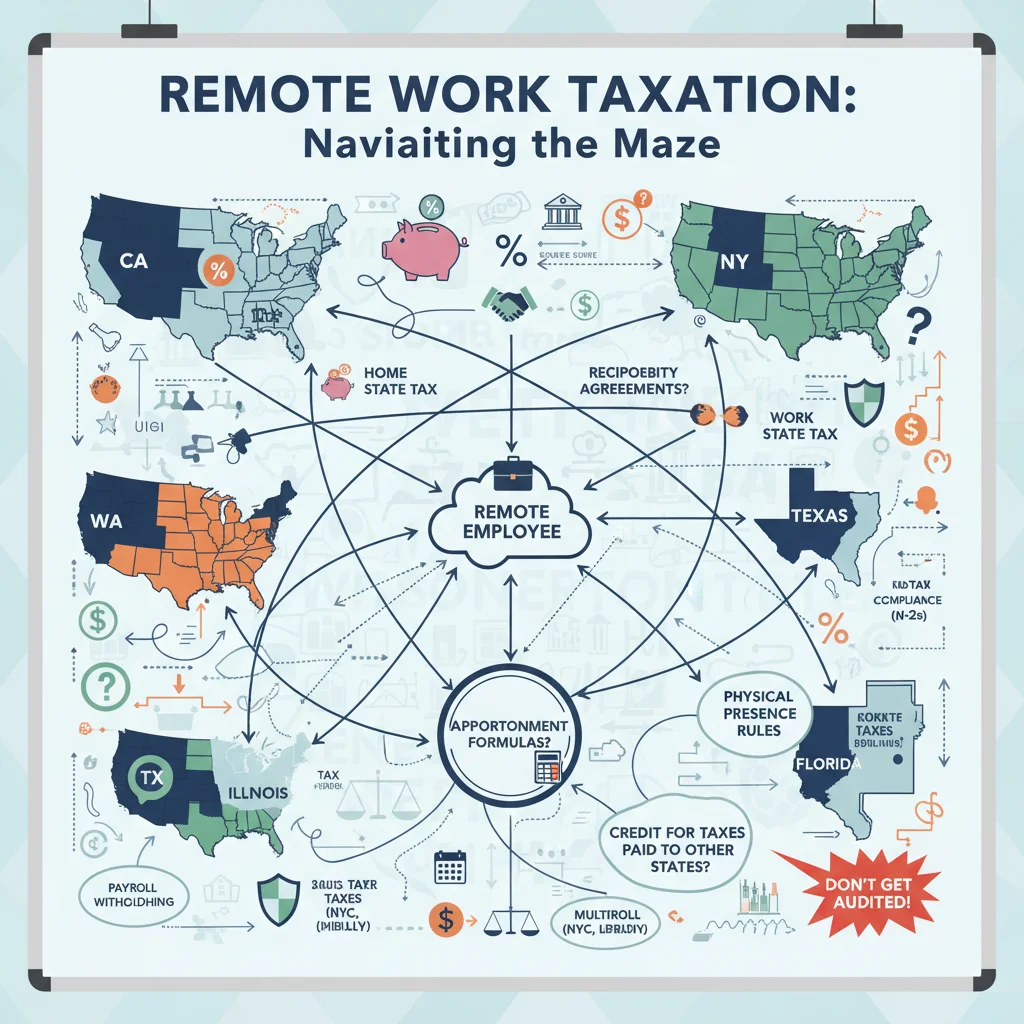
One of the most complex and rapidly evolving areas in remote work is the intricate web of tax and residency rules. When an employee works remotely from a state or even a locality different from their employer’s primary business location, it triggers a cascade of potential tax obligations for both parties. Currently, there’s no uniform federal standard, leading to a confusing and often contradictory patchwork of state and local regulations. This lack of clarity has resulted in significant administrative burdens for companies, compliance risks, and unexpected tax liabilities for employees.
Recent Updates and Legislative Discussions
As of late 2023 and early 2024, several states have begun to introduce or refine legislation aimed at clarifying tax nexus for remote workers. Some states are moving towards a ‘days-present’ rule, where an employer may establish tax nexus, and thus tax obligations, if an employee spends a certain number of days working within that state, even if they reside elsewhere. Conversely, other states are exploring ‘convenience of the employer’ rules, which could dictate that if an employee works remotely for their own convenience (rather than employer necessity), their income remains taxable in the employer’s state.
Federal discussions have also surfaced regarding the possibility of a national framework, or at least standardized guidelines, to simplify interstate remote work taxation. While a comprehensive federal solution for remote work policies 2026 might be some years away, the pressure from businesses and employees is mounting, pushing for greater consistency.
Practical Solutions for Companies and Employees
For Companies:
- Conduct a Tax Nexus Audit: Regularly assess where your remote employees are physically located and understand the tax implications (income tax, payroll tax, unemployment insurance, workers’ compensation) in each jurisdiction. Tools and consultants specializing in multi-state tax compliance can be invaluable.
- Establish Clear Remote Work Agreements: Explicitly define the employee’s official work location, whether it’s their home state or the company’s primary state, and outline responsibilities for tax compliance.
- Implement Robust Payroll Systems: Ensure your payroll system can handle multi-state tax withholdings and reporting requirements. This may involve upgrading existing software or partnering with a specialized payroll provider.
- Communicate Proactively with Employees: Educate employees about their potential tax liabilities, especially if they choose to work from a different state temporarily or permanently. Advise them to consult with tax professionals.
- Monitor Legislative Changes: Assign a dedicated team or individual (e.g., HR, Legal, Finance) to stay abreast of evolving state and federal tax laws related to remote work.
For Employees:
- Understand Your Tax Residency: Know where you are considered a tax resident and how that impacts your state income tax obligations.
- Track Your Work Location: Keep meticulous records of where you physically perform your work, especially if you move between states or travel frequently.
- Consult a Tax Professional: Seek advice from a tax expert specializing in multi-state taxation to understand your personal liabilities and ensure proper filing.
- Review Employer Policies: Familiarize yourself with your company’s remote work tax policies and agreements.
Navigating these tax complexities will be a cornerstone of successful remote work policies 2026.
2. Enhanced Cybersecurity and Data Privacy Regulations
The Challenge: Securing Distributed Workforces
The shift to remote work significantly expanded companies’ digital attack surface. Employees accessing sensitive data from home networks, using personal devices, and relying on cloud-based collaboration tools introduced new vulnerabilities that traditional perimeter-based security models were ill-equipped to handle. Data breaches, ransomware attacks, and insider threats have surged, prompting governments and regulatory bodies to demand more robust cybersecurity and data privacy measures for distributed workforces.
Recent Updates and Legislative Discussions
Expect to see a strengthening of existing data privacy laws like CCPA (California Consumer Privacy Act) and upcoming state-level equivalents (e.g., Virginia’s CDPA, Colorado’s CPA), which will likely extend their reach to how employee data is handled in remote settings. Furthermore, federal agencies like NIST (National Institute of Standards and Technology) are continually updating their cybersecurity frameworks, which, while often voluntary, are increasingly becoming de facto standards for organizations handling sensitive information, especially those contracting with the government. There’s also growing discussion around sector-specific regulations (e.g., healthcare, finance) to mandate specific security protocols for remote access and data handling.
By 2026, many of these guidelines are expected to transition into stricter, enforceable regulations, particularly for industries handling personally identifiable information (PII) or critical infrastructure data. The focus will be on end-to-end encryption, multi-factor authentication (MFA), secure access service edge (SASE) solutions, and mandatory employee training.
Practical Solutions for Companies and Employees
For Companies:
- Zero-Trust Architecture: Implement a zero-trust security model, where no user or device is inherently trusted, regardless of their location on the network.
- Mandatory MFA: Enforce multi-factor authentication for all corporate applications and systems.
- Endpoint Security: Deploy advanced endpoint detection and response (EDR) solutions on all company-issued devices.
- Secure Access Service Edge (SASE): Consider SASE solutions that combine network security functions (like VPN, firewall as a service) with WAN capabilities, optimizing security and performance for remote users.
- Regular Security Audits and Penetration Testing: Conduct frequent assessments of your remote infrastructure to identify and remediate vulnerabilities.
- Comprehensive Employee Training: Provide mandatory and recurring cybersecurity training for all remote employees, covering topics like phishing awareness, secure password practices, and reporting suspicious activities.
- Data Governance Policies: Develop clear policies for data handling, storage, and access, especially for sensitive information, and ensure compliance with relevant privacy regulations.
The proactive adoption of robust security measures will be a non-negotiable aspect of future remote work policies 2026.
For Employees:
- Use Company-Issued Devices: Whenever possible, use devices provided by your employer, as they are typically configured with necessary security measures.
- Strong, Unique Passwords: Practice good password hygiene, using strong, unique passwords for all work-related accounts and enabling MFA.
- Secure Home Networks: Ensure your home Wi-Fi network is secured with a strong password and encrypted (WPA2/WPA3).
- Be Vigilant: Be cautious of suspicious emails, links, or unsolicited requests for information. Report any potential security incidents immediately to IT.
- Adhere to Company Policies: Follow all corporate cybersecurity and data privacy guidelines meticulously.
3. Clarified Employee Classification and Labor Law Compliance
The Challenge: Worker Status and Jurisdictional Ambiguity
Another significant area ripe for reform relates to employee classification and labor law compliance. The gig economy’s rise, coupled with remote work, has blurred the lines between employees, independent contractors, and contingent workers. Misclassification can lead to severe penalties for companies, including back wages, benefits, and tax liabilities. Furthermore, determining which state’s labor laws apply to a remote employee (e.g., minimum wage, overtime, leave policies) when they reside in one state but work for a company based in another remains a complex legal challenge.
Recent Updates and Legislative Discussions
The Department of Labor (DOL) has signaled a renewed focus on employee misclassification, particularly under the Biden administration. New interpretations and guidance are expected to lean towards classifying more workers as employees rather than independent contractors, offering them greater protections and benefits. States like California (with AB5) have already enacted strict laws regarding independent contractor classification, and other states are considering similar legislation. These efforts aim to prevent companies from circumventing labor laws by mislabeling workers.
Regarding jurisdictional ambiguity, courts and legislatures are increasingly grappling with ‘choice of law’ principles. While some states default to the employee’s state of residence for labor law applicability, others might consider the employer’s state or even the location where the ‘predominant’ work occurs. By 2026, we anticipate more definitive guidance, possibly through interstate compacts or federal intervention, to create a more predictable legal environment for remote work policies 2026.
Practical Solutions for Companies and Employees
For Companies:
- Review Classification Regularly: Conduct regular audits of all independent contractors to ensure they meet the legal criteria for that classification in all relevant jurisdictions. Err on the side of caution; if there’s ambiguity, classify as an employee.
- Standardize Remote Work Agreements: Clearly define employment terms, conditions, and applicable state labor laws within remote work agreements. Seek legal counsel to ensure these agreements are robust and compliant.
- Understand State-Specific Labor Laws: Train HR and management teams on the specific labor laws (minimum wage, overtime, paid sick leave, family leave, non-compete clauses) of every state where you have remote employees.
- Update HR Policies: Revise employee handbooks and HR policies to explicitly address remote work scenarios, ensuring they align with all applicable federal, state, and local regulations.
- Consider Professional Employer Organizations (PEOs): For companies with a highly distributed workforce across many states, partnering with a PEO can offload compliance burdens related to payroll, taxes, and HR.
For Employees:
- Know Your Classification: Understand whether you are classified as an employee or an independent contractor and the implications for benefits, taxes, and legal protections.
- Familiarize Yourself with State Labor Laws: Know your rights and entitlements under the labor laws of your state of residence.
- Document Work Arrangements: Keep clear records of your employment agreement, job duties, and hours worked.
- Seek Legal Advice if Unsure: If you believe you are misclassified or have questions about your rights, consult with an employment law attorney.
Clear classification and compliance will be vital for ethical and legal remote work policies 2026.
4. Emphasis on Employee Well-being, Mental Health, and Ergonomics
The Challenge: The Human Cost of Remote Work
While remote work offers flexibility, it also brings challenges such as blurred work-life boundaries, social isolation, increased screen time, and ergonomic issues. These factors can significantly impact employee mental health, physical well-being, and overall productivity. Historically, employer responsibilities in these areas were often less defined for remote settings, but this is rapidly changing as the long-term effects of remote work become more apparent.
Recent Updates and Legislative Discussions
There’s a growing recognition among policymakers and employers that mental health and ergonomic support are not just ‘nice-to-haves’ but essential components of a healthy and productive workforce, regardless of location. Some states are beginning to explore legislation that would mandate employers provide specific support for remote employees’ well-being, such as stipends for ergonomic home office setups, access to mental health resources, or ‘right to disconnect’ policies that limit after-hours communications. OSHA (Occupational Safety and Health Administration) is also expected to issue more explicit guidance on ergonomic standards for home offices, potentially leading to inspectable requirements.
Furthermore, the focus is shifting from simply providing benefits to actively fostering a culture of well-being. This includes training managers to identify signs of burnout in remote teams, promoting flexible schedules, and encouraging digital detoxes. These initiatives will likely become integrated into standard employment practices and, in some cases, legally mandated by 2026, shaping remote work policies 2026 significantly.
Practical Solutions for Companies and Employees
For Companies:
- Ergonomic Assessments and Stipends: Offer remote employees ergonomic assessments of their home workstations and provide stipends for purchasing essential ergonomic equipment (e.g., adjustable desks, ergonomic chairs, external monitors).
- Mental Health Support Programs: Expand access to mental health resources, including employee assistance programs (EAPs), virtual counseling services, and mental health first aid training for managers.
- ‘Right to Disconnect’ Policies: Implement policies that encourage employees to disconnect outside of work hours, respecting personal time and preventing burnout. This could involve guidelines on email response times and meeting scheduling.
- Promote Work-Life Balance: Encourage flexible work schedules, offer unlimited PTO where feasible, and foster a culture that values breaks and personal time.
- Manager Training: Train managers on how to effectively lead remote teams, identify signs of stress or burnout, and foster a supportive and inclusive remote work environment.
- Regular Check-ins and Feedback: Establish regular, informal check-ins with remote employees to gauge their well-being and solicit feedback on remote work challenges.

Prioritizing employee well-being will not only be a compliance requirement but a strategic advantage for remote work policies 2026.
For Employees:
- Set Boundaries: Establish clear boundaries between work and personal life. Create a dedicated workspace, stick to a routine, and disconnect at the end of the workday.
- Utilize Employer Resources: Take advantage of any ergonomic assessments, mental health support programs, or well-being initiatives offered by your company.
- Communicate Needs: Don’t hesitate to communicate your needs regarding workload, schedule flexibility, or ergonomic concerns to your manager.
- Prioritize Self-Care: Schedule regular breaks, engage in physical activity, maintain social connections, and practice mindfulness to manage stress.
- Invest in Your Workspace: If financially feasible and not covered by your employer, invest in a comfortable and ergonomic home office setup.
The Broader Implications and Strategic Adjustments for 2026
Beyond these four specific policy changes, the overarching trend is a move towards greater formalization and regulation of remote work. The ‘wild west’ days of makeshift remote setups are fading, replaced by an increasingly structured environment designed to protect all stakeholders. This shift has several broader implications for how businesses operate and how individuals approach their careers.
Strategic Adjustments for US Companies
Companies must move beyond reactive measures and adopt a proactive, strategic approach to their remote work policies 2026. This includes:
- Developing a Comprehensive Remote Work Strategy: This strategy should integrate HR, legal, IT, finance, and operations, ensuring a cohesive approach to remote work that aligns with business objectives and regulatory requirements.
- Investing in Technology and Infrastructure: Beyond basic connectivity, investment in advanced collaboration tools, secure cloud infrastructure, robust cybersecurity solutions, and AI-powered HR platforms will be crucial.
- Fostering a Culture of Trust and Flexibility: Companies that empower employees with autonomy and trust, while providing necessary support, will thrive. Flexibility will remain a key differentiator in attracting and retaining talent.
- Revisiting Real Estate Strategies: As remote work becomes permanent, companies will continue to re-evaluate their physical office footprint, potentially downsizing or reconfiguring spaces for hybrid models.
- Global Remote Work Considerations: For companies considering international remote employees, the complexities multiply. Understanding international tax treaties, labor laws, and immigration regulations will be paramount.
- Continuous Training and Development: Both employees and managers will require ongoing training in digital literacy, remote collaboration best practices, cybersecurity awareness, and empathetic leadership.
Strategic Adjustments for US Employees
Employees also need to adapt and take ownership of their remote work experience:
- Upskilling in Digital Tools: Proficiency in collaboration platforms, project management software, and digital communication tools will be essential.
- Self-Management and Discipline: The ability to manage one’s time effectively, maintain focus, and communicate proactively will be highly valued.
- Prioritizing Well-being: Employees must actively manage their work-life balance, seek support when needed, and advocate for healthy remote work practices.
- Understanding Rights and Responsibilities: Being aware of their rights regarding labor laws, benefits, and data privacy in a remote context is crucial.
- Networking and Community Building: Actively engaging in virtual team activities and professional networks to counteract potential isolation and foster career growth.
Conclusion: Embracing the Regulated Evolution of Remote Work
The year 2026 marks a significant inflection point for remote work in the United States. The era of improvisational remote setups is giving way to a more regulated, structured, and intentional approach. The four key policy changes discussed – evolving tax and residency rules, enhanced cybersecurity regulations, clarified employee classification, and a greater emphasis on employee well-being – are not just isolated adjustments. They represent a fundamental reshaping of the employer-employee relationship in a distributed environment.
For US companies, proactive engagement with these changes is not merely about avoiding penalties; it’s about building resilient, compliant, and attractive workplaces for the future. Those who strategically adapt their remote work policies 2026 will be better positioned to attract top talent, reduce operational risks, and foster a productive, engaged workforce. This requires cross-functional collaboration, investment in appropriate technologies and expertise, and a commitment to continuous learning and adaptation.
For employees, understanding these shifts empowers them to advocate for their rights, manage their careers effectively, and ensure their well-being in a remote context. The future of work is undeniably remote-friendly, but it’s also increasingly regulated. By embracing these forthcoming policy changes, both companies and employees can navigate the evolving landscape successfully, ensuring that remote work remains a powerful force for flexibility, productivity, and innovation in the years to come.