Navigating the 2026 AI Act: Compliance Strategies for US Startups

The landscape of artificial intelligence is evolving at an unprecedented pace, bringing with it not only groundbreaking innovations but also a complex web of ethical, legal, and societal considerations. As AI becomes increasingly integrated into every facet of our lives, governments worldwide are scrambling to establish regulatory frameworks that can keep pace with technological advancements. The European Union’s AI Act, set to fully apply in 2026, stands as a landmark piece of legislation, poised to significantly impact not only EU-based companies but also US startups operating or offering services within the EU. Understanding the nuances of this regulation and developing robust AI Act Compliance Startups strategies is no longer optional; it’s a critical imperative for survival and sustained growth.
For US startups, the 2026 AI Act presents a unique set of challenges and opportunities. While the Act is an EU regulation, its extraterritorial reach means that any US company developing, deploying, or providing AI systems whose output affects individuals within the EU will likely fall under its purview. This includes a broad spectrum of AI applications, from high-risk systems used in critical infrastructure to general-purpose AI models. The penalties for non-compliance are substantial, ranging into millions of euros or a significant percentage of global annual turnover, making proactive compliance a top strategic priority.
This comprehensive guide will delve into the critical aspects of the 2026 AI Act relevant to US startups. We will explore the key provisions, identify the potential pitfalls, and, most importantly, outline five essential compliance strategies. Our goal is to equip you with the knowledge and actionable insights needed to navigate this complex regulatory environment, mitigate risks, and ultimately, foster responsible and ethical AI innovation. By understanding and implementing these strategies, US startups can transform a potential regulatory burden into a competitive advantage, building trust with consumers and stakeholders alike.
Understanding the EU AI Act: What US Startups Need to Know
Before diving into compliance strategies, it’s crucial to grasp the fundamental principles and scope of the EU AI Act. This regulation adopts a risk-based approach, categorizing AI systems based on their potential to cause harm. The higher the risk an AI system poses, the stricter the requirements placed upon it. This tiered approach is designed to foster innovation while safeguarding fundamental rights and safety.
Key Concepts and Definitions
- Artificial Intelligence System: The Act provides a broad definition, encompassing software that operates with varying levels of autonomy and can, for explicit or implicit objectives, generate outputs such as predictions, recommendations, or decisions influencing physical or virtual environments. This broad scope means many US startup AI products will likely be covered.
- Risk Categories: The Act classifies AI systems into four main categories: unacceptable risk, high-risk, limited risk, and minimal risk.
- Unacceptable Risk: These systems are outright banned due to their clear threat to fundamental rights, such as social scoring by governments or manipulative AI.
- High-Risk: This is where most US startups will face the most stringent requirements. High-risk AI systems include those used in critical infrastructure, education, employment, law enforcement, migration, and democratic processes. Examples include AI used for credit scoring, hiring processes, or medical device diagnostics.
- Limited Risk: AI systems with specific transparency obligations, such as chatbots or deepfakes, where users need to be aware they are interacting with AI or synthetic content.
- Minimal Risk: The vast majority of AI systems, such as spam filters or video games, fall into this category and are subject to very light or no specific requirements, though voluntary codes of conduct are encouraged.
- Providers and Deployers: The Act distinguishes between ‘providers’ (those who develop or place an AI system on the market) and ‘deployers’ (those who use an AI system in their professional activities). US startups could be either or both, depending on their business model.
Extraterritorial Reach: Why it Matters for US Startups
The EU AI Act’s extraterritorial effect is a primary concern for US startups. Article 2 of the Act states that it applies to:
- Providers placing on the market or putting into service AI systems in the Union, irrespective of whether those providers are established in the Union or in a third country.
- Deployers of AI systems located in the Union.
- Providers and deployers of AI systems located in a third country where the output produced by the system is used in the Union.
This means if your US-based startup develops an AI product that is sold to an EU customer, or if your AI service processes data from EU citizens, or if its output is used within the EU, you are likely subject to the AI Act. This broad reach necessitates a global perspective on compliance, even for companies primarily focused on the US market.
Penalties for Non-Compliance
The financial implications of non-compliance are severe. Depending on the violation, penalties can reach up to €35 million or 7% of a company’s worldwide annual turnover for the preceding financial year, whichever is higher. For smaller startups, such penalties could be catastrophic, underscoring the urgency of developing robust AI Act Compliance Startups strategies.
Strategy 1: Conduct a Comprehensive AI System Inventory and Risk Assessment
The first and most fundamental step for any US startup is to gain a clear understanding of its current AI landscape. This involves identifying all AI systems in operation, under development, or planned for future release, and then assessing their potential risk level under the AI Act.
Detailed Inventory of AI Systems
Create a detailed register of every AI system your startup uses or provides. For each system, document:
- Purpose and Functionality: What does the AI system do? What are its intended applications?
- Data Sources: What data does the AI system use for training and operation? Is it personal data, sensitive data, or publicly available data?
- Deployment Context: Where and how is the AI system deployed? Who are the users? Are there any EU users or data subjects involved?
- Lifecycle Stage: Is it in research and development, testing, or production?
- Key Stakeholders: Identify the internal teams responsible for development, deployment, and oversight of each AI system.
Risk Categorization and Assessment
Once you have your inventory, the next step is to categorize each AI system according to the AI Act’s risk framework. This will primarily involve determining if an AI system falls into the ‘high-risk’ category. For high-risk systems, a more in-depth assessment is required:
- Identify Potential Harms: Evaluate the potential negative impacts on fundamental rights (e.g., privacy, non-discrimination, safety) that the AI system could cause. Consider both intended and unintended consequences.
- Likelihood and Severity: Assess the probability of these harms occurring and the severity of their impact.
- Contextual Factors: Consider the specific domain (e.g., healthcare, finance), the characteristics of the users, and the environment in which the AI system operates.
- Due Diligence: For high-risk systems, conduct a thorough analysis against the specific requirements outlined in Article 10 of the AI Act, which covers data governance, technical documentation, record-keeping, transparency, human oversight, accuracy, robustness, and cybersecurity.
This initial assessment will provide a roadmap, highlighting which AI systems require the most immediate attention and resource allocation for compliance. It’s a dynamic process that should be revisited regularly as AI systems evolve and new ones are introduced.
Strategy 2: Implement Robust Data Governance and Quality Management Systems
Data is the lifeblood of AI, and the quality, integrity, and ethical handling of that data are paramount under the AI Act. High-risk AI systems, in particular, face stringent requirements concerning data governance. US startups must establish comprehensive data governance and quality management systems to ensure compliance and build trustworthy AI.
Data Governance Framework
A robust data governance framework should include:
- Data Sourcing and Collection: Ensure data is collected lawfully and ethically, with appropriate consent mechanisms (especially for personal data, aligning with GDPR). Document the provenance of all data used for training and testing.
- Data Preparation and Annotation: Implement processes to ensure data is relevant, representative, and free from biases that could lead to discriminatory or unfair outcomes. Document the methodologies used for data cleaning, labeling, and feature engineering.
- Data Storage and Security: Adhere to best practices for data storage, including encryption, access controls, and regular security audits, to protect against breaches and unauthorized access.
- Data Retention and Deletion: Define clear policies for how long data is retained and when it is securely deleted, in line with legal and ethical obligations.
Quality Management Systems (QMS)
The AI Act mandates that providers of high-risk AI systems establish a QMS. This means implementing a structured system that covers the entire lifecycle of the AI system, from design and development to deployment and post-market monitoring. Key elements of a QMS for AI include:
- Documentation: Maintain comprehensive technical documentation for all high-risk AI systems. This includes detailed descriptions of the system’s general logic, algorithms, training data, testing procedures, and risk management systems.
- Testing and Validation: Conduct rigorous testing, including stress testing, adversarial testing, and real-world scenario testing, to ensure the AI system performs as intended, is robust against errors, and is resilient to potential attacks. Document all testing results.
- Bias Detection and Mitigation: Actively work to identify and mitigate algorithmic bias in training data and model outputs. This requires ongoing monitoring and evaluation.
- Traceability and Explainability: Ensure that the AI system’s decisions and outputs can be traced and, where appropriate, explained to human operators and affected individuals. This often involves developing interpretable AI models.
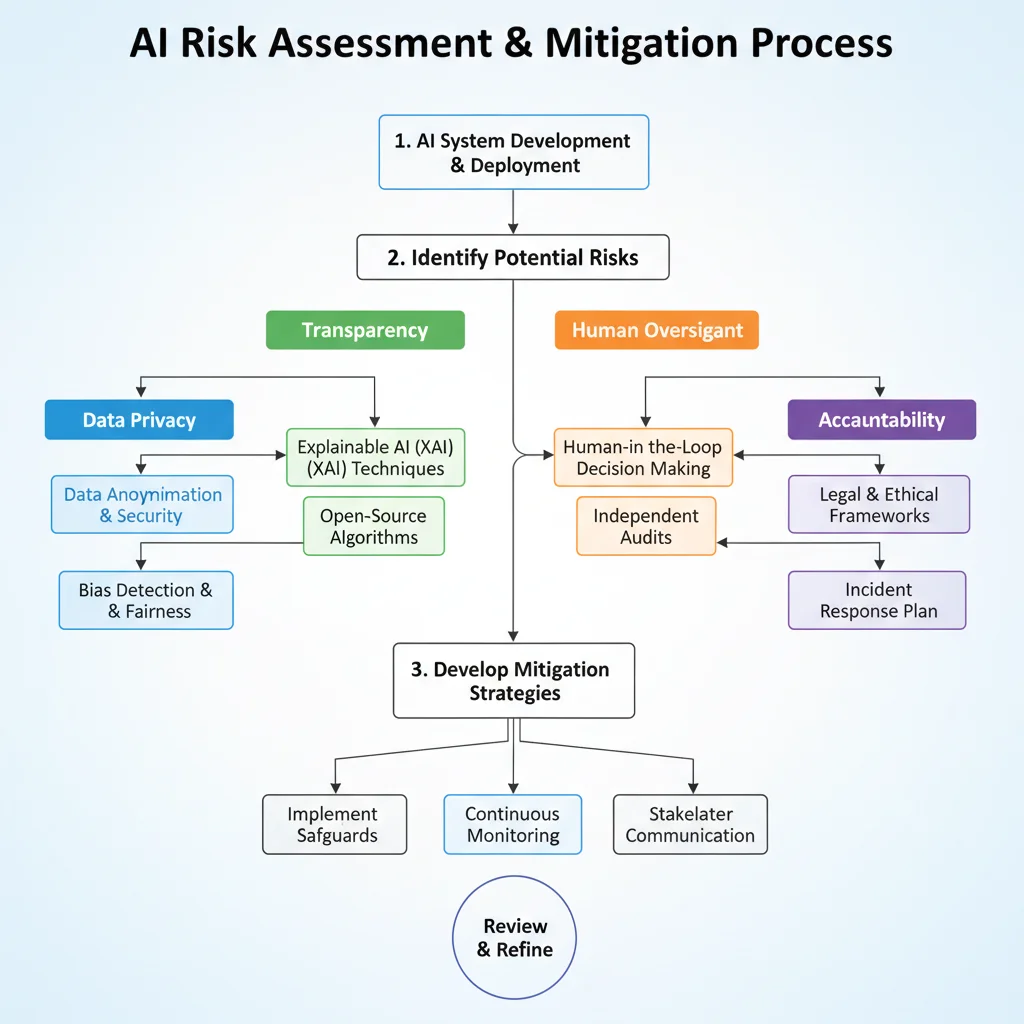
Strategy 3: Prioritize Transparency, Explainability, and Human Oversight
Transparency, explainability, and human oversight are core pillars of the AI Act, particularly for high-risk systems. US startups must embed these principles into their AI development and deployment processes to build trust and demonstrate accountability.
Transparency Requirements
The AI Act requires a high degree of transparency for high-risk AI systems. This includes:
- Clear Information for Users: Users of high-risk AI systems must be provided with clear, comprehensive, and understandable information regarding the system’s capabilities, limitations, and intended purpose. This includes details on how the system works, its accuracy, and any known risks.
- Technical Documentation: As mentioned, providers must maintain extensive technical documentation that allows authorities to assess the system’s compliance with the Act. This documentation needs to be kept up-to-date throughout the AI system’s lifecycle.
- Logging Capabilities: High-risk AI systems must be designed to automatically record events (‘logging capabilities’) throughout their operation. These logs are crucial for monitoring performance, identifying anomalies, and facilitating post-market surveillance.
Explainability of AI Decisions
For high-risk AI systems that make decisions affecting individuals, the ability to explain those decisions is critical. While not every AI system needs to be fully ‘interpretable’ in a human-like way, startups must strive for a level of explainability that allows:
- Affected individuals to understand the rationale behind a decision: This enables individuals to challenge decisions or seek recourse if they believe an AI system has made an unfair or inaccurate judgment.
- Human oversight functions to effectively monitor and intervene: Operators need to understand how the AI system arrived at a particular output to make informed decisions about overriding or correcting it.
This often involves employing explainable AI (XAI) techniques, such as SHAP values, LIME, or feature importance analysis, to provide insights into model behavior.
Meaningful Human Oversight
The AI Act mandates meaningful human oversight for high-risk AI systems. This is not about humans simply rubber-stamping AI decisions, but rather ensuring that humans can effectively:
- Intervene and override AI decisions: Human operators must have the technical means and authority to prevent, correct, or stop the AI system from causing harm.
- Monitor the AI system’s performance: Humans should be able to understand the AI system’s capabilities and limitations, and monitor its operation for anomalies or unexpected behavior.
- Interpret the AI system’s outputs: Operators must be able to comprehend the information provided by the AI system and use it to make informed decisions.
Implementing effective human oversight requires careful design of human-AI interfaces, clear protocols for intervention, and adequate training for human operators. This is a crucial element for AI Act Compliance Startups to get right.
Strategy 4: Establish a Robust Post-Market Monitoring and Incident Reporting System
Compliance with the AI Act doesn’t end once an AI system is deployed. The Act places significant emphasis on post-market monitoring, requiring providers of high-risk AI systems to continuously monitor their performance, identify potential risks, and report serious incidents.
Continuous Monitoring and Evaluation
US startups must implement systems and processes for ongoing monitoring of their high-risk AI systems once they are in operation. This includes:
- Performance Drift Detection: Continuously monitor the AI system’s performance metrics to detect any degradation or ‘drift’ over time, which could indicate issues with data quality, changing environments, or model decay.
- Bias Monitoring: Implement automated and manual processes to detect and address emerging biases in real-world deployment, especially those related to protected characteristics.
- Security Vulnerability Scanning: Regularly scan for and address cybersecurity vulnerabilities that could compromise the AI system’s integrity or lead to misuse.
- User Feedback Mechanisms: Establish channels for users and affected individuals to provide feedback on the AI system’s performance and any negative impacts they experience.
Incident Reporting and Corrective Actions
The AI Act requires providers of high-risk AI systems to establish a system for recording and reporting serious incidents or malfunctions that lead to harm or a significant risk of harm. This involves:
- Defining ‘Serious Incident’: Clearly define what constitutes a serious incident based on the AI Act’s criteria.
- Internal Reporting Procedures: Establish clear internal procedures for employees to report potential incidents promptly.
- Reporting to Authorities: Develop protocols for reporting serious incidents to the relevant national supervisory authorities in the EU without undue delay after becoming aware of them. This typically involves submitting detailed reports outlining the incident, its root cause, and the corrective actions taken.
- Corrective and Preventive Actions (CAPA): Implement a robust CAPA system to address identified issues, prevent recurrence, and continuously improve the AI system’s safety and performance.
Proactive post-market monitoring and a well-defined incident reporting system are vital for demonstrating ongoing compliance and quickly addressing any issues that arise, thereby minimizing potential penalties.

Strategy 5: Appoint a Dedicated AI Compliance Officer and Foster a Culture of Ethical AI
Ultimately, successful AI Act Compliance Startups hinges on establishing clear internal responsibilities and fostering a company-wide culture that prioritizes ethical AI development and deployment. This often involves appointing a dedicated individual or team and providing comprehensive training.
Appoint an AI Compliance Officer or Team
For US startups operating high-risk AI systems within the EU’s scope, it is highly advisable to appoint a dedicated AI Compliance Officer or establish a small compliance team. This individual or group would be responsible for:
- Overseeing Compliance Efforts: Coordinating all activities related to AI Act compliance across different departments (legal, engineering, product, data science).
- Staying Updated: Monitoring changes and interpretations of the AI Act and related regulations.
- Risk Management: Leading the AI system inventory and risk assessment processes.
- Documentation and Reporting: Ensuring all required documentation is maintained and incident reporting is handled appropriately.
- Training and Awareness: Educating employees on their responsibilities regarding AI Act compliance.
This role may initially be combined with existing legal or data protection roles, but as the startup grows and its AI portfolio expands, a dedicated focus will become increasingly necessary.
Foster a Culture of Ethical AI
Compliance is not just about checking boxes; it’s about embedding ethical considerations into the very fabric of your startup’s AI development lifecycle. This involves:
- Leadership Buy-in: Gaining strong commitment from leadership to prioritize ethical AI and compliance, allocating necessary resources.
- Employee Training: Providing regular training for all employees involved in AI development, deployment, and management on the principles of the AI Act, ethical AI guidelines, and internal compliance procedures.
- Ethical AI Principles: Developing and publicly articulating your startup’s ethical AI principles and integrating them into product design and decision-making processes.
- Cross-Functional Collaboration: Encouraging collaboration between technical teams, legal teams, and product managers to ensure that compliance is considered from the initial design phase (‘AI by Design’).
- Whistleblower Protections: Establishing clear channels for internal reporting of ethical concerns or potential non-compliance, with assurances of protection against retaliation.
By fostering a strong culture of ethical AI, US startups can move beyond mere compliance to become leaders in responsible AI innovation, building trust with their users and differentiating themselves in a competitive market.
The Broader Implications: Beyond the EU AI Act
While the focus of this article is on the EU AI Act, it’s important for US startups to recognize that this is just one piece of a rapidly evolving global regulatory puzzle. Other jurisdictions, including the United States itself, are also exploring or implementing AI regulations. For instance, the US has issued an Executive Order on AI, and individual states are considering their own frameworks. Key themes emerging globally include:
- Data Privacy: The intersection of AI and data privacy, particularly with regulations like GDPR and CCPA, remains a critical area.
- Algorithmic Bias and Discrimination: Preventing unfair or discriminatory outcomes from AI systems is a universal concern.
- Transparency and Explainability: The demand for understanding how AI systems make decisions is growing.
- Safety and Accountability: Ensuring AI systems are safe and that there are clear lines of accountability when things go wrong.
By building robust AI Act Compliance Startups strategies that address these core principles, US startups will be better positioned to adapt to future regulations, regardless of their origin. A proactive, principles-based approach to AI governance will serve as a strong foundation for navigating the complex regulatory landscape ahead.
Conclusion: Embracing Responsible AI for Future Success
The 2026 AI Act represents a significant milestone in the regulation of artificial intelligence, and its impact on US startups cannot be overstated. While the prospect of navigating complex international regulations can seem daunting, viewing compliance as an opportunity rather than merely a burden is crucial. By proactively implementing the five strategies outlined in this guide – conducting comprehensive risk assessments, establishing robust data governance, prioritizing transparency and human oversight, setting up effective post-market monitoring, and fostering a culture of ethical AI – US startups can not only avoid substantial penalties but also build more trustworthy, resilient, and ethically sound AI products and services.
The future of AI innovation will undoubtedly be shaped by trust. Companies that demonstrate a genuine commitment to responsible AI development and stringent compliance will gain a significant competitive advantage. They will be better positioned to attract talent, secure investment, and build lasting relationships with customers and partners. For US startups aiming for global reach and long-term success, investing in AI Act Compliance Startups strategies now is an investment in their future. Embrace this challenge, integrate these principles into your core operations, and position your startup at the forefront of responsible AI innovation.