AI’s Societal Impact: 5 Ethical Considerations for the US

Artificial intelligence (AI) is no longer a futuristic concept confined to science fiction; it is a pervasive force transforming every facet of modern life. From automating mundane tasks to powering groundbreaking scientific discoveries, AI’s influence is undeniable and rapidly expanding. In the United States, the integration of AI into critical sectors such as healthcare, finance, defense, and daily commerce is accelerating at an unprecedented pace. This rapid deployment, while promising immense benefits, simultaneously introduces a complex web of ethical dilemmas that demand immediate and thoughtful attention. The stakes are incredibly high, as the decisions made today regarding AI governance and ethical frameworks will profoundly shape the future of American society for generations to come.
The urgency of addressing these ethical considerations cannot be overstated. The next 12 months represent a critical window for the US to proactively establish robust policies, foster public discourse, and develop responsible AI practices. Failing to do so risks exacerbating existing societal inequalities, eroding public trust, and potentially undermining democratic institutions. This article will delve into five paramount ethical considerations concerning AI ethical US society faces, offering a comprehensive analysis of their implications and suggesting pathways for responsible development and integration.
1. Bias and Fairness in AI Algorithms
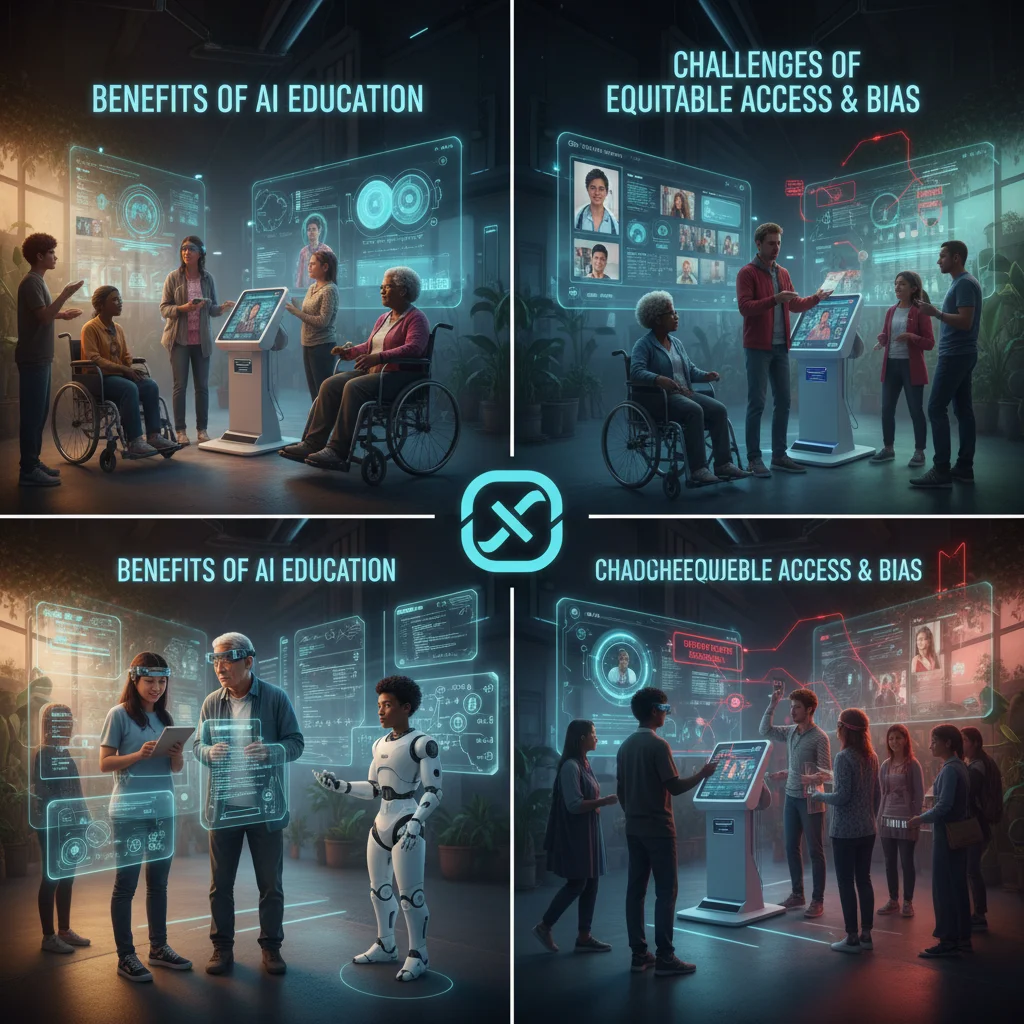
One of the most pressing ethical challenges in AI is the pervasive issue of bias and its direct impact on fairness. AI systems learn from vast datasets, and if these datasets reflect historical or systemic biases present in society, the AI will inevitably perpetuate and even amplify those biases. This is particularly problematic in sensitive areas such as criminal justice, employment, loan applications, and healthcare diagnostics.
For instance, an AI system used to assess recidivism risk might disproportionately flag individuals from certain demographic groups if its training data contains historical policing biases. Similarly, AI-powered hiring tools could inadvertently discriminate against female candidates or minority groups if their algorithms are trained on data from male-dominated industries or past hiring practices that favored specific demographics. The consequences of such biased AI decisions are not merely theoretical; they have tangible, life-altering effects on individuals, leading to denied opportunities, unjust sentences, and unequal access to essential services. The impact of AI ethical US frameworks must address this head-on.
The root causes of AI bias are multifaceted. They can stem from unrepresentative training data, flawed feature selection, or even the inherent assumptions embedded in algorithmic design. Addressing this requires a multi-pronged approach. Firstly, developers must prioritize diversity and representativeness in data collection and curation. This involves actively seeking out and incorporating data from underrepresented groups and meticulously auditing datasets for potential biases. Secondly, there is a growing need for explainable AI (XAI) techniques that allow humans to understand how an AI system arrived at a particular decision, rather than operating as a ‘black box.’ This transparency is crucial for identifying and rectifying biases. Thirdly, regulatory bodies and industry standards must be established to mandate regular audits of AI systems for fairness and to hold developers accountable for biased outcomes. The urgency of these measures within the next 12 months is paramount to prevent the entrenchment of discriminatory AI practices.
2. Privacy and Data Security in an AI-Driven World
The efficacy of most AI systems hinges on access to massive amounts of data. This data often includes highly personal information, ranging from health records and financial transactions to behavioral patterns and biometric identifiers. The collection, storage, and processing of such sensitive data raise profound privacy and data security concerns. As AI becomes more sophisticated, its ability to infer highly personal details about individuals, even from seemingly innocuous data points, increases exponentially. This makes the question of AI ethical US data practices critically important.
The potential for misuse or breaches of this data is immense. A data breach involving an AI system could expose not only personal identifiers but also predictive models about an individual’s health risks, financial stability, or even political leanings. Furthermore, the aggregation of data by different AI systems could create a comprehensive digital profile of every citizen, raising fears of pervasive surveillance and the erosion of individual autonomy. The recent past has shown numerous examples of data breaches and the subsequent damage to individuals and institutions, underscoring the need for robust preventative measures.
To mitigate these risks, the US needs to strengthen its data protection regulations significantly. This includes establishing clear guidelines for data collection, consent, anonymization, and deletion. Implementing privacy-enhancing technologies (PETs) such as differential privacy and federated learning can allow AI models to be trained without directly accessing raw personal data. Furthermore, robust cybersecurity measures are essential to protect AI systems and their underlying data from malicious attacks. The development of a national AI privacy framework, potentially modeled on GDPR but tailored to the US context, is a critical step that should be prioritized within the next year. Public education on data rights and AI’s data demands is also vital to empower citizens.

3. The Future of Work and Economic Disruption
AI’s impact on the labor market is one of the most frequently discussed and deeply concerning ethical considerations. While AI promises to enhance productivity and create new job categories, it also poses a significant threat of job displacement, particularly for routine and manual tasks. Automation, driven by AI, is already transforming industries from manufacturing and logistics to customer service and even some white-collar professions. The question of how the US will adapt to this seismic shift in the workforce is a critical AI ethical US challenge.
The ethical dilemma lies in ensuring that the benefits of AI-driven economic growth are broadly shared and that vulnerable populations are not left behind. Without proactive measures, AI could exacerbate economic inequality, creating a highly skilled elite capable of working alongside AI, while a large segment of the population struggles to find meaningful employment. This could lead to social unrest, increased poverty, and a fracturing of the social fabric.
Addressing this requires a comprehensive national strategy. Investment in lifelong learning and reskilling programs is paramount, enabling workers to adapt to new job demands and transition into AI-complementary roles. This includes funding for vocational training, accessible higher education, and continuous professional development. Furthermore, policymakers must explore innovative social safety nets, such as universal basic income (UBI) or expanded unemployment benefits, to cushion the economic shock for those whose jobs are displaced. Encouraging ethical AI development that focuses on augmentation rather than pure automation, creating tools that empower human workers, is also crucial. The next 12 months should see a concerted effort to pilot and scale these programs, preparing the workforce for an AI-centric future.
4. Accountability and Responsibility for AI Actions
As AI systems become more autonomous and capable of making complex decisions, the question of accountability for their actions becomes increasingly pertinent. Who is responsible when an autonomous vehicle causes an accident, when an AI-powered medical diagnostic tool makes an error, or when an AI algorithm leads to discriminatory outcomes? This is a fundamental AI ethical US legal and philosophical challenge that current legal frameworks are ill-equipped to handle.
Current legal paradigms are largely built around human agency and intent. Attributing blame to an AI system itself is problematic, as AI lacks consciousness or moral culpability. Placing sole responsibility on the developer can also be challenging, especially for complex systems with emergent behaviors that were not explicitly programmed. The absence of clear accountability mechanisms creates a legal and ethical vacuum, potentially hindering innovation due to fear of liability, or worse, allowing harmful AI actions to go unaddressed.
To navigate this, the US needs to develop new legal and regulatory frameworks that clearly define responsibility for AI-driven outcomes. This could involve establishing tiered liability models that consider the roles of developers, deployers, and operators of AI systems. Furthermore, mechanisms for independent auditing and certification of AI systems are necessary to ensure they meet safety and ethical standards before deployment. The concept of ‘human oversight’ in AI systems, where human intervention is possible at critical decision points, also needs to be legally mandated where appropriate. Over the next year, legal scholars, policymakers, and AI experts must collaborate to draft and debate robust accountability frameworks that can stand the test of time and technological advancement.
5. National Security, Autonomous Weapons, and International Stability
The application of AI in national security and defense presents some of the most profound and potentially catastrophic ethical dilemmas. The development and deployment of autonomous weapons systems (AWS), often dubbed ‘killer robots,’ raise fundamental questions about human control over lethal force, the potential for algorithmic warfare, and the implications for international stability. This area represents a critical AI ethical US foreign policy challenge.
The ethical concerns surrounding AWS are manifold. Firstly, removing human judgment from decisions to take a life crosses a moral red line for many. The lack of human empathy or discretion in an autonomous system could lead to unintended escalation of conflicts or violations of international humanitarian law. Secondly, the proliferation of AWS could trigger an AI arms race, destabilizing global security and making conflicts more frequent and devastating. Thirdly, the technical reliability and predictability of AI in complex battlefield scenarios are still unproven, raising the specter of catastrophic errors.
The US, as a leading developer of AI technology, has a crucial role to play in shaping the global norms and regulations surrounding autonomous weapons. This involves actively participating in international discussions and advocating for treaties or agreements that establish clear boundaries on the development and use of AWS. Domestically, there is a need for robust ethical guidelines and oversight mechanisms for military AI applications, ensuring that human control and ethical considerations remain paramount. The debate around a potential ban or strict regulation of AWS is urgent and must be engaged with within the next 12 months to prevent irreversible consequences for global peace and security. Furthermore, investment in AI for humanitarian aid and disaster response should be prioritized as an ethical counterpoint to military applications.
The Path Forward: A Call to Action for Responsible AI
The ethical considerations surrounding AI in the US are complex, interconnected, and demand immediate attention. From ensuring fairness and protecting privacy to preparing the workforce and navigating the perils of autonomous weapons, each challenge requires a multi-stakeholder approach involving government, industry, academia, and civil society. The next 12 months are not just a timeframe but a critical inflection point for the US to demonstrate leadership in responsible AI ethical US development and deployment.
Proactive measures are far more effective than reactive ones. This includes:
- Establishing Clear Regulatory Frameworks: Developing comprehensive laws and policies that address data privacy, algorithmic bias, and accountability. This means moving beyond voluntary guidelines to legally binding standards.
- Investing in AI Ethics Research: Funding dedicated research into ethical AI, explainable AI, fairness metrics, and robust security protocols. This research should be interdisciplinary, incorporating insights from philosophy, social sciences, and law.
- Promoting Public Education and Engagement: Fostering a well-informed public discourse about AI’s capabilities, risks, and ethical implications. Citizens need to understand how AI impacts their lives and have a voice in its development.
- Cultivating a Culture of Ethical AI Development: Encouraging companies and developers to embed ethical considerations into every stage of the AI lifecycle, from design to deployment and maintenance. This includes ethical training for AI professionals.
- International Collaboration: Engaging with allies and international bodies to establish global norms and standards for AI, particularly in areas like autonomous weapons and data governance. A fragmented approach will only lead to greater risks.
The transformative power of AI offers unparalleled opportunities for progress, but its ethical deployment is not guaranteed. It requires conscious effort, continuous vigilance, and a shared commitment to human values. The US has the opportunity and the responsibility to lead the world in building an AI ethical US future that is beneficial, equitable, and safe for all. The time to act is now, within this crucial 12-month window, to lay the groundwork for a future where AI serves humanity’s best interests.