AI Innovations Reshaping US Healthcare: A 2026 Outlook
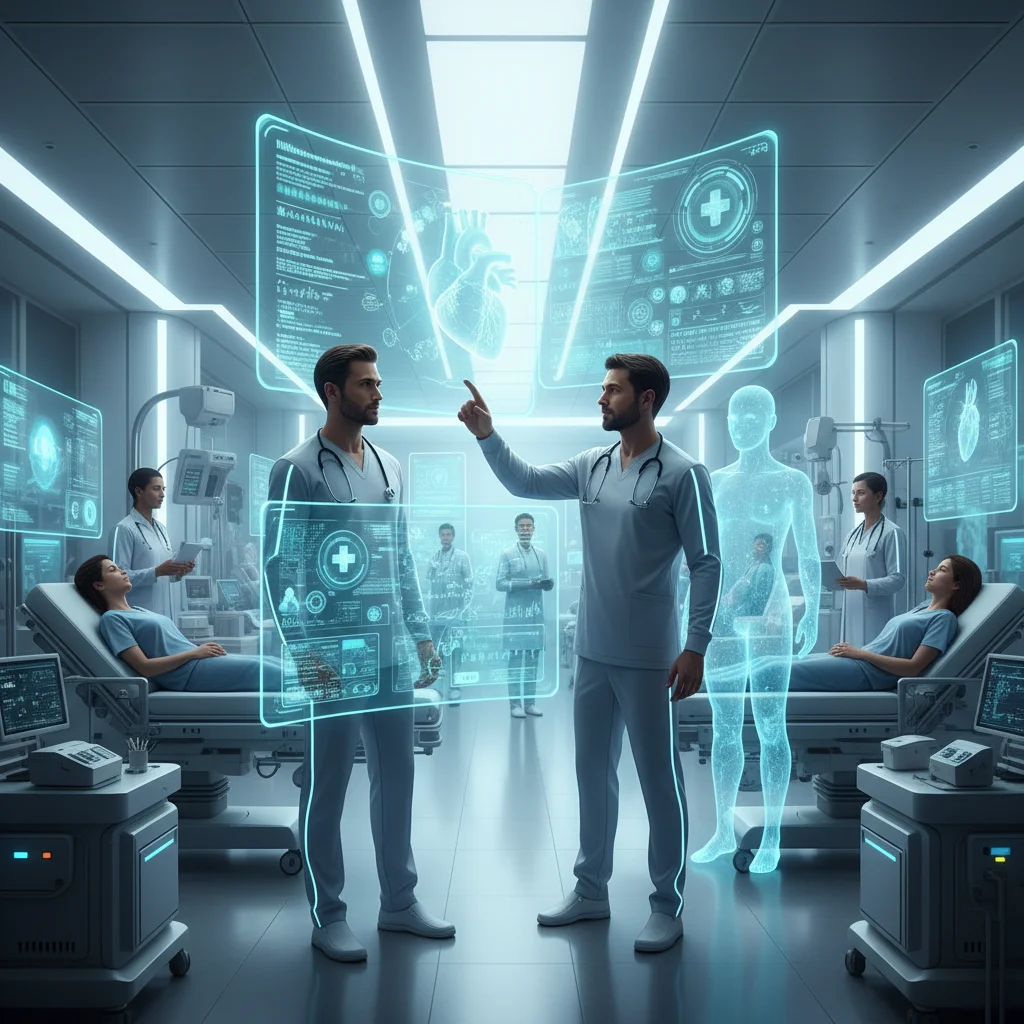
The landscape of healthcare is in a perpetual state of evolution, driven by relentless scientific discovery and technological innovation. Among the myriad forces shaping its future, Artificial Intelligence (AI) stands out as a transformative power, promising to redefine diagnostics, treatment, patient care, and operational efficiency. As we cast our gaze towards 2026, a mere three-month outlook reveals an accelerating pace of AI integration within the US healthcare system. This article will delve into the top five AI innovations that are not just on the horizon but are actively reshaping US healthcare, bringing both unprecedented opportunities and challenges.
The promise of AI in healthcare is not a distant dream; it is a current reality rapidly expanding its footprint. From optimizing administrative tasks to assisting in complex surgical procedures, AI’s capabilities are vast and varied. The US healthcare sector, in particular, is a fertile ground for AI adoption, given its complex structure, high demand for efficiency, and commitment to cutting-edge medical advancements. Understanding these key innovations is crucial for healthcare providers, policymakers, patients, and technology enthusiasts alike, as they will undoubtedly influence the quality, accessibility, and cost-effectiveness of care in the very near future.
The AI Revolution: A Brief Overview of its Impact on Healthcare
Before diving into specific innovations, it’s essential to grasp the fundamental ways AI is impacting healthcare. AI, through its various subfields like machine learning, deep learning, and natural language processing, enables machines to learn from data, identify patterns, make predictions, and even understand human language. In healthcare, this translates into capabilities such as:
- Enhanced Diagnostics: AI algorithms can analyze medical images (X-rays, MRIs, CT scans) with remarkable speed and accuracy, often detecting anomalies that might be missed by the human eye.
- Personalized Treatment Plans: By analyzing a patient’s genetic data, medical history, and lifestyle, AI can help tailor treatment plans for optimal efficacy.
- Drug Discovery and Development: AI accelerates the identification of potential drug candidates, predicts their efficacy, and streamlines clinical trials.
- Operational Efficiency: AI can automate administrative tasks, manage patient flow, and optimize resource allocation within healthcare facilities.
- Remote Patient Monitoring and Virtual Care: AI-powered devices and platforms enable continuous monitoring of patients outside traditional clinical settings, facilitating proactive interventions.
These broad applications form the bedrock upon which the specific innovations we will explore are built. The integration of AI healthcare 2026 is expected to be comprehensive, touching almost every facet of the medical journey.
Innovation 1: Precision Medicine and AI-Powered Genomics
One of the most profound shifts in healthcare is the move towards precision medicine, and AI is its indispensable engine. Precision medicine aims to tailor medical treatment to the individual characteristics of each patient, including their genetic makeup, lifestyle, and environment. AI-powered genomics is at the forefront of this revolution.
The Role of AI in Genomic Analysis
The human genome contains billions of base pairs, and analyzing this vast amount of data to identify disease-causing mutations or predispositions is an incredibly complex task. Traditional methods are time-consuming and resource-intensive. This is where AI excels. Machine learning algorithms can rapidly process genomic data, identify subtle patterns, and correlate genetic variations with specific diseases or responses to treatments.
For instance, AI can analyze a patient’s tumor genome to predict its aggressiveness, identify specific mutations that are targetable by certain drugs, and even forecast the likelihood of recurrence. This level of detail allows oncologists to select therapies that are most likely to be effective for an individual patient, minimizing trial-and-error and improving outcomes. The advancements in AI healthcare 2026 will see even more sophisticated algorithms capable of integrating genomic data with proteomic, metabolomic, and clinical data for a holistic view of patient health.
Impact on Cancer Treatment and Rare Diseases
The impact of AI-powered genomics is particularly evident in oncology and the treatment of rare genetic diseases. For cancer, AI helps identify personalized treatment strategies, including immunotherapy and targeted therapies, based on the unique genetic profile of a patient’s tumor. This means moving away from a one-size-fits-all approach to highly individualized care.
In the realm of rare diseases, diagnosing these often-elusive conditions can take years, causing significant patient suffering. AI algorithms, by analyzing vast databases of genetic information and patient symptoms, can significantly accelerate the diagnostic process, leading to earlier intervention and improved quality of life for affected individuals. The next three months will likely see further refinement of these AI tools, making them more accessible and integrated into routine clinical practice.
Innovation 2: AI-Enhanced Diagnostic Imaging and Pathology
The ability of AI to analyze visual data with speed and accuracy has made it a game-changer in diagnostic imaging and pathology. This innovation is significantly improving the early detection of diseases and the precision of diagnoses.
Faster, More Accurate Image Interpretation
Radiologists and pathologists are often faced with an overwhelming volume of images and slides to review. AI algorithms, trained on millions of annotated images, can now act as highly efficient assistants, flagging suspicious areas for further human review. This not only speeds up the diagnostic process but also reduces the chances of human error.
For example, in mammography, AI systems can detect subtle signs of breast cancer that might be missed by the human eye, leading to earlier diagnosis and better prognosis. Similarly, in retinal scans, AI can identify early indicators of diabetic retinopathy or glaucoma. The integration of AI healthcare 2026 will mean these systems are more ubiquitous, seamlessly integrated into imaging workflows, and capable of analyzing a broader spectrum of medical images.
AI in Digital Pathology
Digital pathology, where glass slides are converted into high-resolution digital images, provides a rich dataset for AI analysis. AI algorithms can analyze these digital slides to quantify tumor characteristics, assess disease progression, and even predict treatment response. This standardization and automation of pathology analysis can lead to more consistent and reproducible diagnoses across different laboratories.
The ability of AI to identify patterns indicative of disease at a microscopic level holds immense promise for conditions like cancer, infectious diseases, and neurological disorders. We can expect to see AI-powered pathology tools becoming standard in many US hospitals, offering unprecedented insights into disease mechanisms and guiding therapeutic decisions.

Innovation 3: Predictive Analytics for Disease Prevention and Population Health
Beyond individual patient care, AI is proving invaluable in understanding and managing population health. Predictive analytics, driven by AI, allows healthcare systems to anticipate disease outbreaks, identify at-risk populations, and implement preventative strategies more effectively.
Forecasting Disease Outbreaks and Patient Risk
AI algorithms can analyze vast datasets, including electronic health records, social determinants of health, environmental factors, and even social media trends, to predict the spread of infectious diseases or the likelihood of chronic disease development within a community. This foresight enables public health officials to allocate resources proactively, launch targeted vaccination campaigns, or implement early screening programs.
For individual patients, AI can assess their risk of developing conditions like heart disease, diabetes, or kidney failure based on their medical history, genetic predispositions, and lifestyle factors. This allows clinicians to intervene early with lifestyle modifications, preventative medications, or more frequent monitoring, thereby preventing the onset or progression of serious illnesses. The continued development of AI healthcare 2026 will bring more sophisticated models that can handle increasingly complex and diverse data sources.
Optimizing Public Health Interventions
The insights generated by AI-powered predictive analytics can significantly optimize public health interventions. By identifying specific communities or demographics at higher risk, resources can be directed where they are most needed, maximizing their impact. This is particularly relevant in managing chronic conditions, where early detection and continuous management are key to preventing complications and reducing healthcare costs.
Furthermore, AI can help evaluate the effectiveness of different public health campaigns, providing data-driven feedback to refine strategies and improve outcomes. This data-driven approach to public health management is set to become a cornerstone of preventative care in the US, with AI playing a central role in shaping healthier communities.
Innovation 4: AI in Drug Discovery and Development Acceleration
The process of bringing a new drug to market is notoriously long, expensive, and fraught with failure. AI is dramatically shortening this timeline and increasing the success rate, promising a faster pipeline for new therapies.
Streamlining Target Identification and Compound Synthesis
Traditionally, identifying potential drug targets and synthesizing promising compounds was a laborious process involving extensive laboratory experiments. AI algorithms can analyze vast chemical and biological databases to identify novel drug targets, predict the efficacy and toxicity of potential compounds, and even design new molecules with desired properties.
This computational approach significantly reduces the time and resources required in the early stages of drug discovery. AI can simulate molecular interactions, predict how a compound will behave in the human body, and prioritize the most promising candidates for experimental testing. This acceleration is crucial for addressing unmet medical needs and responding rapidly to emerging health crises. The advancements in AI healthcare 2026 in this domain will be transformative, leading to a surge in novel drug candidates.
Accelerating Clinical Trials and Reducing Costs
Beyond discovery, AI is also optimizing clinical trials. It can identify suitable patient cohorts for trials, predict patient adherence, and monitor patient responses in real-time, leading to more efficient and successful trials. By analyzing vast amounts of patient data, AI can help researchers understand why certain drugs work for some patients but not others, leading to more targeted and effective trial designs.
Furthermore, AI can analyze existing scientific literature and real-world evidence to identify potential off-label uses for existing drugs, a process known as drug repurposing. This can bring new treatments to patients much faster and at a lower cost than developing an entirely new drug. The impact of AI on the pharmaceutical industry is profound, leading to a more dynamic and responsive drug development ecosystem.
Innovation 5: AI-Powered Virtual Assistants and Remote Patient Monitoring
The shift towards more patient-centric and accessible care is being significantly propelled by AI-powered virtual assistants and remote patient monitoring systems. These innovations are enhancing patient engagement, improving adherence to treatment plans, and extending healthcare services beyond the traditional clinic setting.
Enhancing Patient Engagement and Support
AI-powered virtual assistants, often in the form of chatbots or voice assistants, can provide patients with personalized health information, answer common medical questions, schedule appointments, and offer medication reminders. These assistants are available 24/7, providing immediate support and reducing the burden on healthcare staff.
For patients managing chronic conditions, AI assistants can track symptoms, provide educational content, and offer emotional support, empowering them to take a more active role in their health management. The conversational AI capabilities are becoming increasingly sophisticated, making interactions more natural and helpful. The rapid deployment of AI healthcare 2026 will see these tools becoming more intuitive and integrated into daily patient routines.
Revolutionizing Remote Patient Monitoring (RPM)
Remote patient monitoring (RPM) devices, often coupled with AI analytics, allow healthcare providers to continuously track vital signs, activity levels, and other health metrics from a distance. AI algorithms analyze this data in real-time, identifying concerning trends or anomalies that might require immediate medical attention. This proactive approach can prevent hospital readmissions, manage chronic diseases more effectively, and provide peace of mind for both patients and their families.
For example, AI-powered wearables can detect irregular heart rhythms, monitor blood glucose levels, or track sleep patterns, alerting both the patient and their care team to potential issues. This not only improves patient outcomes but also reduces the need for frequent in-person doctor visits, making healthcare more convenient and accessible, especially for individuals in rural areas or those with mobility challenges.

Challenges and Ethical Considerations in AI Healthcare 2026
While the potential of AI in healthcare is immense, its widespread adoption is not without challenges. Several critical issues need to be addressed to ensure that AI benefits all and is implemented responsibly.
Data Privacy and Security
AI systems in healthcare rely heavily on vast amounts of sensitive patient data. Ensuring the privacy and security of this data is paramount. Robust cybersecurity measures, strict regulatory frameworks, and ethical guidelines are essential to prevent data breaches and misuse. Patients need to trust that their personal health information is protected when shared with AI systems.
Bias in AI Algorithms
AI algorithms learn from the data they are fed. If this data is biased, the AI can perpetuate and even amplify existing health disparities. For instance, if an AI diagnostic tool is primarily trained on data from a specific demographic, its accuracy might be lower for other groups. Addressing algorithmic bias requires diverse and representative datasets, as well as ongoing monitoring and auditing of AI systems.
Regulatory Frameworks and Accountability
The rapid evolution of AI technology often outpaces regulatory development. Clear and comprehensive regulatory frameworks are needed to ensure the safety, efficacy, and ethical deployment of AI in healthcare. Questions of accountability also arise: who is responsible when an AI system makes an error that leads to patient harm? Establishing clear guidelines for liability and oversight is crucial.
Integration into Clinical Workflows and Workforce Training
Integrating AI tools into existing clinical workflows can be complex. Healthcare providers need to be trained on how to effectively use and interpret AI-generated insights. Resistance to change, lack of technical expertise, and concerns about job displacement are all factors that need to be managed through comprehensive training programs and thoughtful implementation strategies. The success of AI healthcare 2026 hinges on effective human-AI collaboration.
Cost and Accessibility
The development and implementation of advanced AI solutions can be expensive, potentially exacerbating existing healthcare inequalities if not managed carefully. Ensuring equitable access to AI-powered healthcare innovations, particularly for underserved populations, is a significant challenge that requires policy interventions and innovative funding models.
The Future is Now: Preparing for AI Healthcare 2026
The innovations discussed in this article are not theoretical concepts; they are actively being developed, tested, and implemented across the US healthcare system. The next three months will likely see further pilot programs, expanded clinical trials, and initial rollouts of these AI-powered solutions.
For healthcare organizations, staying abreast of these developments is not optional; it’s a necessity for remaining competitive and providing the best possible care. Investing in AI infrastructure, fostering a culture of innovation, and training the workforce will be critical steps. For policymakers, developing agile and forward-thinking regulations that encourage innovation while safeguarding patient interests is paramount.
Patients, too, will increasingly encounter AI in their healthcare journey, from AI-powered diagnostic tools to virtual assistants. Understanding the capabilities and limitations of these technologies will empower them to engage more effectively with their care providers and make informed decisions about their health.
Conclusion: A Healthier Future Driven by AI
The top five AI innovations reshaping US healthcare by 2026 – precision medicine and AI-powered genomics, AI-enhanced diagnostic imaging and pathology, predictive analytics for disease prevention, AI in drug discovery and development acceleration, and AI-powered virtual assistants and remote patient monitoring – represent a monumental leap forward. These advancements promise a future where healthcare is more personalized, precise, proactive, and accessible.
While challenges related to data privacy, bias, regulation, and integration remain, the trajectory of AI in healthcare is clear. As we navigate the coming months and years, the collaborative efforts of researchers, clinicians, policymakers, and technology developers will be crucial in harnessing the full potential of AI to build a healthier, more equitable, and more efficient healthcare system for all. The era of AI healthcare 2026 is upon us, and it promises to be nothing short of revolutionary.