Biotech Innovations 2026: Investment Analysis & Market Trends

Comparing 3 Leading US Biotech Innovations: Data-Backed Analysis for Investor Decisions in 2026
The biotechnology sector is a crucible of innovation, constantly pushing the boundaries of what’s possible in medicine, agriculture, and environmental science. For investors, navigating this dynamic landscape requires a blend of scientific understanding, market foresight, and a keen eye for data-backed opportunities. As we approach 2026, several US biotech innovations are poised to reshape industries and deliver significant returns. This comprehensive analysis delves into three leading innovations, providing a data-centric perspective crucial for informed investor decisions. Our focus keyword, biotech investment 2026, underpins this exploration, guiding our deep dive into the most promising ventures.
Understanding the trajectory of biotech investment 2026 demands a nuanced appreciation of the underlying scientific breakthroughs and their potential market impact. The industry is characterized by high risk but also commensurately high reward, making due diligence paramount. From groundbreaking gene therapies to transformative diagnostic tools, the innovations we will explore are not just scientific marvels but also potential economic powerhouses.
The Current Landscape of Biotech Investment: A Snapshot for 2026
Before we dissect specific innovations, it’s essential to grasp the broader context of biotech investment 2026. The sector has witnessed unprecedented growth in recent years, fueled by technological advancements, increased R&D spending, and a growing global demand for advanced healthcare solutions. Venture capital funding in biotech continues to be robust, indicating strong investor confidence in long-term potential, despite occasional market fluctuations. Pharmaceutical partnerships and acquisitions are also on the rise, as larger companies seek to integrate innovative technologies and pipelines.
Key trends shaping the biotech investment 2026 environment include:
- Precision Medicine Expansion: Tailored treatments based on individual genetic, environmental, and lifestyle factors are becoming the standard, driving significant investment in genomics, proteomics, and advanced diagnostics.
- Rise of AI and Machine Learning: Artificial intelligence is revolutionizing drug discovery, clinical trial design, and predictive analytics, accelerating development cycles and reducing costs.
- Cell and Gene Therapy Dominance: These therapies, once considered futuristic, are now yielding tangible results, with an increasing number of FDA approvals and a burgeoning pipeline.
- Sustainable Biomanufacturing: Beyond healthcare, biotech is making inroads into sustainable manufacturing, biofuels, and agricultural enhancements, opening new avenues for investment.
- Global Health Challenges: The ongoing need for solutions to infectious diseases and chronic conditions continues to spur innovation and funding.
These macro trends provide a fertile ground for the specific innovations we will examine. Investors looking at biotech investment 2026 must consider how these broader forces will influence the success and scalability of individual companies and technologies.
Innovation 1: Advanced Gene Editing Technologies (CRISPR 2.0 and Beyond)
The CRISPR-Cas system has already revolutionized genetic engineering, offering unprecedented precision in modifying DNA. However, the next wave of gene editing technologies, often dubbed ‘CRISPR 2.0,’ promises even greater accuracy, reduced off-target effects, and expanded therapeutic applications. This includes base editing and prime editing, which allow for direct, precise changes to single DNA bases without double-strand breaks, and the potential for in vivo (within the body) delivery systems.
Data-Backed Potential for Biotech Investment 2026:
- Clinical Pipeline: Companies leveraging advanced gene editing are seeing a rapid expansion of their clinical pipelines. For instance, firms like Beam Therapeutics (NASDAQ: BEAM) and Verve Therapeutics (NASDAQ: VERV) are advancing programs for single-gene disorders, including sickle cell disease and high cholesterol, with promising early-stage human trial data. Analysts project significant market penetration for these treatments by 2026, given successful progression through trials.
- Market Size & Growth: The global gene editing market is projected to reach tens of billions of dollars by the mid-2020s, with a substantial compound annual growth rate (CAGR). Advanced techniques are expected to capture a significant share, particularly in rare genetic diseases and oncology. Data from market research firms consistently highlight the increasing adoption of these technologies in research and therapeutic development.
- Strategic Partnerships: Major pharmaceutical companies are actively seeking collaborations and licensing agreements with gene editing pioneers. This influx of capital and expertise validates the technology’s potential and provides a clear pathway for commercialization. Investment in companies with strong intellectual property portfolios in this space is a key aspect of prudent biotech investment 2026 strategies.
- Regulatory Landscape: While regulatory hurdles remain, the FDA and other global agencies are developing clearer pathways for gene therapies, potentially accelerating approval times for well-designed clinical programs.
The ability to precisely correct genetic mutations offers a curative approach to diseases previously considered untreatable. For investors, the companies at the forefront of this technology represent a compelling opportunity for biotech investment 2026, particularly those demonstrating robust preclinical and clinical data, strong patent portfolios, and strategic partnerships.
Innovation 2: AI-Driven Drug Discovery and Development Platforms
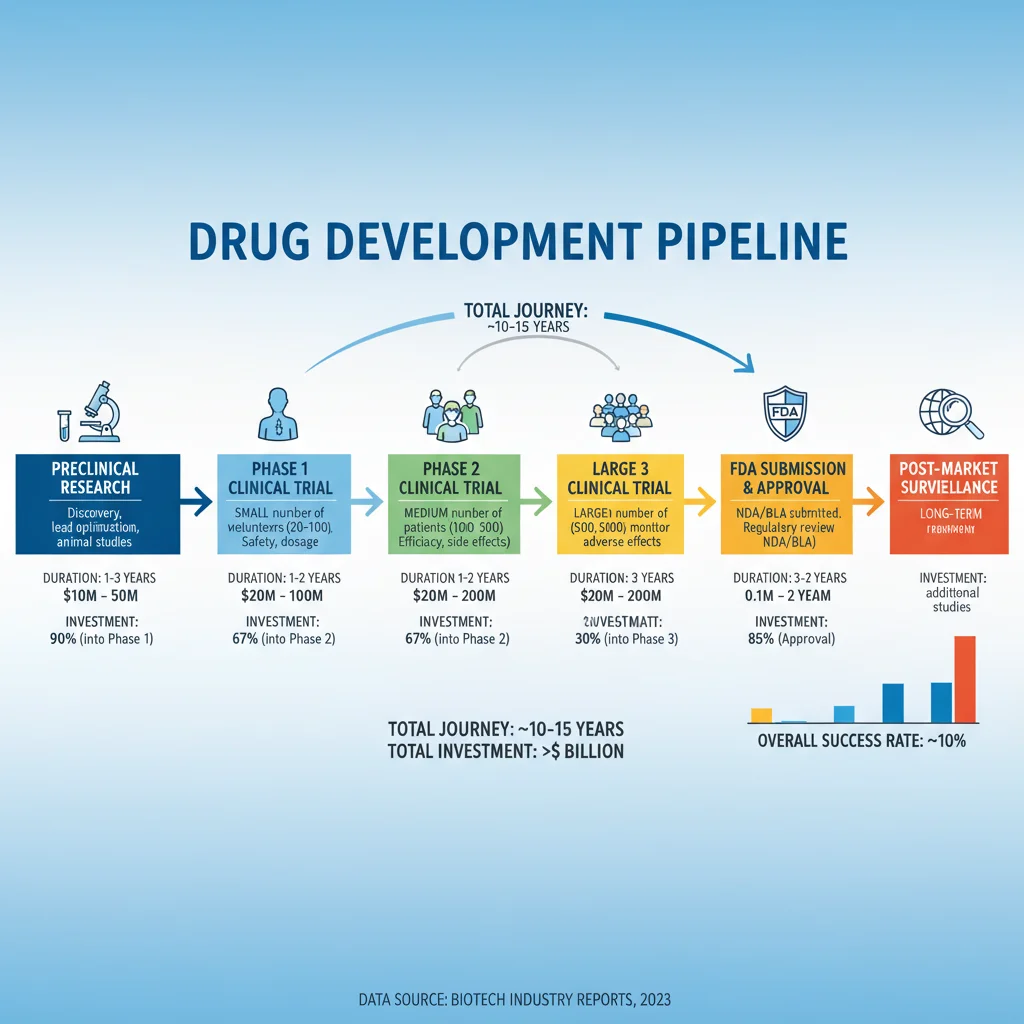
The traditional drug discovery process is notoriously long, expensive, and high-risk. Artificial intelligence and machine learning are fundamentally transforming this paradigm, offering the potential to identify novel drug candidates, predict molecular interactions, optimize compound synthesis, and even design more efficient clinical trials. AI platforms can sift through vast datasets of biological, chemical, and patient information at speeds unimaginable for human researchers, dramatically shortening the discovery phase and improving success rates.
Data-Backed Potential for Biotech Investment 2026:
- Efficiency Gains: Studies by industry analysts indicate that AI can reduce the time and cost of drug discovery by 25-50%. This efficiency translates directly into a higher return on investment for companies adopting these technologies. For investors, this means a potentially faster path to market and profitability, a critical factor for biotech investment 2026.
- Increased Success Rates: Preclinical and early clinical data from AI-discovered drug candidates show promising results, with some platforms achieving higher hit rates for target identification and lead optimization compared to conventional methods. Companies like Exscientia (NASDAQ: EXAI) and Recursion Pharmaceuticals (NASDAQ: RXRX) are demonstrating the power of these platforms with multiple programs entering clinical trials.
- Broad Therapeutic Applications: AI’s utility spans across various therapeutic areas, from oncology and neuroscience to infectious diseases, making it a versatile investment. This broad applicability reduces single-point failure risk for companies specializing in AI-driven discovery.
- Valuation Trends: Companies specializing in AI drug discovery have seen significant valuation upticks, reflecting investor confidence in their disruptive potential. The ability to generate proprietary data and algorithms also creates a strong competitive moat.
- Strategic Collaborations: Large pharmaceutical companies are increasingly partnering with AI biotech firms to leverage their platforms, validating the technology’s efficacy and providing significant revenue streams for the AI specialists. These partnerships are a strong indicator for successful biotech investment 2026.
Investing in AI-driven drug discovery platforms is a bet on the future of pharmaceutical R&D. The companies that can effectively integrate AI into their pipelines are likely to be the leaders in developing next-generation therapeutics, making them attractive targets for biotech investment 2026.
Innovation 3: Next-Generation mRNA Vaccines and Therapeutics
The COVID-19 pandemic propelled mRNA technology into the global spotlight, demonstrating its remarkable speed and efficacy in vaccine development. Beyond infectious diseases, mRNA is now being explored for a vast array of therapeutic applications, including cancer immunotherapies, autoimmune diseases, and even gene editing delivery systems. Next-generation mRNA technologies focus on improving stability, targeted delivery, and reducing reactogenicity, while expanding the types of proteins or antigens that can be expressed.
Data-Backed Potential for Biotech Investment 2026:
- Proven Efficacy & Speed: The rapid development and high efficacy of COVID-19 mRNA vaccines (e.g., Pfizer/BioNTech, Moderna) provide a strong proof of concept. This track record significantly de-risks future mRNA applications for biotech investment 2026.
- Expanding Pipeline: Companies like BioNTech (NASDAQ: BNTX), Moderna (NASDAQ: MRNA), and CureVac (NASDAQ: CVAC) have extensive pipelines beyond infectious diseases, including personalized cancer vaccines, therapies for rare genetic disorders, and autoimmune conditions. Early clinical data for some of these applications are showing promising results, generating excitement among investors.
- Manufacturing Scalability: mRNA vaccine manufacturing processes are relatively scalable and adaptable, allowing for rapid production in response to emerging health threats or market demands. This agility is a significant competitive advantage.
- Investment & Funding: Billions of dollars have been poured into mRNA research and development, both from public and private sources, ensuring continued innovation and expansion of the technology. This sustained funding environment is crucial for ongoing biotech investment 2026.
- Versatility: The ability of mRNA to instruct cells to produce virtually any protein makes it an incredibly versatile platform. This opens doors to addressing a wide range of previously intractable diseases, expanding the potential market significantly.
The continued evolution of mRNA technology represents a powerful force in modern medicine. Investors seeking high-growth opportunities in biotech investment 2026 should closely monitor companies pushing the boundaries of mRNA applications, particularly those with diversified pipelines and strong intellectual property.
Comparative Analysis for Investor Decisions in 2026
When considering biotech investment 2026, a comparative analysis of these three innovation areas is crucial. Each presents a unique risk-reward profile:
Risk Factors:
- Gene Editing: Regulatory hurdles for germline editing, potential off-target effects, and complex delivery mechanisms remain challenges. Ethical considerations also play a role in public acceptance and policy.
- AI Drug Discovery: The ‘black box’ nature of some AI algorithms, data quality issues, and the need for significant computational infrastructure can be limiting factors. The proof of clinical success for AI-discovered drugs is still accumulating.
- mRNA Technologies: Long-term efficacy and safety data for diverse mRNA applications are still being gathered. The cold chain requirements for some mRNA products can also pose logistical challenges, particularly in developing regions.
Reward Potential:
- Gene Editing: Offers potentially curative treatments for a wide range of genetic diseases, leading to immense market value for successful therapies. The ‘first-in-class’ nature of many gene-edited drugs can command premium pricing.
- AI Drug Discovery: Promises to revolutionize the entire pharmaceutical value chain, leading to significant cost reductions, faster drug development, and a higher probability of clinical success. Companies with proprietary AI platforms could become indispensable partners for the entire industry.
- mRNA Technologies: The speed, flexibility, and versatility of mRNA make it a powerful platform for rapid response to global health crises and for developing personalized medicines. Its broad applicability across therapeutic areas indicates vast market potential.
For investors, diversification across these innovative areas could be a prudent strategy. Companies that integrate aspects of all three – for example, using AI to design optimal gene edits or mRNA therapies – could present exceptionally compelling opportunities for biotech investment 2026.
Key Considerations for Biotech Investment 2026
Beyond the specific innovations, several overarching factors should guide investor decisions in the biotech sector for 2026:
1. Intellectual Property (IP) Strength:
In biotech, patents are paramount. Companies with strong, defensible IP portfolios in their core technologies are better positioned to fend off competitors and secure licensing revenues. A thorough understanding of a company’s patent landscape is critical for any serious biotech investment 2026.
2. Clinical Trial Progress and Data:
The success or failure of a biotech company often hinges on its clinical trial results. Investors must meticulously analyze clinical data, understanding trial design, endpoints, and statistical significance. Positive Phase 2 and Phase 3 data are often major inflection points for valuations.
3. Management Team and Scientific Advisory Board:
A strong leadership team with a proven track record of bringing drugs to market, coupled with a highly reputable scientific advisory board, instills confidence. Their expertise and strategic vision are invaluable in navigating the complex biotech environment.
4. Financial Health and Burn Rate:
Biotech R&D is capital-intensive. Investors need to assess a company’s cash reserves, burn rate, and ability to raise additional capital without excessive dilution. Understanding the financial runway is crucial for long-term biotech investment 2026.
5. Partnerships and Collaborations:
Strategic alliances with larger pharmaceutical companies, academic institutions, or other biotech firms can provide funding, clinical expertise, and market access. These partnerships often signal external validation of a technology’s potential.
6. Regulatory Environment:
The regulatory landscape is ever-evolving. Companies with a clear understanding of regulatory pathways and a track record of successful interactions with agencies like the FDA are more likely to navigate the approval process efficiently.
The Future of Biotech Investment Beyond 2026
While our immediate focus is biotech investment 2026, it’s important to consider the longer-term outlook. The convergence of biotechnology with other advanced fields like nanotechnology, quantum computing, and advanced materials science promises even more profound transformations. The concept of ‘bio-convergence’ suggests a future where biological systems are engineered with unprecedented precision and integrated with digital and physical technologies to solve complex problems across multiple domains.
Beyond human health, industrial biotechnology is gaining traction, offering sustainable solutions for manufacturing chemicals, plastics, and fuels. Agricultural biotechnology continues to address global food security challenges, enhancing crop yields and nutritional value. These areas, while perhaps less prominent in the immediate 2026 investment horizon for many, represent significant long-term growth vectors for the broader biotech sector.
The ethical implications of these powerful technologies will also continue to be a critical discussion point, shaping public perception and regulatory frameworks. Responsible innovation, coupled with transparent communication, will be key to maintaining public trust and ensuring continued progress.
Conclusion: Navigating the Biotech Frontier for 2026
The US biotech sector stands at the cusp of a new era, driven by innovations in gene editing, AI-powered drug discovery, and next-generation mRNA technologies. For investors, biotech investment 2026 offers a compelling opportunity for substantial growth, provided they approach the market with a well-informed, data-backed strategy.
Understanding the scientific underpinnings, assessing clinical progress, evaluating intellectual property, and scrutinizing management teams are all critical components of successful investment in this complex yet rewarding sector. While risks are inherent, the potential for groundbreaking medical advancements and significant financial returns makes the biotech frontier an exciting space for forward-thinking investors.
By focusing on companies with robust pipelines, strong scientific foundations, and strategic foresight in these key innovative areas, investors can position themselves to capitalize on the transformative power of biotechnology in 2026 and beyond. The future of medicine and indeed, many other industries, is being written in laboratories across the US, and smart capital will play a crucial role in bringing these innovations to fruition.