US Biotech Funding Window: Act Now Before 2026 Closes

The Critical Window for US Biotech Funding: Opportunities Closing in the Next 6 Months of 2026 (TIME-SENSITIVE)
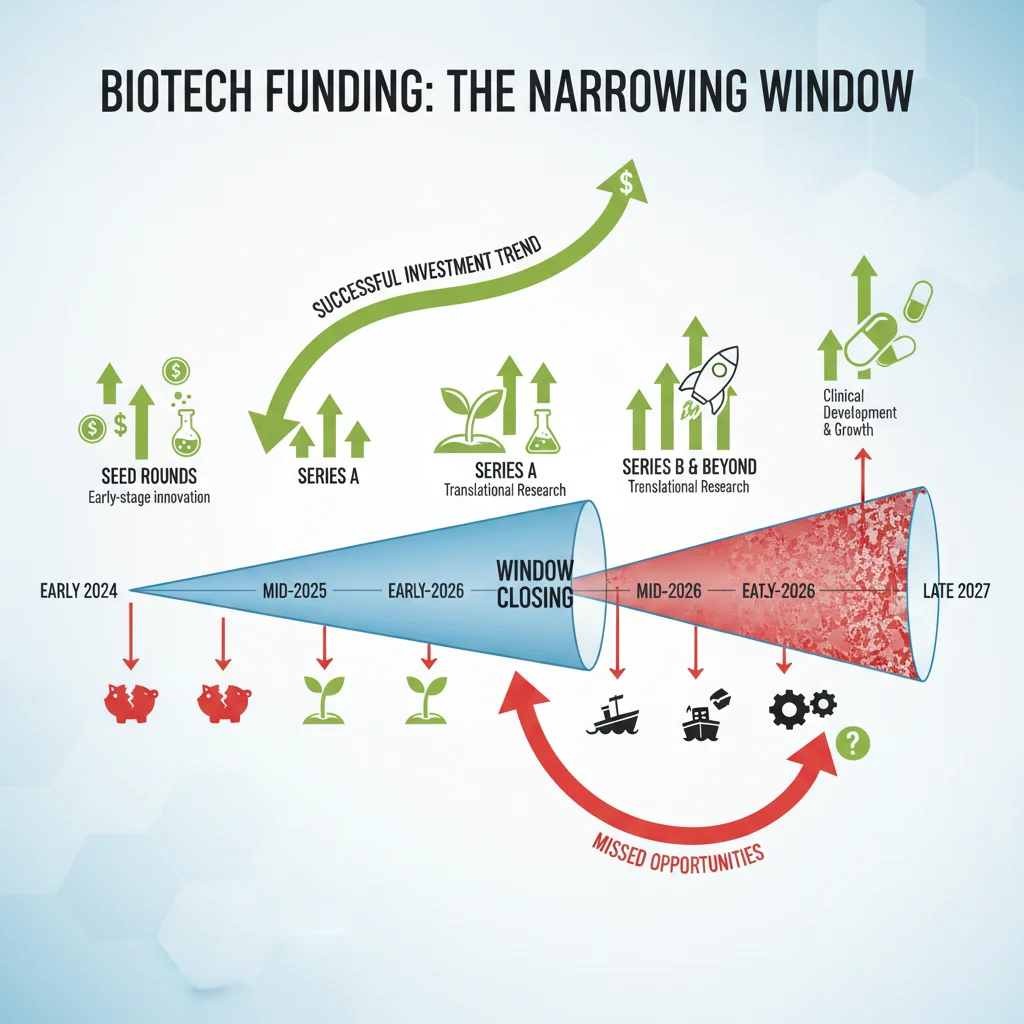
The United States has long been the undisputed global leader in biotechnology innovation and investment. From groundbreaking gene therapies to revolutionary diagnostic tools, the US biotech sector consistently pushes the boundaries of medical science and patient care. However, the dynamics of US Biotech Funding are currently undergoing a significant shift, creating a critical, time-sensitive window of opportunity that is projected to narrow significantly by the middle of 2026. For startups, established firms, and aspiring innovators alike, understanding this impending shift and strategizing accordingly is not just advantageous—it’s imperative for survival and success.
This article delves deep into the current landscape of US Biotech Funding, dissecting the factors contributing to this unique market phase, outlining the opportunities available, and providing actionable strategies for securing investment before the window closes. We will explore the macroeconomic forces at play, the evolving investor sentiment, and what companies need to do to position themselves favorably in this competitive environment.
Understanding the Current US Biotech Funding Climate
To fully grasp the urgency, it’s crucial to analyze the current state of US Biotech Funding. The sector has experienced unprecedented growth over the past decade, fueled by technological advancements, increasing demand for novel treatments, and a robust venture capital ecosystem. However, recent global economic uncertainties, rising interest rates, and a more cautious investor approach are beginning to temper the exuberance. While capital is still flowing, the criteria for investment are becoming more stringent, and the appetite for early-stage, high-risk ventures is showing signs of contraction.
Several key factors are shaping this critical funding window:
- Macroeconomic Headwinds: Inflationary pressures, geopolitical tensions, and fluctuating global markets are prompting investors to de-risk their portfolios. This often means a shift away from longer-term, higher-risk investments like early-stage biotech.
- Interest Rate Hikes: Rising interest rates increase the cost of capital, making debt financing more expensive and increasing the discount rate applied to future cash flows, thereby reducing the present value of potential biotech returns.
- Public Market Performance: While some biotech IPOs have seen success, the overall public market for biotech has been volatile. A sluggish public market can deter private investors who rely on successful exits (IPOs or acquisitions) to realize returns.
- Increased Scrutiny on ROI: Investors are demanding clearer pathways to profitability, stronger clinical data, and more robust business models. The days of funding promising science without a clear commercialization strategy are quickly fading.
- Regulatory Landscape: Changes or anticipated changes in regulatory pathways (e.g., FDA approvals) can also create uncertainty, influencing investment decisions.
These factors, combined with a natural market cycle of expansion and contraction, suggest that the current favorable conditions for securing substantial US Biotech Funding may not persist indefinitely. The next 6 months leading up to mid-2026 are therefore pivotal for companies looking to capitalize on existing investor interest before the landscape potentially becomes more challenging.
Why Mid-2026 is a Critical Juncture for US Biotech Funding
The projection that the US Biotech Funding window will narrow by mid-2026 is not arbitrary. It’s based on a confluence of anticipated trends and historical market cycles. Here’s why this timeframe is so significant:
Anticipated Investment Cycle Shift
Venture capital and private equity operate in cycles. Following a period of significant capital deployment in biotech, a natural recalibration often occurs. Many funds established during the boom years will be approaching their deployment limits or seeking exits for their earlier investments. This can lead to a more conservative approach to new investments as they focus on managing existing portfolios.
Federal Reserve Policy Outlook
While interest rates are subject to change, the Federal Reserve’s long-term outlook on monetary policy will heavily influence capital availability. A prolonged period of higher rates could continue to suppress valuations and make investors more selective, impacting the flow of US Biotech Funding.
Political and Election Cycles
The upcoming US political landscape can introduce uncertainty. Election cycles often lead to a ‘wait-and-see’ approach from investors, especially concerning sectors heavily influenced by government policy, such as healthcare and life sciences. New administrations can bring changes in regulatory frameworks, funding priorities, and tax policies, all of which impact investor confidence and the availability of US Biotech Funding.
Maturation of Current Investment Cohorts
Many biotech companies that received significant funding in the early 2020s will be reaching critical clinical milestones or requiring further, larger rounds of funding by mid-2026. This could create a ‘crowding out’ effect, where a substantial portion of available capital is directed towards supporting existing portfolio companies, leaving less for new entrants. This makes the competition for fresh US Biotech Funding even fiercer.
Key Opportunities in the Current US Biotech Funding Landscape
Despite the impending shift, significant opportunities for US Biotech Funding still exist for well-prepared companies. Investors are not abandoning the sector; rather, they are becoming more discerning. Here are the areas where opportunities are strongest:
Disruptive Technologies and Platforms
Companies developing truly disruptive technologies, such as advanced gene editing (CRISPR 2.0, base editing), AI-driven drug discovery, novel cell therapies, and next-generation diagnostics, continue to attract substantial interest. The ability to demonstrate a clear technological edge and a significant unmet medical need is paramount.
Precision Medicine and Personalized Therapies
The trend towards precision medicine, tailoring treatments to individual patient profiles, remains a strong investment theme. Startups focused on companion diagnostics, targeted therapies, and therapies for rare diseases with clear patient populations are highly attractive for US Biotech Funding.
Digital Health and Bio-Convergence
The convergence of digital technologies with biotechnology is opening new avenues. Companies leveraging AI, machine learning, big data analytics, and wearable tech to improve drug development, clinical trials, patient monitoring, and healthcare delivery are seeing increased investor attention. This intersection offers scalable solutions and novel data insights.
Sustainable Biotech and Biomanufacturing
Beyond human health, biotech applications in sustainable manufacturing, bio-based materials, and environmental solutions are gaining traction. Investors are increasingly looking for companies that address global challenges beyond traditional pharmaceuticals, aligning with ESG (Environmental, Social, and Governance) principles.
Companies with Strong Clinical Data and Clear Milestones
As investor scrutiny increases, companies that have progressed beyond the theoretical stage and can present robust preclinical or early clinical data, along with well-defined, achievable milestones, will stand out. De-risking the science through compelling evidence is crucial for securing US Biotech Funding.
Strategies for Securing US Biotech Funding Before Mid-2026
Given the time-sensitive nature of this funding window, biotech companies must adopt proactive and strategic approaches to attract investment. Here are actionable strategies:
1. Refine Your Value Proposition and Storytelling
In a competitive environment, a compelling narrative is more important than ever. Clearly articulate your unique value proposition, the unmet medical need you address, the size of the market opportunity, and the transformative potential of your technology. Your story should resonate with investors on both an intellectual and emotional level, highlighting the impact of your innovation. Focus on how your solution differentiates itself from existing treatments or technologies and why it represents a significant leap forward.
2. Strengthen Your Scientific and Clinical Data Package
Investors are increasingly data-driven. Ensure your preclinical and any available clinical data are meticulously organized, robust, and presented clearly. Highlight key efficacy and safety signals. If you are in early stages, focus on generating strong proof-of-concept data that de-risks your technology. Collaborate with key opinion leaders and ensure your experimental design is rigorous and reproducible. The strength of your scientific foundation is paramount for attracting serious US Biotech Funding.
3. Build a Robust and Experienced Team
Beyond the science, investors invest in people. A strong management team with a proven track record in drug development, commercialization, and business leadership is a significant asset. Highlight the expertise of your scientific advisors, clinical development team, and executive leadership. A diverse team with complementary skills inspires confidence and demonstrates the ability to execute on your vision.
4. Develop a Clear Commercialization Strategy
Early-stage biotech companies often focus heavily on scientific discovery, sometimes neglecting the commercial path. However, investors want to see a clear vision for how your product will reach the market and generate revenue. This includes understanding target patient populations, regulatory pathways, intellectual property strategy, market access considerations, and potential pricing models. A well-thought-out commercialization plan demonstrates foresight and a path to return on investment for US Biotech Funding.
5. Understand Your Funding Needs and Investor Fit
Be realistic about the amount of funding you need and the type of investors best suited for your stage of development. Are you looking for seed, Series A, or later-stage funding? Research venture capital firms, corporate venture arms, and strategic investors who have a track record in your specific therapeutic area or technology. Tailor your pitch to align with their investment thesis and portfolio interests. Generic pitches rarely succeed in securing significant US Biotech Funding.
6. Network Strategically and Early
Building relationships with investors takes time. Start networking now. Attend industry conferences, investor showcases, and biotech events. Seek introductions through your advisors, board members, and existing network. A warm introduction is always more effective than a cold outreach. Engage with potential investors long before you formally ask for money to build rapport and trust. Proactive networking is crucial for navigating the competitive landscape of US Biotech Funding.
7. Be Prepared for Due Diligence
Once an investor expresses interest, a rigorous due diligence process will follow. Have all your documentation in order: scientific data, intellectual property filings, financial projections, team resumes, corporate governance documents, and clinical trial plans. Being prepared and responsive during due diligence can significantly accelerate the funding process and demonstrate your professionalism and organizational strength.
8. Consider Alternative Funding Mechanisms
While venture capital is a primary source of US Biotech Funding, explore other options. These can include:
- Non-dilutive Grants: Federal grants (e.g., NIH, BARDA, SBIR/STTR) can provide crucial early-stage funding without giving up equity.
- Strategic Partnerships: Collaborations with larger pharmaceutical companies can provide funding, resources, and validation.
- Angel Investors: High-net-worth individuals, often with industry experience, can be valuable early-stage investors.
- Crowdfunding (for specific niches): While less common for core biotech, some digital health or med device innovations might find success here.
Diversifying your funding strategy can provide resilience and reduce reliance on a single source of capital.

Challenges and How to Overcome Them
Even with a strategic approach, securing US Biotech Funding, especially in a tightening market, comes with its challenges:
Valuation Expectations
Founders often have high valuation expectations based on previous market highs. However, in a more conservative environment, investors may push for lower valuations. Be prepared to justify your valuation with solid data and market comparables, but also be realistic. A slightly lower valuation that secures essential funding is better than no funding at all.
Increased Competition
As the funding window narrows, the competition for available capital intensifies. Your pitch needs to be exceptionally strong, and your differentiation clear. Focus on what makes your company indispensable and unique.
Long Development Timelines
Biotech development is inherently long and expensive. Investors are aware of this, but you must demonstrate a clear plan to manage these timelines and costs effectively. Highlight interim milestones that can de-risk the investment over time.
Regulatory Hurdles
Navigating the FDA and other regulatory bodies is complex. Demonstrate a clear understanding of the regulatory pathway for your product and have a robust strategy for addressing potential challenges. Experienced regulatory advisors on your team can be a significant advantage.
The Long-Term Outlook for US Biotech Funding Post-2026
While the immediate future points to a narrowing window for US Biotech Funding, it’s important to understand that biotechnology remains a fundamentally attractive sector for long-term investment. The underlying drivers—an aging global population, increasing chronic disease burden, and continuous scientific breakthroughs—are not disappearing.
Post-2026, the landscape will likely favor companies with:
- Strong Clinical Validation: Companies with late-stage clinical assets and clear paths to market will continue to command premium valuations.
- Revenue Generation: Biotech firms that have transitioned from pure R&D to commercialization and are generating revenue will be highly sought after.
- Sustainable Business Models: Beyond innovative science, companies demonstrating operational efficiency and sustainable growth strategies will thrive.
- Adaptability: The ability to adapt to evolving scientific understanding, technological advancements, and market demands will be crucial.
The period beyond mid-2026 may see fewer, but larger, funding rounds, with investors concentrating capital into more mature, de-risked opportunities. This makes the current window even more vital for early and mid-stage companies to secure the capital needed to reach these later-stage milestones.
Conclusion: Act Decisively on US Biotech Funding Opportunities
The next 6 months leading up to mid-2026 represent a critical, time-sensitive period for companies seeking US Biotech Funding. The confluence of macroeconomic shifts, evolving investor sentiment, and natural market cycles suggests that the current favorable conditions for securing capital may not last. This is not a time for complacency but for decisive action.
Biotech innovators must refine their pitches, strengthen their data, build exceptional teams, and develop clear commercialization strategies. Proactive networking and a keen understanding of investor expectations will be key differentiators. While challenges exist, the opportunities for disruptive technologies, precision medicine, and bio-convergence remain strong for those who are prepared.
Companies that successfully navigate this critical window will be well-positioned to continue their groundbreaking work, bring life-changing therapies to patients, and secure their place in the future of the biotechnology landscape. Don’t let this unique funding opportunity pass you by – the time to act on US Biotech Funding is now.