Combating Misinformation: Effective Media Literacy in US Schools 2026
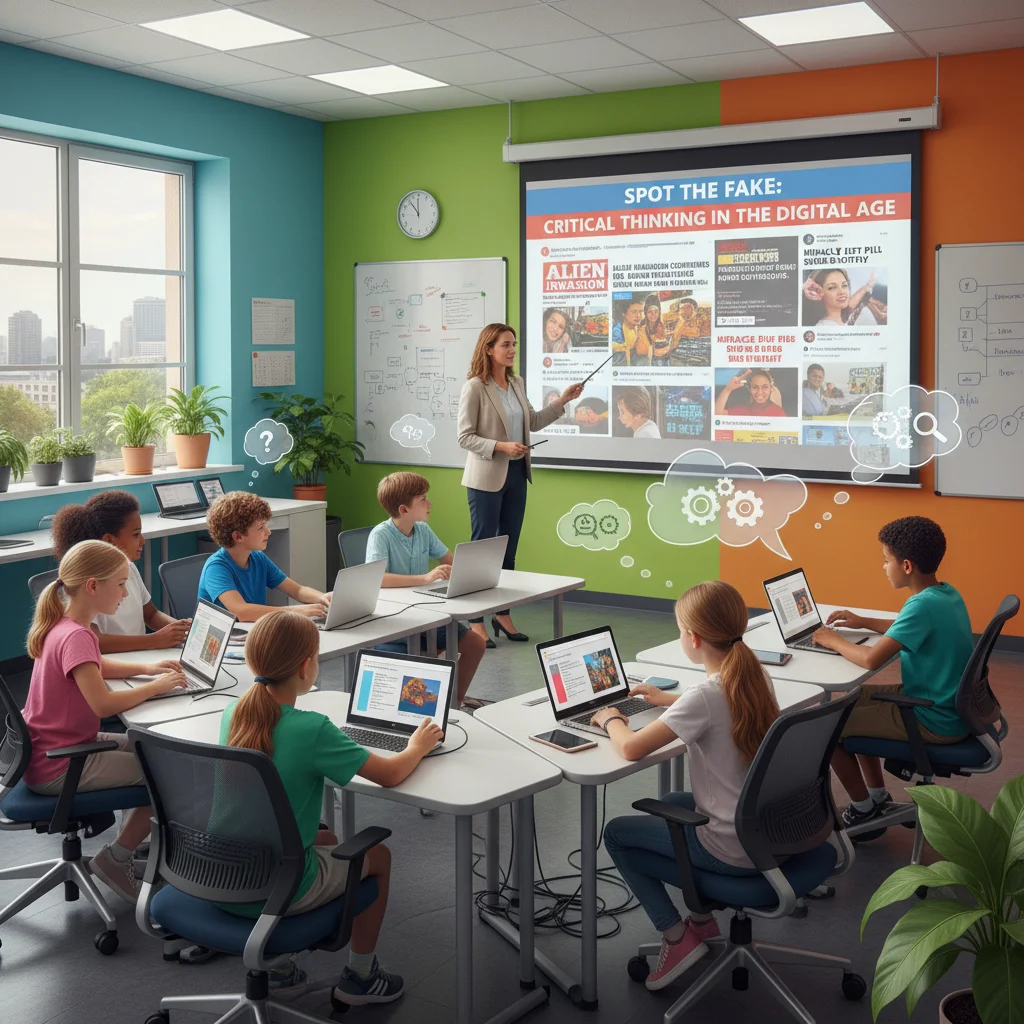
Combating Misinformation: Effective Media Literacy in US Schools for 2026 (Practical Solutions, Recent Updates)
In an era defined by an unprecedented deluge of information, the ability to discern fact from fiction has become a cornerstone of informed citizenship. The proliferation of social media, coupled with sophisticated disinformation campaigns, has created a landscape where misinformation can spread like wildfire, impacting everything from public health to democratic processes. Recognizing this critical challenge, the call for robust media literacy education in US schools has grown louder and more urgent. As we look towards 2026, the focus is not just on introducing these concepts but on embedding practical, effective strategies that empower students to navigate the complex digital world.
The urgency stems from several factors. Children and adolescents are digital natives, often consuming content without the inherent skepticism or critical tools necessary to evaluate its veracity. This makes them particularly vulnerable to misleading narratives, echo chambers, and manipulative content. Furthermore, the rapid evolution of AI-generated content, deepfakes, and sophisticated online manipulation techniques means that the problem is continuously escalating, demanding dynamic and adaptable educational responses. This article delves into how US schools can implement effective media literacy education by 2026, offering practical solutions, recent updates, and a roadmap for fostering a generation of critical thinkers.
The Evolving Landscape of Misinformation and the Need for Media Literacy Education
The digital age has fundamentally altered how we consume and interact with information. Traditional gatekeepers of information, such as established news organizations, now compete with a vast array of online sources, many of which lack journalistic integrity or are driven by ulterior motives. Misinformation, disinformation, and malinformation are distinct but often conflated terms that describe different facets of problematic information. Misinformation refers to false information spread unintentionally, while disinformation is deliberately fabricated and disseminated to deceive. Malinformation, on the other hand, is accurate information used out of context to cause harm.
Students today are exposed to all three forms daily. From misleading headlines designed to generate clicks to sophisticated propaganda campaigns aimed at shaping public opinion, the digital environment is a minefield for the uninitiated. The consequences are far-reaching, eroding trust in institutions, polarizing communities, and even influencing political outcomes. Therefore, media literacy education is no longer a niche subject but a fundamental life skill, akin to reading, writing, and arithmetic, essential for active and responsible participation in a democratic society.
Recent studies highlight the alarming extent of this problem. A report by Stanford University found that most middle schoolers can’t tell the difference between an advertisement and a news story, and many high school students struggle to identify the source of news articles. These findings underscore a critical gap in students’ ability to critically evaluate online content, making comprehensive media literacy education an imperative.
Current State of Media Literacy in US Schools: Challenges and Opportunities
While the awareness of the need for media literacy education has increased, its implementation across US schools remains uneven. Some states, like Washington, California, and Illinois, have made strides in mandating or recommending media literacy curricula. However, a nationwide, standardized approach is still lacking. Existing efforts often depend on individual teacher initiatives, school district priorities, or the availability of external resources, leading to a patchwork of varying quality and scope.
Challenges:
- Lack of Standardized Curriculum: There’s no universal curriculum or set of learning objectives for media literacy across all states and districts.
- Teacher Training and Professional Development: Many educators, while recognizing the importance, may not feel adequately equipped to teach media literacy effectively, lacking specific training in digital forensics, critical evaluation techniques, or understanding the nuances of online algorithms.
- Time Constraints and Overburdened Curricula: Schools often struggle to integrate new subjects into already packed schedules, perceiving media literacy as an additional burden rather than an integrated skill set.
- Rapid Technological Evolution: The pace at which new digital tools and platforms emerge makes it challenging for curricula to stay current and relevant.
- Funding and Resources: Implementing new programs requires financial investment in resources, technology, and professional development, which can be a barrier for many schools.
Opportunities:
- Growing Advocacy: Organizations and policymakers are increasingly advocating for media literacy, creating momentum for change.
- Integration Potential: Media literacy can be seamlessly integrated into existing subjects like English language arts, social studies, science, and even math, rather than being treated as a standalone subject.
- Digital Tools and Resources: A wealth of online tools, lesson plans, and educational platforms are available to support media literacy instruction.
- Student Engagement: Given students’ natural inclination towards digital media, engaging them in discussions about its impact and critical evaluation can be highly motivating.
Practical Solutions for Effective Media Literacy Education by 2026
To effectively combat misinformation, US schools need to adopt a multi-faceted approach to media literacy education that is systemic, integrated, and continuously updated. Here are practical solutions to achieve this by 2026:
1. Develop and Implement a National Framework for Media Literacy
While state-level initiatives are valuable, a national framework or set of guidelines would provide a consistent foundation for media literacy instruction across the country. This framework should outline key competencies, learning objectives, and age-appropriate content. It doesn’t necessarily mean a rigid national curriculum but rather a flexible guide that states and districts can adapt to their specific needs. This framework should emphasize:
- Source Evaluation: Teaching students to identify credible sources, recognize bias, and understand the motivations behind information dissemination.
- Content Analysis: Equipping students with skills to analyze different media formats (text, images, video, audio) for accuracy, completeness, and potential manipulation.
- Digital Footprint and Privacy: Educating students about the implications of their online presence and the importance of digital citizenship.
- Impact of Algorithms: Helping students understand how algorithms shape their online experiences, create echo chambers, and influence information consumption.
- Ethical Media Creation: Encouraging students to be responsible creators of media, understanding the ethical implications of their own digital contributions.
2. Prioritize Comprehensive Teacher Training and Professional Development
Teachers are at the forefront of this educational effort. Investing in robust professional development programs is paramount. These programs should:
- Cover Core Media Literacy Concepts: Provide educators with a deep understanding of misinformation, disinformation, propaganda, logical fallacies, and cognitive biases.
- Introduce Practical Teaching Strategies: Equip teachers with engaging pedagogical approaches, such as inquiry-based learning, Socratic seminars, and project-based assignments, to foster critical thinking.
- Familiarize with Digital Tools: Train teachers on how to use various fact-checking tools, reverse image search, and other digital resources to verify information.
- Promote Cross-Curricular Integration: Show teachers how to seamlessly weave media literacy concepts into their existing subject matter, making it relevant and less of an add-on.
- Foster a Community of Practice: Create platforms for teachers to share best practices, resources, and challenges, fostering continuous learning and support.
3. Integrate Media Literacy Across All Subjects
Rather than isolating media literacy education to a standalone course, integrating it across the curriculum makes it more impactful and relevant. By 2026, every subject should incorporate media literacy in some form:
- English Language Arts: Analyzing news articles, editorials, and persuasive texts for bias, rhetoric, and evidence. Studying how literary devices can be used for manipulation.
- Social Studies: Examining historical propaganda, analyzing current events from multiple perspectives, and understanding the role of media in shaping political discourse.
- Science: Evaluating scientific claims in the media, understanding the scientific method, and identifying pseudoscience or misinterpretations of data.
- Math: Critically analyzing statistics, graphs, and data visualizations presented in the media for accuracy and potential manipulation.
- Health Education: Discerning reliable health information from misleading claims, especially concerning wellness trends and medical advice.

Recent Updates and Innovative Approaches for 2026
The field of media literacy education is constantly evolving, with new tools and pedagogical approaches emerging. By 2026, schools should leverage these innovations to enhance their programs:
1. Leveraging AI and Machine Learning Tools
While AI can contribute to misinformation, it also offers powerful tools for combating it. Schools can integrate AI-powered fact-checking tools and platforms that help students analyze the credibility of sources, detect deepfakes, and identify automated bot accounts. These tools can serve as valuable assistants in the learning process, allowing students to verify information more efficiently and understand the underlying mechanisms of digital manipulation.
2. Gamification and Interactive Learning
Engaging students through gamified learning experiences can significantly improve retention and motivation. Educational games and simulations that challenge students to identify misinformation, navigate complex social media scenarios, or even create their own ethical media campaigns can make learning about media literacy fun and effective. These interactive platforms can provide immediate feedback and allow students to experiment with different strategies for evaluating information in a safe environment.
3. Collaborative Projects and Peer-to-Peer Learning
Encouraging students to work collaboratively on media analysis projects can foster deeper understanding and critical dialogue. Students can form ‘fact-checking teams’ to investigate current events, debate the credibility of different sources, or create public service announcements about media literacy. Peer-to-peer learning allows students to share their insights, challenge each other’s assumptions, and collectively develop stronger critical thinking skills.
4. Partnerships with Media Organizations and Experts
Schools can forge partnerships with local news organizations, journalism schools, and media literacy advocacy groups. These collaborations can bring real-world expertise into the classroom through guest speakers, workshops, and internships. Such partnerships can provide students with insights into journalistic ethics, the challenges of reporting, and the practical application of media literacy skills in professional settings.
5. Addressing Emotional and Psychological Aspects of Misinformation
Effective media literacy education goes beyond simply identifying false information; it also addresses the emotional and psychological factors that make people susceptible to misinformation. By 2026, curricula should include discussions on confirmation bias, echo chambers, the persuasive power of emotional appeals, and the psychological impact of online harassment. Understanding these cognitive biases can help students develop resilience against manipulation and cultivate empathy in online interactions.
Measuring Success and Continuous Improvement
To ensure that media literacy education programs are effective, schools need to establish clear metrics for success and mechanisms for continuous improvement. This includes:
- Formative and Summative Assessments: Developing assessments that measure students’ ability to identify credible sources, analyze media messages, and understand the impact of misinformation. These could include essay prompts, project-based assessments, or digital literacy quizzes.
- Student Surveys and Feedback: Regularly soliciting student feedback on the relevance and effectiveness of media literacy lessons.
- Teacher Feedback and Program Evaluation: Collecting input from educators on the challenges and successes of implementation, and using this information to refine professional development and curriculum materials.
- Staying Current with Research: Continuously monitoring new research in media literacy, cognitive science, and digital communication to adapt curricula and teaching strategies as the information landscape evolves.
By 2026, the goal should be to have a generation of students who are not just passive consumers of information but active, critical, and responsible participants in the digital world. This requires a sustained commitment from educators, policymakers, parents, and the wider community to prioritize and invest in comprehensive media literacy education.

The Role of Parents and Community in Supporting Media Literacy
Effective media literacy education extends beyond the classroom walls. Parents and the wider community play a crucial role in reinforcing the skills and attitudes taught in schools. By 2026, there should be greater emphasis on:
- Parental Education Programs: Offering workshops and resources for parents on how to discuss misinformation with their children, identify credible sources, and model responsible digital behavior.
- Community Engagement: Organizing community forums, public lectures, and awareness campaigns on the importance of media literacy and the dangers of misinformation.
- Library Resources: Public libraries can serve as vital hubs for media literacy, offering access to reliable information, digital tools, and educational programs for all ages.
- Collaboration with Tech Companies: Encouraging tech companies to actively participate in media literacy initiatives, developing user-friendly tools for content verification and promoting transparency in their algorithms.
Creating a culture of critical inquiry and informed consumption requires a collective effort. When schools, families, and communities work in concert, the impact of media literacy education is significantly amplified, preparing students not just for academic success but for a lifetime of engaged and responsible citizenship.
Conclusion: A Future of Informed Citizens
The challenge of misinformation is formidable, but it is not insurmountable. By prioritizing and implementing robust media literacy education in US schools by 2026, we can equip the next generation with the essential skills to navigate the complexities of the digital information landscape. This involves developing national frameworks, investing in teacher training, integrating media literacy across the curriculum, and leveraging innovative tools and approaches.
The goal is to cultivate a student body that can critically evaluate information, understand different perspectives, identify manipulative tactics, and contribute responsibly to online discourse. This proactive approach will not only protect individuals from the harms of misinformation but also strengthen democratic institutions and foster a more informed and resilient society. As we march towards 2026, the commitment to effective media literacy education is an investment in the future of our nation and its citizens.