Ingenious Eco-Innovations: Charting the Future of Sustainable Living Tech
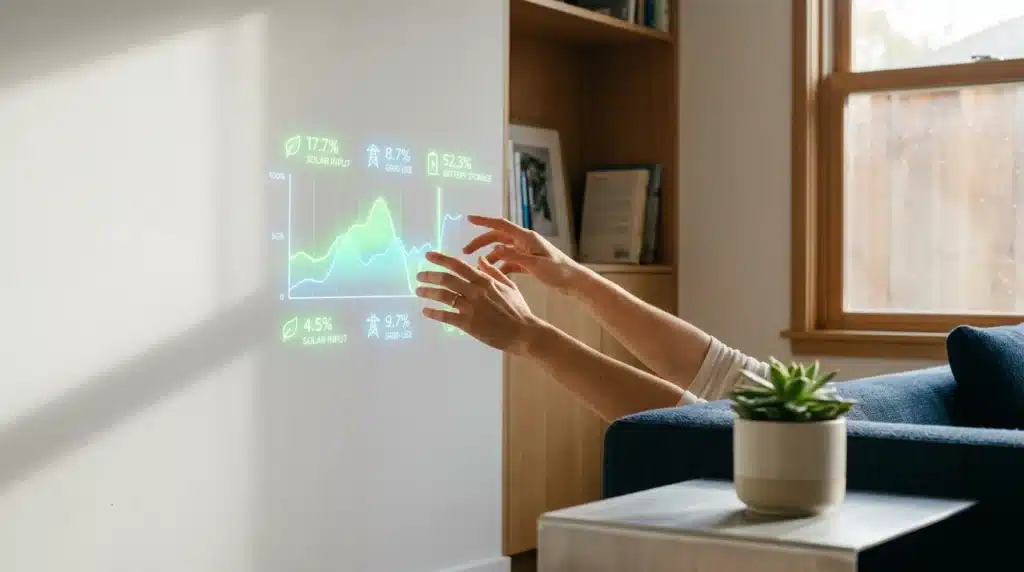
The concept of sustainable living often brings to mind images of sacrifice—giving up conveniences for the sake of the planet. But what if the path to a greener lifestyle wasn’t about using less, but about being smarter? A new generation of technology is quietly embedding sustainability into the fabric of our daily lives, transforming our homes and habits from the inside out. These innovations promise not just to reduce our environmental footprint, but to do so while enhancing convenience and cutting costs.
For years, “smart home” technology was a novelty focused on automating lights and music. Today, that same framework is being repurposed for a more critical mission: resource management. This shift reflects a broader understanding that individual actions, when amplified by intelligent systems, can lead to significant collective impact. The focus is moving away from isolated gadgets and toward integrated ecosystems that manage energy, water, and waste with a level of precision that was previously unimaginable. These are not just tools; they are partners in conservation.
This article charts the future of these ingenious eco-innovations. We’ll explore the AI-driven systems that are making homes more energy-efficient, the revolutionary tech tackling water scarcity and household waste, and the future of sustainable mobility. we will examine the consumer-facing apps that empower you to make more ethical choices every day. Prepare to discover how sustainable living tech solutions are moving from the fringe to the forefront, creating a future that is both intelligent and responsible.
The Dawn of Eco-Conscious Automation: Smart Homes & Energy Management
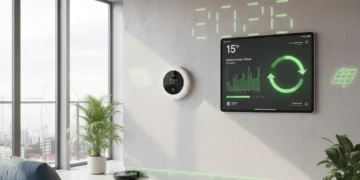
The concept of the smart home is shifting from pure convenience to becoming a powerful tool for sustainability. Early smart devices were about automatically turning on lights or playing music, but the new generation of sustainable living tech solutions is designed with resource conservation at its core. This evolution reflects one of the more significant contemporary societal trends, where technology is being purpose-built to address environmental challenges directly within our living spaces. It’s about creating homes that actively work to reduce their own footprint.
These systems use automation and artificial intelligence to manage a home’s resource consumption with a level of precision that humans simply can’t match. They make countless micro-decisions every minute to optimize performance. The result is a home that is not just smart, but also responsible.
AI-Driven Energy Optimization: Beyond the Thermostat
Modern energy efficiency tech goes far beyond a programmable thermostat. Today’s systems employ AI to learn a household’s unique patterns—when you wake up, when you cook, even which rooms you use most frequently. Based on this data, the AI can predict energy needs, pre-cooling a house before peak demand hours or running appliances when electricity from the grid is cheapest or greenest. A recent study from the Department of Energy found that homes with integrated, AI-driven energy management systems saw an average electricity bill reduction of 18%.
But how does this work in practice? The AI models analyze variables like weather forecasts, occupancy sensor data, and real-time utility pricing to make decisions. Think of it less like a simple timer and more like an air traffic controller for your home’s energy use, constantly rerouting and adjusting for the most efficient path. This kind of advanced automation is key to mastering an algorithmic life where technology works for you, not the other way around.
Integrated Systems for Resource Conservation
The most effective solutions integrate multiple aspects of home management into a single, cohesive system. True smart home sustainability isn’t just about electricity; it’s a holistic approach that connects energy, water, and waste management. For example, a system might detect a water leak via a smart sensor and automatically shut off the main valve, preventing waste and water damage—all while sending an alert to your phone. These are no longer isolated gadgets.
The goal is a fully connected ecosystem.
Some platforms now connect smart sprinklers that pull weather data to avoid watering before it rains, or link to smart appliances that schedule cycles based on grid load. The underrated factor here is how these systems handle data from dozens of inputs simultaneously (a process that can be tricky, representing one of the common pitfalls in emerging tech). The next wave of innovation will likely focus on integrating waste, with smart bins that can help households sort recycling more accurately. The challenge now is moving from a collection of clever devices to a intelligent, self-regulating home environment.
Revolutionizing Resource Use: Water, Waste, and Circular Economy Tech
While smart thermostats and lighting get much of the spotlight, a quieter revolution is happening with our most underlying resources. The next wave of sustainable living tech solutions is tackling the immense challenges of water scarcity and mounting waste. These systems are moving beyond simple efficiency to create regenerative loops within the home. They ask a simple question: what if our homes could not only consume less but also replenish and reuse?
This shift in thinking is critical. We’re talking about core changes to daily life, and understanding these systems is key to mastering the algorithmic life that tech increasingly offers. It’s less about deprivation and more about intelligent redesign.
Next-Gen Water Management: From Greywater to Rainwater Harvesting
Advanced water conservation tech is making a significant impact on household consumption. Greywater recycling systems, for instance, capture used water from showers, sinks, and washing machines, filter it, and then repurpose it for non-potable uses like toilet flushing and garden irrigation. Companies like Hydraloop have systems that can recycle up to 85% of in-home water, according to their own published data. This dramatically reduces a household’s reliance on municipal water supplies.
Smart rainwater harvesting adds another layer to this strategy. Unlike the simple rain barrel of the past, modern systems integrate with weather forecasting APIs to optimize collection. The system might preemptively empty a tank before a predicted storm to maximize capture and prevent overflow. It’s a far more proactive approach to a timeless practice.
Smart Waste Solutions: Minimizing Landfill Impact
Food scraps and packaging make up a huge portion of household trash. In fact, the EPA estimates that food waste alone accounts for over 24% of material landfilled in the United States. New waste reduction innovations are aiming to intercept this material before it ever leaves the kitchen. Smart composters, for example, use heat, aeration, and microorganisms to break down food waste into nutrient-rich soil in as little as a few hours — a process that would normally take months.
These devices—think of them as a high-speed digestive system for your kitchen—eliminate odors and pests associated with traditional composting. Simultaneously, AI-powered sorting bins are emerging that can automatically separate recyclables with greater accuracy than manual sorting. This helps reduce contamination in the recycling stream, which is a major reason why so much collected material ultimately ends up in landfills despite our best intentions. It’s a classic example of where common pitfalls in emerging tech adoption can be solved with better design.
Enabling the Circular Economy: Product Lifecycles & Repairability
Perhaps the most profound shift is the move toward a circular economy, where waste is designed out of the system entirely. Circular economy solutions aim to keep products and materials in use for as long as possible. This is being driven by “product-as-a-service” models, where you lease or subscribe to a product instead of owning it. Companies retain ownership and are incentivized to build durable, repairable, and ultimately recyclable goods.
The “right to repair” movement is another component, pushing manufacturers to make spare parts, tools, and repair information available to consumers. Dr. Julian Allwood, a professor of Engineering and the Environment at the University of Cambridge, suggests that extending product life is one of the most effective ways to reduce material consumption. Below is a comparison of how this looks for a common household item.
| Aspect | Traditional (Linear) Model | Circular Model |
|---|---|---|
| Acquisition | Purchase a new power drill. | Subscribe to a tool-sharing platform; borrow a drill. |
| Use | Drill is used for an average of 13 minutes in its lifetime. | Drill is used frequently by many different users. |
| Maintenance | If it breaks, user may attempt repair or discard it. | Platform owner is responsible for professional maintenance and repair. |
| End of Life | Drill often ends up in a landfill. | Parts are harvested for other drills or the materials are fully recycled. |
This model fundamentally reshapes our relationship with “stuff,” reflecting broader societal trends that shape market opportunities. Instead of valuing ownership, we begin to value access and performance. The biggest hurdle isn’t just the technology; it’s convincing a generation of consumers to embrace this new way of thinking.
The most material-efficient thing we can do is to use things for longer. It’s a simple idea, but it’s the most powerful lever we have against overconsumption and waste.
— Dr. Julian Allwood, Professor of Engineering and the Environment, University of Cambridge
| Technology Category | Key Innovation | Primary Impact |
|---|---|---|
| Smart Energy Management | AI-driven systems that learn household patterns and optimize energy use based on grid demand and weather. | Reduces electricity consumption and lowers utility bills by an average of 15-20%. |
| Water Conservation | Greywater recycling systems that filter and reuse water from showers and sinks for non-potable uses. | Cuts household municipal water usage by up to 85%, reducing strain on local supplies. |
| Waste Reduction | Smart composters and AI-powered sorting bins that process food waste and improve recycling accuracy. | Diverts a significant portion of household waste from landfills and reduces recycling contamination. |
| Ethical Consumption | Transparency apps that track carbon footprints and rate brands on sustainability and labor practices. | Empowers consumers to make informed purchasing decisions that align with their values. |
Sustainable Mobility: Electric, Autonomous, and Shared Futures
Transportation is a huge piece of the carbon puzzle, and sustainable living tech solutions are steering us in a new direction. Electric vehicles (EVs) are at the forefront, with battery ranges and charging infrastructure improving steadily. The International Energy Agency reports that global EV sales have been climbing, representing a significant shift away from fossil fuels. This is a core change.
The real major shift, I suspect, is combining EVs with other tech. Autonomous driving, for instance, promises to optimize routes and reduce congestion, making electric fleets even more efficient. successfully integrating these systems means carefully navigating the common pitfalls in emerging tech adoption, from software security to public acceptance. Are we ready for cars that think for themselves?
On a smaller scale, shared mobility platforms are already altering city life. App-based bike and e-scooter rentals provide convenient options for short trips, reducing car dependency—a reflection of evolving societal trends.
The challenge isn’t just about individual technologies, but how they connect into a single, smooth network. Integrating personal EVs, autonomous shuttles, and micro-mobility requires a new way of thinking about urban planning, often forcing us to look past the hype and unmask the myths of progress. The ultimate question is whether our infrastructure can keep up.
Empowering Green Choices: Consumer Tech for Ethical Living
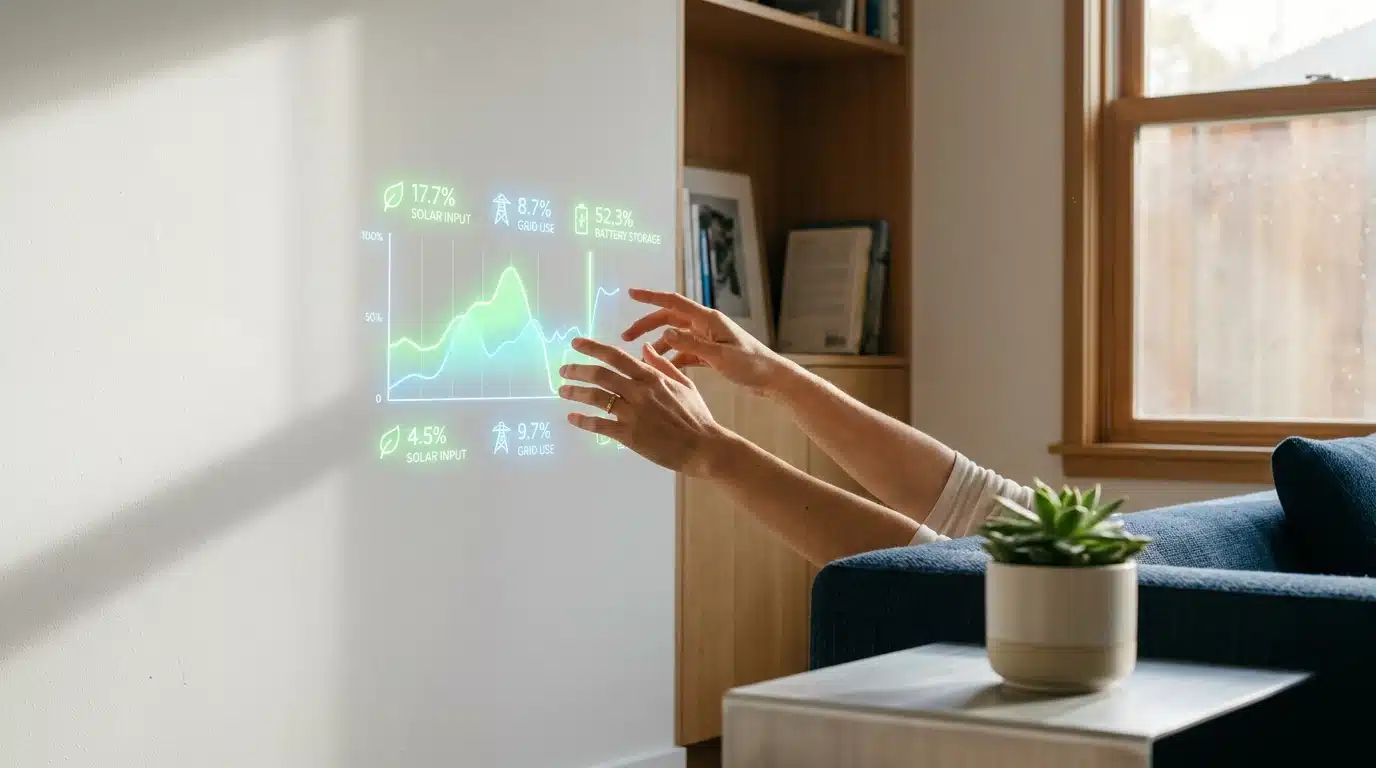
While large-scale changes in transport and energy are vital, a surge of sustainable living tech solutions is placing real power directly into consumer hands. These tools are designed to demystify complex supply chains and quantify personal environmental impact. They transform abstract goals into daily, manageable actions. The goal is to make the sustainable choice the easy choice.
Carbon Footprint Trackers and Lifestyle Apps
One of the most direct ways technology is helping is through apps that calculate your personal carbon footprint. Early versions required tedious manual entry, but modern apps often link to bank accounts or email receipts to automatically analyze the environmental cost of your purchases. It’s like a financial budget, but for your carbon output. This approach gamifies sustainability by setting goals and tracking progress, which the data suggests is surprisingly effective.
A recent analysis from the Journal of Industrial Ecology found that individuals using automated tracking apps reduced their consumption-based emissions by an average of 8.2% in the first six months. These platforms are more than just calculators; they are becoming integrated coaches that help you master an algorithmic life by suggesting lower-impact alternatives for food, travel, and shopping. But are we simply offloading our conscience to an app?
Transparency Tools: From Farm to Shelf
Beyond personal tracking, a new class of ethical consumer tech aims to provide radical transparency at the point of sale. Imagine scanning a QR code on a bag of coffee to see the exact farm it came from, its fair-trade certification, and its water usage. Apps like Good On You and CoGo do this for fashion and general retail, offering brand ratings based on labor practices and environmental policies.
These sustainable shopping apps act as a real-time verification layer. This shift towards on-demand information is a powerful counter to “greenwashing” — the corporate practice of making misleading claims about environmental benefits. Of course, this exposes a potential dark side of innovation if the data sources themselves are not properly vetted. Before trusting any app, it’s wise to evaluate its credibility.
Here’s a quick checklist for assessing these tools:
- Data Sources: Does the app clearly state where it gets its information? Look for reputable third-party certifiers or publicly available data.
- Methodology: How does it calculate ratings or footprints? A transparent methodology is a sign of a trustworthy platform.
- Business Model: Understand how the app makes money. Is it through user subscriptions, or are brands paying for placement?
- User Reviews: Check reviews for comments on accuracy and usability, not just the app’s interface.
Ultimately, these tools are not a perfect solution, but they represent a significant step in aligning consumer spending with personal values. The next challenge will be integrating this data even more seamlessly into our purchasing habits without creating decision fatigue.
The Road Ahead: Overcoming Hurdles in Sustainable Tech Adoption
While the promise of sustainable living tech solutions is immense, the path to widespread adoption is paved with significant challenges. The transition isn’t as simple as swapping an old lightbulb for an LED. It involves overcoming deep-seated economic, structural, and psychological barriers that currently slow down progress. Three major hurdles stand out: cost, infrastructure, and consumer behavior.
Addressing the Cost Barrier: Affordability and Incentives
The most immediate roadblock for many consumers is the upfront cost. High-performance solar panels, electric vehicles, and smart home energy systems often carry a premium price tag that places them out of reach for the average household. What most people miss, is the rapid decline in these costs. According to the National Renewable Energy Laboratory (NREL), the cost of solar photovoltaic modules has plummeted by nearly 89% over the last decade. This trend is making clean energy more accessible.
Still, perception often lags reality. To bridge the remaining gap, government incentives play a vital role. Federal tax credits, state-level rebates, and utility-sponsored programs can substantially reduce the net cost of an installation, effectively shortening the payback period. These financial tools are not just discounts; they are signals to the market that influence broader economic forces and encourage investment. The goal is to make the sustainable choice the easy financial choice.
Ultimately, reaching price parity with conventional technologies is the key.
Infrastructure Development: Powering the Green Revolution
New technology requires new infrastructure to support it, and this is where sustainable tech faces a classic chicken-and-egg problem. For instance, potential electric vehicle buyers hesitate due to “range anxiety,” a fear of running out of power with no charging station in sight. Building out a detailed charging network is like paving the national highway system before most people owned cars—it’s a foundational investment required to unlock mass adoption.
The numbers highlight the scale of this challenge. Data from the Department of Energy suggests the U.S. will need more than 1.2 million public EV chargers by 2030 to support projected growth, a significant increase from the roughly 160,000 available currently. Addressing these common pitfalls in tech adoption involves massive public and private investment in not just charging stations, but also in upgrading the electrical grid to handle increased demand and integrate decentralized sources like rooftop solar.
Shifting Consumer Mindsets: Education and Engagement
Even with affordable tech and reliable infrastructure, adoption hinges on consumer behavior. A perfectly efficient smart home system provides zero benefit if the owner doesn’t use it correctly. This is where education and user experience design become major. People need to understand the “why” behind the technology and the “how” of its daily use without feeling overwhelmed. But how do you make energy conservation feel engaging rather than like a chore?
Surprisingly, the will is often there. A recent NielsenIQ report found that 73% of global consumers would definitely or probably change their consumption habits to reduce their impact on the environment. The challenge is converting that intention into action. This requires clear communication, transparent data on environmental impact (think carbon footprint labels on products), and creating feedback loops that reward sustainable behavior. Understanding how innovation reshapes daily patterns is critical for designers and marketers in this space.
The Role of Policy and Regulation
Strong governmental policy acts as a powerful catalyst for both infrastructure and consumer change. Regulations can set minimum efficiency standards, phase out obsolete technologies, and create stable, long-term market conditions for green industries. “Policy de-risks innovation,” explains Dr. Lena Petrova, a senior fellow at the Institute for Environmental Policy. “When governments set clear targets and provide consistent support, they give companies the confidence to invest billions in research, development, and manufacturing.” Policies like carbon pricing or renewable portfolio standards create a direct financial incentive to go green.
The interplay between falling costs, expanding infrastructure, and evolving consumer attitudes—all guided by smart policy—will determine the speed of the sustainable tech transition. It’s a complex equation, but one where every variable is finally starting to move in the right direction.
Pioneering Innovations: Emerging Tech on the Horizon
Beyond the tech available today, researchers are exploring paradigm-shifting sustainable living tech solutions. These concepts often feel like science fiction, but they aim to solve basic problems of resource consumption. While there are always common pitfalls in emerging tech adoption, the potential upside of these projects is immense. One of the most fascinating fields is bio-integrated design, where buildings could one day feature living walls that purify air and regulate temperature organically.
Another area gaining traction is the creation of novel eco-materials. Researchers at Delft University of Technology, for instance, are experimenting with self-healing concrete that uses bacteria to repair its own cracks, potentially extending the life of infrastructure by decades. This isn’t just a minor fix. Considering that cement production accounts for a reported 8% of global CO2 emissions, materials that last longer could have a massive environmental impact.
On the food front, cellular agriculture and AI-driven vertical farms promise to produce more with significantly fewer resources. These systems can operate in urban centers, slashing transportation emissions and water usage—sometimes by up to 95% compared to traditional farming. It’s a direct response to how societal trends shape market opportunities for healthier, more localized food sources.
These ideas are still in their early stages. They represent a underlying rethinking of our relationship with the built and natural environments. As these technologies mature, we can expect to see how innovation reshapes daily living patterns in ways we are only just beginning to imagine.
Beyond Optimization: The New Social Contract of Tech
As these technologies weave themselves more deeply into our lives, we move beyond simple questions of efficiency and cost. The next frontier isn’t just about optimizing a single home; it’s about connecting millions of them into a responsive, intelligent grid. When your EV, your neighbor’s solar panels, and the local power plant are all communicating, who sets the priorities? This level of integration requires a new kind of social contract, one that balances individual autonomy with collective resilience. The most significant challenge ahead may not be engineering the technology, but rather engineering the trust and governance needed to deploy it at a societal scale.
Frequently Asked Questions
What are the most impactful sustainable living technologies available today?
The most impactful technologies are those that tackle core resource consumption. These include AI-driven energy management systems for homes, greywater recycling technology that significantly reduces water use, and the adoption of circular economy models like product-as-a-service to minimize waste.
How can smart home technology contribute to a more sustainable lifestyle?
Smart home technology automates resource conservation with high precision. It uses AI to learn a household’s habits, analyze weather data, and monitor utility pricing to optimize energy and water usage, resulting in significant reductions in waste and lower utility bills without requiring constant manual effort.
Are sustainable tech solutions typically more expensive?
While many sustainable technologies have a higher upfront cost, prices are steadily decreasing. long-term savings on energy and water bills, combined with available government incentives and tax credits, often offset the initial investment, making them financially viable for a growing number of households.
What role do consumers play in accelerating sustainable tech adoption?
Consumers play a key role by creating market demand. When they choose to invest in sustainable products and use transparency apps to support ethical brands, they send a powerful signal to manufacturers that sustainability is a priority. This encourages further innovation and drives down costs over time.
What are some future trends to watch in sustainable living technology?
Future trends point towards deeper integration between systems, such as a home’s energy storage communicating with a vehicle and the city’s power grid. We can also expect growth in product-as-a-service models that eliminate waste and the emergence of more technical AI platforms that act as personal sustainability coaches.