Blueprint for Tomorrow: Charting the Future of Sustainable Urban Living
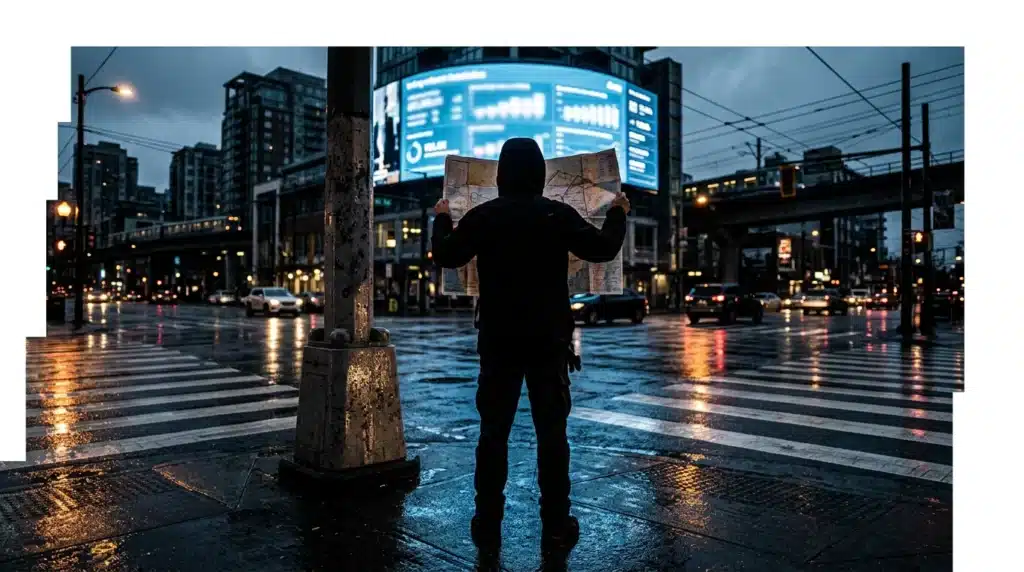
Our cities hum with a promise of opportunity, but they are groaning under the weight of that promise. The relentless pace of urban growth, once a symbol of progress, now flashes warning signs on a global dashboard. With the majority of the world’s population now calling cities home, the systems that support them—energy grids, food supply chains, and transportation networks—are strained to a breaking point.
This isn’t a distant problem for a future generation; it’s a present-day crisis demanding a radical redesign. The convergence of population density and climate instability has rendered our old models of urban development obsolete. While technology offers a dazzling array of potential solutions, from smart grids to AI-driven logistics, the belief that an app can solve systemic failure is a dangerous illusion. True sustainability requires more than just bolting new gadgets onto an old framework.
So, what does the blueprint for the future of sustainable urban living actually look like? This exploration moves beyond superficial green initiatives to dissect the core components of a resilient city. We will examine the systemic innovations in green infrastructure that are re-engineering resource flows, the role of technology in fostering genuine citizen engagement, and the critical policy frameworks necessary to turn ambitious visions into concrete reality. The question is no longer if our cities will change, but whether we will direct that change with intention or be forced into it by necessity.
The Evolving Landscape of Urban Sustainability
The modern city is built on a fragile promise of endless growth, a promise that is rapidly fracturing under its own weight. We treat our urban centers like engines that can run indefinitely without an oil change, but the warning lights are flashing. The confluence of relentless population growth and the undeniable pressures of climate change is forcing a difficult conversation about the very nature of city life. This isn’t just an academic debate; it’s a practical crisis demanding a new blueprint for the future of sustainable urban living.
Data from the World Bank indicates that over 56% of the global population currently lives in cities, a figure projected to climb dramatically. This mass migration puts an incredible strain on resources, from water and energy to housing and transportation. At the same time, technological advancements are accelerating, presenting both solutions and new complexities. The push for smart cities often involves a range of eco-innovations, but what most people miss is that technology alone is not a savior. We must be careful to avoid the alluring myths of progress that suggest an app can solve systemic failures.
True urban sustainability is a core shift.
It involves re-evaluating the core operating system of our communities, much like swapping a gas-guzzling V8 for an efficient electric motor. This means integrating circular economies, prioritizing green infrastructure, and designing for human well-being over simple commercial throughput. The challenge is immense, as these powerful societal trends are not just changing our environment but also reshaping economic realities on a global scale. The question is no longer if our cities will change, but whether we will direct that change deliberately or be forced into it by catastrophe.
Innovations Redefining Green Infrastructure
The conventional picture of green infrastructure—more parks, a few bike lanes—is dangerously outdated. True progress in the future of sustainable urban living is happening at a systemic level, embedded within the city’s operational DNA. We are talking about an active, intelligent network rather than passive green spaces. This shift is less about aesthetics and more about hardcore efficiency and resilience.
These systems are not just greener alternatives; they represent a core re-engineering of urban resource flow. Think of it less like adding a solar panel to a house and more like replacing a city’s entire circulatory system. The data suggests this is where the real impact lies. According to a report by the Urban Land Institute, integrated green infrastructure can reduce energy consumption by up to 50% and water usage by 60% in new developments.
Smart Grids and Renewable Energy Integration
The traditional power grid is a clumsy, one-way street built for a different century. Energy flows from a central plant to consumers, with massive inefficiencies along the way. Smart grids demolish this model by introducing a two-way communication network. This allows for real-time monitoring of electricity demand, routing power where it’s needed most and minimizing waste. It’s the difference between an old telephone operator manually connecting calls and the instantaneous routing of today’s internet traffic.
This digital overlay is what makes widespread renewable energy feasible. The primary criticism of solar and wind has always been their intermittency—what happens when the sun isn’t shining or the wind isn’t blowing? Smart grids, coupled with battery storage, can manage these fluctuations, storing excess energy during peak production and releasing it during lulls. The German city of Feldheim, for example, operates on a localized smart grid that achieves 100% renewable energy independence. This kind of algorithmic life management is the key to decoupling urban growth from fossil fuels.
Vertical Farming and Urban Food Security
Our food supply chain is absurdly fragile. A head of lettuce can travel over 2,000 miles to reach a city supermarket, burning fossil fuels and losing nutritional value every mile. Vertical farming attacks this problem head-on by bringing food production directly into the urban core. These indoor, stacked farms use hydroponics and LED lighting to grow crops year-round, regardless of weather.
The efficiency metrics are compelling. AeroFarms, a major operator in New Jersey, claims its facilities are up to 390 times more productive per square foot than a traditional field farm while using 95% less water. But is it a perfect solution? The energy required to power thousands of LEDs remains a significant hurdle, leading some critics to question its net environmental benefit. This highlights the constant tension within progress, where many ingenious eco-innovations present their own complex trade-offs.
Similar advancements are seen in waste management. Cities like Stockholm are implementing pneumatic tube systems that whisk garbage away to central sorting facilities, while others experiment with plasma gasification to convert non-recyclable waste into energy—a far cry from just piling refuse into a landfill.
The contrast between old and new systems is stark.
| Infrastructure | Traditional Approach | Innovative Solution |
|---|---|---|
| Energy | Centralized coal/gas plants; one-way grid; ~35% efficiency. | Decentralized renewables with smart grid; two-way flow; up to 90% system efficiency with storage. |
| Food Production | Rural agriculture; long supply chains; high water/land use. | Urban vertical farms; hyper-local; 95% less water; 1% of the land use. |
| Waste Management | Collection trucks to landfill; high emissions and land use. | Pneumatic tubes, plasma gasification; waste-to-energy conversion; 70% reduction in landfill volume. |
Implementing these technologies isn’t merely a technical challenge. What most people miss is that it requires a complete overhaul of regulatory frameworks and economic incentives, creating new market opportunities while disrupting entrenched industries. The technology is largely here; the political and social will is the real variable.
The goal of a ‘smart city’ is not to create a city that thinks for itself, but to empower citizens to think more effectively together.
— Dr. Elena Vasquez, Urban Systems Analyst
| Infrastructure | Traditional Approach | Innovative Solution |
|---|---|---|
| Energy | Centralized coal/gas plants; one-way grid; ~35% efficiency. | Decentralized renewables with smart grid; two-way flow; up to 90% system efficiency with storage. |
| Food Production | Rural agriculture; long supply chains; high water/land use. | Urban vertical farms; hyper-local; 95% less water; 1% of the land use. |
| Waste Management | Collection trucks to landfill; high emissions and land use. | Pneumatic tubes, plasma gasification; waste-to-energy conversion; 70% reduction in landfill volume. |
The Role of Technology in Citizen Engagement and Livability
The term “smart city” often conjures sterile images of self-driving pods and sensor-laden lampposts. This vision misses the point entirely. The most significant shift in the future of sustainable urban living isn’t about automating infrastructure; it’s about using technology to re-engage the very people who live there. True urban livability is not a top-down engineering problem to be solved, but a bottom-up human experience to be nurtured.
Technology’s role is to act as a facilitator for this connection, not a replacement for it. When implemented thoughtfully, digital tools can amplify citizen voices and make municipal services more responsive to real-time needs. The data suggests—though not conclusively—that cities investing in citizen-centric tech see higher satisfaction rates. Yet, there is a fine line between a connected city and a surveilled one, and avoiding common pitfalls in this adoption process is major.
Enhancing Mobility with Intelligent Transport Systems
Urban congestion is more than an annoyance; it’s an economic and environmental drain. Intelligent Transport Systems (ITS) use real-time data from GPS, sensors, and user feedback to optimize traffic flow, manage public transit, and reduce commute times. Think of it less like giving everyone a faster car and more like upgrading the city’s entire circulatory system. In Singapore, for example, the integrated transport network has helped reduce peak-hour congestion by an estimated 15% even as the population has grown.
These systems can dynamically reroute traffic around accidents, adjust signal timings based on vehicle density, and provide commuters with precise arrival predictions for buses and trains. For residents, this means less time stuck in traffic and more predictable travel—a tangible improvement in daily quality of life. But what is the hidden cost of this convenience? The constant collection of location data raises serious questions about privacy and control, exposing some of the hidden costs of progress that are often overlooked.
Digital Platforms for Community Collaboration
Beyond physical movement, technology is reshaping how residents interact with local governance. Citizen participation tech provides digital forums for people to propose ideas, report issues, and vote on neighborhood projects. Barcelona’s Decidim platform is a prime example, having been used to process over 40,000 citizen proposals for city planning and budgeting decisions. This creates a direct line of communication that was previously impossible at such a scale.
These platforms empower communities to have a direct stake in their environment. What most people miss, is that a digital suggestion box is useless without a genuine commitment from city officials to listen and act. The technology itself doesn’t create democracy; it merely provides a new venue for it. For these systems to be effective, residents must become adept at mastering these new digital tools to make their voices heard effectively.
The challenge, then, is to ensure these digital tools bridge divides rather than create new ones, making certain that access is equitable for all residents, regardless of their technical literacy.

Policy Frameworks and Economic Incentives for Sustainable Cities
The smartest technology is nothing but expensive circuitry without the political and economic frameworks to guide it. While the previous section highlighted digital tools, what most people miss is that policy is the operating system on which all urban technology runs. Without intelligent rules and incentives, even the most ingenious eco-innovations fail to scale, leaving cities with fragmented, ineffective pilot projects instead of systemic change.
Driving Change Through Regulatory Innovation
The tired, prescriptive zoning codes of the last century are a dead end. Progressive cities are instead adopting performance-based regulations that define outcomes—such as targets for energy efficiency, water use, or vehicle miles traveled—and give developers the flexibility to meet them. This approach fosters creativity rather than mandating a one-size-fits-all solution. For instance, requiring all new large-scale developments to achieve a certification like LEED Gold or BREEAM Excellent forces the market to adapt and internalize sustainability metrics from day one.
The data suggests this isn’t just theory. A study from the National Renewable Energy Laboratory (NREL) found that cities with outcome-based green building codes saw a 21% higher adoption rate of advanced energy efficiency measures compared to their peers with more traditional codes. This regulatory shift is like giving chefs a list of required nutritional values for a meal instead of a rigid recipe; the result is more diverse and often more effective. This is where the real work for the future of sustainable urban living happens.
Economic Models for Green Urban Growth
Money is the language that city governments and private markets understand best. To accelerate the green transition, economic models must make sustainability profitable and pollution costly. Carbon pricing, either through a direct tax or a cap-and-trade system, is one of the most direct mechanisms. By attaching a real cost to emissions, it creates a powerful incentive for industries and individuals to reduce their carbon footprint, shifting investment toward cleaner alternatives.
Financing the necessary infrastructure requires massive capital. This is where instruments like green bonds enter the picture. These are fixed-income financial instruments specifically earmarked to raise money for climate and environmental projects. Cities issue them to fund everything from electric public transit fleets to large-scale solar installations and resilient water systems. The global green bond market has seen explosive growth, demonstrating a clear investor appetite for projects that deliver both financial returns and positive environmental impact. This shift reveals how societal trends are shaping new market opportunities.
It fundamentally changes the economic equation.
Overcoming Barriers to Policy Adoption
Implementing these policies is never straightforward. Cities are complex systems with deeply entrenched interests, and meaningful change often faces a wall of resistance. Political cycles are short, making long-term infrastructure investments a tough sell against more immediate voter concerns. the sheer inertia of municipal bureaucracy can stifle even the most well-intentioned plans, bogging them down in years of studies and committee meetings.
For policymakers to succeed, they need a clear plan of attack. A functional checklist is a good starting point.
- Data-Driven Baselines: Establish clear, measurable benchmarks for energy use, emissions, and waste before implementing any new policy. You cannot manage what you do not measure.
- Phased Implementation: Introduce new regulations or taxes incrementally to allow businesses and residents time to adapt, mitigating economic shocks.
- Revenue Neutrality: When implementing carbon taxes, consider returning the revenue to taxpayers through dividends or other tax cuts to increase public support.
- Cross-Departmental Collaboration: Ensure that transportation, housing, energy, and economic development departments are working in concert, not in silos.
- Public-Private Partnerships (PPPs): Actively court private investment for green infrastructure projects to share the financial burden and accelerate deployment.
Community Resistance and Stakeholder Alignment
Perhaps the most significant barrier is not institutional but human. The phenomenon of NIMBY (“Not In My Back Yard”) can derail primary projects, from wind turbines and waste-to-energy plants to the densification of housing near transit hubs. How do you reconcile a city-wide goal for affordable, low-carbon housing with a neighborhood’s fierce opposition to a new apartment building? The answer lies in genuine stakeholder alignment, not just token public comment periods.
This means bringing community groups, local businesses, and private developers to the table from the very beginning. It also requires a focus on equitable outcomes. Green policies can inadvertently harm low-income communities—a concept known as “green gentrification”—if they drive up property values without protections for existing residents. Deploying technology without considering these dynamics is a recipe for failure, a clear example of the myths of progress that often ignore real-world consequences. Planners must ensure that the benefits of a sustainable city, such as clean air and better transit, are shared by all, not just the affluent. The underrated factor here is trust, which—once broken by a top-down, poorly communicated project—is incredibly difficult to rebuild.
Future Horizons: Predicting the Next Wave of Urban Sustainability
Forget the glossy renders of flying cars and sterile glass towers. The next leap in urban sustainability isn’t about more chrome, but about closing loops. We’re moving toward cities designed around circular economy principles, where waste from one process becomes the raw material for another. This isn’t just better recycling; it’s a basic redesign of urban metabolism, treating a metropolis less like a factory and more like a forest floor where nothing is ever discarded. It is a total paradigm shift.
Bio-integrated design pushes this concept even further. Imagine facades covered in algae that consume CO2 and produce biofuel, or buildings with circulatory systems that filter greywater through living walls. According to a forecast by the urban design firm Arup, buildings could become net energy producers by integrating such systems, with some prototypes already achieving 70% water self-sufficiency. These aren’t just green decorations; they are functional, living infrastructure and represent some of the most ingenious eco-innovations on the horizon.
Overseeing these complex, interconnected systems will be the domain of AI and advanced robotics. Automated drones will manage vertical farms, while predictive algorithms optimize energy and water distribution in real-time — a level of micromanagement impossible for humans. But does mastering the algorithmic life at a city-wide scale guarantee a better one? The efficiency gains are obvious, but it’s critical we start the work of unmasking the myths of progress before we code ourselves into a corner.
The true challenge is not technological, but social. As we build these self-regulating, hyper-efficient urban ecosystems, we must question who gets left behind and how these powerful new systems will shape our behavior and freedoms. The future of sustainable urban living depends less on the sophistication of our technology and more on the wisdom with which we deploy it.
Beyond the Blueprint: The Human Algorithm
We have the technical schematics for a sustainable future. Smart grids can reroute power, vertical farms can localize food production, and intelligent transport can ease congestion. Yet, the most advanced urban blueprint is useless if it designs for efficiency at the expense of humanity. The ultimate challenge isn’t optimizing resource flows; it’s ensuring that the cities we build are places we actually want to live.
As we embed technology deeper into the urban fabric, we must constantly ask who it serves. Does a data-driven platform for citizen engagement amplify all voices or only the most tech-savvy? Does an optimized transport system serve every neighborhood equally? The most critical algorithm in the future city won’t be written in code; it will be the human one—our collective capacity for empathy, equity, and civic will. What happens when we perfect the ‘smart’ city, only to find we’ve built a more efficient cage?
Frequently Asked Questions
What defines a ‘sustainable urban area’?
A sustainable urban area is a city designed to achieve a balance between environmental, social, and economic well-being. It goes beyond just green spaces and recycling programs to encompass a holistic system that meets the needs of its current residents without compromising the ability of future generations to meet their own needs.
How does technology contribute to urban sustainability?
Technology acts as a critical enabler for urban sustainability by improving efficiency and providing data for better decision-making. Smart grids optimize energy distribution, intelligent transport systems reduce congestion and emissions, and digital platforms can enhance citizen participation in local governance, making cities more responsive and resilient.
What are the biggest challenges in achieving sustainable urban living?
The primary challenges are not technological but are rooted in policy, finance, and social equity. Overcoming bureaucratic inertia, securing long-term funding for large-scale infrastructure projects, and ensuring that the benefits of new technologies are distributed fairly across all communities represent the most significant hurdles to progress.
Can individual actions significantly impact urban sustainability?
Absolutely. While systemic change is key, individual actions create a powerful collective impact. Everyday choices regarding consumption, transportation, and waste management contribute to a city’s overall footprint. engaged citizens advocating for better policies are often the driving force behind meaningful, top-down change.
Which cities are leading the way in sustainable urban development?
Different cities excel in various areas. For example, Copenhagen is a leader in cycling infrastructure and carbon-neutral goals, Singapore is renowned for its intelligent transport systems and water management, and Barcelona has pioneered the use of digital platforms for citizen participation. These cities serve as living labs for different facets of urban sustainability.