Biometric Security Innovations: Reshaping US Enterprise Data Protection by 2026
In an increasingly interconnected world, where data breaches loom as a constant threat, the imperative for robust data protection has never been more critical for US enterprises. As we look towards 2026, the landscape of cybersecurity is undergoing a profound transformation, driven largely by advancements in biometric security innovations. These cutting-edge technologies are not merely incremental improvements; they represent a paradigm shift in how organizations authenticate identities, safeguard sensitive information, and ensure the integrity of their digital ecosystems. The traditional reliance on passwords and PINs, long recognized for their inherent vulnerabilities, is rapidly giving way to more sophisticated, user-friendly, and inherently secure biometric methods. This comprehensive guide will explore the pivotal role of biometric security innovations in reshaping data protection for US enterprises, offering practical solutions and strategic insights to navigate this evolving frontier.
The digital age has brought unprecedented opportunities for growth and efficiency, but it has also ushered in an era of heightened risk. Cybercriminals are more sophisticated than ever, employing an array of tactics to exploit weaknesses in conventional security systems. For US enterprises, the stakes are incredibly high. A single data breach can lead to catastrophic financial losses, irreparable damage to reputation, and severe legal and regulatory repercussions. Consequently, investing in advanced security measures is no longer an option but a strategic necessity. Biometric security innovations offer a compelling answer to these challenges, providing a level of assurance that traditional methods simply cannot match. By leveraging unique biological or behavioral characteristics, biometrics create an almost unforgeable link between an individual and their digital access, significantly reducing the attack surface for malicious actors.
The Current State of Enterprise Data Protection in the US
Before delving into the future, it’s essential to understand the present. US enterprises currently grapple with a complex tapestry of data protection challenges. These include managing an ever-growing volume of data, complying with stringent regulations like GDPR and CCPA, combating sophisticated phishing and social engineering attacks, and securing remote workforces. Many organizations still rely on a combination of passwords, multi-factor authentication (MFA) using tokens or SMS, and network perimeter defenses. While these methods offer a baseline of security, they are often cumbersome for users and susceptible to various forms of compromise. Passwords can be stolen, guessed, or brute-forced. SMS-based MFA can be intercepted. Hardware tokens can be lost or cloned. The human element, often the weakest link in any security chain, frequently plays a role in these vulnerabilities. Employees might use weak passwords, fall prey to phishing scams, or inadvertently expose credentials. The sheer scale of user accounts and access points within a large enterprise makes effective management of these traditional methods a monumental task, leading to security gaps and operational inefficiencies. This is where the transformative potential of biometric security innovations truly shines, offering a more robust and intuitive alternative that addresses many of these longstanding issues.
Understanding Biometric Security Innovations
Biometric security innovations encompass a broad spectrum of technologies that identify individuals based on their unique biological or behavioral traits. These traits are far more difficult to forge or steal than traditional credentials. Broadly, biometrics can be categorized into two main types:
- Physical Biometrics: These are based on unique physical characteristics. Examples include:
- Fingerprint Recognition: One of the most common and widely adopted biometrics, leveraging the unique patterns of ridges and valleys on a person’s finger.
- Facial Recognition: Analyzes unique features of a person’s face, including distances between eyes, nose, and mouth. Advanced systems can differentiate between live faces and photographs.
- Iris Recognition: Scans the unique patterns of the iris, known for its high accuracy and stability over time.
- Retinal Scans: Examines the unique pattern of blood vessels at the back of the eye, offering extremely high accuracy but often perceived as more intrusive.
- Palm Vein Recognition: Maps the unique pattern of veins beneath the skin of the palm.
- Behavioral Biometrics: These analyze unique behavioral patterns. Examples include:
- Voice Recognition: Identifies individuals based on their unique vocal characteristics, pitch, and cadence.
- Gait Analysis: Recognizes individuals by their unique walking pattern.
- Keystroke Dynamics: Authenticates users based on their typing rhythm and pressure.
- Signature Recognition: Analyzes the unique way a person signs their name, including speed, pressure, and stroke order.
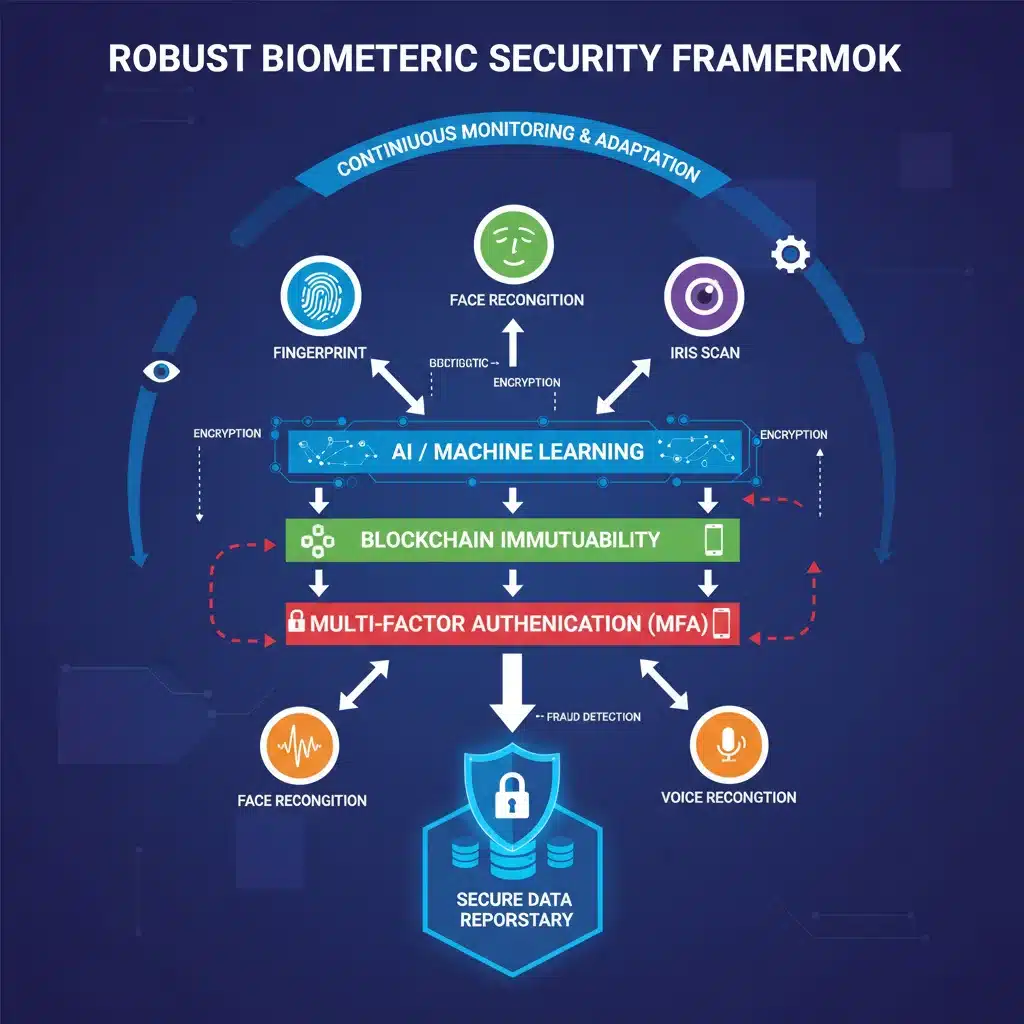
The ‘innovations’ aspect comes from the continuous refinement and integration of these technologies with other advanced fields. For instance, AI and machine learning are critical in improving the accuracy and robustness of biometric systems, enabling them to adapt to changes, detect spoofing attempts more effectively, and process data at unprecedented speeds. Blockchain technology is also being explored to create immutable, decentralized records of biometric templates, enhancing privacy and preventing single points of failure. Furthermore, the convergence of multiple biometric modalities (multi-modal biometrics) is creating even more secure and resilient authentication systems, where a combination of traits is required for verification, significantly raising the bar for attackers. These biometric security innovations are not just about recognizing a user; they are about continuously verifying identity in a dynamic and secure manner throughout a session, making them incredibly powerful tools for data protection.
Why Biometric Security Innovations are Essential for US Enterprises by 2026
By 2026, the adoption of biometric security innovations will no longer be a competitive advantage but a fundamental requirement for US enterprises. Several factors underscore this urgency:
- Enhanced Security Posture: Biometrics offer a significantly higher level of security compared to traditional methods. They are inherently unique to an individual and far more difficult to compromise. This drastically reduces the risk of unauthorized access, account takeover, and insider threats.
- Improved User Experience and Productivity: Passwords are a major source of frustration for users, leading to forgotten passwords, frequent resets, and the use of weak or reused credentials. Biometrics provide a seamless, quick, and intuitive authentication experience, saving employees time and reducing IT support overhead. This boost in productivity is a tangible benefit for any enterprise.
- Compliance with Evolving Regulations: Data protection regulations are becoming increasingly stringent. Biometric security innovations can help enterprises demonstrate stronger compliance by providing irrefutable proof of identity for access to sensitive data and systems, thereby mitigating regulatory risks and potential fines.
- Combating Sophisticated Cyber Threats: As cybercriminals develop more advanced techniques, enterprises need equally advanced defenses. Biometrics, especially when combined with AI and multi-factor authentication, are highly resistant to common attack vectors like phishing, credential stuffing, and brute-force attacks.
- Securing Remote and Hybrid Workforces: The shift to remote and hybrid work models has expanded the enterprise attack surface. Biometric authentication provides a reliable way to verify the identity of employees accessing corporate resources from anywhere, on any device, ensuring consistent security regardless of location.
- Reduced Costs Associated with Password Management: The costs associated with password-related help desk calls, resets, and managing complex password policies can be substantial. Biometric systems can significantly reduce these operational costs, offering a strong return on investment.
Practical Solutions: Implementing Biometric Security in US Enterprises
Implementing biometric security innovations requires a strategic and phased approach. Here are practical solutions for US enterprises:
1. Multi-Factor Biometric Authentication (MFBA)
Instead of relying on a single biometric, MFBA combines two or more biometric modalities (e.g., fingerprint and facial recognition) or a biometric with a knowledge factor (e.g., a biometric scan plus a PIN). This significantly enhances security by requiring multiple proofs of identity, making it exponentially harder for attackers to gain unauthorized access. Enterprises should prioritize MFBA for high-privilege accounts and access to highly sensitive data.
2. Continuous Authentication
Traditional authentication is a one-time event at login. Continuous authentication, powered by behavioral biometrics and AI, constantly verifies user identity throughout a session by analyzing subtle patterns like keystroke dynamics, mouse movements, and gait. If suspicious activity is detected, the system can prompt for re-authentication or automatically lock the account, providing real-time data protection against session hijacking and insider threats. This proactive approach significantly elevates the security posture beyond initial access.
3. Biometrics for Physical Access Control
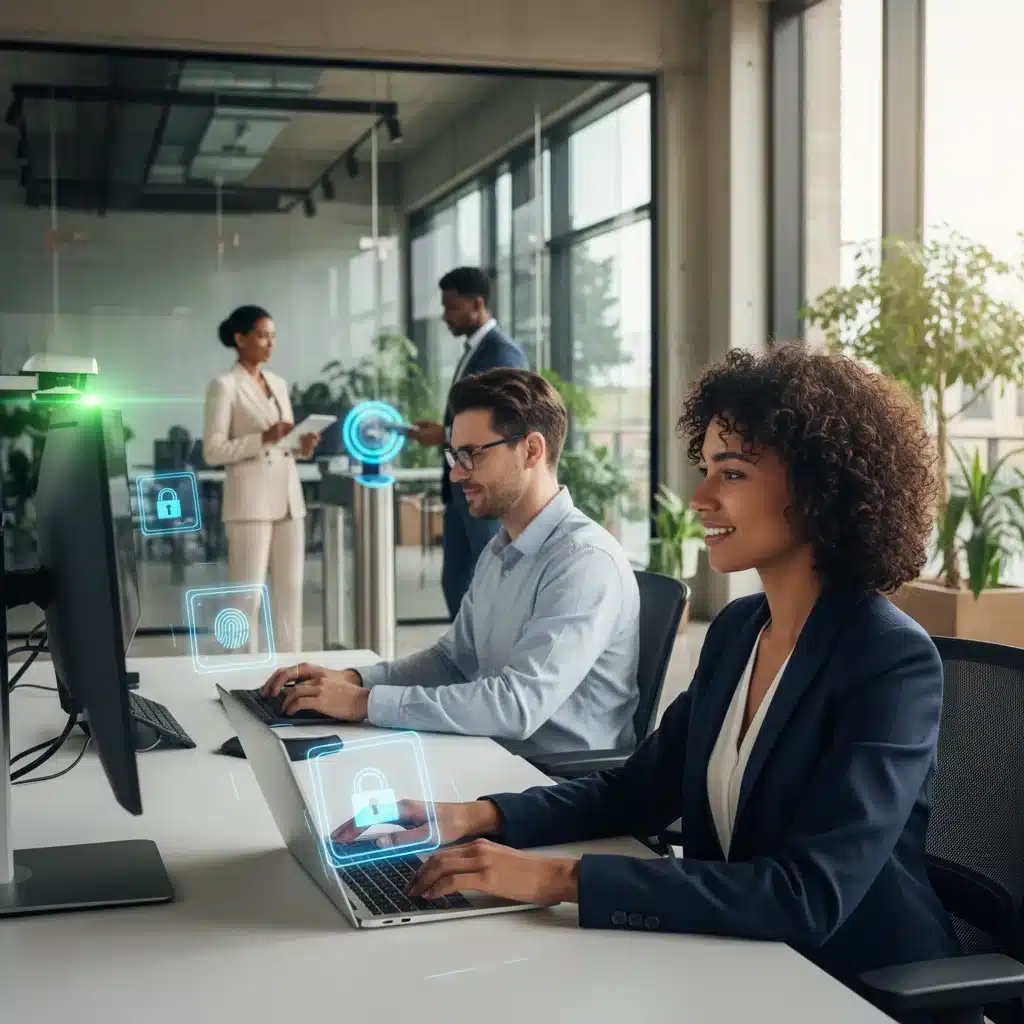
Integrating biometric security innovations with physical access systems (e.g., for server rooms, data centers, or restricted areas) creates a seamless and highly secure environment. Facial recognition or iris scans at entry points ensure that only authorized personnel can access critical infrastructure, eliminating the risks associated with lost or stolen key cards. This convergence of physical and digital security is a crucial step towards holistic data protection.
4. Secure Onboarding and Offboarding Processes
Biometrics can streamline and secure employee onboarding and offboarding. During onboarding, unique biometric templates can be securely enrolled. During offboarding, access can be instantly revoked across all systems, preventing former employees from retaining unauthorized access. This automation reduces human error and strengthens the overall security lifecycle.
5. Integration with Identity and Access Management (IAM) Systems
For large enterprises, integrating biometric security innovations with existing IAM solutions is paramount. This allows for centralized management of user identities and access privileges, ensuring that biometric authentication is consistently applied across all applications and services. A unified IAM platform with biometric capabilities simplifies administration, enhances visibility, and enforces granular access controls.
6. Leveraging Biometrics in Cloud Environments
As more enterprise data moves to the cloud, securing cloud access becomes critical. Biometric authentication can be used to secure access to cloud services and applications, providing a stronger layer of protection than traditional passwords. Cloud-based biometric solutions can offer scalability and flexibility, allowing enterprises to secure their distributed data assets effectively.
Challenges and Considerations for US Enterprises
While the benefits of biometric security innovations are compelling, enterprises must also address potential challenges:
- Privacy Concerns: The collection and storage of biometric data raise significant privacy issues. Enterprises must ensure transparent policies, obtain informed consent, and comply with all relevant data privacy regulations. Secure hashing and encryption of biometric templates are essential.
- Accuracy and Reliability: While highly accurate, no biometric system is 100% foolproof. Factors like environmental conditions, user presentation, and sensor quality can affect performance. Enterprises need to choose robust systems with high accuracy rates and deploy them appropriately.
- Spoofing and Liveness Detection: Advanced attackers might attempt to spoof biometric systems using sophisticated replicas (e.g., high-quality masks for facial recognition, synthetic fingerprints). Implementing liveness detection technologies that verify the presence of a live human is crucial.
- Enrollment and Management: The initial enrollment of biometric data and ongoing management of templates require careful planning. Secure enrollment procedures, proper data storage, and a clear policy for handling exceptions (e.g., when a biometric cannot be read) are necessary.
- Cost of Implementation: While costs are decreasing, the initial investment in biometric hardware, software, and integration can be significant. Enterprises must conduct a thorough cost-benefit analysis and plan for phased implementation.
- User Acceptance and Education: Employees may have concerns about privacy or the intrusiveness of biometrics. Clear communication, training, and demonstrating the benefits of enhanced security and convenience are vital for user adoption.
The Future of Data Protection: Biometric Security Innovations by 2026
Looking ahead to 2026, several key trends will define the evolution of biometric security innovations in US enterprises:
1. Pervasive Multi-Modal Biometrics
The reliance on single biometric modalities will diminish. Instead, multi-modal systems combining two or more biometrics (e.g., facial and voice, or fingerprint and iris) will become the standard for high-security applications. This layered approach provides superior authentication accuracy and resilience against spoofing attempts, making it incredibly difficult for unauthorized individuals to gain access. The fusion of these different data points will create an almost unassailable identity verification process.
2. AI and Machine Learning Driven Biometric Intelligence
AI and ML will be at the heart of next-generation biometric systems. These technologies will continuously analyze biometric data, detect anomalies, improve accuracy over time, and provide real-time threat intelligence. AI will enhance liveness detection capabilities, making it harder for sophisticated spoofing attacks to succeed. Furthermore, AI will enable adaptive authentication, where the level of authentication required adjusts based on risk factors like location, device, and time of day, providing a dynamic and intelligent security layer.
3. Biometrics-as-a-Service (BaaS) and Cloud Integration
The adoption of BaaS models will accelerate, allowing enterprises to leverage advanced biometric capabilities without significant upfront infrastructure investments. Cloud-based biometric solutions will offer scalability, flexibility, and easier integration with existing enterprise systems, making sophisticated biometric security accessible to a wider range of organizations, including small and medium-sized businesses. This shift will democratize access to powerful biometric security innovations.
4. Behavioral Biometrics for Continuous Trust Assessment
Behavioral biometrics will move beyond initial login to provide continuous authentication and trust assessment throughout a user’s session. By constantly monitoring unique behavioral patterns (e.g., typing rhythm, mouse movements, device usage), systems will be able to detect deviations that might indicate a compromised account or an imposter. This ‘zero-trust‘ approach, where trust is never implicitly granted and constantly verified, will become a cornerstone of enterprise data protection.
5. Decentralized Identity and Blockchain Integration
Blockchain technology offers a promising avenue for enhancing the privacy and security of biometric data. By storing encrypted biometric templates on a decentralized ledger, enterprises can eliminate central points of failure and enhance data integrity. Decentralized identity (DID) frameworks, where individuals control their own biometric data, could empower users while providing verifiable credentials to enterprises, addressing many privacy concerns associated with centralized biometric databases.
6. Biometrics in the Internet of Things (IoT) Security
As the number of IoT devices in enterprise environments explodes, securing these endpoints becomes critical. Biometric security innovations will play a vital role in authenticating users and devices interacting with IoT ecosystems, preventing unauthorized access and ensuring the integrity of data flowing from these devices. From smart sensors to industrial control systems, biometrics will provide a robust layer of identity verification.
Conclusion: Embracing Biometric Security Innovations for a Secure Future
The trajectory of data protection for US enterprises by 2026 is unequivocally shaped by the rapid evolution of biometric security innovations. These technologies offer a powerful antidote to the escalating threats of the digital age, promising not only enhanced security but also a more seamless and intuitive user experience. While challenges related to privacy, implementation costs, and user acceptance remain, proactive engagement with these issues through transparent policies, robust system design, and comprehensive user education will pave the way for successful adoption. Enterprises that strategically invest in multi-modal biometrics, AI-driven authentication, continuous behavioral analysis, and integrated security frameworks will be best positioned to protect their invaluable data assets, maintain regulatory compliance, and foster a resilient cybersecurity posture. The future of enterprise data protection is biometric, and the time for US businesses to embrace these transformative innovations is now, ensuring a secure and prosperous digital journey into 2026 and beyond.