Quantum Cybersecurity Solutions: Protecting US Businesses by 2026
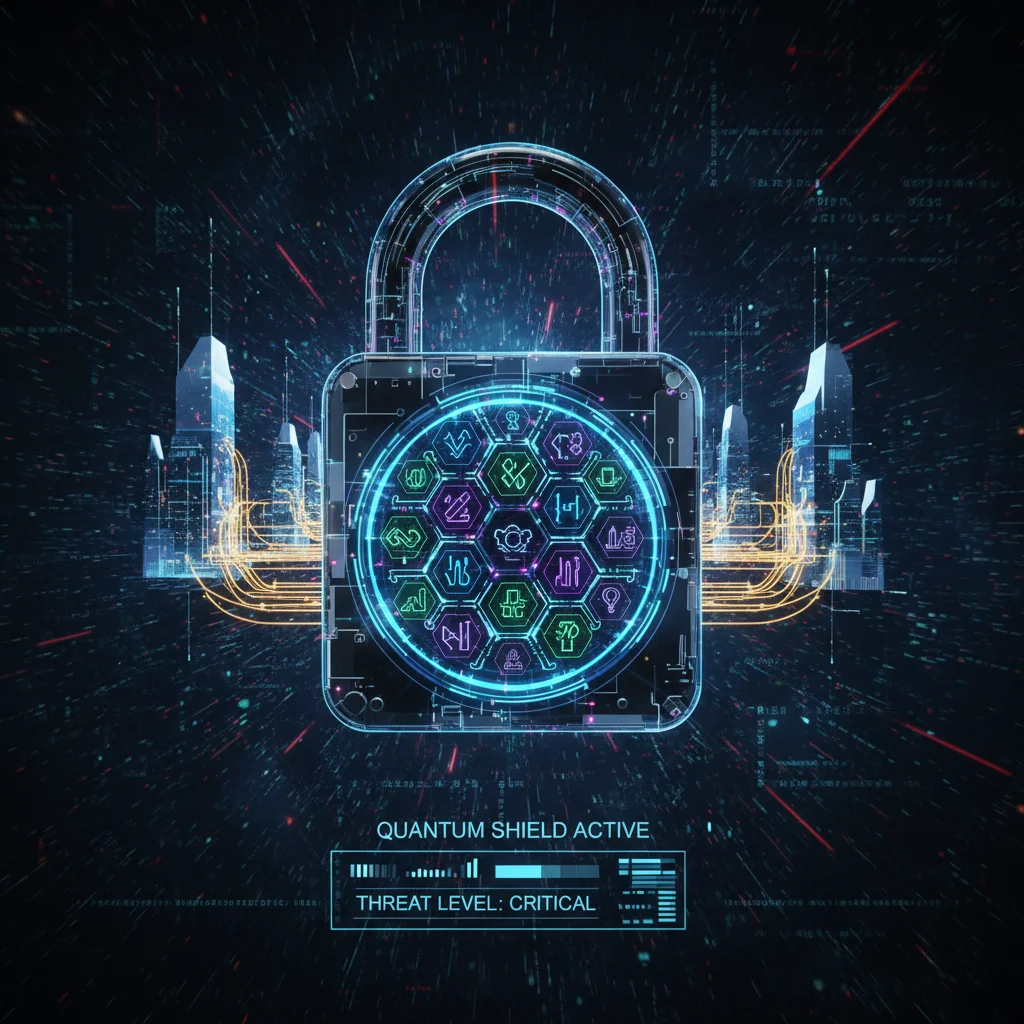
The dawn of quantum computing, while promising revolutionary advancements in fields ranging from medicine to materials science, casts a long shadow over the current landscape of digital security. Today’s most robust encryption methods, the very backbone of our digital economy and national security, are vulnerable to the immense processing power of future quantum computers. For US businesses, this isn’t a distant threat; it’s a rapidly approaching reality that demands immediate strategic planning and implementation of robust quantum cybersecurity solutions. Mid-2026 is not far off, and the window of opportunity to prepare is closing. Proactive measures are no longer an option but a necessity to safeguard sensitive data, intellectual property, and critical infrastructure.
The implications of a quantum attack are staggering. Imagine financial transactions being decrypted in moments, state secrets exposed, and national defense systems compromised. The potential for widespread chaos and economic devastation is immense. This article delves into the critical need for US businesses to embrace quantum cybersecurity solutions, outlining four practical strategies that must be adopted by mid-2026 to build a resilient defense against the quantum threat. We will explore the nuances of quantum-resistant cryptography, the importance of inventorying cryptographic assets, the strategic value of quantum key distribution, and the necessity of employee education and incident response planning.
The transition to a quantum-secure future is not merely a technical upgrade; it’s a fundamental shift in how we approach digital trust and security. Businesses that fail to adapt risk not only financial losses and reputational damage but also potential regulatory penalties and a complete erosion of customer confidence. Understanding the landscape of quantum threats and implementing effective quantum cybersecurity solutions now will determine the survival and prosperity of enterprises in the coming quantum era.
The Impending Quantum Threat: Why US Businesses Can’t Wait
The concept of quantum computing has moved from theoretical physics to engineering labs, with significant breakthroughs accelerating its development. While fully fault-tolerant quantum computers capable of breaking current encryption are still some years away, the timeline for their arrival is uncertain and potentially much shorter than many anticipate. The ‘store now, decrypt later’ threat is particularly insidious: adversaries can collect encrypted data today, knowing they will be able to decrypt it once quantum computers are powerful enough. This means that data considered secure today could be compromised in the future, making the need for quantum cybersecurity solutions immediate.
Current cryptographic standards, such as RSA and ECC (Elliptic Curve Cryptography), rely on the computational difficulty of certain mathematical problems, like integer factorization and discrete logarithms. Quantum algorithms, most notably Shor’s algorithm, can solve these problems exponentially faster than classical computers. This renders widely used public-key cryptography, which secures everything from online banking to government communications, effectively useless. The National Institute of Standards and Technology (NIST) has been actively working on standardizing post-quantum cryptographic (PQC) algorithms, a clear indication of the urgency of this transition.
For US businesses, the exposure is multifaceted. Financial institutions handle vast amounts of sensitive customer data and transactions. Healthcare organizations manage protected health information (PHI) that requires stringent security. Critical infrastructure, including energy grids, water systems, and transportation networks, relies on secure communication and control systems. Defense contractors and government agencies protect classified information vital to national security. In all these sectors, the compromise of existing encryption would have catastrophic consequences. Therefore, implementing quantum cybersecurity solutions is not just about staying ahead; it’s about fundamental survival.
The economic impact of a successful quantum attack could be devastating. Beyond the direct financial losses from data breaches, there would be significant costs associated with system remediation, legal liabilities, regulatory fines, and irreparable damage to reputation and customer trust. Businesses need to consider the long-term implications and the potential for supply chain vulnerabilities, where a weak link in a partner’s security could expose their own operations. The time to assess these risks and develop a robust strategy for quantum cybersecurity solutions is now, well before mid-2026.
Practical Solution 1: Implementing Quantum-Resistant Cryptography (PQC)
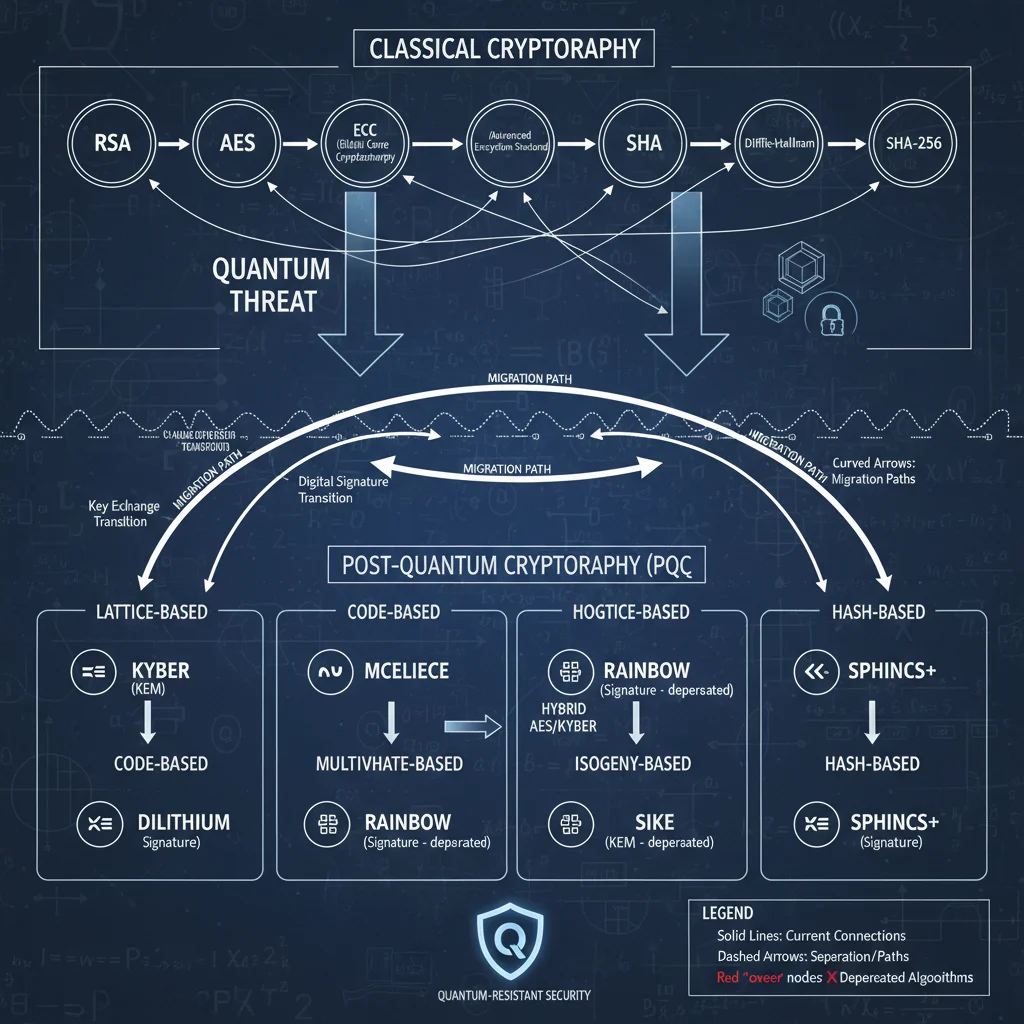
The most direct and widely applicable approach to counter the quantum threat is the adoption of Post-Quantum Cryptography (PQC), also known as quantum-resistant cryptography. PQC refers to cryptographic algorithms that are designed to be secure against attacks by both classical and quantum computers. NIST has been leading an extensive multi-year process to evaluate and standardize PQC algorithms, with several candidates already identified as promising. This standardization provides a clear roadmap for businesses to begin their transition.
Understanding PQC and Its Implementation
Implementing PQC involves a significant shift from current cryptographic practices. It’s not just about swapping out one algorithm for another; it often requires re-evaluating entire cryptographic architectures. The current NIST PQC standardization effort focuses on algorithms for public-key encryption, key-establishment, and digital signatures. These are the primary targets for quantum attacks.
Key steps for US businesses in implementing PQC include:
- Inventorying Cryptographic Assets: Before any transition can begin, businesses must have a comprehensive understanding of where cryptography is used across their entire infrastructure. This includes identifying all systems, applications, protocols, and data stores that rely on public-key cryptography. This ‘crypto-discovery’ phase is crucial for prioritizing migration efforts.
- Risk Assessment and Prioritization: Not all cryptographic assets carry the same level of risk or urgency. Businesses need to assess the sensitivity of the data protected, the lifespan of that data, and the cost of compromise. Data with long-term confidentiality requirements (e.g., intellectual property, patient records) or systems critical to ongoing operations should be prioritized for PQC migration.
- Pilot Programs and Testing: Given the complexity and novelty of PQC, it’s advisable to start with pilot programs. Implement PQC in non-critical systems or isolated environments to understand its performance characteristics, compatibility issues, and integration challenges. This allows for iterative learning and refinement before widespread deployment.
- Hybrid Mode Deployment: A common strategy during the transition period is to use a ‘hybrid mode’ or ‘crypto-agility’ approach. This involves running both classical and PQC algorithms concurrently. For example, a TLS handshake might use both an RSA certificate and a PQC certificate. This provides a fallback in case PQC algorithms are found to have unforeseen vulnerabilities or if the quantum threat materializes faster than anticipated. It also ensures backward compatibility with systems that haven’t yet migrated.
- Integration with Existing Security Infrastructure: PQC solutions must integrate seamlessly with existing security tools, such as Public Key Infrastructure (PKI), Hardware Security Modules (HSMs), and security management platforms. Vendors of these solutions are actively developing PQC-compatible versions, and businesses should engage with their providers to ensure future compatibility.
The adoption of PQC is a marathon, not a sprint. It requires careful planning, significant resources, and a long-term commitment. However, it is the most fundamental of all quantum cybersecurity solutions for protecting data against future quantum attacks.
Practical Solution 2: Employing Quantum Key Distribution (QKD) for Critical Data
While PQC addresses the vulnerability of public-key algorithms to quantum computers, Quantum Key Distribution (QKD) offers an entirely different, physics-based approach to secure key exchange. QKD leverages the principles of quantum mechanics to establish a shared secret key between two parties with provable security, meaning any attempt by an eavesdropper to intercept the key will inevitably disturb its quantum state, alerting the legitimate users. This makes QKD a highly secure method for distributing cryptographic keys, especially for extremely sensitive information.
How QKD Enhances Security
Unlike PQC, which relies on mathematical hardness assumptions, QKD’s security is guaranteed by the laws of physics. This means it is theoretically immune to any computational advancements, including those from quantum computers. For US businesses dealing with critical, long-term confidential data – such as government communications, high-value financial transactions, or intellectual property – QKD represents a robust layer of security that complements PQC efforts.
Key considerations for integrating QKD into quantum cybersecurity solutions:
- Targeted Deployment: QKD is typically deployed in point-to-point connections over fiber optic cables or free-space optical links. Its physical requirements and cost make it less suitable for widespread, general-purpose encryption. Instead, businesses should identify specific, high-value communication channels that require the highest level of security. Examples include secure links between data centers, critical infrastructure control systems, or government agencies exchanging classified information.
- Hybrid Cryptosystems with QKD: QKD is not a complete encryption solution on its own. It provides a secure method for exchanging keys, which are then used with classical symmetric-key encryption algorithms (like AES-256) to encrypt the actual data. This ‘QKD-enabled symmetric encryption’ combines the provable security of QKD for key exchange with the efficiency of classical symmetric encryption for bulk data.
- Infrastructure Requirements: Deploying QKD requires specialized hardware and dedicated optical fiber or line-of-sight for free-space links. This can be a significant infrastructure investment. Businesses must carefully evaluate the cost-benefit for their most critical assets. As QKD technology matures, its cost and accessibility are expected to improve, but planning for these infrastructure needs is crucial by mid-2026.
- Integration and Management: QKD systems need to be integrated into existing network security architectures and managed effectively. This includes key management systems that can handle both QKD-generated and PQC-generated keys. Training security personnel to operate and maintain QKD systems will also be essential.
While QKD is a more specialized solution compared to PQC, its unique security guarantees make it an indispensable component of a comprehensive quantum cybersecurity strategy for the most critical assets. US businesses must assess where QKD can provide an unparalleled level of protection against future threats.
Practical Solution 3: Comprehensive Cryptographic Asset Inventory and Agile Management
Before any quantum cybersecurity solutions can be effectively implemented, US businesses must first understand what they need to protect. This starts with a comprehensive and continuously updated cryptographic asset inventory. Many organizations lack a clear picture of all cryptographic instances, algorithms, key lengths, certificates, and their locations across their vast and often complex IT environments. This lack of visibility is a major vulnerability in the face of quantum threats.
Building a Robust Crypto-Agility Framework
A thorough inventory forms the foundation for a ‘crypto-agile’ strategy. Crypto-agility refers to an organization’s ability to quickly and efficiently migrate cryptographic algorithms and keys without disrupting services. This is paramount for addressing the quantum threat, as the specific PQC algorithms standardized by NIST may evolve, and new vulnerabilities could emerge, requiring rapid updates.
Key elements of this practical solution include:
- Automated Discovery Tools: Manual inventory is often insufficient and prone to errors. Businesses should invest in automated tools that can scan networks, endpoints, applications, and cloud environments to discover all cryptographic instances. These tools should identify algorithms in use (RSA, ECC, AES), key sizes, certificate expiration dates, and the specific systems relying on them.
- Centralized Cryptographic Management: Once inventoried, cryptographic assets need centralized management. This includes a robust Public Key Infrastructure (PKI) that can issue, revoke, and manage both classical and PQC certificates. Centralized management simplifies the transition to PQC and enhances overall security posture.
- Dependency Mapping: Understanding the dependencies between applications, services, and cryptographic modules is crucial. A change to one cryptographic component can have cascading effects. Mapping these dependencies helps in planning the migration to quantum cybersecurity solutions and minimizing downtime.
- Policy-Driven Cryptography: Establish clear organizational policies for cryptographic usage, including approved algorithms, key lengths, and certificate lifetimes. These policies should be regularly reviewed and updated to reflect the latest PQC standards and threat intelligence. Automated enforcement of these policies can prevent the introduction of weak or unsupported cryptography.
- Regular Audits and Monitoring: The cryptographic landscape is dynamic. Regular audits and continuous monitoring of cryptographic assets are essential to ensure compliance with policies, identify unauthorized or deprecated algorithms, and track the progress of PQC migration.
- Supply Chain Cryptography: Extend the inventory and management efforts to the supply chain. Many businesses rely on third-party software, hardware, and cloud services. It’s critical to understand the cryptographic posture of these external dependencies and work with vendors to ensure their products and services will be quantum-ready.
By mid-2026, US businesses must have a clear, actionable understanding of their cryptographic footprint and the agility to adapt to new cryptographic standards. This foundational work is indispensable for the successful deployment and management of all other quantum cybersecurity solutions.

Practical Solution 4: Workforce Education and Incident Response Planning for Quantum Threats
Technology alone cannot secure an organization. The human element is critical, both in terms of expertise and preparedness. As US businesses navigate the transition to quantum cybersecurity solutions, investing in workforce education and developing quantum-aware incident response plans are paramount. Without a knowledgeable team, even the most advanced technical solutions can fail.
Building a Quantum-Ready Security Team and Response Strategy
The complexity of quantum computing and post-quantum cryptography requires specialized knowledge. Organizations need to cultivate internal expertise and prepare their security operations centers (SOCs) for a new class of threats.
Key components of this practical solution include:
- Cybersecurity Team Training: Provide comprehensive training to cybersecurity professionals on the principles of quantum computing, the specific vulnerabilities it poses to current cryptography, and the details of PQC algorithms. This includes understanding the new mathematical problems PQC relies on, their performance characteristics, and potential implementation pitfalls. Training should also cover the deployment and management of QKD systems where applicable.
- Developer Education: Software developers play a critical role in integrating cryptographic libraries into applications. They need to be educated on secure coding practices for PQC, how to use new cryptographic APIs, and the importance of avoiding common cryptographic errors that could undermine quantum security.
- Executive and Board Awareness: Senior leadership and board members need to understand the strategic risks and implications of the quantum threat. This awareness is crucial for securing the necessary budget, resources, and organizational buy-in for implementing quantum cybersecurity solutions. They must view this as a business continuity issue, not just an IT problem.
- Quantum-Aware Incident Response Plans: Existing incident response plans may not adequately address quantum-specific threats. Businesses need to update their plans to include scenarios where encryption is compromised by quantum attacks. This involves defining new procedures for detecting such breaches, containing the damage, recovering data, and communicating with stakeholders.
- Threat Intelligence and Monitoring: Stay abreast of the latest advancements in quantum computing and cryptography. Continuously monitor threat intelligence feeds for signs of quantum cryptanalysis breakthroughs or early indicators of quantum-enabled attacks. This proactive monitoring allows for timely adjustments to security strategies.
- Regular Drills and Simulations: Conduct regular tabletop exercises and simulations to test the effectiveness of quantum-aware incident response plans. These drills help identify weaknesses, improve coordination, and ensure that personnel are prepared to act decisively under pressure.
- Collaboration and Information Sharing: Engage with industry consortia, government agencies (like NIST and CISA), and academic institutions to share knowledge, best practices, and threat intelligence related to quantum cybersecurity. Collaboration can accelerate the adoption of effective quantum cybersecurity solutions across various sectors.
By investing in their workforce and refining their incident response capabilities, US businesses can build a human firewall that complements their technological defenses, ensuring resilience in the face of the quantum challenge by mid-2026.
The Roadmap to Quantum Security by Mid-2026
The journey to quantum security is complex and requires a phased approach. For US businesses, the mid-2026 deadline serves as a critical milestone, urging immediate action. The four practical solutions outlined above – implementing PQC, employing QKD for critical data, comprehensive cryptographic asset inventory, and workforce education with incident response planning – are not isolated efforts but interconnected components of a holistic strategy.
The first step for any organization is to conduct a thorough risk assessment, understanding which assets are most vulnerable and what the potential impact of a quantum attack would be. This assessment should inform the prioritization of migration efforts. Simultaneously, organizations should begin their cryptographic inventory, a foundational task that will reveal the scope of the challenge.
As NIST finalizes its PQC standards, businesses should be ready to integrate these new algorithms into their systems, starting with non-critical applications and gradually moving towards core infrastructure. The adoption of crypto-agility principles will ensure that organizations can adapt quickly to changes in the PQC landscape. For the most sensitive data, exploring QKD for point-to-point connections offers an unparalleled level of security.
Crucially, the human element cannot be overlooked. Investing in training for cybersecurity teams, developers, and even executive leadership will foster a culture of quantum awareness and preparedness. Developing and regularly testing quantum-aware incident response plans will ensure that organizations can effectively mitigate the impact of any breach.
The quantum threat is real, and its arrival is inevitable. Procrastination is not an option. US businesses that proactively invest in and implement robust quantum cybersecurity solutions by mid-2026 will not only protect their invaluable assets but also gain a significant competitive advantage in a world where digital trust is paramount. The future of cybersecurity depends on the actions taken today.
Conclusion: Securing the Future with Quantum Cybersecurity Solutions
The quantum computing revolution presents both unprecedented opportunities and existential threats to cybersecurity. For US businesses, the imperative to act is clear and urgent. By mid-2026, a significant portion of current encryption methods will be at risk from advanced quantum computers, making the adoption of quantum cybersecurity solutions a strategic necessity rather than a mere technical upgrade.
The four practical solutions discussed – the implementation of quantum-resistant cryptography (PQC), the strategic deployment of Quantum Key Distribution (QKD) for critical assets, the establishment of a comprehensive cryptographic asset inventory coupled with crypto-agility, and robust workforce education alongside quantum-aware incident response planning – provide a clear and actionable roadmap. These strategies, when integrated effectively, will create a multi-layered defense capable of withstanding the quantum onslaught.
The transition will demand significant investment in technology, infrastructure, and human capital. It requires a forward-thinking leadership that recognizes the gravity of the quantum threat and champions the necessary organizational changes. Businesses that embrace this challenge proactively will not only safeguard their data, intellectual property, and operational continuity but will also enhance their resilience, build greater trust with their customers and partners, and position themselves as leaders in the quantum era.
The time for theoretical discussions is over. The time for practical action is now. US businesses have a critical window of opportunity until mid-2026 to embed these essential quantum cybersecurity solutions into their core security frameworks. Failing to do so risks an exposure to unimaginable levels of cyber vulnerability, potentially jeopardizing national security and economic stability. Let us collectively strive to build a quantum-secure future, protecting our digital world from the threats of tomorrow, today.