Quantum Computing 2026: Reshaping US Industries with Breakthroughs
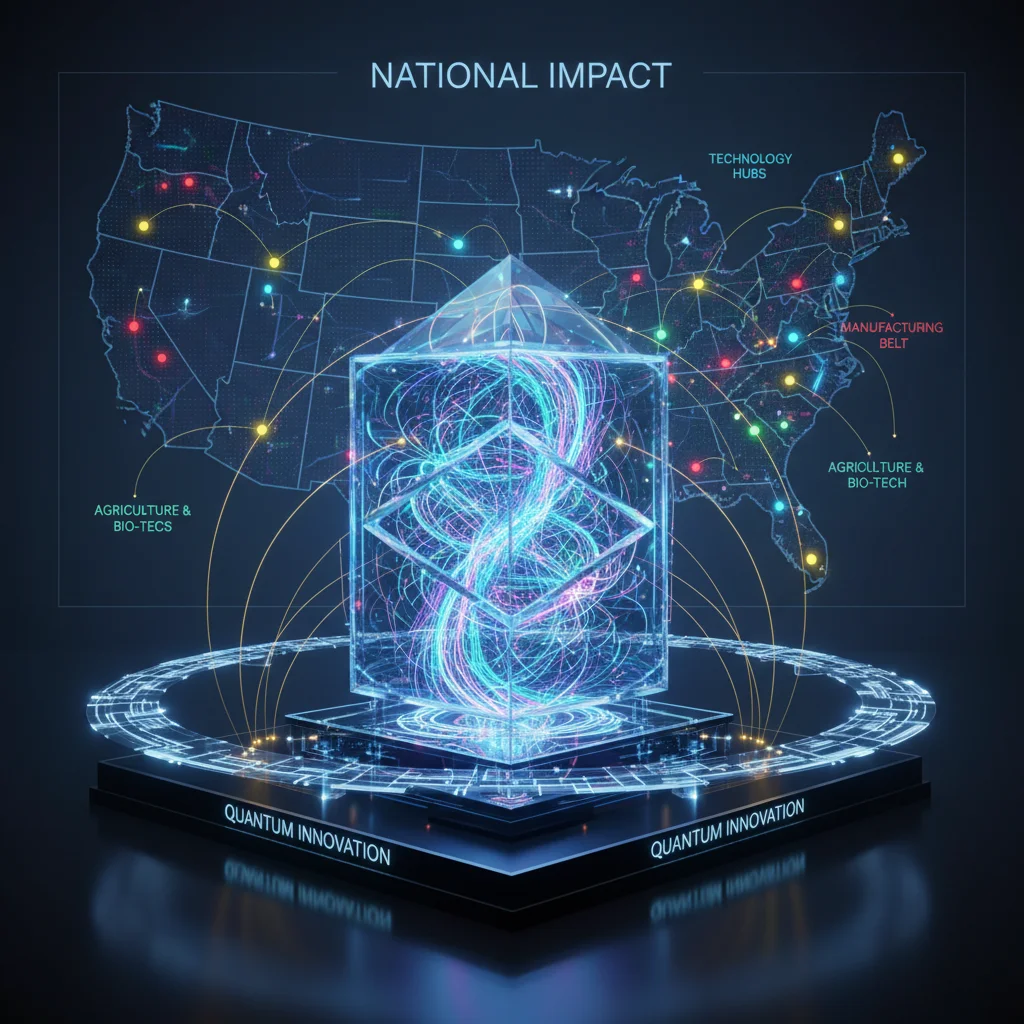
Quantum Computing 2026: 3 Breakthroughs Expected to Reshape US Industries (INSIDER KNOWLEDGE)
The year 2026 is not just another mark on the calendar; for the technological landscape, it represents a pivotal moment in the evolution of quantum computing. While often discussed in hushed tones of scientific theory and distant potential, quantum computing is rapidly transitioning from the realm of pure research to tangible applications, especially within the United States. The pace of innovation in this field is accelerating, driven by significant investments from both government agencies and private enterprises. This article delves into the anticipated breakthroughs in quantum computing 2026 and explores how these advancements are set to profoundly reshape key US industries. We’re talking about a paradigm shift, not just incremental improvements.
For years, classical computers have been the bedrock of our digital world, performing calculations based on bits that represent either a 0 or a 1. Quantum computers, however, leverage the bizarre principles of quantum mechanics – superposition, entanglement, and quantum tunneling – to process information in fundamentally different and exponentially more powerful ways. Instead of bits, they use qubits, which can represent 0, 1, or both simultaneously. This inherent parallelism allows quantum machines to tackle problems that are utterly intractable for even the most powerful supercomputers today. The implications for industries reliant on complex optimization, simulation, and data analysis are nothing short of revolutionary.
The journey to widespread quantum utility is complex, fraught with engineering challenges and the need for significant scientific breakthroughs. Yet, the progress being made is undeniable. By quantum computing 2026, we anticipate reaching several critical inflection points that will move quantum technology out of specialized labs and into practical, albeit still nascent, industrial applications. This isn’t about replacing every classical computer; it’s about augmenting them, providing unprecedented computational power for specific, high-value problems.
The US, with its robust research ecosystem, significant venture capital, and a strategic focus on technological leadership, is at the forefront of this quantum race. Government initiatives, such as the National Quantum Initiative Act, have injected billions into quantum research and development, fostering collaboration between academia, industry, and national labs. This concerted effort is creating an environment ripe for rapid advancement, making the quantum computing 2026 outlook particularly exciting for American industries.
Breakthrough 1: Error Correction and Fault-Tolerant Qubits
One of the most persistent hurdles in quantum computing has been the fragility of qubits. Quantum states are incredibly sensitive to environmental interference, leading to ‘decoherence’ and errors. Building a quantum computer that can perform complex calculations reliably requires robust error correction mechanisms. While perfect fault tolerance is still a distant goal, significant strides are being made. By quantum computing 2026, we expect to see the development of ‘near-term’ fault-tolerant qubits that can maintain their quantum state for longer durations and with significantly lower error rates.
This breakthrough isn’t about achieving perfect error correction, but rather about reaching a threshold where the error rates are low enough for certain quantum algorithms to outperform classical ones on commercially relevant problems. Imagine a quantum computer that can run for minutes, or even hours, without significant error accumulation, rather than mere microseconds. This extended coherence time and reduced error rate will unlock a new class of problems that are currently out of reach.
Impact on US Industries: Finance and Cybersecurity
The financial sector, a behemoth of complex calculations and risk assessment, stands to gain immensely from improved qubit stability. Quantum algorithms for portfolio optimization, fraud detection, and high-frequency trading could become vastly more efficient. For instance, optimizing a diverse investment portfolio with hundreds or thousands of variables is a computationally intensive task. Quantum computers could explore a far greater number of possible combinations in a fraction of the time, leading to more profitable and resilient investment strategies. Furthermore, the ability to model complex financial derivatives and predict market fluctuations with greater accuracy could provide US financial institutions with a significant competitive edge on the global stage.
In cybersecurity, the implications are equally profound. The development of Shor’s algorithm, a quantum algorithm capable of breaking widely used public-key cryptography (like RSA) that underpins secure communication, has long been a concern. While fully breaking current encryption schemes requires truly fault-tolerant quantum computers, improved qubit stability by quantum computing 2026 will accelerate research into post-quantum cryptography. This means developing new encryption methods resistant to quantum attacks. The US government and critical infrastructure sectors are already investing heavily in this area, and the advancements in qubit reliability will drive the urgent adoption and implementation of these new security standards. This will be a race against time, with the stability of quantum systems dictating the pace of cryptographic evolution. 
Moreover, quantum computing could also enhance cybersecurity by enabling the creation of unbreakable quantum-safe communication networks, utilizing principles like quantum key distribution (QKD). While QKD is still in its early stages, more stable qubits could make such systems more practical and scalable, offering an unprecedented level of secure communication for sensitive government and corporate data. The ability to detect eavesdropping attempts with absolute certainty through the laws of physics is an alluring prospect for national security and critical infrastructure. The US, with its vast digital footprint and strategic interests, will be a primary beneficiary of these advancements, bolstering its defensive capabilities against increasingly sophisticated cyber threats.
Breakthrough 2: Hybrid Quantum-Classical Algorithms for Optimization
While fully fault-tolerant quantum computers are still some years away, the immediate future of quantum computing lies in ‘noisy intermediate-scale quantum’ (NISQ) devices. These machines, while not perfectly error-free, are powerful enough to tackle certain problems more efficiently than classical computers. The key to leveraging NISQ devices effectively is through hybrid quantum-classical algorithms. By quantum computing 2026, we anticipate significant advancements in these hybrid approaches, where quantum processors handle the computationally intensive parts of a problem, and classical computers manage the rest, iterating and refining the quantum output.
These algorithms are designed to maximize the potential of current quantum hardware by offloading tasks that a quantum computer is uniquely suited for, such as exploring vast solution spaces or simulating complex molecular interactions. The classical component then takes these quantum insights and refines them using traditional computational methods. This synergistic approach allows us to harness the power of quantum mechanics without requiring perfect quantum machines, bridge the gap between current capabilities and future potential, and accelerate the discovery of practical applications. The development of more sophisticated quantum compilers and software frameworks will also play a crucial role in making these hybrid algorithms more accessible and efficient for industry professionals, moving beyond the highly specialized domain of quantum physicists.
Impact on US Industries: Logistics and Manufacturing
The logistics and manufacturing sectors in the US are ripe for disruption by these hybrid algorithms. Supply chain optimization, a notoriously complex problem involving countless variables (routes, inventory, demand fluctuations, factory output), can benefit immensely. Quantum-assisted optimization algorithms could find optimal solutions for global supply chains, reducing costs, improving efficiency, and enhancing resilience against disruptions. For example, a major US logistics company could use a hybrid quantum algorithm to dynamically re-route thousands of delivery vehicles in real-time in response to traffic, weather, or unexpected delays, leading to substantial fuel savings and faster delivery times. This level of dynamic optimization is currently impossible for classical systems.
In advanced manufacturing, hybrid quantum-classical approaches could revolutionize material science and product design. Simulating the properties of new materials at the atomic level, a task currently limited by classical computational power, could be significantly accelerated. This means faster discovery of new alloys, polymers, or catalysts with desired properties, leading to innovations across industries from aerospace to automotive. Imagine designing a new generation of lightweight, super-strong materials for aircraft with unprecedented speed, or developing more efficient battery technologies for electric vehicles. The ability to simulate and predict material behavior with quantum accuracy will drastically reduce the time and cost associated with research and development, giving US manufacturers a significant competitive edge.
Furthermore, quantum computing could optimize complex manufacturing processes themselves, from factory floor scheduling to quality control. By modeling the intricate interdependencies of machines, materials, and personnel, quantum algorithms could identify bottlenecks, improve throughput, and minimize waste, leading to more efficient and sustainable production lines. The ‘smart factory’ of the future will undoubtedly incorporate quantum-enhanced optimization to achieve levels of efficiency and adaptability previously unimaginable. This transformation will not only boost productivity but also enable greater customization and responsiveness to market demands, strengthening the US manufacturing base.
Breakthrough 3: Quantum Machine Learning Advancements
Machine learning (ML) has already transformed countless industries, but quantum machine learning (QML) promises to take artificial intelligence to an entirely new level. By quantum computing 2026, we expect to see significant progress in developing quantum algorithms that can process and analyze vast datasets in ways that classical ML algorithms cannot, particularly for tasks involving complex pattern recognition and classification. This isn’t just about faster ML; it’s about fundamentally new approaches to learning from data.
QML algorithms leverage quantum principles to perform computations on data represented as quantum states. This allows them to explore high-dimensional feature spaces more efficiently, potentially leading to breakthroughs in areas like image recognition, natural language processing, and anomaly detection. While fully scalable quantum neural networks are still a long way off, the advancements in NISQ devices and hybrid algorithms will enable the development of specialized QML models that can offer a ‘quantum advantage’ for specific, challenging ML tasks. The ability to process and understand data in novel ways could unlock insights currently hidden within massive datasets, driving innovation across diverse sectors. The US, a leader in AI and ML research, is uniquely positioned to capitalize on these QML advancements, integrating them into existing AI frameworks.
Impact on US Industries: Healthcare and Pharmaceuticals
The healthcare and pharmaceutical industries are poised for revolutionary changes through quantum machine learning. In drug discovery, QML could dramatically accelerate the process of identifying potential drug candidates. By analyzing vast databases of molecular structures and their interactions, quantum algorithms could predict the efficacy and toxicity of new compounds with unprecedented accuracy. This means bringing life-saving drugs to market faster and at lower costs. Imagine a quantum-powered AI sifting through millions of molecular combinations to pinpoint the most promising candidates for a new cancer therapy, a task that currently takes years and billions of dollars through traditional methods.
Personalized medicine is another area where QML can have a transformative impact. Analyzing individual patient genomic data, medical history, and lifestyle factors to tailor treatments is an incredibly complex task. Quantum machine learning could process this massive, heterogeneous data to identify subtle patterns and predict the most effective therapies for individual patients, leading to more precise and effective treatments. This could usher in an era where medical interventions are truly personalized, minimizing side effects and maximizing positive outcomes. US healthcare providers and pharmaceutical companies are already exploring these possibilities, understanding that early adoption of QML could lead to significant competitive advantages and, more importantly, better patient care. 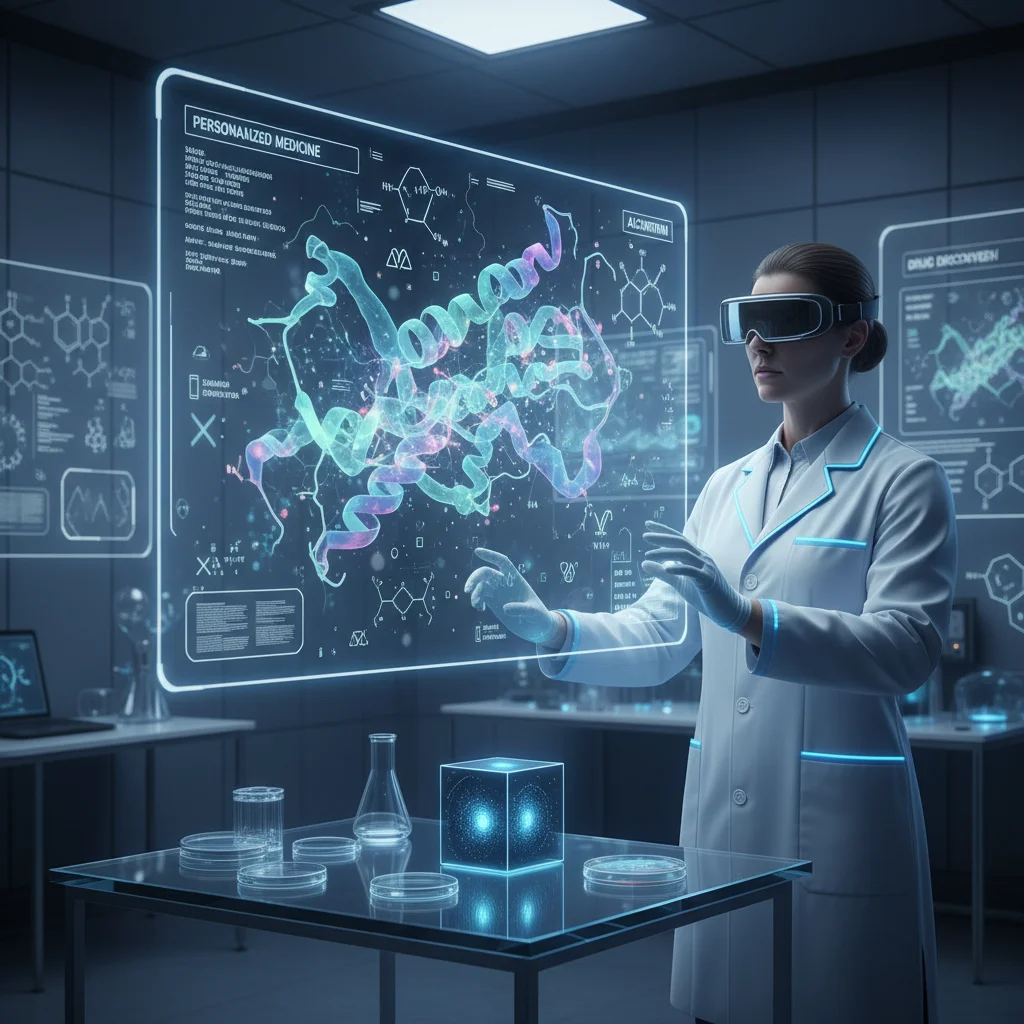
Beyond drug discovery and personalized medicine, QML could also enhance medical imaging analysis, leading to earlier and more accurate disease detection. For example, quantum-enhanced image recognition could identify minute anomalies in MRI or CT scans that are currently missed by classical algorithms or even human eyes. This could lead to earlier diagnosis of diseases like cancer or neurodegenerative disorders, drastically improving treatment outcomes and saving lives. The integration of QML into diagnostic tools will represent a significant leap forward in medical technology, making healthcare more proactive and preventative.
Challenges and the Road Ahead for Quantum Computing 2026
While the prospects for quantum computing 2026 are incredibly exciting, it’s crucial to acknowledge the significant challenges that remain. The engineering complexity of building and maintaining quantum computers is immense. Qubits require extremely cold temperatures (close to absolute zero) or highly specialized vacuum environments, making scaling up these devices a monumental task. Furthermore, the development of robust quantum software and algorithms that can effectively translate real-world problems into quantum computations is still an active area of research. There’s also a significant talent gap, with a shortage of quantum engineers and scientists capable of working with these cutting-edge technologies.
Despite these hurdles, the momentum is undeniable. The US government, through agencies like the Department of Energy and the National Science Foundation, continues to pour resources into quantum research, establishing quantum research centers and fostering a new generation of quantum talent. Private companies, from tech giants like IBM and Google to innovative startups, are also making massive investments, pushing the boundaries of what’s possible. Collaborative efforts between academia and industry are accelerating the pace of discovery and ensuring that theoretical breakthroughs are quickly translated into practical applications.
The ethical implications of quantum computing, particularly concerning cybersecurity and data privacy, also need careful consideration as the technology matures. Establishing responsible development guidelines and regulatory frameworks will be crucial to ensure that quantum advancements benefit society as a whole while mitigating potential risks. This proactive approach to ethics and governance will be vital in shaping a positive future for quantum technology.
Conclusion: The Quantum Leap of 2026 and Beyond
The journey of quantum computing is a testament to human ingenuity and the relentless pursuit of knowledge. By quantum computing 2026, we are not expecting fully universal, fault-tolerant quantum computers that can solve every problem. Instead, we anticipate significant, targeted breakthroughs in qubit stability, hybrid algorithms, and quantum machine learning that will begin to demonstrate tangible, transformative value in specific industrial applications. These advancements will serve as powerful catalysts, driving further investment and accelerating the path towards more powerful quantum systems in the decades to come.
The US, with its strategic vision and unparalleled capacity for innovation, is poised to lead this quantum revolution. From securing financial transactions and defending against cyber threats to accelerating drug discovery and optimizing complex supply chains, the impact of quantum computing will be felt across every major industry. The insights gained from these early applications will not only reshape existing markets but also give rise to entirely new industries and economic opportunities.
As we look towards 2026 and beyond, the message is clear: quantum computing is no longer a distant dream. It is a rapidly approaching reality, and the US industries that embrace and invest in this transformative technology today will be the ones that thrive in the quantum-powered economy of tomorrow. The quantum leap is happening, and its ripple effects will redefine the technological and economic landscape of the United States for generations to come. The future is quantum, and 2026 marks a critical inflection point in this exciting journey.