Robotics in US Manufacturing: Boosting Productivity & Financial Impact
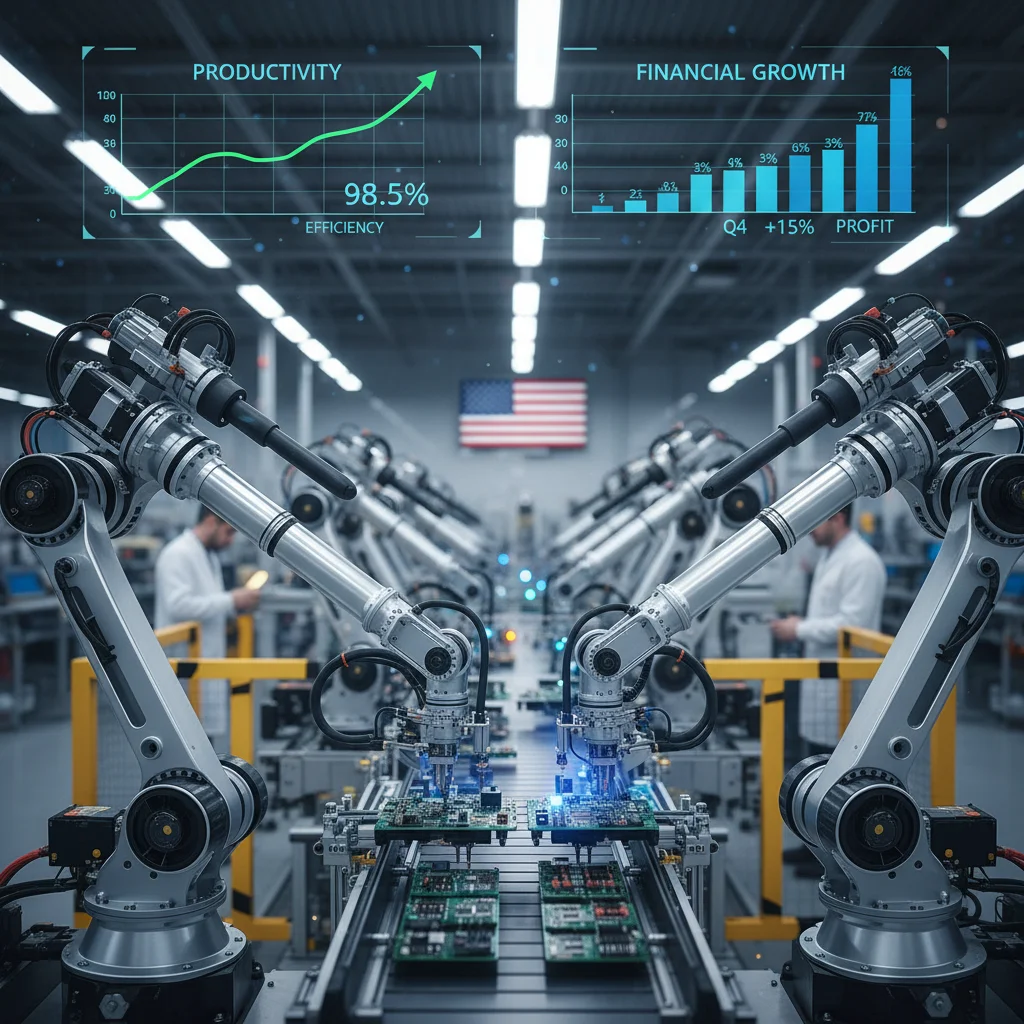
Robotics in US Manufacturing: How Automation Can Boost Productivity by 18% in the Next 12 Months (FINANCIAL IMPACT)
The landscape of US manufacturing is undergoing a profound transformation, driven by technological advancements that promise not just incremental improvements, but a fundamental shift in operational efficiency and financial performance. At the heart of this revolution lies robotics in US manufacturing, a force capable of redefining production paradigms and delivering unprecedented gains. For American industries vying for global competitiveness, embracing automation is no longer an option but a strategic imperative. This article delves into the substantial impact of robotics, projecting how its strategic implementation can elevate productivity by an impressive 18% within the next 12 months, translating directly into significant financial returns and a stronger foothold in the global market.
The narrative around manufacturing often conjures images of traditional assembly lines, but the reality is rapidly evolving. Today, smart factories powered by artificial intelligence, machine learning, and advanced robotics are becoming the norm. These technologies are not merely replacing human labor; they are augmenting it, enabling new levels of precision, speed, and consistency that were previously unattainable. The integration of robotics in US manufacturing is a testament to the industry’s commitment to innovation, resilience, and economic growth.
Understanding the full scope of this transformation requires a deep dive into the mechanisms through which robotics delivers its benefits. From reducing operational costs and minimizing waste to enhancing product quality and accelerating time-to-market, the advantages are multifaceted. This comprehensive exploration will equip manufacturers with the insights needed to navigate this technological frontier, make informed investment decisions, and ultimately, capitalize on the immense potential that robotics offers for the American industrial sector.
The Productivity Imperative: Why Robotics is Key for US Manufacturing
In an increasingly competitive global economy, productivity is the bedrock of sustained growth and profitability. For US manufacturing, which faces challenges ranging from rising labor costs to supply chain disruptions, optimizing output per input is paramount. This is precisely where robotics in US manufacturing emerges as a game-changer. Robots, unlike their human counterparts, do not tire, do not require breaks, and can perform repetitive tasks with unwavering accuracy and speed, 24 hours a day, seven days a week.
Consider the sheer volume of tasks that can be automated: material handling, welding, painting, assembly, inspection, and packaging. Each of these processes, when performed by robots, experiences a dramatic uptick in efficiency. The consistency of robotic operations leads to fewer errors, less rework, and a significant reduction in scrap material, all of which directly contribute to enhanced productivity. Furthermore, the speed at which robots can execute these tasks compresses production cycles, allowing manufacturers to respond more swiftly to market demands and scale operations with greater agility.
The 18% productivity boost projected within 12 months is not an arbitrary figure; it’s an achievable benchmark based on numerous industry case studies and expert analyses. This gain is derived from a combination of factors including increased throughput, improved quality (leading to less waste and returns), reduced downtime, and more efficient utilization of floor space. For manufacturers struggling with labor shortages, robotics offers a viable solution, enabling them to maintain or even expand production without relying solely on a shrinking human workforce. Instead, human employees can be upskilled to manage, program, and maintain these advanced systems, shifting their roles towards higher-value activities.
Moreover, the precision offered by robotics in US manufacturing is critical for industries demanding high levels of accuracy, such as aerospace, medical devices, and electronics. Minute errors in these sectors can have catastrophic consequences, both in terms of product failure and financial loss. Robots, with their ability to perform tasks with micron-level precision, virtually eliminate these risks, ensuring consistent quality and compliance with stringent industry standards. This not only safeguards reputation but also reduces liability and warranty claims, further solidifying financial performance.
Understanding the Financial Impact: ROI and Cost Savings
While the concept of increased productivity is appealing, the real driver for businesses is the financial return on investment (ROI). Investing in robotics in US manufacturing represents a substantial capital outlay, but the returns are often rapid and significant. The financial impact can be broken down into several key areas:
Reduced Labor Costs
One of the most immediate and tangible benefits is the reduction in direct labor costs associated with repetitive, dangerous, or ergonomically challenging tasks. While robots don’t eliminate jobs entirely, they reallocate human resources to more complex, supervisory, or creative roles. This shift optimizes the human capital, allowing skilled workers to focus on innovation and problem-solving rather than rote tasks. The savings from reduced wages, benefits, and overheads for these specific tasks can be substantial over time, often offsetting the initial investment within a few years.
Lower Operational Expenses
Beyond direct labor, robots contribute to lower operational expenses in various ways. Their consistent performance minimizes material waste due to errors, leading to significant savings on raw materials. Energy consumption can also be optimized, especially with newer, more energy-efficient robotic systems. Furthermore, the ability of robots to work in harsh or hazardous environments reduces the need for expensive safety equipment and minimizes workplace accidents, leading to lower insurance premiums and fewer regulatory fines.
Increased Throughput and Revenue
The ability to produce more goods in less time directly translates to increased sales potential and higher revenue. With an 18% boost in productivity, manufacturers can fulfill more orders, take on larger contracts, and penetrate new markets. This enhanced capacity allows businesses to scale operations without proportional increases in fixed costs, leading to improved profit margins. The faster time-to-market also provides a competitive edge, enabling companies to respond quickly to consumer trends and gain market share.
Improved Quality and Customer Satisfaction
Consistent quality is a hallmark of robotic production. Fewer defects mean fewer customer complaints, returns, and warranty claims. This not only saves money but also builds brand loyalty and enhances the company’s reputation. Satisfied customers are more likely to become repeat buyers and recommend the brand to others, fostering long-term business growth. The reduction in quality control issues also streamlines the entire production process, freeing up resources that would otherwise be spent on rectifying errors.
Enhanced Safety and Employee Morale
While not directly a financial metric, improved safety and employee morale have indirect financial benefits. By taking over dangerous tasks, robots create a safer working environment, reducing the risk of injuries and associated costs (medical expenses, lost workdays, legal fees). Employees who work in safer environments tend to be more engaged, productive, and loyal, leading to lower turnover rates and reduced recruitment and training costs. This positive work culture contributes to overall operational efficiency and a healthier bottom line.
Types of Robotics in US Manufacturing and Their Applications
The field of robotics in US manufacturing is vast and diverse, offering a range of solutions tailored to specific industrial needs. Understanding the different types of robots and their applications is crucial for strategic implementation:
Articulated Robots
These are the most common industrial robots, resembling a human arm with rotating joints. They are highly versatile and used for a wide array of tasks, including welding, material handling, machine tending, and assembly. Their flexibility allows them to reach objects in complex workspaces, making them indispensable in modern production lines.
SCARA Robots (Selective Compliance Assembly Robot Arm)
SCARA robots excel in high-speed, high-precision assembly operations. They have a limited number of axes but offer excellent rigidity in the vertical direction, making them ideal for pick-and-place tasks, screw driving, and other applications requiring swift, accurate horizontal movements.
Delta Robots (Parallel Robots)
Known for their speed and agility, Delta robots are characterized by their parallel kinematics. They are predominantly used for very fast pick-and-place applications in food, pharmaceutical, and electronics industries, where rapid sorting and packaging are essential.
Cartesian (Gantry) Robots
These robots operate along three linear axes (X, Y, Z), moving in a straight line. They are often used for large-scale applications requiring significant reach and heavy payload capacity, such as dispensing, stacking, and large-format assembly. Their precise linear motion is highly valued in certain manufacturing processes.
Collaborative Robots (Cobots)
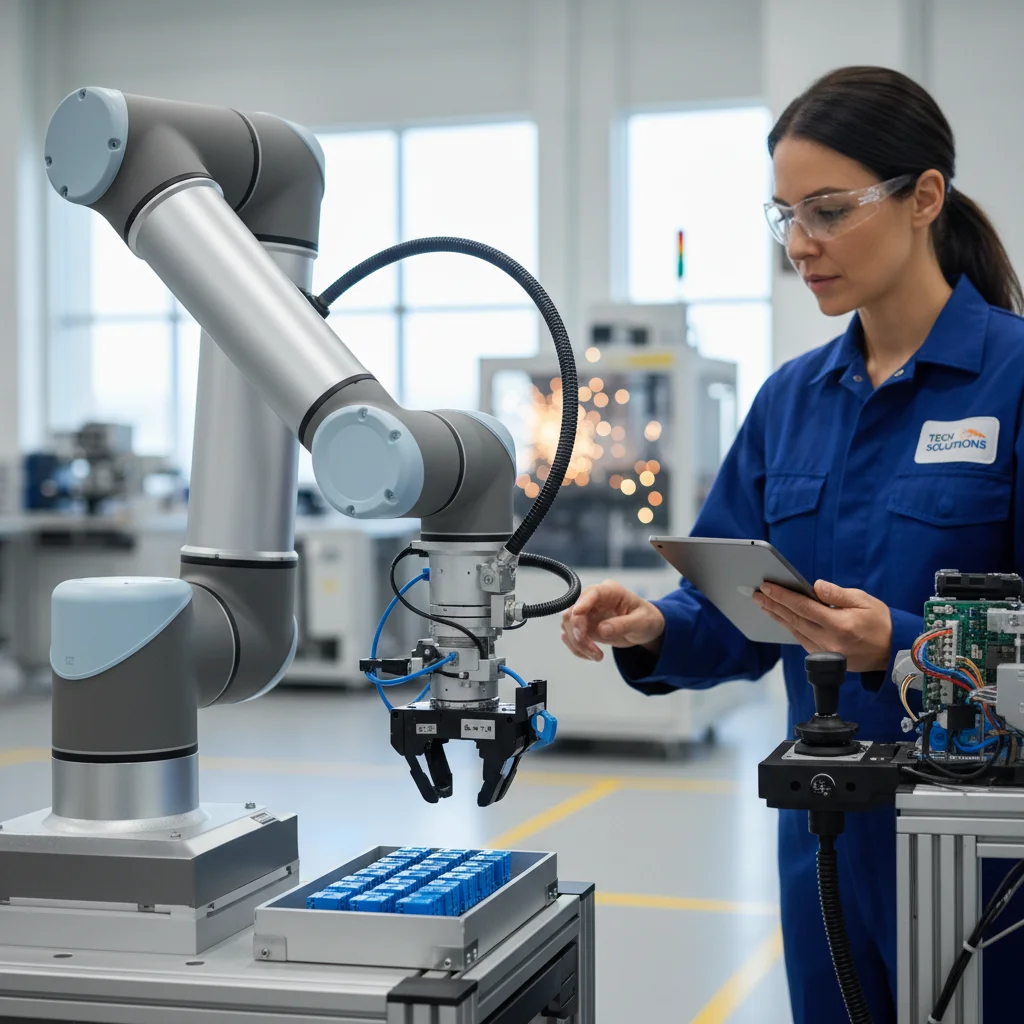
Cobots are designed to work safely alongside human operators without the need for extensive safety caging. Equipped with advanced sensors and safety features, they can assist with tasks that require human dexterity or decision-making, while handling repetitive or ergonomically challenging portions of the work. This human-robot collaboration is a burgeoning area, maximizing the strengths of both.
Automated Guided Vehicles (AGVs) and Autonomous Mobile Robots (AMRs)
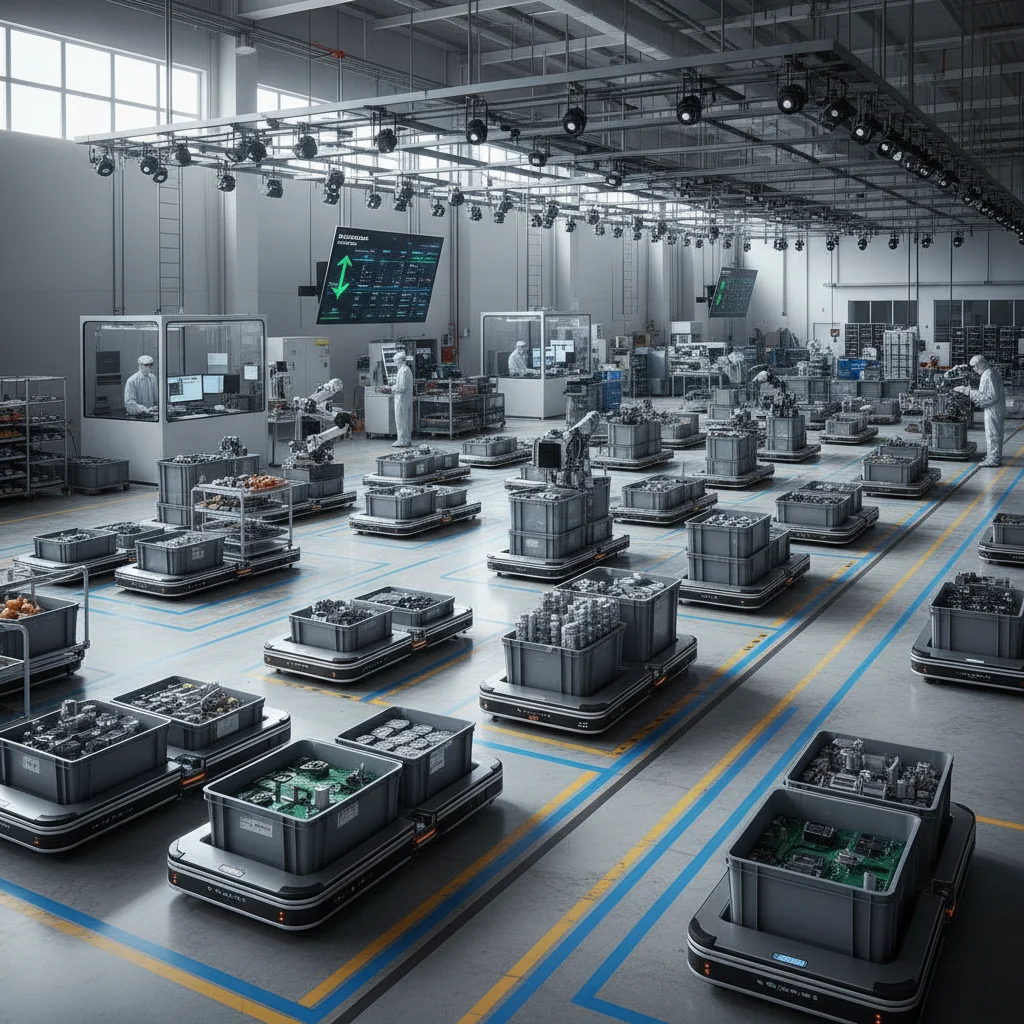
These mobile robots are revolutionizing internal logistics and material transport within factories. AGVs follow predefined paths, while AMRs use intelligent navigation to move autonomously through dynamic environments. They significantly reduce manual labor in material handling, improve efficiency, and ensure a continuous flow of components to production lines, directly impacting the overall productivity of robotics in US manufacturing.
Challenges and Considerations in Robotics Implementation
While the benefits of robotics in US manufacturing are undeniable, successful implementation requires careful planning and addressing potential challenges. Manufacturers must consider several key factors to maximize their investment and achieve the projected productivity gains.
Initial Investment Costs
The upfront cost of purchasing and installing robotic systems can be substantial. This includes not only the robots themselves but also end-effectors, safety systems, programming, integration, and training. Businesses need to conduct thorough cost-benefit analyses and explore financing options to ensure the investment is financially viable.
Integration Complexity
Integrating new robotic systems into existing production lines can be complex, requiring expertise in automation engineering, software development, and mechanical design. Compatibility with legacy systems, data exchange protocols, and seamless workflow integration are critical for avoiding disruptions and ensuring optimal performance. A phased approach to implementation can often mitigate these challenges.
Workforce Reskilling and Training
The introduction of robots often necessitates a shift in the skills required of the human workforce. Employees may need to be retrained in robot operation, programming, maintenance, and troubleshooting. Investing in reskilling programs is essential not only for successful implementation but also for fostering a positive attitude towards automation among employees and ensuring a smooth transition.
Maintenance and Support
Robotic systems, like any complex machinery, require regular maintenance to ensure optimal performance and longevity. Manufacturers need to establish robust maintenance schedules, have access to spare parts, and potentially train in-house technicians or rely on external service providers. Downtime due to maintenance issues can negate productivity gains if not managed effectively.
Cybersecurity Risks
As factories become more connected and reliant on automated systems, cybersecurity becomes a paramount concern. Robotic systems, if not properly secured, can be vulnerable to cyberattacks, leading to production halts, data breaches, or even physical damage. Implementing strong cybersecurity protocols and network segmentation is crucial for protecting these valuable assets.
Flexibility and Adaptability
While robots excel at repetitive tasks, some traditional robots can lack the flexibility to adapt quickly to changes in product design or production volumes. However, advancements in software, AI, and collaborative robotics are making systems more adaptable. Manufacturers should choose robotic solutions that offer the necessary flexibility for their evolving product lines and market demands.
The Future of Robotics in US Manufacturing: Trends and Innovations
The trajectory of robotics in US manufacturing is one of continuous innovation, with several emerging trends poised to further amplify its impact. Staying abreast of these developments is vital for manufacturers looking to maintain a competitive edge.
Artificial Intelligence and Machine Learning Integration
AI and ML are transforming robots from mere programmable machines into intelligent, adaptive systems. AI-powered robots can learn from their environment, make autonomous decisions, and optimize their performance over time. This leads to greater efficiency, predictive maintenance capabilities, and the ability to handle more complex and unstructured tasks that traditionally required human intervention. Imagine robots self-correcting errors or adapting to variations in raw materials without explicit reprogramming.
Advanced Sensor Technology
The integration of sophisticated sensors (vision systems, force sensors, tactile sensors) is enhancing robots’ perception and dexterity. This allows them to perform more intricate tasks, interact safely with humans, and carry out precise inspections. For example, advanced vision systems enable robots to identify and pick irregularly shaped objects, a task that was once a significant challenge for automation.
Human-Robot Collaboration (HRC) Expansion
Cobots are becoming increasingly sophisticated and versatile. The trend is moving towards more seamless and intuitive interaction between humans and robots, leveraging the strengths of both. Humans provide cognitive abilities, adaptability, and problem-solving skills, while robots offer strength, endurance, and precision. This synergy is unlocking new possibilities for optimized workflows and improved ergonomic conditions for workers.
Cloud Robotics and Edge Computing
Cloud robotics allows robots to access vast amounts of data and processing power from the cloud, enabling more complex computations and collaborative learning across entire fleets of robots. Edge computing, on the other hand, processes data closer to the source, reducing latency and making real-time decision-making faster and more reliable, especially critical for time-sensitive manufacturing operations.
Modular and Reconfigurable Robotics
Manufacturers are increasingly seeking robotic solutions that are modular and easily reconfigurable. This allows them to adapt their production lines quickly to new products, varying production volumes, or changes in market demand without significant re-investment. This flexibility is crucial for industries with short product lifecycles or high customization requirements.
Digital Twins and Simulation
The use of digital twins – virtual replicas of physical robotic systems and entire factory floors – is gaining traction. These digital models allow manufacturers to simulate, test, and optimize robotic operations in a virtual environment before physical implementation. This reduces risks, shortens deployment times, and fine-tunes performance, ensuring maximum efficiency when robots go live.
Case Studies: Real-World Productivity Gains with Robotics
To truly appreciate the impact of robotics in US manufacturing, it’s beneficial to look at real-world examples where companies have successfully integrated automation and reaped significant rewards.
Automotive Industry: Enhanced Assembly and Welding
The automotive sector has long been a pioneer in robotics adoption. Major US automotive manufacturers have deployed hundreds of robots for tasks like spot welding, painting, and complex assembly. This has led to dramatic reductions in production times, superior weld quality, and significant cost savings. One leading automaker reported a 25% increase in production line speed and a 15% reduction in defects after a major robotics overhaul, contributing to their overall productivity goals.
Electronics Manufacturing: Precision Pick-and-Place
In the electronics industry, where components are minuscule and precision is paramount, SCARA and Delta robots are indispensable. A US-based electronics manufacturer specializing in circuit board assembly implemented a fleet of high-speed pick-and-place robots. This resulted in a 30% increase in assembly throughput and a near-zero defect rate for component placement, drastically improving product reliability and reducing rework. The financial impact was immediate through reduced scrap and faster time-to-market for new products.
Food and Beverage: Packaging and Palletizing
The food and beverage sector utilizes robots for tasks ranging from handling delicate food items to high-speed packaging and heavy-duty palletizing. A US food processing plant integrated robotic palletizers, replacing manual labor for repetitive and ergonomically challenging tasks. This not only improved worker safety but also increased palletizing speed by 20% and reduced product damage during handling by 10%, leading to substantial savings and improved supply chain efficiency.
Aerospace Industry: Large-Scale Component Handling and Assembly
For the aerospace industry, manufacturing large, heavy, and complex components requires robust and precise automation. A US aerospace company deployed gantry robots for drilling and riveting large aircraft fuselage sections. The robots achieved a level of precision and consistency unattainable by manual processes, reducing assembly time by 18% and significantly improving structural integrity. This investment not only boosted productivity but also enhanced safety by removing human workers from hazardous large-scale operations.
Small and Medium-sized Enterprises (SMEs): Cobot Integration
It’s not just large corporations benefiting. Many US SMEs are adopting collaborative robots to automate specific tasks without a complete factory overhaul. A small metal fabrication shop implemented a cobot for machine tending, loading and unloading parts from a CNC machine. This allowed the human operator to focus on programming and quality control, effectively doubling the output of that particular machine and improving cycle times by 15%, demonstrating that robotics in US manufacturing is accessible to businesses of all sizes.
Strategies for Successful Robotics Integration in US Manufacturing
Achieving the projected 18% productivity boost with robotics in US manufacturing requires a well-defined strategy. Here are key steps for successful integration:
1. Conduct a Thorough Needs Assessment
Before investing, identify specific pain points, bottlenecks, and hazardous tasks in your current operations. Determine which processes are most suitable for automation and where robots can deliver the greatest impact. Prioritize tasks that are repetitive, dangerous, or require high precision.
2. Start Small, Think Big
Consider a phased approach. Begin with a pilot project to test the waters, gain experience, and demonstrate ROI. This could involve automating a single workstation or a specific, well-defined task. Learn from this experience before scaling up to larger deployments.
3. Choose the Right Robotic Solution
Select robots that are appropriate for your specific applications, budget, and desired outcomes. Consider factors like payload capacity, reach, speed, precision, and ease of programming. Work with reputable integrators and suppliers who can provide expert guidance.
4. Invest in Workforce Training and Upskilling
Develop comprehensive training programs for your employees. Focus on teaching them how to operate, program, and maintain the new robotic systems. Emphasize that robots are tools to augment human capabilities, not replace them, fostering a collaborative environment.
5. Prioritize Safety
Implement robust safety measures from the outset. This includes proper guarding, emergency stop systems, and adherence to industry safety standards. For cobots, ensure their safety features are fully utilized and understood by all personnel working alongside them.
6. Plan for Integration and Data Flow
Ensure that the new robotic systems can seamlessly integrate with your existing IT infrastructure, ERP systems, and other factory automation. Plan for efficient data exchange to enable real-time monitoring, analysis, and optimization of production processes.
7. Establish Metrics and Monitor Performance
Define clear key performance indicators (KPIs) to measure the impact of your robotic investment. Regularly monitor productivity gains, cost savings, quality improvements, and ROI. Use this data to make adjustments and continuously optimize your automated processes.
8. Foster a Culture of Continuous Improvement
Embrace automation as an ongoing journey, not a one-time project. Encourage employees to identify new opportunities for automation and process optimization. Stay informed about emerging robotic technologies and be prepared to adapt your strategy as the industry evolves.
Conclusion: Securing the Future of US Manufacturing with Robotics
The imperative for US manufacturing to innovate and enhance its competitive edge has never been stronger. The strategic adoption of robotics in US manufacturing offers a clear and demonstrable path to achieving this goal. With the potential to boost productivity by 18% within just 12 months, the financial implications are profound, translating into reduced costs, increased revenue, superior quality, and a more resilient operational framework.
While challenges such as initial investment and integration complexity exist, the long-term benefits far outweigh these hurdles. By embracing a forward-thinking approach, investing in workforce development, and leveraging the latest advancements in AI, sensors, and collaborative robotics, American manufacturers can unlock unprecedented levels of efficiency and innovation. The future of US manufacturing is not merely about production; it’s about intelligent production, driven by the transformative power of automation.
For businesses ready to embrace this technological evolution, the time to act is now. The journey towards a more productive, profitable, and globally competitive US manufacturing sector is paved with robots, ready to revolutionize the factory floor and secure a prosperous industrial future.