Sustainable Tech Breakthroughs: Cutting US Industrial Emissions by 20% by 2026
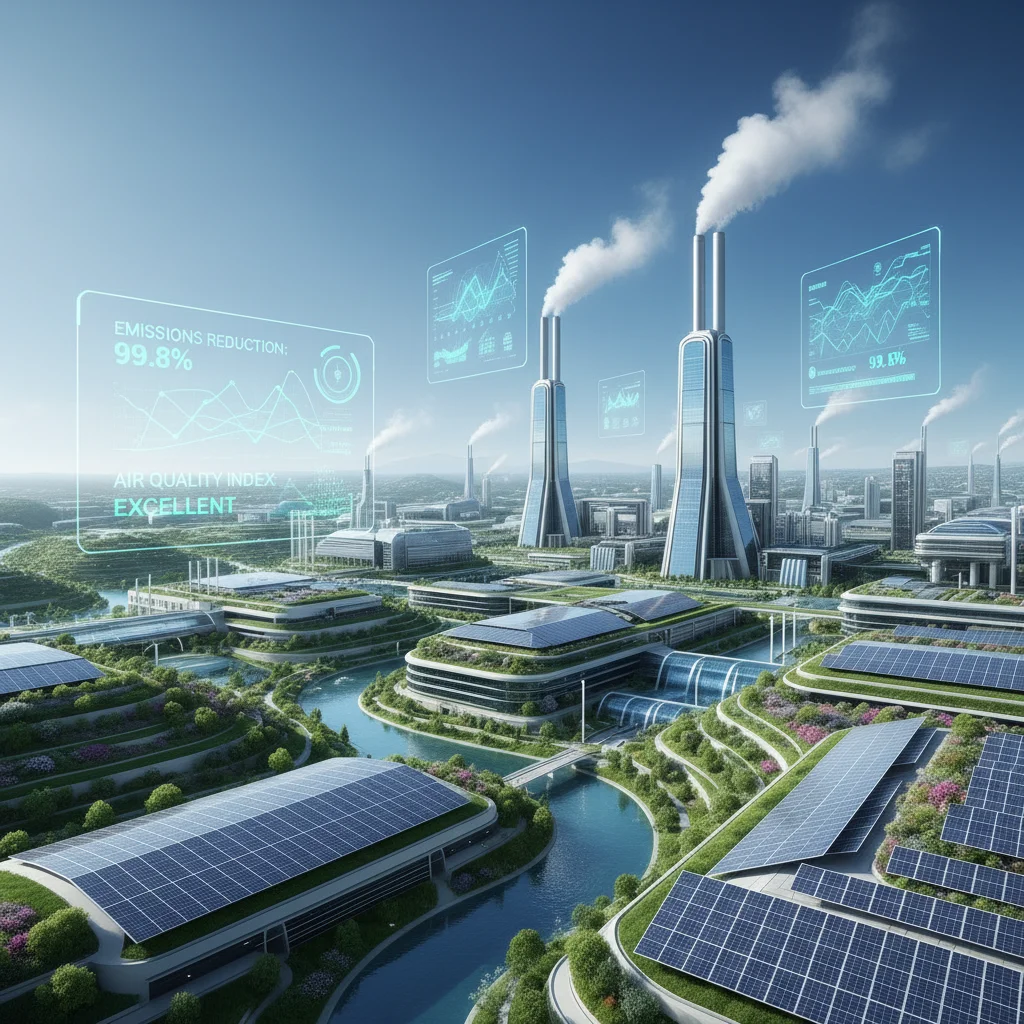
The urgency to combat climate change has never been more pronounced, and the industrial sector, a significant contributor to global greenhouse gas emissions, is at the forefront of this battle. In the United States, ambitious targets are being set, with a particular focus on leveraging cutting-edge innovations to achieve substantial reductions in industrial emissions. The goal? A remarkable 20% reduction by 2026. This isn’t just a pipe dream; it’s a tangible objective supported by a wave of sustainable industrial tech breakthroughs that are transforming how industries operate. From advanced carbon capture to green hydrogen and next-generation materials, the landscape of industrial sustainability is rapidly evolving, promising a cleaner, more efficient, and economically robust future.
The industrial sector accounts for a substantial portion of the nation’s energy consumption and carbon footprint. Historically, achieving significant emission cuts in this sector has been challenging due to the complex nature of industrial processes, the high capital costs associated with new technologies, and the reliance on fossil fuels for energy-intensive operations. However, recent advancements in sustainable industrial tech, coupled with strong policy incentives and increasing societal pressure, are creating an unprecedented opportunity for change. This article delves into six pivotal technological breakthroughs that are not only making these ambitious targets achievable but are also redefining industrial efficiency and competitiveness.
Understanding these innovations is crucial for policymakers, industry leaders, investors, and environmental advocates alike. Each breakthrough represents a unique pathway to decarbonization, addressing different facets of industrial emissions, from energy generation and process heat to raw material production and waste management. As we explore these technologies, we will also consider the policy frameworks supporting their deployment, the economic implications, and the challenges that still need to be overcome to realize the full potential of a 20% reduction in US industrial emissions by 2026.
The Imperative for Industrial Decarbonization
Before diving into the specific technologies, it’s essential to grasp the scale and significance of industrial emissions. Manufacturing, chemical production, cement, steel, and other heavy industries are vital for economic prosperity but are also major emitters of carbon dioxide (CO2), methane, and other greenhouse gases. These emissions stem from a combination of factors: the burning of fossil fuels for process heat and electricity, chemical reactions inherent in production processes (e.g., in cement manufacturing), and fugitive emissions from equipment and infrastructure.
The US government, through initiatives like the Inflation Reduction Act and various Department of Energy programs, has signaled a strong commitment to industrial decarbonization. The 20% reduction target by 2026 is an ambitious yet critical step towards achieving broader climate goals, such as a 50-52% reduction in economy-wide greenhouse gas emissions below 2005 levels by 2030. Reaching this industrial milestone requires not just incremental improvements but transformative changes driven by innovative sustainable industrial tech.
Beyond environmental benefits, industrial decarbonization offers significant economic advantages. Investing in sustainable industrial tech can lead to increased energy efficiency, reduced operational costs, enhanced competitiveness in global markets, and the creation of new green jobs. It also fosters innovation and positions the US as a leader in clean industrial practices. The shift towards sustainability is no longer merely a regulatory burden but a strategic opportunity for long-term growth and resilience.
Breakthrough 1: Advanced Carbon Capture, Utilization, and Storage (CCUS)
Carbon Capture, Utilization, and Storage (CCUS) technologies are paramount for decarbonizing industries that have unavoidable process emissions, such as cement, steel, and chemical production. While CCUS has existed for decades, recent advancements have made it significantly more efficient, cost-effective, and scalable. The focus is now on developing next-generation capture materials and processes that can capture CO2 with higher purity and lower energy penalties.
One key advancement lies in novel sorbents and membranes that can selectively capture CO2 from flue gases with greater efficiency. Metal-organic frameworks (MOFs), covalent organic frameworks (COFs), and advanced amine-based solvents are showing immense promise. These materials require less energy for regeneration, thereby reducing the overall operational cost of CCUS facilities. Furthermore, modular designs are making deployment easier and faster, allowing for integration into existing industrial infrastructure without extensive retrofitting.
Beyond capture, the ‘Utilization’ aspect of CCUS (CCU) is gaining traction. Captured CO2 can be transformed into valuable products, such as synthetic fuels, building materials, and chemicals, creating a circular economy model. This not only offsets the cost of capture but also turns a waste product into a resource. The ‘Storage’ component involves injecting CO2 into deep geological formations, where it remains safely sequestered. With robust monitoring and verification protocols, geological storage offers a reliable long-term solution.
The potential impact of advanced CCUS on reducing US industrial emissions is enormous. For heavy industries where electrification or fuel switching is challenging, CCUS provides a direct pathway to significantly cut emissions, contributing substantially to the 20% reduction target by 2026. Policy support, including tax credits like 45Q, is accelerating the adoption and deployment of these crucial sustainable industrial tech solutions.
Breakthrough 2: Green Hydrogen as an Industrial Fuel and Feedstock
Green hydrogen, produced through electrolysis powered by renewable electricity, is emerging as a game-changer for industrial decarbonization. It offers a clean alternative to fossil fuels for high-temperature industrial processes and can serve as a crucial feedstock for chemical production, ammonia, and steelmaking, areas traditionally reliant on fossil-derived hydrogen or natural gas.
The cost of green hydrogen production has been a significant barrier, but rapid advancements in electrolyzer technology, coupled with the decreasing cost of renewable energy, are making it increasingly competitive. New electrolyzer designs, such as solid oxide electrolyzers and anion exchange membrane (AEM) electrolyzers, are more efficient and durable, capable of operating at higher temperatures and pressures, thereby reducing energy input.
In steel production, green hydrogen can replace coal in direct reduced iron (DRI) processes, eliminating CO2 emissions from this energy-intensive step. For chemical plants, it offers a clean feedstock for ammonia synthesis and other chemical reactions. Furthermore, green hydrogen can be blended with natural gas in existing industrial furnaces or used in dedicated hydrogen burners to generate process heat without emissions.
The US government’s hydrogen hubs initiative and production tax credits are designed to scale up green hydrogen infrastructure and deployment. As production costs continue to fall and infrastructure develops, green hydrogen will play an indispensable role in helping industries meet their emission reduction targets, making it a cornerstone of sustainable industrial tech.
Breakthrough 3: Advanced Energy Efficiency and Industrial Electrification
While often seen as incremental, advancements in energy efficiency and industrial electrification represent one of the most immediate and cost-effective pathways to reducing industrial emissions. New technologies are pushing the boundaries of what’s possible, allowing industries to achieve significant energy savings and switch away from fossil fuels.
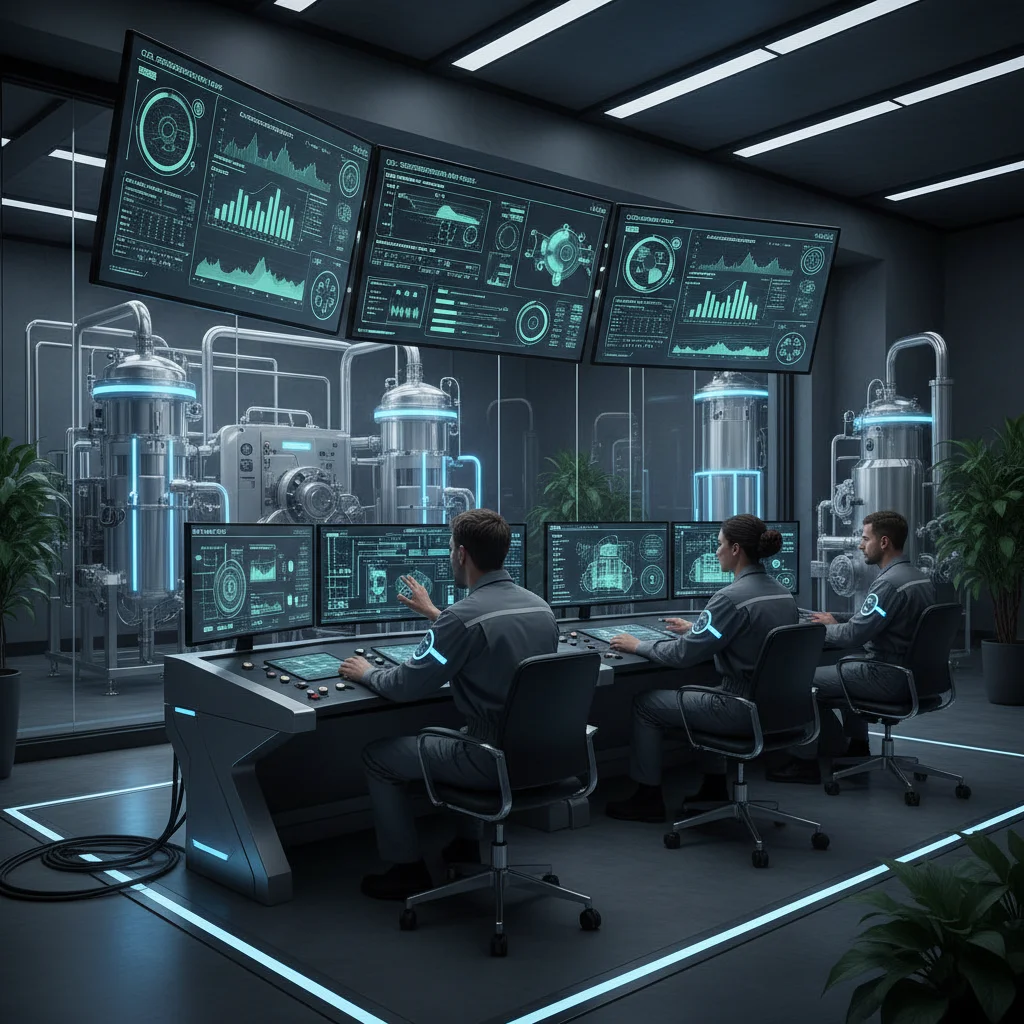
On the energy efficiency front, smart manufacturing systems, powered by AI and machine learning, are optimizing production processes in real-time. Predictive maintenance, advanced sensor networks, and digital twins allow factories to identify inefficiencies, minimize waste, and improve energy utilization across the entire production chain. High-efficiency motors, pumps, and industrial heating solutions (e.g., heat pumps, recuperators, and regenerators) are also becoming more prevalent, drastically cutting energy consumption.
Industrial electrification involves replacing fossil fuel-fired equipment with electric alternatives powered by renewable electricity. This includes electric arc furnaces for steelmaking, electric boilers for process steam, and industrial heat pumps for various heating and cooling applications. Innovations in high-temperature electric heating elements and induction technologies are enabling electrification in even the most demanding industrial processes. The synergy between electrification and the growing availability of renewable energy sources (solar, wind) makes this a powerful strategy for decarbonization.
These two pillars of sustainable industrial tech not only reduce emissions but also offer substantial operational cost savings, improved air quality, and enhanced competitiveness. Their widespread adoption is critical for achieving the 20% reduction target by 2026, providing a foundational layer of emissions reduction that complements other more complex decarbonization strategies.
Breakthrough 4: Sustainable Materials and Circular Economy Principles
Beyond reducing emissions from production, a significant portion of industrial impact comes from the materials themselves. The development of sustainable materials and the adoption of circular economy principles are transforming how products are designed, manufactured, and consumed, leading to substantial emission reductions.
This breakthrough encompasses several areas: low-carbon materials like ‘green steel’ (produced with green hydrogen) and ‘green cement’ (using alternative clinker or carbon capture), which inherently have a lower carbon footprint. It also includes bio-based materials derived from renewable resources, reducing reliance on fossil-based plastics and chemicals. Advanced recycling technologies for plastics, metals, and other industrial waste are also crucial, allowing for the recovery of high-value materials and minimizing the need for virgin production.
The circular economy paradigm shifts from a linear ‘take-make-dispose’ model to one that emphasizes reducing, reusing, recycling, and regenerating materials. This means designing products for durability, repairability, and recyclability; developing robust reverse logistics systems; and creating markets for secondary materials. Innovations in material science and process engineering are enabling these shifts, making it economically viable to close material loops.
By reducing the demand for new, energy-intensive raw materials and diverting waste from landfills, sustainable materials and circular economy practices offer a powerful, systemic approach to cutting industrial emissions. This holistic approach is an increasingly critical component of sustainable industrial tech strategies.
Breakthrough 5: Advanced Modular Nuclear Reactors (AMRs) for Industrial Heat and Power
While often associated with electricity generation, advanced modular nuclear reactors (AMRs), including Small Modular Reactors (SMRs) and microreactors, hold immense potential for industrial decarbonization, particularly for providing reliable, high-temperature process heat and electricity with zero emissions.
Traditional industrial processes often require very high temperatures that are difficult to achieve with conventional renewable energy sources or electric heating alone. AMRs can generate process heat at temperatures suitable for industries like chemical manufacturing, hydrogen production, and even steelmaking, offering a constant, dispatchable, and emissions-free energy source. Their modular design allows for smaller footprints, quicker construction, and greater flexibility in deployment, making them suitable for integration into existing industrial sites.
The safety features of AMRs are also significantly enhanced compared to older nuclear designs. They often incorporate passive safety systems that do not require active intervention or external power to shut down safely. This makes them a compelling option for industries seeking a reliable and clean energy supply without the intermittency challenges of some renewables.
The deployment of AMRs could drastically reduce the reliance on fossil fuels for industrial heat and power, making a substantial contribution to the 20% emission reduction target. While regulatory hurdles and public acceptance remain factors, ongoing research and development, coupled with government support, are paving the way for AMRs to become a significant sustainable industrial tech solution for heavy industry.
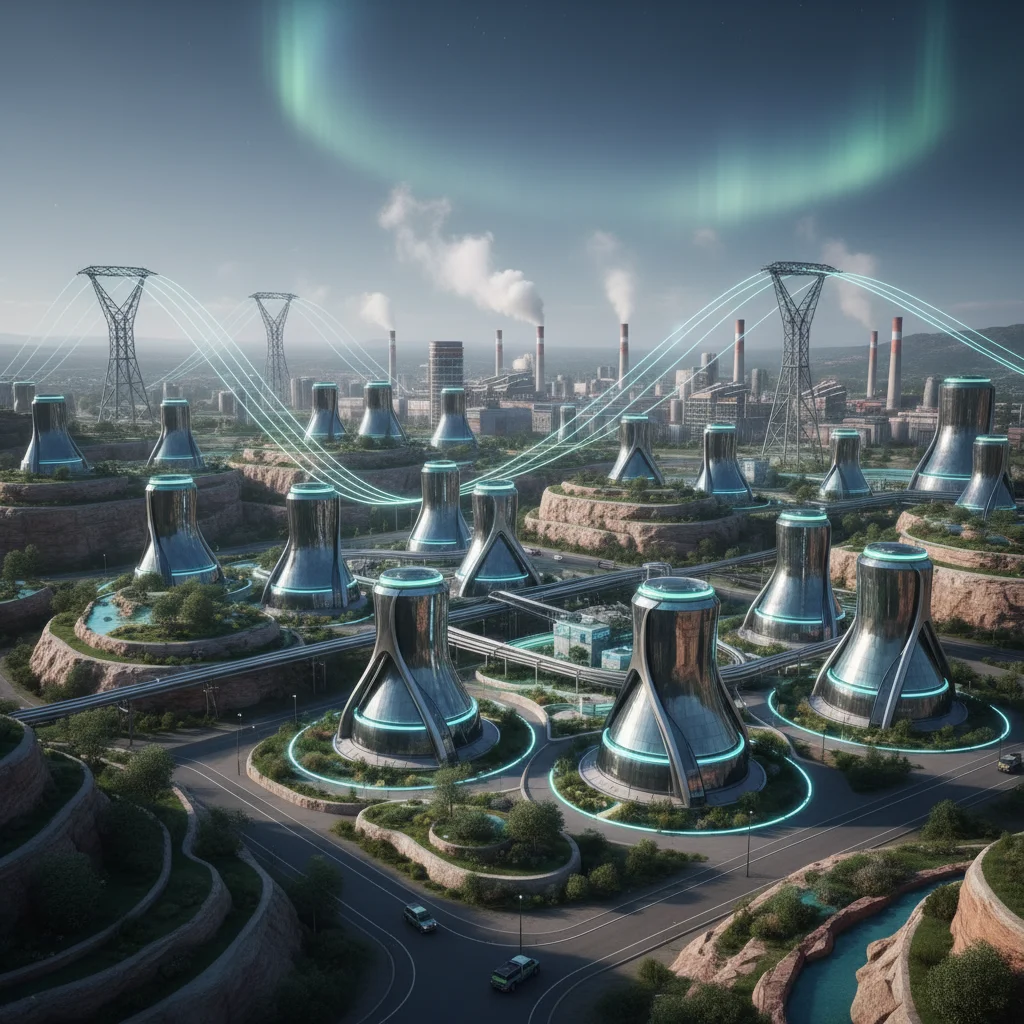
Breakthrough 6: Industrial Symbiosis and Digital Optimization
Industrial symbiosis and digital optimization are not single technologies but rather systemic approaches that leverage interconnectedness and data to achieve emissions reductions. Industrial symbiosis involves the sharing of resources (energy, water, materials, by-products) between different industrial facilities, transforming waste from one process into a valuable input for another.
For example, waste heat from a power plant can be used to provide process heat for a nearby chemical factory, or CO2 emissions from a cement plant can be captured and utilized by an adjacent greenhouse for enhanced plant growth. This creates a localized circular economy, reducing overall resource consumption and waste generation, thereby cutting emissions associated with energy production and raw material extraction.
Digital optimization, powered by the Industrial Internet of Things (IIoT), artificial intelligence (AI), and advanced analytics, provides the intelligence layer for industrial symbiosis and overall operational efficiency. Sensors collect vast amounts of data from across industrial processes, which AI algorithms then analyze to identify optimal operating parameters, predict equipment failures, and manage energy flows more efficiently. This real-time visibility and control enable industries to minimize energy use, reduce waste, and optimize resource allocation.
These approaches foster a more integrated and efficient industrial ecosystem. By optimizing resource flows and leveraging digital intelligence, industries can achieve significant emissions reductions that might not be possible with individual technology deployments alone. Industrial symbiosis and digital optimization are crucial, enabling sustainable industrial tech strategies that maximize impact.
Policy Frameworks and Economic Incentives Driving Adoption
The rapid adoption of these sustainable industrial tech breakthroughs is heavily reliant on supportive policy frameworks and robust economic incentives. The US government has recognized this need and implemented several key initiatives:
- Inflation Reduction Act (IRA): This landmark legislation provides significant tax credits and incentives for clean energy deployment, manufacturing, and industrial decarbonization. Programs like the 45Q tax credit for carbon capture and storage, and incentives for clean hydrogen production, are directly accelerating the adoption of CCUS and green hydrogen.
- Department of Energy (DOE) Programs: The DOE invests heavily in research, development, and demonstration (RD&D) of advanced industrial technologies. Programs like the Industrial Decarbonization Roadmap and various funding opportunities aim to de-risk new technologies and bring them to market faster.
- State-Level Initiatives: Many states are implementing their own clean energy standards, carbon pricing mechanisms, and grant programs to support industrial decarbonization, creating a patchwork of incentives that further drive innovation and investment.
- Buy Clean Initiatives: These policies encourage the procurement of low-carbon materials and products by government agencies, creating market demand for sustainably manufactured goods and incentivizing industries to reduce their embodied carbon.
These policies not only provide financial support but also create a stable regulatory environment that encourages long-term investment in sustainable industrial tech. The economic benefits extend beyond emission reductions, including job creation, increased energy independence, and enhanced global competitiveness for US industries.
Challenges and the Path Forward
While the outlook for achieving a 20% reduction in US industrial emissions by 2026 is promising, significant challenges remain. These include:
- High Capital Costs: Many of these advanced technologies require substantial upfront investment, which can be a barrier for industries, especially smaller and medium-sized enterprises.
- Infrastructure Development: Scaling up technologies like CCUS and green hydrogen requires extensive new infrastructure for CO2 transport and storage, and hydrogen production and distribution.
- Technological Maturity: While promising, some technologies are still in early stages of commercial deployment and require further demonstration and de-risking.
- Skilled Workforce: A transition to a green industrial economy necessitates a skilled workforce capable of designing, building, operating, and maintaining these new sustainable industrial tech systems.
- Policy Certainty: Long-term policy certainty and consistent regulatory frameworks are crucial for attracting sustained investment and mitigating risks for industrial players.
Addressing these challenges requires continued collaboration between government, industry, academia, and civil society. Public-private partnerships, targeted R&D funding, workforce development programs, and streamlined permitting processes will be essential to accelerate the deployment of sustainable industrial tech and ensure the US meets its ambitious emission reduction targets.
Conclusion: A Greener Industrial Future within Reach
The journey towards a 20% reduction in US industrial emissions by 2026 is ambitious, but entirely achievable thanks to the remarkable progress in sustainable industrial tech. From advanced carbon capture and green hydrogen to industrial electrification and modular nuclear power, a diverse portfolio of solutions is now available to transform the industrial landscape. These breakthroughs, supported by strong policy incentives and a growing commitment to sustainability, are not just about meeting environmental targets; they are about building a more efficient, resilient, and economically vibrant industrial sector.
The next few years will be critical in scaling these innovations from pilot projects to widespread commercial deployment. Continued investment in research and development, smart policy design, and collaborative efforts across the value chain will be paramount. By embracing these sustainable technologies, the US industrial sector can lead the way in decarbonization, demonstrating that economic growth and environmental stewardship are not mutually exclusive but rather synergistic goals. The vision of a cleaner, greener industrial future is not a distant dream, but a rapidly approaching reality, driven by the ingenuity and determination to innovate for a sustainable world.