Sustainable Tech 2026: Cut Your U.S. Business Carbon Footprint by 15% (Financial Impact)

In an era defined by increasing environmental consciousness and regulatory pressures, U.S. businesses face an imperative to not only acknowledge but actively address their carbon footprint. The year 2026 stands as a pivotal point, offering unprecedented opportunities for companies to integrate groundbreaking sustainable tech solutions that promise a significant 15% reduction in carbon emissions. This isn’t merely about corporate social responsibility; it’s a strategic move with profound financial implications, translating directly into cost savings, enhanced brand reputation, and a more resilient operational framework. This comprehensive guide will delve into the transformative potential of these technologies, providing a roadmap for American enterprises aiming to achieve sustainability targets while bolstering their bottom line.
The Urgent Call for Carbon Footprint Reduction
The global climate crisis is no longer a distant threat but a present reality, impacting economies and societies worldwide. For businesses, the urgency to reduce carbon emissions stems from multiple facets: evolving consumer demands, stringent governmental regulations, investor expectations, and the tangible economic risks associated with climate change itself. Consumers are increasingly favoring brands that demonstrate genuine commitment to environmental stewardship. Regulators, both at federal and state levels, are implementing stricter emissions standards and offering incentives for green initiatives. Investors are integrating ESG (Environmental, Social and Governance) factors into their decision-making, viewing sustainability as a key indicator of long-term financial health and risk management.
Moreover, the financial benefits of reducing one’s carbon footprint extend beyond mere compliance. Energy efficiency, a cornerstone of carbon reduction, directly lowers operational costs. Investing in renewable energy sources can hedge against volatile fossil fuel prices. Furthermore, a strong sustainability profile can unlock new market opportunities, attract top talent, and foster innovation within the organization. The 15% reduction target by 2026 is ambitious but entirely achievable with the right strategic investments in sustainable tech solutions.
Defining Sustainable Tech Solutions for U.S. Businesses
What exactly constitutes a sustainable tech solution in the context of carbon footprint reduction for U.S. businesses? It encompasses a broad spectrum of innovations designed to minimize environmental impact across all operational areas. These solutions leverage advancements in artificial intelligence (AI), machine learning (ML), Internet of Things (IoT), advanced materials, and renewable energy to create more efficient, less resource-intensive processes. They are not just about ‘going green’ but about ‘being smart’ – optimizing resource use, reducing waste, and transitioning towards circular economy principles.
Key categories of sustainable tech include: renewable energy integration (solar, wind, geothermal), energy efficiency technologies (smart grids, advanced HVAC, LED lighting), waste reduction and circular economy solutions (advanced recycling, waste-to-energy, material optimization), sustainable logistics and transportation (electric vehicle fleets, route optimization software), and carbon capture and storage (CCS) technologies. The synergy between these various technologies is crucial, creating a holistic approach to environmental management that maximizes impact and financial returns. Businesses must look beyond isolated solutions and consider an integrated strategy to achieve significant carbon reductions by 2026.
Strategic Pillars for a 15% Carbon Footprint Reduction by 2026
Achieving a 15% reduction in carbon footprint by 2026 requires a multi-pronged approach, focusing on strategic pillars that leverage the latest sustainable tech solutions. These pillars are interconnected and, when implemented synergistically, can drive substantial environmental and financial benefits.
1. Renewable Energy Integration and Decentralization
Transitioning from fossil fuel-based energy sources to renewables is perhaps the most direct path to carbon reduction. U.S. businesses are increasingly adopting solar panels, wind turbines, and geothermal systems to power their operations. The cost of renewable energy technologies has plummeted over the past decade, making them not only environmentally sound but also economically attractive. By 2026, advancements in energy storage (e.g., improved battery technologies) will further enable energy independence and resilience.
- On-site Generation: Installing solar arrays on rooftops or vacant land, or small-scale wind turbines, can significantly offset grid electricity consumption, which often comes from fossil fuels.
- Off-site Procurement: For businesses without suitable on-site options, purchasing renewable energy credits (RECs) or entering into power purchase agreements (PPAs) with renewable energy providers allows them to support clean energy development and claim carbon reductions.
- Microgrids: Developing localized microgrids powered by renewables can enhance energy security, reduce transmission losses, and provide a stable power supply, especially critical during outages.
2. Advanced Energy Efficiency Technologies
Even with renewable energy, minimizing overall energy consumption remains paramount. Energy efficiency technologies are continuously evolving, offering sophisticated ways to monitor, manage, and reduce energy use across facilities.
- Smart Building Management Systems (BMS): AI-powered BMS can optimize HVAC, lighting, and other energy-intensive systems based on occupancy, weather forecasts, and real-time energy prices, leading to substantial savings.
- IoT Sensors and Analytics: Deploying IoT sensors can provide granular data on energy consumption patterns, identifying inefficiencies and opportunities for optimization that were previously invisible. Predictive analytics can anticipate equipment failures and schedule maintenance to prevent energy waste.
- High-Efficiency Equipment Upgrades: Replacing outdated machinery, lighting (e.g., traditional bulbs with LEDs), and insulation with energy-efficient alternatives can yield immediate and long-term benefits.
3. Sustainable Supply Chain and Logistics
The supply chain often represents a significant portion of a business’s carbon footprint. Optimizing logistics and sourcing sustainably can lead to substantial reductions.
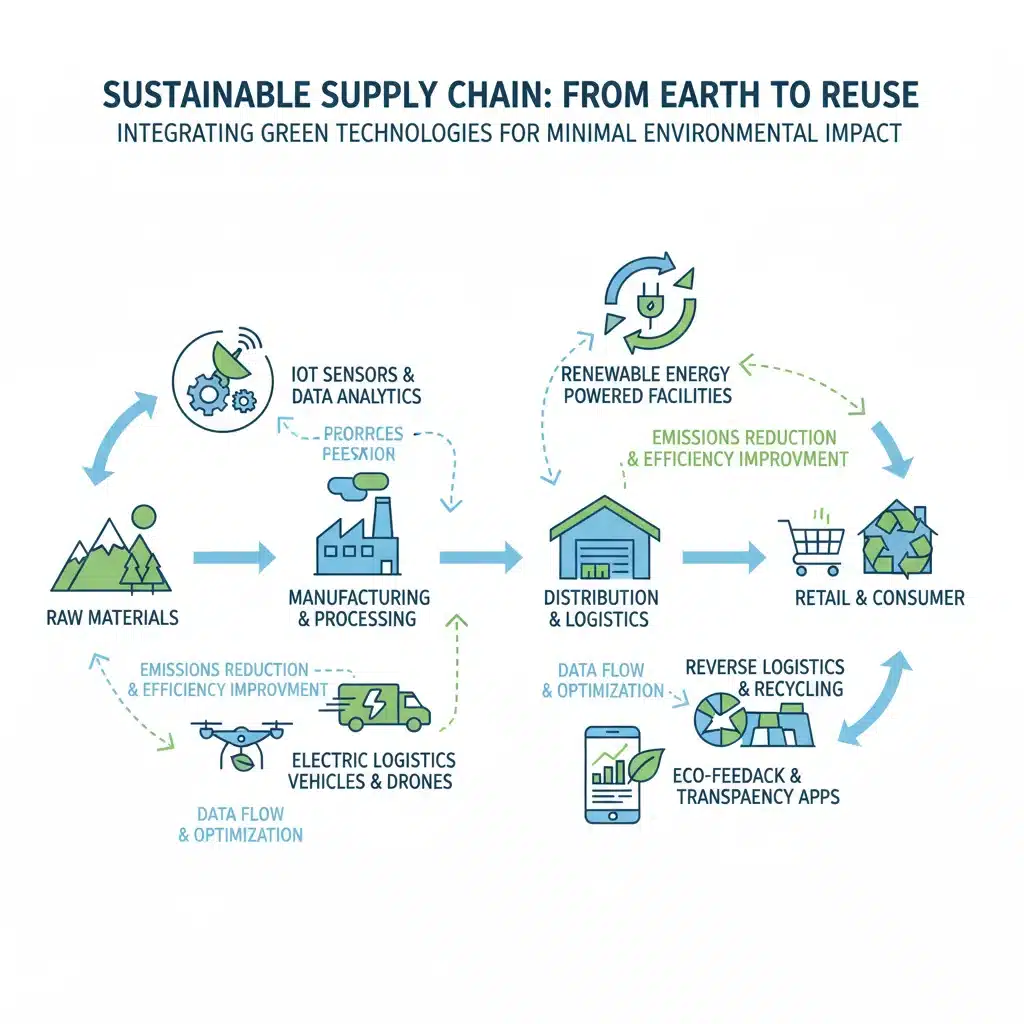
- Electric and Autonomous Vehicles: Transitioning to electric vehicle (EV) fleets for transportation and delivery, combined with advancements in autonomous driving, can drastically cut fuel emissions.
- Route Optimization Software: AI-driven software can optimize delivery routes, reducing mileage, fuel consumption, and delivery times.
- Sustainable Sourcing and Local Production: Prioritizing suppliers with strong sustainability practices and exploring opportunities for local production can reduce transportation emissions and support regional economies.
- Blockchain for Transparency: Utilizing blockchain technology can enhance supply chain transparency, allowing businesses to verify the environmental credentials of their suppliers and track products from origin to destination, ensuring sustainable practices are upheld.
4. Waste Reduction and Circular Economy Initiatives
Moving away from a linear ‘take-make-dispose’ model towards a circular economy is crucial for reducing waste and the associated emissions from production and disposal.
- Advanced Recycling Technologies: Investing in or partnering with facilities utilizing advanced chemical recycling or upcycling technologies can transform waste into valuable resources, reducing the need for virgin materials.
- Product Design for Durability and Recyclability: Designing products with their end-of-life in mind – making them durable, repairable, and easily recyclable – minimizes waste generation.
- Waste-to-Energy Solutions: For unavoidable waste, exploring waste-to-energy conversion technologies can generate electricity or heat, reducing landfill reliance and offsetting fossil fuel use.
- Digital Waste Management: IoT-enabled waste bins and smart sorting systems can optimize waste collection routes and improve recycling rates by providing real-time data on waste levels and composition.
5. Carbon Capture, Utilization, and Storage (CCUS)
While prevention is key, for hard-to-abate emissions, CCUS technologies offer a path to capture carbon dioxide from industrial processes or directly from the atmosphere, preventing its release into the atmosphere.
- Point-Source Capture: Implementing technologies to capture CO2 emissions directly from industrial smokestacks.
- Direct Air Capture (DAC): Developing and deploying systems that can remove CO2 directly from ambient air.
- Utilization and Storage: Once captured, CO2 can be utilized in various industrial processes (e.g., producing synthetic fuels, building materials) or safely stored underground in geological formations. While nascent for many businesses, advancements in CCUS are making it a viable option for specific sectors by 2026.
The Financial Impact: Beyond Environmental Compliance
The financial benefits of investing in sustainable tech solutions are often underestimated. While the initial capital outlay might seem significant, the long-term returns are compelling, making sustainability a strategic financial decision rather than just an expense.
Reduced Operational Costs
The most immediate and tangible financial benefit comes from reduced operational costs. Energy efficiency upgrades, for instance, directly translate into lower utility bills. Companies adopting renewable energy sources can fix their energy costs, shielding themselves from market volatility and rising electricity prices. Waste reduction initiatives decrease disposal fees and can even generate revenue through the sale of recycled materials or by-products. Optimized logistics reduce fuel consumption and maintenance costs for vehicle fleets.
Enhanced Brand Reputation and Customer Loyalty
In today’s market, consumers are increasingly conscious of a company’s environmental practices. A strong commitment to sustainability, backed by measurable carbon reduction efforts, enhances brand reputation, attracts environmentally conscious customers, and fosters loyalty. This can lead to increased sales, market share, and a competitive advantage. Studies consistently show that consumers are willing to pay more for products from sustainable brands.
Access to Green Financing and Investor Appeal
The financial sector is increasingly prioritizing sustainable investments. Businesses with robust sustainability strategies can access green bonds, sustainability-linked loans, and other favorable financing options. Furthermore, institutional investors and venture capitalists are actively seeking out companies with strong ESG performance, viewing them as more resilient and future-proof. A reduced carbon footprint signals responsible management and long-term viability, attracting capital and improving stock performance for publicly traded companies.
Regulatory Incentives and Risk Mitigation
Governments, both federal and state, offer various incentives for businesses adopting sustainable practices, including tax credits, grants, and rebates for renewable energy installations or energy-efficient upgrades. By proactively reducing their carbon footprint, businesses also mitigate regulatory risks, avoiding potential fines, carbon taxes, or future compliance costs associated with stricter environmental regulations. This forward-thinking approach ensures long-term operational stability.
Innovation and Competitive Advantage
Embracing sustainable tech solutions often spurs internal innovation. Companies are challenged to rethink processes, design more efficient products, and develop new business models. This culture of innovation can lead to new revenue streams, patented technologies, and a significant competitive edge in a rapidly evolving market. Businesses that lead in sustainability are often seen as industry pioneers, attracting talent and partnerships.
Implementation Challenges and How to Overcome Them
While the benefits are clear, implementing sustainable tech solutions is not without its challenges. U.S. businesses may face hurdles related to initial investment costs, technological complexity, employee training, and integrating new systems with existing infrastructure.
Initial Investment and ROI Justification
The upfront cost of new sustainable technologies can be a barrier. To overcome this, businesses should conduct thorough cost-benefit analyses, focusing on the long-term ROI. Highlighting energy savings, reduced waste disposal costs, and potential revenue from green initiatives can build a strong business case. Exploring government incentives, grants, and green financing options can also alleviate financial strain.
Technological Integration and Expertise
Integrating new sustainable tech with legacy systems can be complex. Businesses may lack the internal expertise to implement and manage these solutions effectively. Partnering with specialized consultants, technology providers, and academic institutions can bridge this knowledge gap. Investing in employee training and upskilling programs is also crucial to ensure smooth adoption and maximize the benefits of new technologies.
Data Measurement and Reporting
Accurately measuring and reporting carbon emissions and reductions is essential for demonstrating progress and verifying claims. Implementing robust data collection systems, utilizing specialized software for carbon accounting, and adhering to recognized reporting frameworks (e.g., GHG Protocol, SASB) are vital. This not only ensures transparency but also provides valuable insights for further optimization.
Organizational Buy-in and Culture Change
Successful sustainability initiatives require buy-in from all levels of an organization, from leadership to frontline employees. Fostering a culture of sustainability through clear communication, employee engagement programs, and integrating sustainability goals into performance metrics can drive widespread adoption and commitment. Leadership commitment is paramount in setting the vision and allocating necessary resources.
Case Studies: U.S. Businesses Leading the Way
Numerous U.S. businesses are already demonstrating the tangible benefits of adopting sustainable tech solutions. While specific company names are beyond the scope of this general article, we can look at examples of industries and types of initiatives.
- Manufacturing Sector: A large manufacturing firm invested in AI-powered process optimization, reducing energy consumption by 18% in its production lines and cutting waste by 25% through advanced material recycling. This led to annual savings exceeding $5 million.
- Retail Chain: A national retail chain implemented smart building management systems across its stores and distribution centers, coupled with LED lighting upgrades. They also transitioned 30% of their delivery fleet to electric vehicles. These initiatives resulted in a 12% reduction in their overall carbon footprint and significant utility cost savings.
- Tech Company: A leading tech company committed to 100% renewable energy for its data centers, achieving this through a combination of on-site solar installations and large-scale power purchase agreements. They also developed innovative cooling solutions that drastically reduced energy use in their server farms, setting a new industry standard.
These examples underscore that achieving a 15% carbon footprint reduction by 2026 is not an idealistic goal but a practical, financially sound objective for U.S. businesses across diverse sectors.
The Road Ahead: 2026 and Beyond
The journey towards a sustainable future is continuous, and 2026 marks an important milestone. As technology evolves at an unprecedented pace, new sustainable tech solutions will emerge, offering even greater potential for carbon reduction and financial gain. Businesses that proactively embrace these innovations will not only contribute to a healthier planet but also secure their long-term viability and competitive edge.

Looking beyond 2026, the focus will likely shift towards even more sophisticated solutions, including advanced biotechnologies for carbon sequestration, widespread adoption of circular economy principles, and hyper-efficient resource management powered by quantum computing and advanced AI. The integration of environmental performance into core business strategy will become non-negotiable. U.S. businesses have a unique opportunity to lead this transformation, demonstrating that economic prosperity and environmental stewardship are not mutually exclusive but rather interdependent goals.
Conclusion
The call to action for U.S. businesses to reduce their carbon footprint by 15% by 2026 is both an environmental necessity and a strategic financial opportunity. By strategically investing in and implementing cutting-edge sustainable tech solutions, companies can achieve significant carbon reductions, realize substantial cost savings, enhance their brand, attract investors, and mitigate future risks. From renewable energy integration and advanced energy efficiency to sustainable supply chains, waste reduction, and emerging CCUS technologies, the tools are available. The path forward requires vision, commitment, and a willingness to embrace innovation. Those who act decisively will not only contribute to a more sustainable planet but also forge a path to greater profitability and resilience in the years to come.