AI for Predictive Maintenance: Reduce Downtime 10% in US Manufacturing
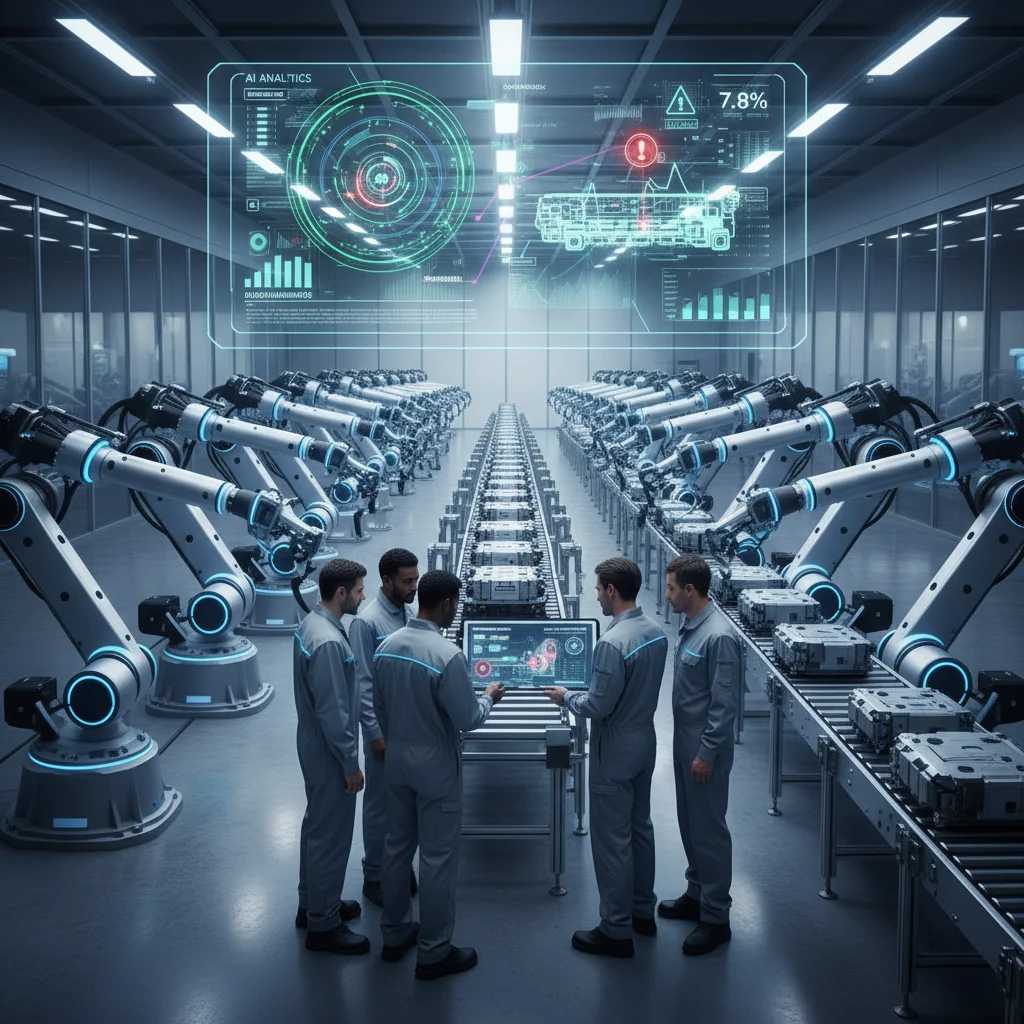
In the fiercely competitive landscape of modern manufacturing, operational efficiency is not just an advantage; it’s a necessity for survival and growth. For US manufacturers, where every minute of downtime can translate into significant financial losses and eroded market share, the pursuit of uninterrupted production is relentless. Traditionally, maintenance strategies have fallen into two broad categories: reactive (fixing things when they break) and preventive (scheduled maintenance regardless of actual need). While these approaches have served their purpose, they are inherently inefficient, often leading to either unexpected outages or unnecessary expenditures.
Enter Artificial Intelligence (AI). The integration of AI into industrial operations is revolutionizing how US manufacturers approach asset management and maintenance. Specifically, AI predictive maintenance is emerging as a game-changer, offering the ability to anticipate equipment failures before they occur, thereby enabling proactive intervention. This isn’t just about avoiding catastrophic breakdowns; it’s about optimizing maintenance schedules, extending asset lifespan, reducing operational costs, and ultimately, boosting overall productivity.
The promise is substantial: a reduction in unplanned downtime by up to 10% or more, a significant improvement in maintenance efficiency, and a clearer path to sustainable profitability. This article delves deep into the power of AI predictive maintenance, exploring three core strategies that US manufacturers can leverage to achieve these transformative results. We’ll uncover how AI is not just a tool, but a strategic partner in forging a more resilient and efficient manufacturing future.
The Urgent Need for AI Predictive Maintenance in US Manufacturing
The stakes for US manufacturers are higher than ever. Supply chain disruptions, rising labor costs, and increasing global competition demand an unparalleled level of operational excellence. Unplanned downtime, a perennial thorn in the side of manufacturers, directly impacts production schedules, delivery commitments, and ultimately, customer satisfaction. According to industry reports, the average cost of downtime for manufacturers can range from tens of thousands to hundreds of thousands of dollars per hour, depending on the industry and scale of operations. This staggering figure underscores the critical need for more sophisticated maintenance strategies.
Traditional preventive maintenance, while better than reactive, often leads to over-maintenance or under-maintenance. Over-maintenance wastes resources (labor, parts, production time) by servicing equipment that doesn’t yet need it. Under-maintenance, on the other hand, risks unexpected failures, which can be even more costly. The sweet spot lies in performing maintenance precisely when it’s needed – not too early, not too late. This is the core promise of AI predictive maintenance.
AI predictive maintenance leverages vast amounts of data – from sensors embedded in machinery (IoT devices), historical maintenance logs, environmental conditions, and even production schedules – to predict potential equipment failures. By applying advanced machine learning algorithms, AI can identify subtle patterns and anomalies that human eyes or traditional statistical methods might miss. This proactive approach transforms maintenance from a reactive cost center into a strategic asset that drives efficiency and profitability.
For US manufacturers, adopting AI predictive maintenance is not merely about technological adoption; it’s about embracing a paradigm shift that offers a significant competitive edge. It enables a move from a fixed, time-based maintenance schedule to a dynamic, condition-based one, ensuring that resources are deployed optimally and equipment operates at peak performance for longer. The benefits extend beyond cost savings, encompassing improved safety, enhanced product quality, and a more sustainable operational footprint.
Strategy 1: Advanced Anomaly Detection for Early Warning Systems
One of the foundational pillars of effective AI predictive maintenance is advanced anomaly detection. In a manufacturing environment, an ‘anomaly’ refers to any deviation from normal operational behavior that could indicate an impending fault or failure in a machine. These deviations might be subtle changes in vibration, temperature, pressure, current, or acoustic signatures that, individually, seem insignificant but, when analyzed collectively by AI, paint a clear picture of deteriorating health.
How it Works:
- Data Collection: The first step involves continuous collection of real-time data from various sensors installed on critical machinery. This data stream is the lifeblood of any AI predictive maintenance system.
- Baseline Establishment: AI algorithms first learn the ‘normal’ operating parameters and patterns of a healthy machine. This baseline is crucial for identifying what constitutes an anomaly.
- Pattern Recognition: Using machine learning techniques (such as clustering, classification, or neural networks), the AI continuously monitors incoming data, comparing it against the learned baseline. It looks for deviations, however small, that could signal a problem.
- Alert Generation: When an anomaly is detected that crosses a predefined threshold of concern, the system generates an alert, notifying maintenance teams of a potential issue before it escalates into a breakdown.
Benefits for US Manufacturers:
- Reduced Unplanned Downtime: By catching issues early, manufacturers can schedule maintenance during planned downtime or less critical periods, preventing costly emergency shutdowns. This is a direct contributor to achieving the 10% downtime reduction target.
- Extended Asset Lifespan: Addressing minor issues before they cause major damage means components and entire machines last longer, delaying capital expenditures on replacements.
- Optimized Spare Parts Inventory: With forewarning of potential failures, manufacturers can procure necessary parts just-in-time, reducing the need for large, costly spare parts inventories.
- Enhanced Safety: Malfunctioning equipment can pose significant safety risks. Early detection allows for repairs before conditions become hazardous.
Implementing advanced anomaly detection for AI predictive maintenance requires robust data infrastructure and a commitment to integrating these insights into existing workflows. However, the investment pays off handsomely by transforming maintenance from a reactive firefighting exercise into a strategic, data-driven operation. For US manufacturers, this means a more predictable production environment and a stronger bottom line.

Strategy 2: Prescriptive Analytics for Actionable Insights
While anomaly detection tells you what is going wrong, prescriptive analytics takes AI predictive maintenance a significant step further by telling you what to do about it. It’s the highest level of analytical sophistication, moving beyond merely predicting future events to recommending specific actions to optimize outcomes or mitigate risks. For US manufacturers, this means not just knowing a machine is likely to fail, but also knowing the best course of action to prevent that failure, considering various operational constraints and goals.
The Evolution from Predictive to Prescriptive:
- Descriptive Analytics: What happened? (e.g., "Machine X broke down last week.")
- Diagnostic Analytics: Why did it happen? (e.g., "Machine X broke down due to bearing failure.")
- Predictive Analytics: What will happen? (e.g., "Machine X’s bearing is likely to fail in the next 3 weeks.")
- Prescriptive Analytics: What should I do? (e.g., "Replace Machine X’s bearing during the Tuesday night shift to minimize production impact and order part Y from supplier Z.")
Prescriptive analytics for AI predictive maintenance leverages sophisticated algorithms that not only forecast potential issues but also evaluate various intervention scenarios. It considers factors such as the cost of repair, the availability of spare parts, technician schedules, production deadlines, energy consumption, and the potential impact on other connected systems. The AI then recommends the optimal action, providing a clear, data-backed path forward.
Key Components of Prescriptive AI Predictive Maintenance:
- Multi-factor Analysis: Integrates data from maintenance logs, sensor readings, ERP systems (Enterprise Resource Planning), MES systems (Manufacturing Execution Systems), and even weather forecasts to provide a holistic view.
- Simulation and Optimization: AI models simulate the outcomes of different maintenance actions, weighing their costs, benefits, and risks. This allows for the identification of the most efficient and effective solution.
- Constraint Awareness: Understands and incorporates operational constraints, such as limited maintenance windows, budget restrictions, and critical production schedules, into its recommendations.
- Recommendation Engine: Generates clear, actionable recommendations for maintenance teams, often including timing, required parts, estimated labor, and potential alternative solutions.
Impact on US Manufacturing Efficiency:
By moving from merely predicting to prescribing, US manufacturers can:
- Maximize Uptime: Optimal scheduling of maintenance based on AI recommendations ensures that repairs are performed at the least disruptive times, contributing significantly to the 10% downtime reduction goal.
- Minimize Maintenance Costs: Avoids unnecessary repairs and ensures that maintenance resources (labor, parts) are utilized most effectively, reducing overall operational expenditure.
- Improve Resource Allocation: Ensures that skilled technicians are deployed where and when they are most needed, increasing their productivity and reducing idle time.
- Enhance Decision-Making: Provides maintenance managers with data-driven insights to make informed decisions quickly, reducing guesswork and improving strategic planning.
Implementing prescriptive analytics for AI predictive maintenance represents a significant leap forward in operational intelligence. It empowers US manufacturers to not only foresee the future but also actively shape it, ensuring maximum efficiency and resilience in their production processes.
Strategy 3: Digital Twins for Holistic Asset Management
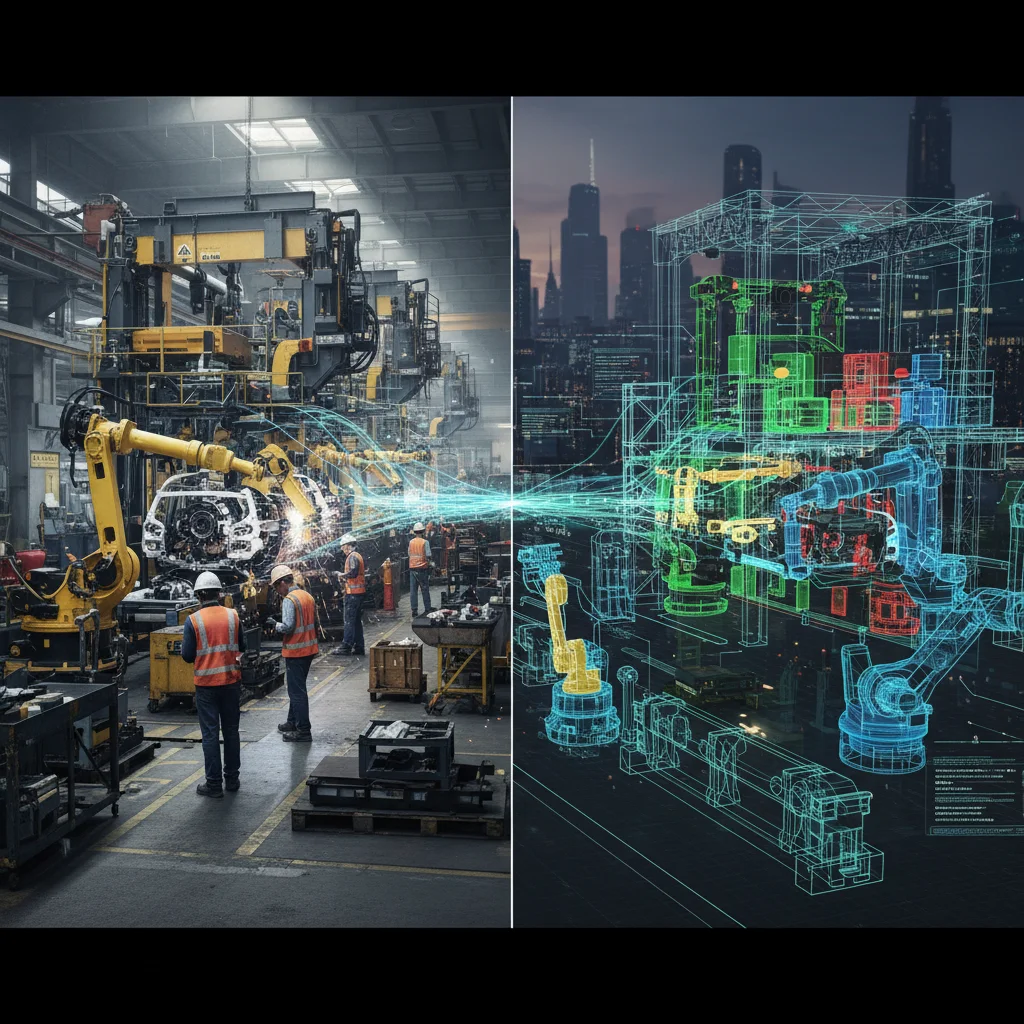
The concept of a digital twin, when combined with AI predictive maintenance, offers US manufacturers an incredibly powerful tool for holistic asset management and optimization. A digital twin is a virtual replica of a physical asset, process, or system. It’s not just a 3D model; it’s a dynamic, living digital counterpart that receives real-time data from its physical twin via IoT sensors. This continuous data flow allows the digital twin to accurately mirror the physical asset’s current state, behavior, and performance.
How Digital Twins Enhance AI Predictive Maintenance:
- Real-time Monitoring and Visualization: The digital twin provides a comprehensive, real-time view of an asset’s condition, performance, and operational context. Maintenance teams can visualize the health of complex machinery from a central dashboard, often in a more intuitive and detailed way than through raw data.
- Predictive Modeling and Simulation: AI algorithms are embedded within the digital twin. They use the real-time and historical data to build predictive models that forecast future performance, identify potential failure points, and estimate remaining useful life (RUL) of components. This goes beyond predicting a single failure to understanding the cascading effects across an entire system.
- Scenario Planning and Optimization: Manufacturers can run ‘what-if’ scenarios on the digital twin without affecting the physical asset. For example, they can simulate the impact of different maintenance schedules, changes in operating parameters, or the introduction of new components. This allows for optimization of maintenance strategies and operational settings.
- Root Cause Analysis: When an issue does occur, the digital twin, with its rich historical data and operational context, can be invaluable for pinpointing the root cause faster and more accurately, preventing recurrence.
- Remote Diagnostics and Collaboration: Digital twins facilitate remote diagnostics, allowing experts to assess equipment issues from anywhere, reducing travel time and speeding up problem resolution.
Transformative Benefits for US Manufacturing:
- Comprehensive Asset Health Visibility: Provides an unparalleled understanding of individual assets and their interconnectedness within the broader manufacturing ecosystem.
- Proactive and Optimized Maintenance: By combining AI’s predictive capabilities with the detailed context of the digital twin, maintenance becomes incredibly precise, contributing significantly to the 10% downtime reduction goal.
- Improved Product Design and Engineering: Insights gained from the digital twin’s performance data can feed back into product design, leading to more robust and reliable machinery in the future.
- Enhanced Training and Knowledge Transfer: Digital twins can be used as realistic training environments for technicians, allowing them to practice complex maintenance procedures without risking damage to actual equipment.
- Reduced Risk and Increased Safety: By identifying potential failures and operational risks in a virtual environment, manufacturers can implement preventative measures, improving workplace safety.
Implementing digital twins for AI predictive maintenance is a sophisticated undertaking, often requiring significant investment in IoT infrastructure, data integration, and specialized software platforms. However, for large-scale US manufacturers with complex and critical assets, the ability to virtually replicate, monitor, predict, and optimize their entire operational footprint offers an unmatched level of control and efficiency, making it an essential component of advanced Industry 4.0 strategies.
Implementing AI Predictive Maintenance: A Roadmap for US Manufacturers
Adopting AI predictive maintenance is not a one-size-fits-all solution; it requires a strategic, phased approach. For US manufacturers eager to reduce downtime by 10% or more, a clear roadmap is essential.
1. Define Clear Objectives and Scope:
Before diving into technology, identify specific pain points. Which machines cause the most downtime? Where are maintenance costs highest? Start with a pilot project on a critical asset or a specific production line where success can be clearly measured. Defining measurable KPIs (Key Performance Indicators) for downtime reduction, maintenance cost savings, or asset availability is crucial.
2. Assess Current Data Infrastructure and Gaps:
AI predictive maintenance is data-hungry. Evaluate your existing sensor infrastructure, data collection capabilities, and data storage solutions. Identify gaps where additional IoT sensors are needed or where data integration between disparate systems (SCADA, MES, ERP, CMMS) is lacking. Data quality and cleanliness are paramount for accurate AI models.
3. Choose the Right Technology Partners and Platforms:
The market for AI and IoT solutions is vast. Select vendors with proven expertise in industrial AI, predictive analytics, and digital twin technology. Look for platforms that offer scalability, robust security, and seamless integration with your existing IT/OT (Operational Technology) systems. Consider whether a cloud-based or edge computing solution is more appropriate for your specific needs.
4. Start Small, Learn, and Scale:
Begin with a pilot project. Implement anomaly detection on a single critical machine. Gather data, train your AI models, and validate their predictions against actual events. Learn from early successes and failures. Once proven, gradually expand the scope to other assets and integrate prescriptive analytics and digital twin capabilities as your data maturity grows.
5. Develop Internal Expertise and Foster a Data-Driven Culture:
Technology alone is not enough. Invest in training your maintenance teams, engineers, and data scientists. They need to understand how to interpret AI insights, validate recommendations, and adapt their workflows. Foster a culture of continuous improvement and data-driven decision-making across the organization. This human element is critical for the sustained success of AI predictive maintenance initiatives.
6. Measure and Refine:
Continuously monitor the performance of your AI predictive maintenance system. Are you meeting your downtime reduction targets? Are maintenance costs decreasing? Use these insights to refine your AI models, adjust maintenance strategies, and identify new opportunities for optimization. The journey with AI is iterative, requiring ongoing adjustments and improvements.
Challenges and Considerations for US Manufacturers
While the benefits of AI predictive maintenance are clear, US manufacturers should be aware of potential challenges:
- Initial Investment: The upfront costs for sensors, software, data infrastructure, and training can be significant. However, the ROI is often rapid and substantial.
- Data Silos and Integration: Bridging the gap between various operational and IT systems to create a unified data source can be complex.
- Talent Gap: A shortage of skilled AI engineers, data scientists, and maintenance technicians proficient in AI tools can hinder adoption.
- Cybersecurity Concerns: Connecting operational technology to networks introduces cybersecurity risks that must be carefully managed.
- Change Management: Overcoming resistance to new technologies and processes within the workforce requires strong leadership and effective communication.
Addressing these challenges proactively is key to a successful AI predictive maintenance implementation. Partnering with experienced technology providers and leveraging industry best practices can ease the transition.
The Future of Maintenance: Continuous Innovation with AI
The journey of AI predictive maintenance is far from over. As AI technologies continue to evolve, we can expect even more sophisticated capabilities. Imagine self-optimizing machines that automatically adjust their operating parameters based on real-time conditions and predicted wear, or fully autonomous maintenance systems that can diagnose and even perform minor repairs without human intervention. The integration of AI with other emerging technologies like augmented reality (AR) for guided maintenance and advanced robotics will further enhance efficiency and safety in manufacturing.
For US manufacturers, embracing AI predictive maintenance is not just about adopting a new technology; it’s about future-proofing their operations. It’s about building resilient, intelligent factories that can adapt to changing demands, overcome disruptions, and maintain a competitive edge on the global stage. The 10% reduction in downtime is just the beginning; the long-term benefits of an AI-driven maintenance strategy are transformative, leading to greater profitability, sustainability, and innovation.
The time to act is now. By strategically implementing advanced anomaly detection, prescriptive analytics, and digital twins, US manufacturers can unlock the full potential of AI predictive maintenance, ensuring their machinery runs smarter, longer, and more efficiently.