The Evolving Role of Education: How US Universities Are Adapting to 21st-Century Demands by 2026
The landscape of higher education is in a perpetual state of flux, driven by rapid technological advancements, shifting economic demands, and an increasingly interconnected global society. For US universities, the imperative to adapt is not merely an option but a necessity for survival and sustained relevance. As we approach 2026, the strategies employed by these institutions to meet 21st-century demands offer a fascinating glimpse into the future of learning. This comprehensive analysis will explore the key areas of US university adaptation, highlighting recent updates, comparative approaches, and the challenges and opportunities that lie ahead.
The traditional model of higher education, often characterized by lectures, rote memorization, and a focus on theoretical knowledge, is rapidly becoming insufficient for preparing students for the complexities of the modern workforce. Today’s graduates are expected to possess a diverse skill set that includes critical thinking, problem-solving, digital literacy, adaptability, and emotional intelligence. Consequently, US university adaptation involves a multi-faceted approach, encompassing curriculum redesign, technological integration, pedagogical innovation, and a renewed emphasis on practical, experiential learning.
Understanding the nuances of US university adaptation requires an examination of various factors, including funding models, regional economic pressures, and the diverse missions of different types of institutions, from large public research universities to small liberal arts colleges. While the challenges are universal, the responses are often tailored to specific institutional contexts and student demographics. This article aims to provide a holistic view of these transformative efforts, painting a clear picture of how US universities are positioning themselves for success in the coming years.
Curriculum Innovation: Redefining What it Means to Learn
One of the most significant areas of US university adaptation is the radical overhaul of traditional curricula. Universities are moving away from rigid, siloed disciplines towards interdisciplinary programs that reflect the interconnected nature of real-world problems. This shift is driven by the recognition that complex challenges, such as climate change, global health crises, and economic inequality, cannot be solved within the confines of a single academic field. Instead, they require insights and methodologies drawn from multiple disciplines.
Many institutions are developing new majors and minors that combine elements of humanities, social sciences, natural sciences, and engineering. For instance, programs in ‘Digital Humanities,’ ‘Environmental Policy and Management,’ or ‘Bioinformatics’ are becoming increasingly common. These programs equip students with a broader perspective and the ability to synthesize information from diverse sources, a crucial skill in the 21st century. The emphasis is on fostering critical thinking, creativity, and the ability to adapt to new information and technologies, rather than simply accumulating facts.
Beyond interdisciplinary studies, there’s a growing focus on skills-based learning. Universities are embedding competencies like data analysis, ethical reasoning, cross-cultural communication, and entrepreneurial thinking directly into their courses. This often involves project-based learning, case studies, and simulations that mimic real-world scenarios. The goal is to ensure that graduates are not only knowledgeable but also possess the practical skills immediately applicable in their chosen careers.
Furthermore, micro-credentials and stackable certificates are gaining traction as part of the US university adaptation strategy. These shorter, focused programs allow students and working professionals to acquire specific skills or knowledge areas without committing to a full degree program. This flexibility is particularly appealing in a rapidly changing job market where continuous learning is essential. Universities are partnering with industry leaders to design these credentials, ensuring their relevance and value to employers.
The pace of change in curriculum design is accelerating. Universities are constantly reviewing and updating their offerings to remain current with industry needs and societal challenges. This iterative process involves close collaboration with alumni, employers, and advisory boards to ensure that the education provided is both rigorous and relevant. The success of US university adaptation in this domain hinges on its ability to anticipate future demands and prepare students accordingly.
Technological Integration: Enhancing Learning and Accessibility
Technology has emerged as a powerful catalyst for US university adaptation, transforming how education is delivered, accessed, and experienced. The COVID-19 pandemic accelerated the adoption of online learning platforms and digital tools, pushing institutions to innovate at an unprecedented pace. By 2026, technology is deeply embedded in almost every aspect of university operations and pedagogy.
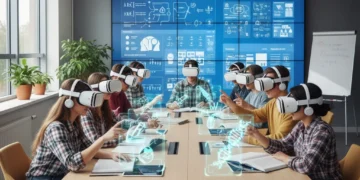
Learning Management Systems (LMS) have become more sophisticated, offering personalized learning paths, adaptive assessments, and rich multimedia content. Artificial intelligence (AI) is being leveraged to provide personalized feedback to students, identify learning gaps, and even automate administrative tasks, freeing up faculty to focus on teaching and mentorship. Virtual reality (VR) and augmented reality (AR) are also finding their way into classrooms, offering immersive experiences for subjects ranging from medicine and engineering to history and art. Imagine medical students practicing complex surgeries in a VR environment or history students exploring ancient civilizations through AR overlays.
Beyond the classroom, technology is improving accessibility and inclusivity. Online degrees and hybrid models of learning have made higher education more accessible to a global audience and to students who may not be able to attend traditional on-campus programs. This expansion of access is a critical component of US university adaptation, ensuring that education remains available to a diverse population, regardless of geographical location or personal circumstances.
Data analytics plays a crucial role in optimizing educational outcomes. Universities are collecting and analyzing data on student performance, engagement, and retention to identify effective teaching strategies and areas where students might need additional support. This data-driven approach allows institutions to make informed decisions about resource allocation and pedagogical improvements, leading to more effective learning environments.
However, technological integration also presents challenges. Ensuring equitable access to technology for all students, addressing digital literacy gaps, and safeguarding data privacy are critical considerations. Universities are investing in robust IT infrastructure, providing training for both faculty and students, and developing ethical guidelines for the use of AI and data. The effective and responsible integration of technology is paramount to successful US university adaptation.
Global Engagement and Cross-Cultural Competencies
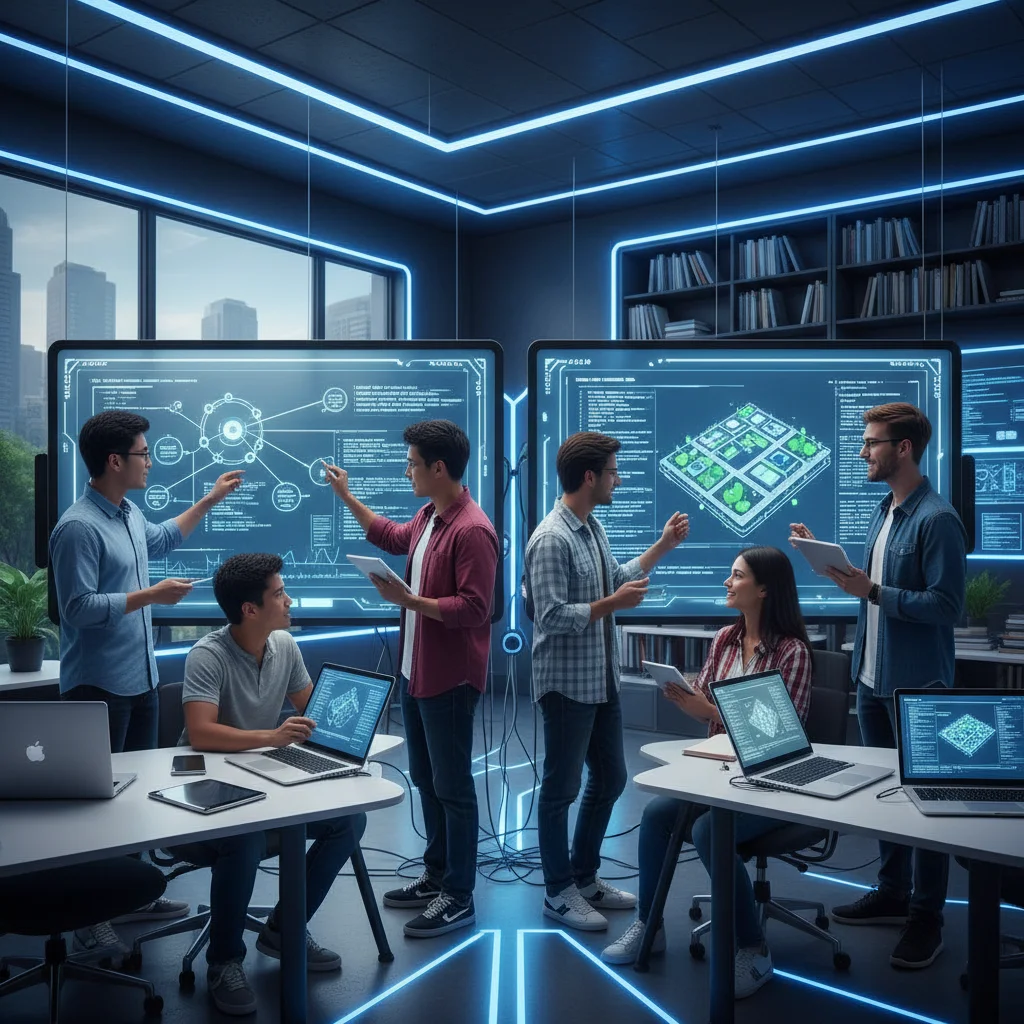
In an increasingly interconnected world, global engagement is no longer an optional add-on but a core component of US university adaptation. Universities are preparing students to be global citizens, capable of navigating diverse cultures, collaborating across borders, and understanding complex international issues. This involves a multi-pronged approach that includes study abroad programs, international partnerships, and the integration of global perspectives into the curriculum.
Study abroad programs continue to be a cornerstone of global engagement, offering students immersive experiences in different cultural contexts. However, these programs are evolving to be more accessible and diverse, including shorter-term options, faculty-led trips, and virtual international exchanges. The focus is on fostering cross-cultural communication skills, adaptability, and a deeper understanding of global challenges and opportunities.
International partnerships are also flourishing, with US universities collaborating with institutions worldwide on research projects, student and faculty exchanges, and joint degree programs. These partnerships not only enrich the academic experience but also facilitate the exchange of ideas and best practices, contributing to global knowledge creation. Such collaborations are vital for US university adaptation, allowing institutions to tap into diverse intellectual resources and expand their global reach.
Furthermore, universities are actively internationalizing their curricula, ensuring that global perspectives are woven into various disciplines. This might involve incorporating case studies from different regions, discussing international policy implications, or inviting guest speakers with global expertise. The goal is to cultivate a global mindset in students, preparing them for careers that increasingly transcend national boundaries.
Beyond academic programs, universities are also fostering a diverse and inclusive campus environment that reflects the globalized world. This includes supporting international students, promoting cultural awareness events, and addressing issues of global equity and justice. By creating a truly global learning environment, US university adaptation aims to produce graduates who are not only academically proficient but also culturally competent and globally conscious.
Research and Innovation: Driving Societal Progress
US universities have historically been powerhouses of research and innovation, and this role remains central to their adaptation in the 21st century. The focus is increasingly on translational research that addresses pressing societal challenges, from developing new medical treatments and sustainable energy solutions to understanding social inequalities and informing public policy. This commitment to impactful research is a key aspect of US university adaptation, demonstrating their relevance beyond traditional teaching.
Universities are actively fostering interdisciplinary research collaborations, bringing together experts from different fields to tackle complex problems. This collaborative approach often extends beyond academic departments to include partnerships with industry, government agencies, and non-profit organizations. These external collaborations not only provide additional funding and resources but also ensure that research outcomes have real-world applications and impact.
Innovation ecosystems are also being cultivated on campuses, with incubators, accelerators, and entrepreneurship centers supporting students and faculty in transforming their ideas into viable ventures. These initiatives provide mentorship, funding, and resources to help bring new technologies and solutions to market, contributing to economic growth and job creation. The emphasis on entrepreneurship is a growing trend in US university adaptation, reflecting the need to equip students with the skills to innovate and create their own opportunities.
The dissemination of research findings is also evolving. Beyond traditional academic publications, universities are utilizing various platforms to share their discoveries with a wider audience, including public lectures, online repositories, and engagement with media outlets. This commitment to public engagement ensures that research benefits society at large and informs public discourse on critical issues. The impact of US university adaptation is not just measured in academic papers but in the tangible benefits it brings to communities and the world.
Student Support and Well-being: A Holistic Approach
Recognizing that student success extends beyond academic achievement, US universities are increasingly adopting a holistic approach to student support and well-being. This is a crucial element of US university adaptation, acknowledging the diverse needs of today’s student population. The pandemic highlighted the importance of mental health services, and institutions are responding with expanded counseling services, stress reduction programs, and initiatives to foster a sense of community and belonging.
Career services are also undergoing a transformation, moving beyond resume writing and interview preparation to offer more comprehensive career development. This includes personalized career coaching, networking opportunities with alumni and industry professionals, and programs that help students explore different career paths and develop essential professional skills. Universities are recognizing that preparing students for the workforce begins long before their final year.
Financial aid and affordability remain significant concerns, and universities are exploring innovative models to make education more accessible. This includes increasing scholarship opportunities, developing more flexible payment plans, and advocating for policy changes that address the rising cost of higher education. Ensuring equitable access to education is a fundamental aspect of US university adaptation, particularly in a competitive global landscape.
Furthermore, diversity, equity, and inclusion (DEI) initiatives are at the forefront of student support efforts. Universities are actively working to create welcoming and inclusive environments for students from all backgrounds, addressing issues of systemic inequality and promoting cultural understanding. This involves hiring diverse faculty and staff, implementing equitable policies, and providing resources for underrepresented groups. A truly inclusive environment is essential for effective US university adaptation, fostering a richer learning experience for everyone.

Challenges and Future Outlook for US University Adaptation
Despite the significant strides in US university adaptation, several challenges persist. Funding remains a perennial concern, with institutions constantly seeking sustainable revenue streams amid fluctuating state support and increasing operational costs. The debate over tuition fees and student debt continues to shape public perception and policy discussions. Finding a balance between financial viability and accessibility is a delicate act.
The pace of technological change also presents a continuous challenge. Universities must invest in cutting-edge infrastructure and ongoing professional development for faculty to keep up with emerging technologies. The rapid evolution of AI, for instance, requires constant re-evaluation of its role in teaching, learning, and research, along with ethical considerations that must be addressed proactively.
Competition from alternative education providers, such as online learning platforms, bootcamps, and corporate training programs, is another factor driving US university adaptation. These alternatives often offer specialized skills training at a lower cost and in a shorter timeframe. Universities are responding by emphasizing the unique value proposition of a comprehensive university education, which includes critical thinking, research opportunities, and a broader intellectual development.
Looking towards 2026 and beyond, the trajectory of US university adaptation points towards even greater personalization, flexibility, and impact. We can expect to see more competency-based education models, where learning is measured by demonstrated skills rather than credit hours. Lifelong learning will become an even more central mission, with universities offering continuous educational opportunities for alumni and working professionals throughout their careers.
The role of universities as anchor institutions in their communities will also strengthen, with increased engagement in local economic development, social programs, and public discourse. This deeper integration with society will ensure that US university adaptation not only serves the needs of students but also contributes significantly to the well-being and progress of their surrounding regions and the nation as a whole.
In conclusion, US universities are undergoing a profound transformation to meet the multifaceted demands of the 21st century. Through innovative curricula, strategic technological integration, robust global engagement, impactful research, and comprehensive student support, these institutions are redefining their purpose and methods. While challenges remain, the commitment to continuous US university adaptation positions them as vital engines of progress, preparing future generations for a world that is constantly evolving.