Critical Patch Tuesday Alerts: Top 5 Vulnerabilities US IT Teams Must Address by March 2026 (TIME-SENSITIVE)

Critical Patch Tuesday Alerts: Top 5 Vulnerabilities US IT Teams Must Address by March 2026 (TIME-SENSITIVE)
In the ever-evolving landscape of cyber threats, staying ahead of potential breaches is not just a best practice; it’s a critical imperative. For US IT teams, the monthly rhythm of Microsoft’s Patch Tuesday brings a fresh wave of vulnerabilities requiring immediate attention. This article serves as a crucial guide, spotlighting the top 5 critical Patch Tuesday Alerts that demand the focus of every IT professional by March 2026. The urgency cannot be overstated; these vulnerabilities represent significant risks that, if left unaddressed, could lead to devastating data breaches, operational disruptions, and severe reputational damage.
The cybersecurity threat landscape is dynamic and relentless. Adversaries are constantly seeking new weaknesses to exploit, and unpatched systems remain among their most preferred entry points. While every Patch Tuesday brings a multitude of updates, some stand out due to their severity, exploitability, and potential impact on widely used systems. Our aim here is to cut through the noise, providing a focused, actionable roadmap for prioritizing your patching efforts. By March 2026, these specific Patch Tuesday Alerts must be fully mitigated across your infrastructure.
Understanding the nuances of each vulnerability, its potential impact, and the recommended remediation steps is paramount. This guide will delve into these critical areas, offering insights that will empower your IT team to make informed decisions and implement effective security measures. We will also discuss proactive strategies to enhance your overall vulnerability management program, ensuring that your organization remains resilient against future threats.
The Unrelenting Importance of Patch Tuesday Alerts
Patch Tuesday, the second Tuesday of every month, is a day circled on every IT administrator’s calendar. It’s when Microsoft releases security updates for its products, addressing newly discovered vulnerabilities. While the sheer volume of these updates can be overwhelming, ignoring them is not an option. Each update closes a potential backdoor that attackers could use to compromise systems, steal data, or deploy malware. The critical Patch Tuesday Alerts are those that address vulnerabilities with high severity scores, known exploits, or a wide attack surface.
For US IT teams, the stakes are particularly high. Compliance regulations, industry standards, and the increasing sophistication of cyber adversaries mean that a robust patching strategy is non-negotiable. Procrastination in applying these critical patches can lead to:
- Data Breaches: Exploited vulnerabilities are a direct path to sensitive data exposure.
- Ransomware Attacks: Many ransomware campaigns leverage known, unpatched vulnerabilities for initial access.
- Operational Downtime: Security incidents can halt business operations, leading to significant financial losses.
- Reputational Damage: A public security breach erodes customer trust and harms brand image.
- Regulatory Fines: Non-compliance with data protection laws due to unpatched systems can result in hefty penalties.
Therefore, a structured and disciplined approach to processing Patch Tuesday Alerts is fundamental to maintaining a strong security posture. This includes not only applying the patches but also thoroughly testing them, monitoring systems for any adverse effects, and verifying successful remediation.
Top 5 Critical Patch Tuesday Alerts US IT Teams Must Address by March 2026
Based on our analysis of historical trends, severity, exploitability, and potential impact on widely used enterprise systems, we’ve identified the following five archetypal critical vulnerabilities that represent the most significant risks. While specific CVEs will vary month-to-month, these categories consistently contain the most dangerous threats. US IT teams should proactively allocate resources to address these types of Patch Tuesday Alerts with utmost priority by March 2026.
1. Critical Remote Code Execution (RCE) Vulnerabilities in Core Microsoft Services
Remote Code Execution (RCE) vulnerabilities are consistently among the most dangerous. They allow attackers to execute arbitrary code on a target system without prior access, often with SYSTEM privileges. When these vulnerabilities are found in core Microsoft services like Windows Server, Exchange Server, or SharePoint, the impact can be catastrophic. An RCE flaw can lead to complete system compromise, data exfiltration, or the deployment of further malicious payloads across the network.
Why it’s Critical: RCE vulnerabilities are the holy grail for attackers. They offer immediate and profound control over affected systems, often without requiring user interaction. The widespread use of Microsoft’s core services in enterprise environments makes these targets incredibly attractive to adversaries. Unpatched RCE flaws can be leveraged for initial access, privilege escalation, and lateral movement within an organization’s network.
Action by March 2026: Implement a rigorous patching schedule for all Windows Servers, Exchange Servers, and SharePoint instances. Utilize automated patch management tools to ensure timely deployment. Prioritize RCE Patch Tuesday Alerts above almost all others. Conduct regular vulnerability scans to identify any missed patches and ensure that all affected systems are brought up to date.
2. Privilege Escalation Vulnerabilities in Windows Operating Systems
Privilege Escalation (PE) vulnerabilities allow an attacker with limited access to a system to gain higher-level permissions, often elevating to administrator or SYSTEM privileges. While not always an initial entry point, PE flaws are crucial for attackers to solidify their foothold and expand their control within a compromised network. They often follow an initial compromise, enabling an attacker to move from a user account to full administrative control.
Why it’s Critical: Even if an attacker gains initial access through a less severe vulnerability (e.g., phishing), a privilege escalation flaw can quickly turn a minor incident into a major breach. With elevated privileges, attackers can install malware, modify system configurations, create new user accounts, and access sensitive data that would otherwise be protected. These Patch Tuesday Alerts are essential for preventing an attacker from fully owning your systems.
Action by March 2026: Ensure all Windows workstations and servers are consistently updated with patches addressing privilege escalation vulnerabilities. Implement the principle of least privilege for all user accounts and applications. Regularly audit user permissions and access controls to minimize the impact of a potential privilege escalation event. Keep an eye on security bulletins specifically detailing privilege escalation Patch Tuesday Alerts for prompt action.

3. Spoofing and Information Disclosure Vulnerabilities in Browser Engines and Client Applications
Web browsers and client applications (like Microsoft Office, Adobe products, and PDF readers) are frequent targets for attackers due to their direct interaction with users and external content. Spoofing vulnerabilities can allow attackers to impersonate legitimate entities, facilitating phishing attacks or tricking users into revealing sensitive information. Information Disclosure flaws can inadvertently expose sensitive system or user data, which attackers can then use for further reconnaissance or exploitation.
Why it’s Critical: These vulnerabilities often serve as the initial attack vector for targeted campaigns. A successful spoofing attack can bypass security awareness training, leading users to download malware or provide credentials. Information disclosure, while seemingly less severe, can provide attackers with crucial details about your network topology, software versions, or user habits, enabling them to craft more sophisticated attacks. Addressing these Patch Tuesday Alerts is vital for endpoint security.
Action by March 2026: Maintain strict update policies for all web browsers (Edge, Chrome, Firefox, etc.) and client applications across your organization. Implement browser security configurations and ensure users are running the latest, patched versions. Educate users about phishing and social engineering tactics to complement technical controls. Pay close attention to Patch Tuesday Alerts related to browser engines and client-side applications, as these are often exploited in the wild.
4. Denial of Service (DoS) Vulnerabilities in Network Services
Denial of Service (DoS) vulnerabilities, while not always leading to data loss, can be extremely disruptive. They allow an attacker to make a system or network resource unavailable to its legitimate users, often by overwhelming it with traffic or exploiting a flaw that causes it to crash. When these affect critical network services like DNS, DHCP, or web servers, the entire organization’s operations can grind to a halt.
Why it’s Critical: Business continuity relies heavily on the availability of IT systems. A successful DoS attack can lead to significant financial losses from lost sales, productivity, and recovery efforts. While some DoS attacks are volumetric, exploiting software vulnerabilities can achieve the same effect with minimal resources. These Patch Tuesday Alerts are crucial for maintaining operational resilience and preventing service outages.
Action by March 2026: Prioritize patching for all network infrastructure components and services that are vulnerable to DoS attacks. Implement network intrusion detection/prevention systems (IDS/IPS) to detect and block DoS attempts. Ensure redundancy and load balancing for critical services. Regularly review and update incident response plans to effectively manage and recover from DoS incidents. Consistent monitoring of Patch Tuesday Alerts for network services is key.
5. Security Feature Bypass Vulnerabilities
Security Feature Bypass vulnerabilities are insidious because they undermine existing security controls. These flaws allow attackers to circumvent security mechanisms designed to protect systems, such as Address Space Layout Randomization (ASLR), Data Execution Prevention (DEP), or even authentication protocols. By bypassing these defenses, attackers can make other vulnerabilities easier to exploit or gain unauthorized access that would otherwise be blocked.
Why it’s Critical: These vulnerabilities weaken the overall security posture of an organization by neutralizing layers of defense. An attacker who can bypass a security feature can then more easily exploit other, perhaps less severe, vulnerabilities that would typically be mitigated. This makes the entire system more susceptible to compromise. Addressing these Patch Tuesday Alerts is about reinforcing your foundational security.
Action by March 2026: Pay close attention to Patch Tuesday Alerts that specifically mention security feature bypasses. While these might not always be rated as ‘Critical’ on their own, their impact on other vulnerabilities can be profound. Ensure that all security features, such as Windows Defender Exploit Guard, SmartScreen, and other built-in protections, are not only enabled but also fully patched. Regular security audits should confirm that these protective layers are functioning as intended and not being bypassed.
Developing a Robust Vulnerability Management Program
Addressing these critical Patch Tuesday Alerts by March 2026 requires more than just reactive patching; it demands a comprehensive and proactive vulnerability management program. Here are key components to consider:
Automated Patch Management Systems
Manual patching can be time-consuming, prone to error, and simply not scalable for large organizations. Automated patch management systems can streamline the process, ensuring that patches are deployed consistently and efficiently across all endpoints and servers. These tools can also help with reporting and compliance, providing an auditable trail of patching activities.
Regular Vulnerability Scanning and Penetration Testing
Even with the best patching efforts, some vulnerabilities might slip through, or new configurations might introduce weaknesses. Regular vulnerability scans can identify these gaps, while penetration testing simulates real-world attacks to uncover exploitable flaws before adversaries do. This proactive approach ensures that your systems are not just patched but truly secure.
Threat Intelligence Integration
Staying informed about emerging threats and active exploits is crucial. Integrating threat intelligence feeds into your security operations can help your team prioritize Patch Tuesday Alerts based on real-world risk. Knowing which vulnerabilities are actively being exploited in the wild allows for a more targeted and urgent response.
Incident Response Planning and Testing
Even with the most robust defenses, breaches can occur. A well-defined and regularly tested incident response plan is essential. This plan should outline the steps to take in the event of a security incident, from detection and containment to eradication and recovery. Regular drills and simulations will ensure your team is prepared to act swiftly and effectively.
Employee Security Awareness Training
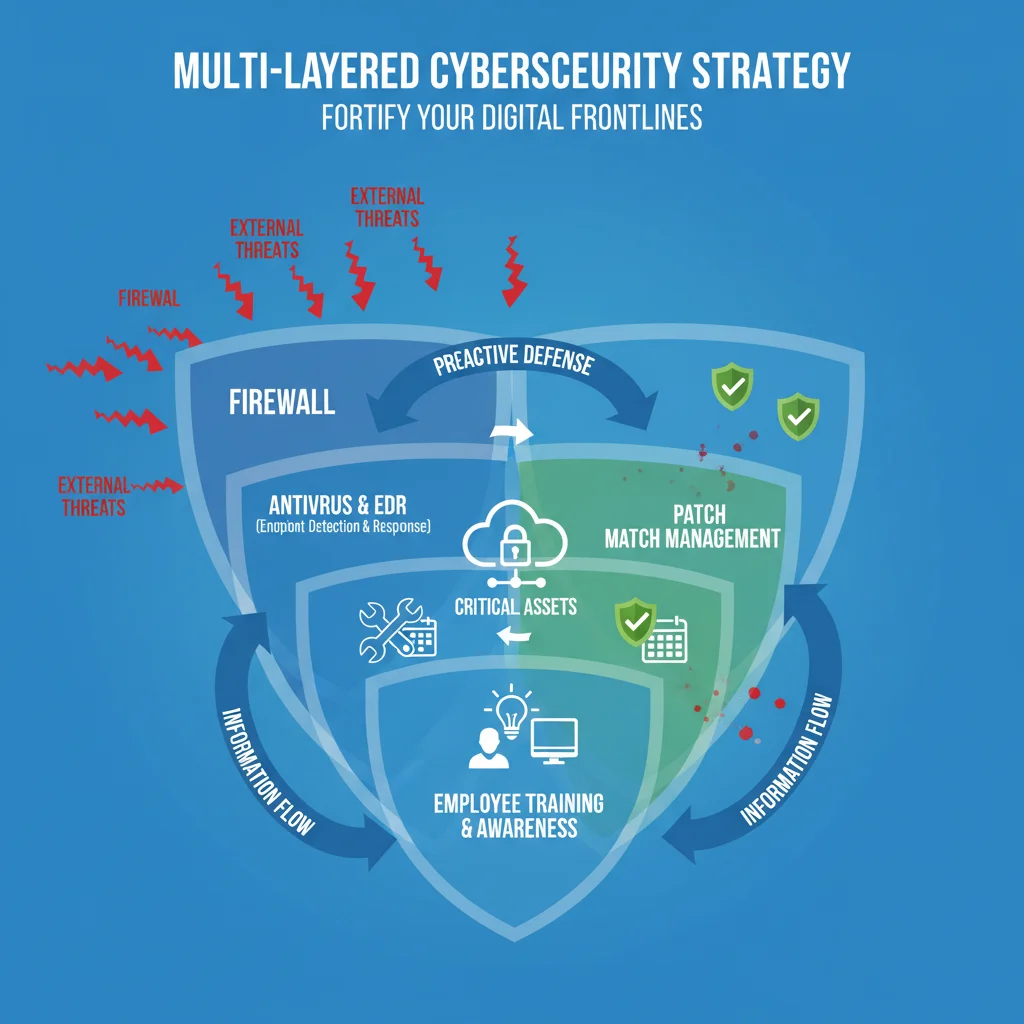
The human element remains one of the weakest links in cybersecurity. Regular and engaging security awareness training for all employees can significantly reduce the risk of successful attacks. Topics should include phishing recognition, strong password practices, safe browsing habits, and how to report suspicious activities. A well-informed workforce acts as an additional layer of defense.
Backup and Disaster Recovery Strategy
In the unfortunate event of a successful attack, a robust backup and disaster recovery strategy can mean the difference between a minor setback and catastrophic business failure. Regular, verified backups of critical data and systems, combined with a clear recovery plan, ensure that your organization can quickly restore operations and minimize data loss.
The Path Forward: Beyond March 2026
While this article focuses on the critical Patch Tuesday Alerts that US IT teams must address by March 2026, the principles of proactive vulnerability management extend far beyond this deadline. The cyber threat landscape is a perpetual battle, requiring continuous vigilance, adaptation, and investment in security. The lessons learned from prioritizing these specific vulnerabilities should inform a broader strategy for ongoing security excellence.
Organizations should strive to move towards a state of continuous security posture management, where vulnerability assessment, patching, and monitoring are integrated into daily operations rather than being reactive, monthly tasks. This involves:
- Continuous Monitoring: Implementing tools that provide real-time visibility into your network and systems, alerting you to new vulnerabilities or anomalous activities as they arise.
- Risk-Based Prioritization: Developing a methodology to prioritize vulnerabilities based on their severity, exploitability, the value of the affected assets, and the potential business impact. Not all vulnerabilities are created equal, and resources should be allocated accordingly.
- Automated Remediation Workflows: Where possible, automating the entire patching lifecycle, from detection and assessment to deployment and verification, to reduce manual effort and accelerate response times.
- Supplier Security Assessment: Extending vulnerability management to your supply chain, ensuring that third-party software and services also adhere to high security standards and patching protocols.
- Regular Review and Improvement: Periodically reviewing your vulnerability management program’s effectiveness, identifying areas for improvement, and adapting to new technologies and threats.
By embedding these practices into your organizational culture, US IT teams can transform their approach to security from a reactive chore to a strategic advantage. The goal is not just to survive the next Patch Tuesday Alerts, but to thrive in a challenging digital environment, protecting assets, maintaining trust, and ensuring business continuity.
Conclusion
The critical Patch Tuesday Alerts outlined in this guide represent the most pressing cybersecurity vulnerabilities that US IT teams must address by March 2026. From remote code execution in core services to subtle security feature bypasses, each category poses a significant threat to organizational security and operational integrity. Proactive and timely patching is not merely a technical task; it is a fundamental pillar of modern cybersecurity resilience.
By focusing on these top 5 areas, implementing robust vulnerability management practices, and fostering a culture of security awareness, organizations can significantly strengthen their defenses against the relentless tide of cyber threats. The deadline of March 2026 serves as a powerful reminder: the time to act is now. Prioritize these patches, secure your systems, and safeguard your future.