Energy-Efficient Lighting: Save $75 Annually on Electricity
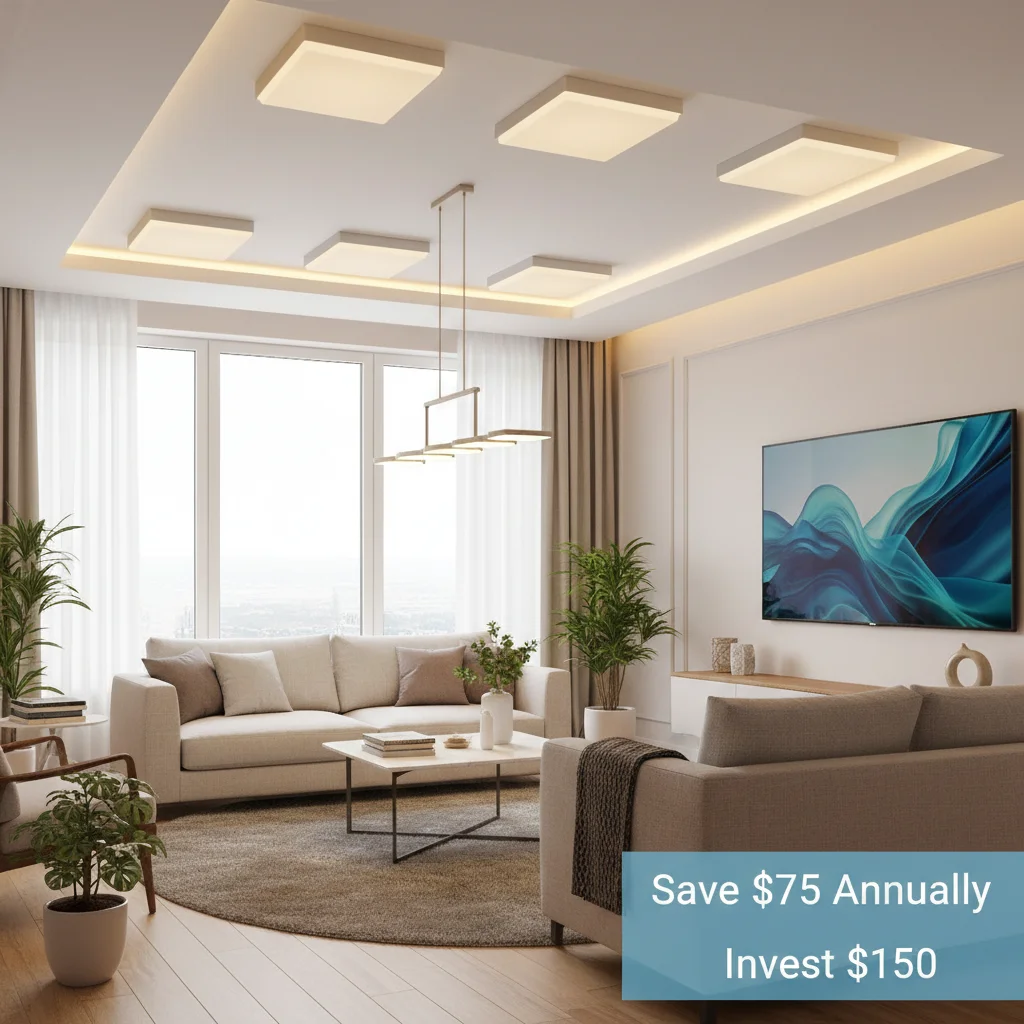
In an era where both personal finances and environmental sustainability are paramount, making smart choices about our energy consumption has never been more critical. One of the most impactful yet often overlooked areas for significant savings and positive environmental change lies within our homes: lighting. Specifically, investing in Energy-Efficient Lighting Savings can yield remarkable returns, both financially and ecologically.
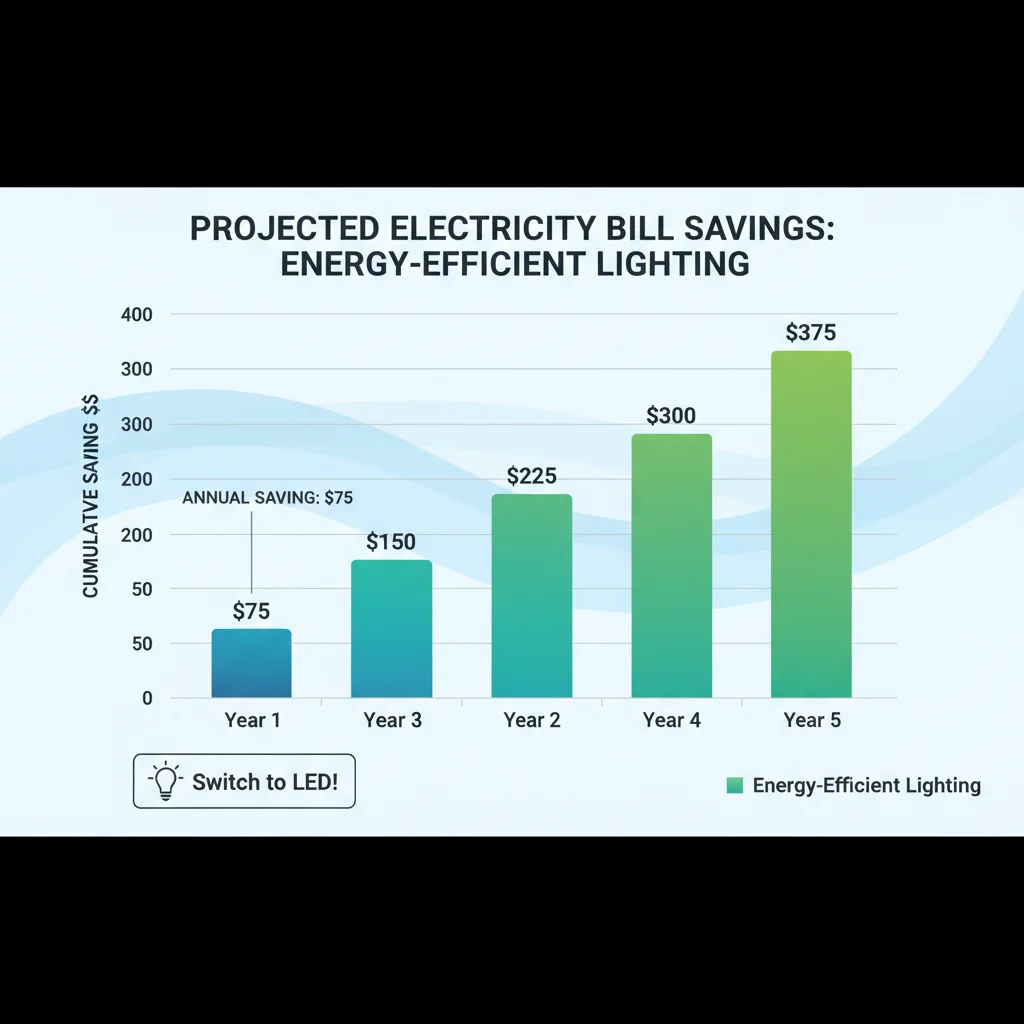
Consider this compelling scenario: an initial investment of just $150 in upgrading your home to energy-efficient lighting can translate into an impressive $75 in annual electricity savings, with these benefits beginning as early as 2026. This isn’t just a hypothetical figure; it’s a realistic projection based on the rapid advancements in lighting technology and the ever-increasing cost of electricity. This article delves deep into the financial impact, environmental advantages, and practical steps you can take to harness the power of Energy-Efficient Lighting Savings.
The Economic Imperative: Why $150 Now Means $75 Annually Later
The upfront cost of upgrading to energy-efficient lighting, particularly LED (Light Emitting Diode) technology, can sometimes deter consumers. A $150 investment might seem like a small sum, but for many, it’s still a consideration. However, understanding the long-term financial benefits paints a much clearer picture. This isn’t merely an expense; it’s a strategic investment in reducing your recurring household costs.
Understanding Your Current Lighting Costs
Before we delve into the savings, let’s briefly consider what you’re currently spending. Traditional incandescent bulbs are notoriously inefficient, converting only about 10% of the energy they consume into light, with the rest wasted as heat. Compact Fluorescent Lamps (CFLs) were an improvement, but LEDs have truly revolutionized the industry.
To calculate your current lighting costs, you would typically multiply the wattage of your bulbs by the hours they are used per day, then by the number of days per year, and finally by your electricity rate. For an average household with several incandescent bulbs, these costs can quickly add up, often representing a significant portion of the overall electricity bill.
The Power of LED Technology
LEDs are the cornerstone of Energy-Efficient Lighting Savings. They consume significantly less energy than traditional bulbs – often 75% to 80% less than incandescents – and have a much longer lifespan, sometimes lasting 25 times longer. This combination of lower energy consumption and extended durability is what drives the substantial annual savings.
Let’s break down the $150 investment and $75 annual savings. This scenario assumes a typical household might replace a dozen or more frequently used incandescent or older CFL bulbs with new LED equivalents. The $150 covers the cost of these bulbs, which have become increasingly affordable. The $75 annual saving is a conservative estimate, reflecting the reduction in kilowatt-hours (kWh) consumed for lighting and the average national electricity rate. For homes with higher energy usage or in regions with higher electricity costs, the savings could be even greater.
Return on Investment (ROI)
The concept of return on investment (ROI) is crucial here. If you invest $150 and save $75 annually, your initial investment is paid back in just two years. After that, every dollar saved is pure profit. Over the typical 15-25 year lifespan of an LED bulb, these savings accumulate into hundreds, if not thousands, of dollars. The financial prudence of adopting Energy-Efficient Lighting Savings is undeniable.
Beyond the Wallet: Environmental Impact of Efficient Lighting
While the financial benefits are a powerful motivator, the environmental advantages of Energy-Efficient Lighting Savings are equally, if not more, compelling. Reducing electricity consumption directly translates to a smaller carbon footprint and a more sustainable planet.
Decreased Carbon Emissions
The vast majority of electricity generated globally still comes from burning fossil fuels, which releases greenhouse gases like carbon dioxide into the atmosphere. By using less electricity for lighting, you reduce the demand for power generation, thereby lowering carbon emissions. Every kWh saved is a step towards mitigating climate change.
The $75 in annual savings isn’t just monetary; it represents a significant reduction in energy usage, which in turn means fewer tons of carbon dioxide released into the atmosphere over the lifespan of your LED bulbs. This collective effort, when adopted by millions of households, can have a profound impact on global emissions targets.
Reduced Waste and Resource Consumption
The extended lifespan of LED bulbs means fewer bulbs are manufactured, packaged, shipped, and ultimately discarded. This reduces the consumption of raw materials, the energy used in manufacturing, and the volume of waste sent to landfills. Unlike CFLs, LEDs do not contain mercury, making them safer to dispose of and reducing the risk of environmental contamination.
Choosing Energy-Efficient Lighting Savings is a tangible way for individuals to contribute to a circular economy, where resources are used more efficiently and waste is minimized. It’s a simple change that embodies the principles of responsible consumption.
Practical Steps to Achieve Energy-Efficient Lighting Savings
Now that we understand the "why," let’s explore the "how." Implementing Energy-Efficient Lighting Savings in your home is a straightforward process that doesn’t require specialized skills or extensive renovations.
1. Identify High-Usage Areas
Start by identifying the rooms and fixtures where lights are used most frequently and for the longest durations. These are typically living rooms, kitchens, bathrooms, and hallways. Prioritizing these areas will yield the quickest and most significant returns on your investment.
2. Choose the Right LED Bulbs
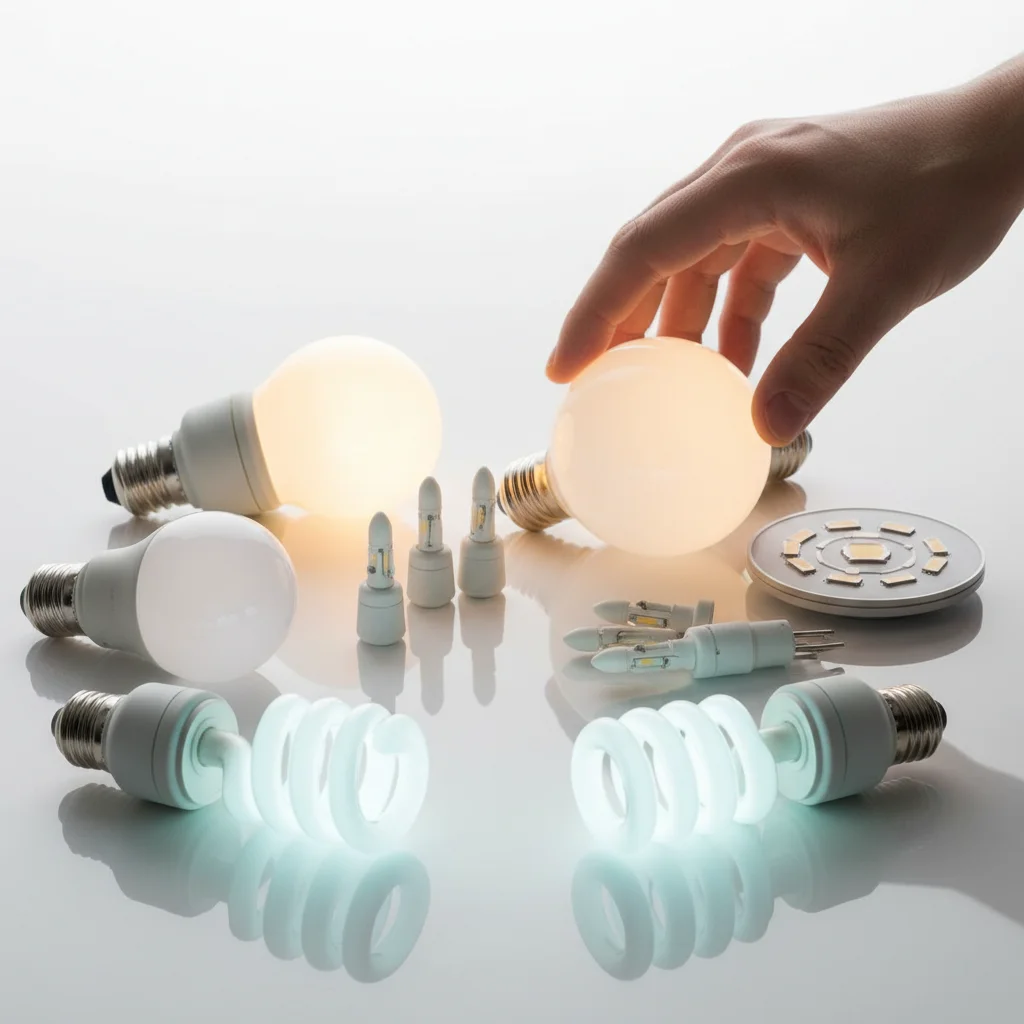
LED technology has advanced considerably, offering a wide range of options in terms of brightness (lumens), color temperature (warm white to cool daylight), and dimmability. When selecting bulbs:
- Lumens, not Watts: Focus on lumens to determine brightness. A 60-watt incandescent bulb is roughly equivalent to an 8-12 watt LED bulb (around 800 lumens).
- Color Temperature: Choose a color temperature (measured in Kelvins) that suits the mood and function of the room. Warmer temperatures (2700K-3000K) are ideal for living areas and bedrooms, while cooler temperatures (4000K-5000K) are better for task lighting in kitchens or home offices.
- Dimmability: If you have dimmer switches, ensure your chosen LED bulbs are "dimmable." Not all LEDs are compatible with standard dimmers.
- Smart Features: Consider smart LED bulbs that can be controlled via apps, voice assistants, or schedules for added convenience and energy management.
3. Phased Replacement Strategy
You don’t have to replace every bulb in your home overnight. A phased approach can make the $150 investment more manageable. Start with the most frequently used bulbs, then gradually replace others as your budget allows or as older bulbs burn out. This strategy ensures continuous Energy-Efficient Lighting Savings without a large initial outlay.
4. Incorporate Smart Lighting Controls
Beyond just efficient bulbs, smart lighting controls can amplify your savings. Motion sensors in bathrooms, hallways, and utility rooms ensure lights are only on when needed. Timers for outdoor lighting prevent unnecessary illumination. Smart home systems allow you to control lighting remotely, ensuring you never leave lights on accidentally when you’re away.
5. Maximize Natural Light
While not directly related to bulb replacement, maximizing natural light reduces the need for artificial lighting during the day. Keep windows clean, use lighter colored window treatments, and arrange furniture to avoid blocking natural light sources. This "free" light complements your investment in Energy-Efficient Lighting Savings.
The Future of Lighting: Innovations and Continued Savings
The field of lighting technology is constantly evolving, promising even greater efficiencies and innovative features in the years to come. This means that the $75 annual savings starting in 2026 is likely just the beginning of a long-term trend of increasing financial and environmental benefits.
Advanced LED Technologies
Researchers are continually working on improving LED efficiency, making them even brighter for less power. Organic LEDs (OLEDs), while currently more expensive, offer diffuse, panel-like illumination and could become more mainstream. Beyond just light, "Li-Fi" technology – using light waves for data transmission – is also on the horizon, potentially integrating our lighting infrastructure with our digital lives in new, energy-efficient ways.
Integration with Smart Home Ecosystems
The synergy between energy-efficient lighting and smart home ecosystems will only grow stronger. Imagine lighting systems that adapt to your daily routines, adjust based on natural light availability, or even monitor your well-being through subtle changes in light spectrum. These integrated systems will further optimize energy usage, enhancing Energy-Efficient Lighting Savings and convenience.
Government Incentives and Rebates
Many governments and utility companies offer incentives, rebates, or tax credits for homeowners who upgrade to energy-efficient appliances and lighting. These programs can further reduce the initial investment cost, making the transition even more attractive and accelerating your ROI. Always check with your local utility provider or government energy department for available programs in your area.
Addressing Common Misconceptions
Despite the overwhelming benefits, some misconceptions about energy-efficient lighting persist. Let’s address a few:
"LEDs are too expensive."
While the initial cost per bulb was higher in the past, prices have dropped dramatically. When factoring in the energy savings and extended lifespan, LEDs are significantly cheaper in the long run than traditional bulbs. The $150 investment for $75 annual savings clearly demonstrates this.
"LEDs don’t produce good quality light."
Early LEDs sometimes had issues with color rendition or produced harsh, cool light. Modern LEDs offer excellent color rendering index (CRI) and are available in a full spectrum of color temperatures, including warm whites that perfectly mimic traditional incandescent light.
"It’s too complicated to switch."
Replacing a bulb is as simple as unscrewing the old and screwing in the new. For existing fixtures, it’s a direct swap. Smart lighting systems might require a hub, but most are designed for easy setup and user-friendly control.
Case Study: A Homeowner’s Transition to Energy-Efficient Lighting
To further illustrate the tangible benefits of Energy-Efficient Lighting Savings, let’s consider a hypothetical homeowner, Sarah, who decided to upgrade her lighting in late 2025. Sarah lives in a modest three-bedroom home and had approximately 20 incandescent bulbs and 5 older CFLs in frequently used areas. Her average monthly electricity bill for lighting alone was around $15-20.
Sarah invested $150 in a mix of LED replacement bulbs for her most-used fixtures (living room, kitchen, two bathrooms, and her home office). She chose a variety of lumen outputs and color temperatures to suit each space. The installation was simple; she replaced the bulbs herself over a weekend.
By early 2026, Sarah started observing the impact. Her monthly electricity bill for lighting dropped by approximately $6.25, totaling $75 over the year. This reduction was consistent, and she noticed no compromise in light quality. In fact, she appreciated the instant brightness of the LEDs compared to the warm-up time of her old CFLs.
By late 2027, Sarah had fully recouped her initial $150 investment. From 2028 onwards, every $75 saved annually represents pure financial gain. Over the next decade, assuming her LED bulbs continue to perform as expected, she stands to save $750, all from that initial $150 outlay. Furthermore, she experienced the satisfaction of knowing she was contributing to a greener environment by reducing her home’s energy consumption.
Conclusion: A Bright Future with Energy-Efficient Lighting Savings
The evidence is clear: investing in Energy-Efficient Lighting Savings is one of the smartest decisions you can make for your home and the planet. With a modest investment of $150, you can realistically expect to save $75 annually on your electricity bill, starting in 2026. This rapid return on investment, coupled with the significant environmental benefits of reduced carbon emissions and waste, makes the transition to energy-efficient lighting an undeniable win-win situation.
Don’t let outdated lighting technology drain your wallet or contribute unnecessarily to environmental strain. Take the simple step today to embrace the future of illumination. Upgrade your bulbs, explore smart lighting controls, and enjoy a brighter, more sustainable, and financially sound home. The path to substantial Energy-Efficient Lighting Savings is well-lit and waiting for you.