Boosting R&D Tax Credits: How US Innovators Can Save 15% Annually Starting in 2026 (FINANCIAL IMPACT)

In the dynamic landscape of American innovation, businesses constantly seek avenues to reinvest in their growth and technological advancement. One of the most powerful yet often underutilized tools at their disposal is the Research and Development (R&D) Tax Credit. For US innovators, understanding and strategically leveraging R&D Tax Credits can translate into substantial annual savings, with projections indicating a potential 15% annual boost starting in 2026. This comprehensive guide delves into the nuances of R&D Tax Credits, their profound financial impact, and how your business can optimize its claims to fuel future innovation.
The R&D Tax Credit, officially known as the Credit for Increasing Research Activities, was established in 1981 to incentivize domestic research and development. It’s a dollar-for-dollar reduction in a company’s federal and, in many cases, state tax liability. While the concept has been around for decades, its application, interpretation, and potential benefits continue to evolve, making it crucial for businesses to stay informed.
For US innovators, the R&D Tax Credits represent more than just a tax break; they are a vital mechanism for fostering innovation, driving economic growth, and maintaining global competitiveness. By reducing the after-tax cost of qualified research expenses, these credits empower companies to invest more in groundbreaking technologies, new product development, and process improvements. This, in turn, can lead to job creation, increased market share, and a stronger national economy.
The anticipation of increased savings starting in 2026 stems from various factors, including potential legislative adjustments and a growing awareness among businesses about the breadth of activities that qualify. Historically, many companies, especially small and medium-sized enterprises (SMEs), have either overlooked these credits or underestimated their eligibility. However, with enhanced guidance and a more aggressive approach to identifying qualifying activities, the financial impact for US innovators is set to become even more pronounced.
Understanding the Basics of R&D Tax Credits
Before diving into the specifics of maximizing your savings, it’s essential to grasp the fundamental criteria for R&D Tax Credits. The IRS outlines a four-part test that an activity must meet to be considered qualified research:
- Permitted Purpose: The activity must be intended to develop a new or improved business component’s function, performance, reliability, or quality. This means the research must aim for a technological improvement.
- Elimination of Uncertainty: The activity must involve an attempt to eliminate uncertainty concerning the development or improvement of a product or process. This uncertainty can relate to the capability or method for developing or improving the business component, or the appropriate design of the business component.
- Process of Experimentation: The activity must involve a process of experimentation relating to a new or improved function, performance, reliability, or quality. This often means testing, analyzing, and refining hypotheses.
- Technological in Nature: The experimentation must be fundamentally rooted in the principles of a physical or biological science, engineering, or computer science.
It’s a common misconception that R&D activities are exclusive to laboratories and white coats. In reality, a vast array of industries and activities can qualify. From software development and manufacturing process improvements to agricultural innovations and architectural design, many businesses are conducting qualifying R&D without realizing it. The key is to identify the activities that meet the four-part test and meticulously document them.
Who Qualifies for R&D Tax Credits?
The R&D Tax Credit is available to a wide range of businesses, not just large corporations. Small businesses, startups, and even businesses with no taxable income can benefit. For instance, qualifying small businesses (those with less than $50 million in gross receipts) can claim the credit against their payroll tax liability, making it an immediate cash flow benefit rather than just a future income tax reduction. This provision has been particularly impactful for startups and early-stage companies that may not yet be profitable but are heavily investing in R&D.
Industries that frequently claim R&D Tax Credits include:
- Manufacturing (e.g., developing new products, improving production processes)
- Software Development (e.g., creating new applications, enhancing existing platforms)
- Engineering and Architecture (e.g., innovative design, material science)
- Life Sciences and Biotech (e.g., drug discovery, medical device development)
- Food and Beverage (e.g., new product formulations, process optimization)
- Aerospace and Defense (e.g., advanced materials, system integration)
The scope is broad, and many businesses perform qualifying activities without explicitly labeling them as "R&D." This underscores the importance of a thorough review of operations to identify all potential qualifying expenses.
Qualified Research Expenses (QREs)
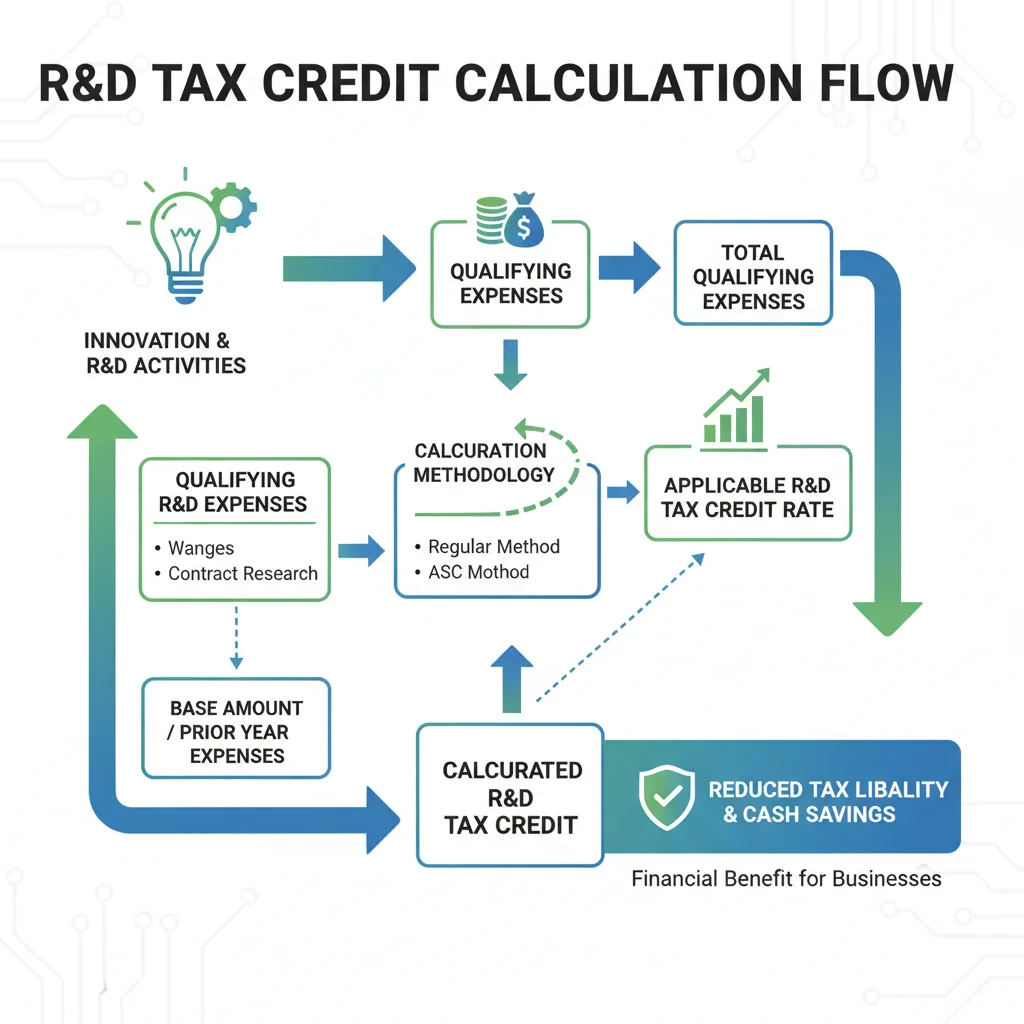
Once an activity is deemed qualified, the next step is to identify the associated Qualified Research Expenses (QREs). These typically fall into three main categories:
- Wages: This includes the wages paid to employees directly performing, supervising, or supporting qualified research activities. A significant portion of an employee’s time dedicated to R&D can be included.
- Supplies: Costs of tangible property (other than land or improvements to land, and property subject to depreciation) used or consumed in the conduct of qualified research. This can include raw materials, prototypes, and experimental components.
- Contract Research: Amounts paid to third parties for conducting qualified research on behalf of the taxpayer. Generally, 65% of these expenses can be included, with specific rules for universities and federal labs allowing 75% and 100% respectively.
It’s crucial to meticulously track and categorize these expenses. Inadequate documentation is one of the primary reasons R&D Tax Credit claims are challenged by the IRS. Businesses should implement robust internal systems to capture all relevant data, from timekeeping records for employees involved in R&D to invoices for supplies and contract research.
The Financial Impact: Why 15% Annual Savings in 2026?
The projection of 15% annual savings for US innovators starting in 2026 is an exciting prospect, though it’s important to understand the factors contributing to this figure. This isn’t a guaranteed across-the-board increase but rather an achievable benchmark for businesses that strategically optimize their R&D Tax Credit claims.
Several elements contribute to this potential increase:
- Increased Awareness and Education: More businesses are becoming aware of the R&D Tax Credit and its broad applicability. As knowledge spreads, more companies will proactively identify and claim eligible activities, leading to higher aggregate savings.
- Refined Interpretation of "Process of Experimentation": Over time, IRS guidance and court cases have provided clearer definitions of what constitutes a "process of experimentation." This allows businesses to more confidently include activities that might have previously been considered borderline.
- Focus on "Elimination of Uncertainty": A deeper understanding of the "elimination of uncertainty" criterion allows businesses to pinpoint specific challenges and solutions within their development cycles, strengthening their claims.
- Technological Advancements Expanding R&D: The rapid pace of technological change means that R&D is becoming an increasingly integral part of almost every industry. Automation, AI, data analytics, and new materials are constantly being developed and integrated, expanding the pool of qualifying activities.
- Potential Legislative Enhancements: While not a certainty, there’s always the possibility of legislative changes that could further enhance the R&D Tax Credit, such as increasing the credit rate, expanding eligibility, or simplifying the claiming process. These discussions are ongoing in Congress, reflecting a bipartisan desire to foster innovation.
- Improved Documentation and Tracking: With specialized software and consulting services, businesses are getting better at identifying, tracking, and documenting their R&D activities and expenses. This precision allows for more comprehensive and defensible claims.
The 15% figure represents an illustrative potential for businesses to significantly increase their R&D Tax Credit capture rate by proactively engaging with the credit, optimizing their internal processes, and staying abreast of regulatory developments. For many companies, this could mean the difference between funding a new research initiative or delaying it, hiring more engineers or maintaining the status quo.

Strategic Approaches to Maximize Your R&D Tax Credits
To realize the full potential of R&D Tax Credits, US innovators need a strategic, proactive approach. Here are key steps and considerations:
1. Conduct a Comprehensive R&D Study
Many businesses mistakenly believe they don’t perform R&D. A detailed R&D study, often conducted by experienced tax professionals, can uncover qualifying activities that are deeply embedded in your daily operations. This involves interviewing key personnel, reviewing project documentation, and analyzing financial records to identify all eligible expenses.
2. Implement Robust Documentation Practices
Documentation is paramount. The IRS requires taxpayers to substantiate their R&D claims. This includes:
- Project Narratives: Detailed descriptions of the technical challenges, uncertainties, and experimental processes undertaken.
- Employee Time Tracking: Records of hours spent by employees on qualified R&D activities.
- Expense Tracking: Meticulous records of supplies, contract research payments, and other direct costs.
- Prototypes and Test Results: Evidence of experimentation, including failed attempts, which are also valuable for demonstrating a process of experimentation.
Starting early and maintaining these records concurrently with the R&D activities themselves is far more effective than trying to reconstruct them retrospectively.
3. Leverage Expert Guidance
The R&D Tax Credit rules are complex and can be challenging to navigate. Engaging with tax professionals specializing in R&D credits can significantly enhance your ability to identify eligible activities, accurately calculate your credit, and withstand potential IRS audits. These experts can help you interpret the four-part test within the context of your specific industry and operations.
4. Understand State-Level R&D Credits
Beyond federal credits, many states offer their own R&D tax incentives. These often mirror federal guidelines but may have unique eligibility criteria, credit rates, or claiming procedures. Combining federal and state R&D Tax Credits can further amplify your annual savings. Researching and understanding the specific R&D tax benefits available in your state(s) of operation is crucial.
5. Plan for Future R&D Investments
Integrate R&D Tax Credit planning into your overall business strategy. As you plan new projects or improvements, consider how they might qualify for the credit. This forward-looking approach ensures that you’re not only maximizing current claims but also positioning yourself for future benefits. By understanding the criteria, you can sometimes slightly adjust project documentation or scope to better align with R&D credit eligibility without compromising project goals.
Common Pitfalls to Avoid
While the benefits of R&D Tax Credits are significant, businesses must be aware of common pitfalls that can lead to disallowed claims or audit scrutiny:
- Insufficient Documentation: As mentioned, this is the biggest issue. "If it’s not documented, it didn’t happen" holds true for R&D claims.
- Misinterpreting the Four-Part Test: Applying the criteria too broadly or too narrowly can lead to errors. For example, routine engineering or quality control activities generally do not qualify unless they involve a process of experimentation to eliminate technical uncertainty.
- Claiming Non-Qualifying Activities: Activities like market research, routine data collection, or reverse engineering (unless it involves technical uncertainty) are typically excluded.
- Inaccurate Expense Allocation: Incorrectly allocating wages or supplies between R&D and non-R&D activities can lead to inflated claims.
- Failing to Account for Payroll Tax Credit Limitations: For startups claiming against payroll tax, there are annual limits on the amount that can be claimed, which must be carefully managed.
Proactive engagement with qualified professionals can help mitigate these risks and ensure compliance.
The Future of R&D Tax Credits for US Innovators
The landscape for R&D Tax Credits is continually evolving. Discussions around potential changes, such as the full expensing of R&D costs (which was temporarily allowed but then reverted), highlight the government’s ongoing interest in incentivizing innovation. While the 15% annual savings starting in 2026 is a strong indicator of growing opportunities, businesses should remain vigilant for legislative updates and IRS guidance.
For US innovators, the R&D Tax Credit is more than just a line item on a tax return; it’s a strategic financial lever that can accelerate growth, foster technological breakthroughs, and enhance competitive advantage. By embracing a proactive, well-documented, and expertly guided approach, businesses can unlock substantial annual savings and channel these funds back into the very innovation that drives their success.
The financial impact of optimized R&D Tax Credits is not just theoretical. It translates into real-world benefits: increased hiring of skilled professionals, investment in cutting-edge equipment, expansion into new markets, and the development of products and services that shape the future. As we approach 2026, the emphasis on identifying and maximizing these credits will only grow, presenting a golden opportunity for businesses committed to innovation.
Case Studies: Realizing the Benefits
Consider a small software company developing a new AI-powered analytics platform. Their R&D activities involve significant investment in engineering salaries, cloud computing resources for algorithm testing, and contract developers for specialized modules. By meticulously tracking these expenses and demonstrating the technical uncertainties overcome during development, they successfully claim substantial R&D Tax Credits. This allows them to hire two additional data scientists, accelerating their product launch and securing early market share.
Another example is a manufacturing firm that invests in optimizing its production line to reduce waste and increase efficiency. The process involves experimenting with new robotic systems, material handling techniques, and software integration. These activities, which might seem like routine improvements, qualify as R&D because they involve a process of experimentation to achieve a new or improved process, eliminating technical uncertainty. The R&D Tax Credits they receive enable them to further invest in automation, reducing operational costs and making their products more competitive.
These examples highlight that R&D is not confined to specific industries but is prevalent across the economy wherever businesses are striving for technological advancement and improvement. The potential for 15% annual savings starting in 2026 is an aggregate figure that reflects the increasing sophistication of businesses in identifying and claiming these credits, alongside a growing appreciation for the breadth of qualifying activities.
Conclusion: Seize the R&D Tax Credit Opportunity
For US innovators, the message is clear: the R&D Tax Credit is a powerful financial tool that you cannot afford to overlook. With the potential for 15% annual savings starting in 2026, driven by increased awareness, refined interpretations, and strategic planning, now is the time to re-evaluate your R&D activities and ensure you are maximizing your claims.
By understanding the four-part test, meticulously documenting your Qualified Research Expenses, seeking expert guidance, and integrating R&D tax planning into your broader business strategy, you can unlock significant capital. This capital can then be reinvested into further innovation, driving job creation, economic growth, and ultimately, securing your position at the forefront of technological advancement. Don’t let this valuable opportunity pass you by; empower your innovation journey with the full benefits of R&D Tax Credits.