Zero-Trust Architecture for US SMBs: Boost Cybersecurity 25% with This 6-Step Guide

Implementing Zero-Trust Architecture: A 6-Step Guide for US SMBs to Enhance Cybersecurity by 25% (PRACTICAL SOLUTIONS)
In an increasingly digital landscape, the phrase “trust but verify” has been replaced by a more stringent, yet necessary, mantra: “never trust, always verify.” This fundamental shift underpins the Zero-Trust Architecture (ZTA), a cybersecurity model that is no longer a luxury but a critical necessity for businesses of all sizes, especially US Small and Medium-sized Businesses (SMBs). Cyber threats are evolving at an alarming rate, and traditional perimeter-based security models are proving insufficient against sophisticated attacks. For SMBs, the stakes are particularly high; a single data breach can lead to devastating financial losses, reputational damage, and even business closure. This comprehensive guide outlines a practical, 6-step approach for US SMBs to implement Zero-Trust Architecture, aiming to boost their cybersecurity posture by a significant 25%.
The average cost of a data breach for an SMB continues to rise, making proactive security measures indispensable. Zero Trust SMB strategies are designed to minimize the attack surface, contain breaches, and ensure that only authorized users and devices can access specific resources, regardless of their location. By adopting a Zero-Trust mindset, SMBs can build a resilient defense against phishing, ransomware, insider threats, and supply chain attacks. This guide will walk you through each step, providing actionable insights and practical solutions tailored for the unique challenges faced by US SMBs.
Understanding Zero-Trust Architecture: Why It Matters for US SMBs
Before diving into the implementation steps, it’s crucial to grasp the core principles of Zero-Trust Architecture. At its heart, ZTA assumes that no user, device, application, or network segment should be inherently trusted, even if they are within the organization’s traditional network perimeter. Every access request must be authenticated, authorized, and continuously validated. This “never trust, always verify” approach contrasts sharply with older security models that granted broad access once a user was inside the network.
For US SMBs, this paradigm shift is particularly vital. Unlike large enterprises with vast IT security budgets and dedicated teams, SMBs often operate with limited resources and may lack specialized cybersecurity expertise. This makes them attractive targets for cybercriminals who exploit vulnerabilities in less robust security infrastructures. Implementing Zero Trust SMB principles helps level the playing field by providing a structured, proactive defense mechanism.
Key Benefits of Zero Trust for SMBs:
- Reduced Attack Surface: By enforcing strict access controls, ZTA limits the potential entry points for attackers.
- Improved Breach Containment: Even if a breach occurs, the “least privilege” principle ensures that attackers cannot move laterally across the network easily.
- Enhanced Data Protection: Critical business data is safeguarded through granular access policies and continuous monitoring.
- Better Compliance: ZTA helps SMBs meet various regulatory requirements (e.g., HIPAA, GDPR, CCPA) by demonstrating robust security controls.
- Remote Work Security: With the rise of remote and hybrid work models, ZTA provides secure access for employees regardless of their location or device.
- Cost-Effectiveness: While initial investment is required, ZTA can reduce long-term costs associated with data breaches, recovery, and regulatory fines.
Moving forward, our focus will be on practical, actionable steps that US SMBs can take to implement this powerful security framework effectively. We’ll break down the complexities into manageable stages, ensuring that even businesses with limited IT staff can embark on their Zero Trust SMB journey with confidence.
Step 1: Define Your Protect Surface & Critical Assets
The first and arguably most crucial step in implementing Zero-Trust Architecture is to identify and categorize your organization’s “protect surface.” This concept, central to ZTA, focuses on what you need to protect rather than where it is located. For US SMBs, this means understanding your most valuable assets and the data flows that support your core business operations. Without this clear understanding, any security efforts risk being misdirected or inefficient.
Practical Actions for SMBs:
- Inventory Critical Data:
- Identify all sensitive data – customer information, financial records, intellectual property, employee data, trade secrets, etc. – and where it resides (servers, cloud storage, endpoints, backup systems).
- Classify data based on its sensitivity and regulatory requirements (e.g., PII, PHI, PCI).
- Map Applications:
- List all applications – SaaS, on-premise, custom-built – that process or store critical data. Understand their interdependencies.
- Document which users and devices access these applications.
- Identify Key Services:
- Determine essential network services (e.g., DNS, Active Directory, authentication services) that are vital for business continuity and data access.
- Pinpoint Critical Devices:
- Identify devices that handle or access sensitive data, such as servers, critical workstations, mobile devices, and IoT devices.
- Understand Data Flows:
- Visualize how your critical data moves between users, devices, applications, and services. This helps in understanding potential attack vectors and points of vulnerability.
For an SMB, this exercise doesn’t need to be overly complex. Start with a spreadsheet or a simple diagram. The goal is to gain clarity on what absolutely must be protected. This foundational step informs all subsequent Zero Trust SMB decisions, ensuring that your security efforts are focused on the most impactful areas. By clearly defining your protect surface, you can then begin to build policies around these critical assets, rather than around broad network segments.
Step 2: Map Transaction Flows & Establish Micro-segmentation
Once your protect surface is defined, the next step in implementing Zero-Trust Architecture for your US SMB is to understand how legitimate transactions flow through your environment and then to apply micro-segmentation. Micro-segmentation is a core Zero Trust SMB principle that involves dividing your network into small, isolated segments, each with its own granular security policies.
Practical Actions for SMBs:
- Analyze Transaction Flows:
- For each critical application and data set identified in Step 1, document the specific users, devices, and services that legitimately interact with it.
- Determine the exact paths and protocols used for these interactions. For example, “Sales team members using company-issued laptops access the CRM application via HTTPS.”
- Identify any unnecessary communication paths or open ports that could be exploited.
- Design Micro-segments:
- Based on your transaction flow analysis, create logical security zones (micro-segments) around your protect surface. Each segment should contain only the assets required for a specific function or team.
- Examples: A segment for financial data, a segment for HR applications, a segment for development servers.
- Implement Network Segmentation Technologies:
- VLANs (Virtual Local Area Networks): While not true micro-segmentation, VLANs can be a starting point for basic network separation in smaller SMBs.
- Firewall Rules: Configure your firewalls (both perimeter and internal) to enforce strict “deny by default” rules, allowing only explicitly authorized traffic between segments.
- Software-Defined Networking (SDN) & Cloud Security Groups: For SMBs utilizing cloud infrastructure (AWS, Azure, Google Cloud), leverage native security groups and network access control lists (NACLs) to create virtual micro-segments.
- Host-Based Firewalls: Ensure all endpoints have host-based firewalls configured to restrict incoming and outgoing connections.
- Isolate Sensitive Systems:
- Critical systems, like domain controllers or payment processing servers, should be in their own highly restricted micro-segments.
The goal here is to create a “zero-trust zone” around each critical asset, ensuring that even if an attacker breaches one segment, they cannot easily move to another. This significantly reduces the blast radius of any potential attack, making your Zero Trust SMB implementation more robust. This step requires careful planning and potentially some network reconfiguration, but the security benefits are immense.
Step 3: Develop Granular “Never Trust, Always Verify” Policies
With your protect surface defined and transaction flows mapped, the next critical step for US SMBs in their Zero-Trust Architecture journey is to develop and enforce granular access policies. This is where the “never trust, always verify” principle truly comes to life. Instead of broad permissions, every access request, whether from inside or outside the network, must be evaluated against a strict set of rules.
Practical Actions for SMBs:
- Implement Least Privilege Access:
- Grant users and devices only the minimum access necessary to perform their specific tasks. This means no more “admin by default” for regular users.
- Regularly review and revoke unnecessary permissions.
- Adopt Strong Identity and Access Management (IAM):
- Multi-Factor Authentication (MFA): Mandate MFA for all users, especially for accessing critical applications and data. This is a non-negotiable Zero Trust SMB requirement.
- Single Sign-On (SSO): Implement SSO to streamline user access while maintaining centralized control and reducing password fatigue.
- Privileged Access Management (PAM): For highly sensitive accounts (e.g., IT administrators), implement PAM solutions to manage, monitor, and audit their activities.
- Device Posture Checks:
- Before granting access, verify the security posture of the requesting device. This includes checking for up-to-date antivirus, operating system patches, disk encryption, and device compliance with security policies.
- Deny access to non-compliant devices or quarantine them until issues are resolved.
- Context-Based Access Decisions:
- Policies should consider various contextual factors beyond just user identity and device. These include:
- Location: Restrict access from unusual geographic locations.
- Time of Day: Limit access during non-business hours for certain resources.
- Behavioral Anomalies: Flag unusual user or device behavior (e.g., accessing an unusual amount of data, connecting from an unknown IP).
- Resource Sensitivity: Apply stricter policies for highly sensitive data or applications.
- Attribute-Based Access Control (ABAC):
- Move beyond traditional role-based access control (RBAC) to ABAC, where access is granted based on a combination of attributes (user attributes, resource attributes, environment attributes). This offers more granular control.
Developing these policies can seem daunting, but starting with your most critical assets and gradually expanding is a pragmatic approach for a US SMB. Document every policy clearly, ensure it aligns with your defined protect surface and transaction flows, and communicate these changes effectively to your employees. This comprehensive approach to access control is fundamental to a successful Zero Trust SMB implementation.
Step 4: Automate & Orchestrate Security Workflows
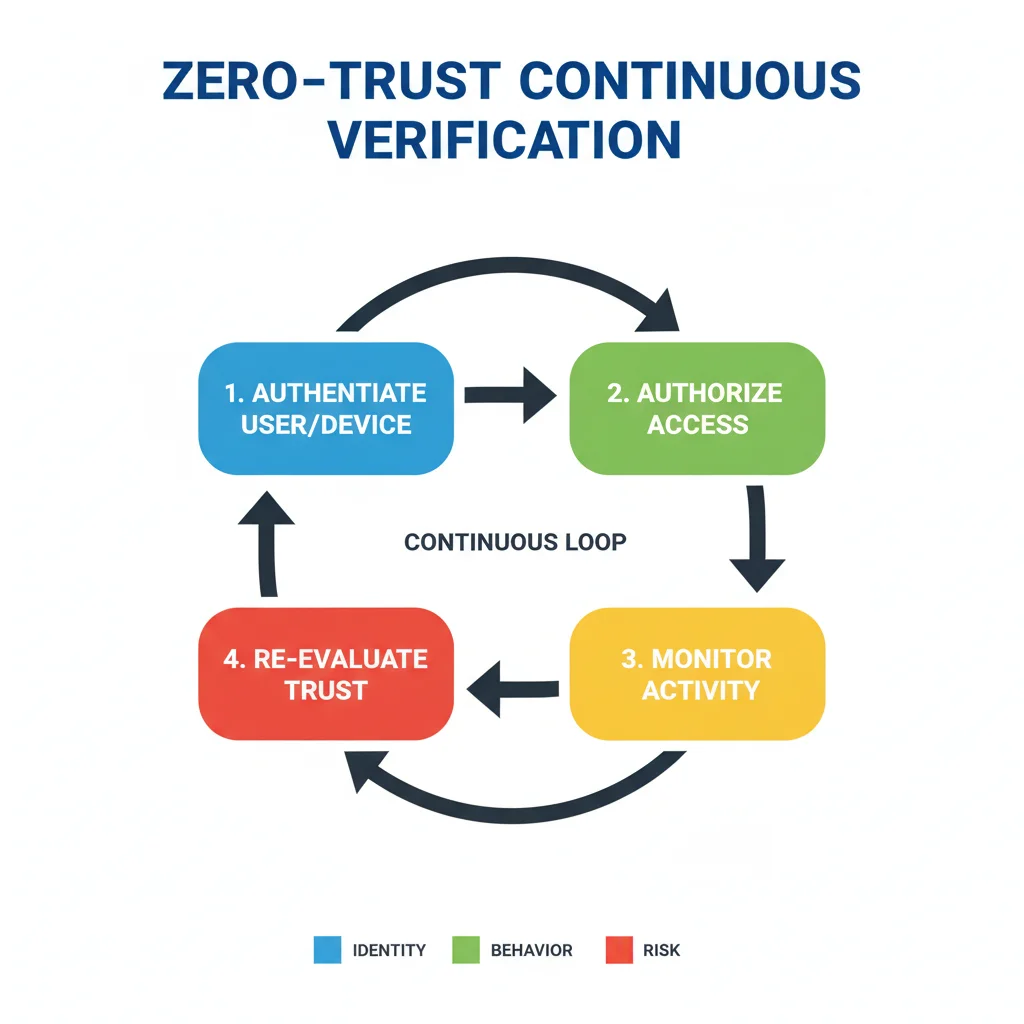
Manual security operations are prone to errors and cannot keep pace with the dynamic nature of modern cyber threats. For US SMBs to effectively implement Zero-Trust Architecture, automation and orchestration of security workflows are essential. This step focuses on leveraging technology to enforce policies, respond to threats, and ensure continuous verification with minimal human intervention.
Practical Actions for SMBs:
- Leverage Security Information and Event Management (SIEM) Systems:
- Implement a SIEM solution (or a more affordable cloud-based log management tool) to aggregate security logs from all your devices, applications, and network infrastructure.
- Configure alerts for suspicious activities, policy violations, and potential threats.
- Implement Security Orchestration, Automation, and Response (SOAR) Capabilities:
- While full-fledged SOAR might be complex for smaller SMBs, look for security tools that offer some level of automation.
- Automate routine tasks such as blocking suspicious IP addresses, quarantining infected devices, or resetting user passwords after multiple failed login attempts.
- Integrate security tools to share threat intelligence and automate responses across your security stack.
- Automate Policy Enforcement:
- Use identity providers (IdPs), network access control (NAC) solutions, and endpoint detection and response (EDR) platforms to automatically enforce your granular access policies.
- Ensure that device posture checks (from Step 3) are automated, and non-compliant devices are automatically restricted or remediated.
- Automate Patch Management:
- Implement automated patch management systems for operating systems, applications, and firmware. This ensures that vulnerabilities are addressed promptly, reducing the attack surface.
- Automate Configuration Management:
- Use configuration management tools to ensure all systems are configured according to your security baselines and to detect and remediate configuration drift.
- Centralized Management Platforms:
- Look for security solutions that offer a unified management console. This simplifies monitoring, policy creation, and incident response for your Zero Trust SMB strategy.
Automation is the backbone of an efficient Zero-Trust Architecture. It allows US SMBs to enforce complex policies consistently, respond to threats much faster than manual processes, and free up valuable IT resources to focus on more strategic security initiatives. While a full automation suite might be a long-term goal, starting with key security functions can significantly strengthen your Zero Trust SMB posture.
Step 5: Continuously Monitor & Analyze
Zero-Trust Architecture is not a “set it and forget it” solution. It requires continuous monitoring and analysis to be truly effective. For US SMBs, this means constantly observing network traffic, user behavior, and system health to detect anomalies, identify potential threats, and refine security policies. This continuous feedback loop is crucial for adapting to evolving cyber threats and ensuring the ongoing integrity of your Zero Trust SMB implementation.
Practical Actions for SMBs:
- Implement Continuous Logging and Auditing:
- Ensure all relevant systems – firewalls, servers, endpoints, cloud services, identity providers – are configured to generate comprehensive logs.
- Regularly review these logs for unusual activity, failed login attempts, unauthorized access attempts, and policy violations.
- Utilize your SIEM or log management solution (from Step 4) to centralize and analyze these logs efficiently.
- Network Traffic Analysis (NTA):
- Monitor network traffic for suspicious patterns, such as unexpected data transfers, communication with known malicious IP addresses, or unusual protocol usage.
- Look for tools that can provide visibility into encrypted traffic, as many attacks hide within seemingly legitimate SSL/TLS connections.
- User and Entity Behavior Analytics (UEBA):
- For SMBs that can afford it, UEBA solutions use machine learning to establish baseline behaviors for users and entities (devices, applications).
- Alerts are generated when deviations from these baselines occur, indicating potential insider threats or compromised accounts.
- Even without a dedicated UEBA solution, manually reviewing access patterns and looking for anomalies can be a good start.
- Threat Intelligence Integration:
- Integrate threat intelligence feeds into your security tools to automatically identify and block known malicious indicators of compromise (IOCs).
- Stay informed about emerging threats relevant to your industry and adjust your Zero Trust SMB policies accordingly.
- Regular Vulnerability Scanning and Penetration Testing:
- Conduct regular vulnerability scans of your systems and applications to identify weaknesses before attackers do.
- Consider periodic penetration testing (even a simplified version) to simulate real-world attacks and test the effectiveness of your Zero-Trust Architecture.
- Security Metrics and Reporting:
- Establish key performance indicators (KPIs) for your security posture (e.g., number of blocked threats, time to detect, time to respond).
- Generate regular reports to track progress, identify areas for improvement, and demonstrate the value of your Zero Trust SMB investment to stakeholders.
Continuous monitoring provides the visibility needed to detect and respond to threats in real-time, making your Zero-Trust Architecture adaptive and resilient. For US SMBs, this means being vigilant and proactive, using the data collected to strengthen your defenses and ensure your “never trust, always verify” policies are always effective.
Step 6: Educate Employees & Foster a Security Culture
Technology alone cannot guarantee complete security. The human element remains one of the most significant risk factors. For US SMBs implementing Zero-Trust Architecture, educating employees and fostering a strong security culture is as crucial as any technical control. Employees are often the first line of defense, and their awareness and adherence to security protocols are paramount to the success of your Zero Trust SMB strategy.

Practical Actions for SMBs:
- Regular Cybersecurity Training:
- Conduct mandatory and recurring cybersecurity awareness training for all employees, from new hires to senior management.
- Cover topics such as phishing detection, strong password practices, the importance of MFA, safe browsing habits, and how to identify and report suspicious activities.
- Explain the “Why” of Zero Trust:
- Help employees understand the principles of Zero-Trust Architecture and why these new security measures are being implemented. Explain how “never trust, always verify” protects both the company and their personal data.
- Address concerns about increased friction and explain the long-term benefits in terms of security and business continuity.
- Phishing Simulations:
- Regularly conduct simulated phishing campaigns to test employee awareness and provide immediate, targeted training to those who fall for the simulations.
- Use these as learning opportunities, not punitive measures.
- Clear Policy Communication:
- Clearly communicate all security policies related to data handling, device usage, remote access, and incident reporting.
- Make these policies easily accessible and understandable.
- Promote a Reporting Culture:
- Encourage employees to report any suspicious emails, unusual system behavior, or potential security incidents without fear of reprimand.
- Establish clear channels for reporting and ensure that reported issues are addressed promptly.
- Lead by Example:
- Management and IT teams must consistently adhere to all security policies and demonstrate best practices. Their commitment reinforces the importance of the Zero Trust SMB culture.
- Provide Secure Tools & Resources:
- Equip employees with the necessary secure tools (e.g., VPNs, secure communication platforms, password managers) and ensure they know how to use them correctly.
A well-informed and security-conscious workforce significantly reduces the risk of human-error-related breaches. By making security an integral part of your company culture, US SMBs can transform their employees into a powerful asset in defending against cyber threats, complementing the technical controls of Zero-Trust Architecture.
Overcoming Common Zero Trust SMB Implementation Challenges
Implementing a comprehensive Zero Trust Architecture can present several challenges for US SMBs. Awareness of these hurdles and proactive planning can ensure a smoother transition and more successful outcome. Here are some common challenges and practical strategies to overcome them:
1. Limited Budget and Resources:
- Challenge: SMBs often operate with tight budgets and may not have dedicated cybersecurity teams.
- Solution:
- Phased Approach: Don’t try to implement everything at once. Prioritize your most critical assets and implement Zero Trust principles incrementally.
- Cloud-Native Security: Leverage the security features built into cloud services (AWS, Azure, Google Cloud) which often include robust IAM, network segmentation, and monitoring capabilities at a lower operational cost.
- Managed Security Service Providers (MSSPs): Consider partnering with an MSSP specializing in Zero Trust for SMBs. They can provide expertise and manage security operations without the need for a large in-house team.
- Open-Source Tools: Explore reputable open-source tools for certain security functions, but be mindful of the support and maintenance overhead.
2. Complexity and Integration:
- Challenge: Integrating various security tools and enforcing granular policies across a diverse IT environment can be complex.
- Solution:
- Standardization: Where possible, standardize on a limited set of vendors or platforms that offer integrated security suites.
- API Integrations: Look for solutions with strong API capabilities to facilitate integration between different systems (e.g., your IAM system with your network access control).
- Pilot Programs: Test Zero Trust policies on a small segment of your network or a specific application before rolling it out company-wide.
- Professional Guidance: Don’t hesitate to seek advice from cybersecurity consultants experienced in Zero Trust SMB deployments.
3. User Friction and Resistance:
- Challenge: New security measures, especially MFA and strict access controls, can sometimes be perceived as inconvenient by employees.
- Solution:
- Clear Communication: As highlighted in Step 6, explain the “why” behind Zero Trust and its benefits for the business and employees.
- User-Friendly Solutions: Choose security tools that are as intuitive and seamless as possible. SSO, for instance, can reduce password fatigue while enhancing security.
- Phased Rollout: Introduce changes gradually, allowing users to adapt to new workflows.
- Feedback Channel: Establish a channel for employees to provide feedback on new security measures and address their concerns.
4. Legacy Systems:
- Challenge: Many SMBs still rely on older, legacy systems that may not natively support Zero Trust principles or modern security integrations.
- Solution:
- Isolation: Isolate legacy systems into their own highly restricted micro-segments.
- Proxies and Gateways: Use security proxies or gateways to control and monitor access to legacy applications, acting as a “trust broker.”
- Modernization Roadmap: Develop a long-term plan to gradually replace or upgrade legacy systems with more secure, Zero Trust-compatible alternatives.
- Compensating Controls: Implement additional security controls around legacy systems (e.g., enhanced logging, strict network ACLs) to mitigate their inherent vulnerabilities.
5. Continuous Management and Maintenance:
- Challenge: Zero Trust requires ongoing monitoring, policy refinement, and system maintenance.
- Solution:
- Automate Where Possible: Leverage automation for patching, configuration management, and threat response (as discussed in Step 4).
- Dedicated Resources: Even if not full-time, allocate specific individuals or an outsourced provider to oversee Zero Trust operations.
- Regular Review Cycles: Schedule regular reviews of your policies, asset inventory, and threat landscape to ensure your Zero Trust SMB strategy remains effective and current.
- Stay Informed: Keep abreast of the latest cybersecurity threats and Zero Trust best practices.
By anticipating these challenges and applying these practical solutions, US SMBs can navigate the implementation of Zero-Trust Architecture more effectively, ultimately strengthening their cybersecurity posture and achieving that targeted 25% enhancement in security.
Conclusion: Your Path to Enhanced Zero Trust SMB Cybersecurity
The journey to a robust cybersecurity posture for US SMBs, particularly through the adoption of Zero-Trust Architecture, is not a sprint but a continuous process of improvement and adaptation. By diligently following these six practical steps – from defining your protect surface to fostering a strong security culture – your business can significantly enhance its resilience against the ever-growing landscape of cyber threats. Our aim with this guide is to empower you to boost your Zero Trust SMB cybersecurity by 25%, translating directly into better data protection, reduced risk, and greater peace of mind.
Remember, the “never trust, always verify” principle is more than just a security slogan; it’s a fundamental shift in how you approach access and security within your organization. It forces a proactive mindset, where every user, device, and application is treated as a potential threat until proven otherwise. This granular approach, while requiring initial investment in time and resources, yields substantial dividends in long-term security and operational integrity.
For US SMBs, the benefits extend beyond mere compliance. A strong Zero-Trust Architecture builds customer trust, protects your brand reputation, and ensures business continuity in the face of sophisticated cyberattacks. It allows you to confidently embrace digital transformation, remote work, and cloud technologies, knowing that your critical assets are secured by a modern, adaptive defense framework.
Start your Zero Trust SMB implementation today. Begin with a thorough assessment, prioritize your most valuable assets, and gradually build out your architecture. Leverage available tools, consider expert guidance when needed, and most importantly, educate your team to be an active part of your defense. The future of cybersecurity for SMBs is Zero Trust, and by embracing it now, you are securing your business for tomorrow.