FinOps Cloud Cost Optimization: US Businesses Saving 20% by 2026

The relentless march of digital transformation has propelled cloud adoption to unprecedented levels across US businesses. While the cloud offers unparalleled agility, scalability, and innovation, it also introduces a complex challenge: managing and optimizing cloud spend. In an era where every dollar counts, the ability to effectively control and reduce cloud costs without stifling innovation has become a critical competitive advantage. This is where FinOps Cloud Optimization emerges as a game-changer, promising US businesses the potential to save up to 20% on their cloud expenditures by 2026.
FinOps, a portmanteau of ‘Finance’ and ‘DevOps,’ is more than just a set of tools; it’s an operational framework and cultural practice that brings financial accountability to the variable spend model of the cloud. It fosters collaboration between engineering, finance, and business teams to make data-driven decisions on cloud spending. As organizations mature in their cloud journey, the need for robust financial governance becomes paramount. Without it, the promise of cloud efficiency can quickly turn into an uncontrolled financial drain. This comprehensive guide will delve into the intricacies of FinOps, its core principles, strategic implementation for US businesses, and the tangible benefits it offers in achieving significant cloud cost reductions.
The Core Principles of FinOps Cloud Optimization
At its heart, FinOps is built upon a set of six guiding principles that provide a roadmap for effective cloud financial management:
- Collaboration: FinOps breaks down traditional silos between finance, engineering, and business teams. It emphasizes shared responsibility and collective decision-making regarding cloud usage and costs. Engineers understand the financial impact of their architectural choices, while finance teams gain insight into technical operations.
- Decision-Making Driven by the Business Value of Cloud: Every cloud expenditure should be tied back to a tangible business outcome. FinOps advocates for making investment decisions based on the value generated by cloud resources, rather than simply focusing on cost reduction in isolation.
- Everyone Takes Ownership for Their Cloud Usage: This principle promotes accountability across the organization. Teams are empowered and expected to manage their cloud resources efficiently, understanding the cost implications of their actions.
- Reports Should Be Accessible and Timely: To make informed decisions, relevant, accurate, and timely data on cloud costs and usage must be readily available to all stakeholders. This includes detailed billing data, usage metrics, and cost allocation reports.
- Centralized Team Drives FinOps: While ownership is distributed, a centralized FinOps team often spearheads the initiative, providing governance, best practices, tool recommendations, and training to the wider organization.
- FinOps is a Continuous Iteration: Cloud environments are dynamic. FinOps is not a one-time project but an ongoing process of monitoring, analyzing, optimizing, and iterating. It requires constant vigilance and adaptation to evolving cloud services and business needs.
These principles lay the foundation for a robust FinOps framework, enabling US businesses to gain unprecedented control over their cloud spending and unlock significant savings. The adoption of these principles is crucial for any organization serious about achieving FinOps Cloud Optimization.
The Escalating Need for FinOps in US Businesses
The rapid expansion of cloud services has presented both immense opportunities and significant challenges for US businesses. While the benefits of scalability, flexibility, and innovation are clear, the complexities of cloud billing, resource sprawl, and lack of visibility have led to substantial wasted expenditure. Reports consistently show that a significant portion of cloud spending goes unoptimized or unused.
Consider the following drivers for the increasing adoption of FinOps:
- Complex Cloud Billing Models: Hyperscale cloud providers like AWS, Azure, and Google Cloud offer a dizzying array of services, pricing models, and discount options. Understanding and navigating these complexities requires specialized knowledge that traditional finance teams often lack.
- Resource Sprawl and Shadow IT: The ease of provisioning cloud resources can lead to developers spinning up instances that are later forgotten, underutilized, or misconfigured. This ‘resource sprawl’ contributes significantly to unnecessary costs.
- Lack of Visibility and Accountability: Without proper tagging, cost allocation, and reporting, it’s challenging to determine who is spending what and why. This lack of transparency hinders effective cost management.
- Economic Pressures: In an increasingly competitive global economy, US businesses are under constant pressure to optimize operational costs and maximize profitability. Cloud spend, often a significant line item, is a prime target for optimization.
- Accelerated Digital Transformation: The push for digital transformation means more business-critical workloads are moving to the cloud, making efficient cloud financial management more crucial than ever.
By addressing these challenges head-on, FinOps Cloud Optimization provides a structured approach to transform cloud cost management from a reactive firefighting exercise into a proactive, strategic initiative. This strategic shift is what will empower US businesses to achieve their 20% savings target by 2026.
Implementing a Successful FinOps Cloud Optimization Strategy
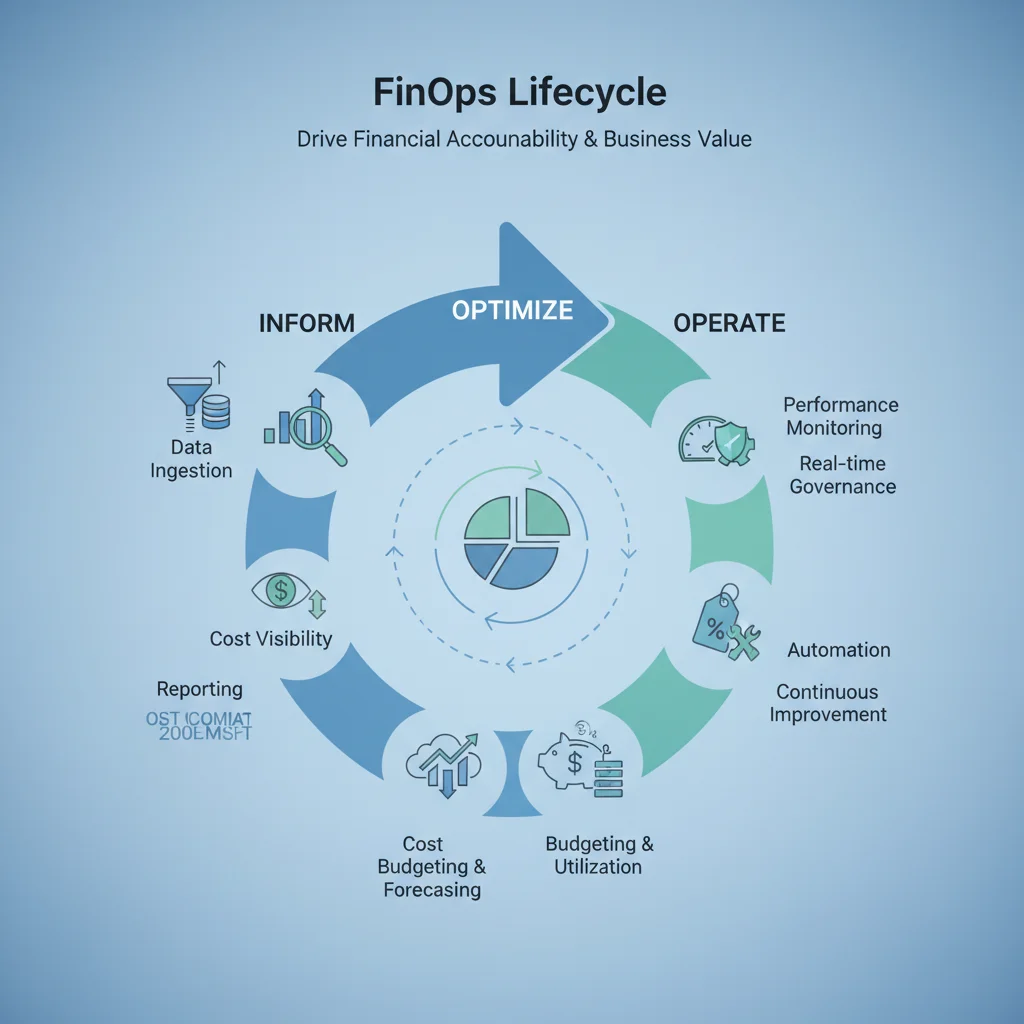
Implementing FinOps is a journey, not a destination. It requires a strategic, phased approach tailored to the organization’s unique cloud maturity and business objectives. Here are key steps for US businesses to consider:
1. Establish a Dedicated FinOps Team or Function
While FinOps advocates for distributed ownership, a central team is essential to drive the initiative. This team typically includes members from finance, engineering, and operations. Their responsibilities include:
- Defining FinOps policies and best practices.
- Selecting and implementing FinOps tools.
- Providing training and evangelism across the organization.
- Monitoring cloud spend and identifying optimization opportunities.
- Facilitating communication between different departments.
2. Gain Visibility and Allocate Costs Accurately
You can’t manage what you can’t see. The first critical step is to achieve comprehensive visibility into all cloud spending. This involves:
- Robust Tagging Strategy: Implement a consistent and mandatory tagging policy for all cloud resources. Tags should identify ownership, cost centers, projects, environments, and business applications.
- Cost Allocation Tools: Utilize cloud provider tools (e.g., AWS Cost Explorer, Azure Cost Management) and third-party FinOps platforms to break down costs by tags, accounts, and services.
- Showback/Chargeback Mechanisms: Implement systems to show or charge back cloud costs to relevant business units or teams, fostering accountability.
3. Optimize Cloud Usage and Resources
This phase is where the direct cost savings are realized. Key strategies include:
- Rightsizing Instances: Regularly review and adjust the size of virtual machines, databases, and other resources to match actual workload requirements, avoiding over-provisioning.
- Identifying and Terminating Unused Resources: Actively search for and decommission idle or orphaned resources (e.g., unattached EBS volumes, old snapshots, unused IPs).
- Leveraging Reserved Instances (RIs) and Savings Plans (SPs): Commit to a certain level of usage for a 1-year or 3-year term in exchange for significant discounts. This requires careful forecasting and commitment management.
- Spot Instances: For fault-tolerant workloads, utilize spot instances for substantial savings, though with the understanding that they can be interrupted.
- Automated Shutdown Schedules: Implement automation to shut down non-production environments during off-hours.
- Storage Optimization: Move infrequently accessed data to cheaper storage tiers (e.g., S3 Glacier, Azure Archive Storage).
- Network Cost Optimization: Analyze data transfer patterns and optimize network architecture to reduce egress costs.

4. Forecast and Budget Effectively
Accurate forecasting and budgeting are essential for proactive cost management:
- Baseline Cloud Spend: Understand historical spending patterns to establish a baseline.
- Collaborative Forecasting: Involve engineering and business teams in forecasting future cloud needs based on project roadmaps and growth projections.
- Set and Monitor Budgets: Establish clear budgets for different teams or projects and monitor actual spend against these budgets in real-time, setting up alerts for potential overruns.
5. Automate and Continuously Monitor
Manual processes are not sustainable in dynamic cloud environments. Automation is key:
- Automated Cost Anomaly Detection: Implement tools that automatically detect unusual spikes or patterns in cloud spend.
- Policy-Driven Automation: Use infrastructure-as-code (IaC) and policy engines to enforce cost-saving measures (e.g., preventing the launch of oversized instances, ensuring proper tagging).
- Continuous Optimization: FinOps is an ongoing cycle. Regularly review cost reports, identify new optimization opportunities, and refine strategies.
By diligently following these steps, US businesses can systematically implement FinOps Cloud Optimization and realize substantial financial benefits.
The Tangible Benefits: Up to 20% Savings by 2026
The promise of FinOps is not merely theoretical; it translates into concrete financial and operational advantages for US businesses. The projection of saving up to 20% on cloud spend by 2026 is an achievable goal for organizations that fully embrace the FinOps culture and practices.
Direct Financial Benefits:
- Reduced Cloud Waste: By rightsizing, eliminating idle resources, and optimizing storage, organizations cut down unnecessary expenditures.
- Lower TCO (Total Cost of Ownership): Effective FinOps extends beyond direct cloud costs to optimize related operational expenses, leading to a lower overall TCO for cloud infrastructure.
- Improved Budget Predictability: Better forecasting and budgeting capabilities lead to more accurate financial planning and fewer budget surprises.
- Maximized ROI on Cloud Investments: By ensuring cloud resources are used efficiently and tied to business value, FinOps helps maximize the return on every dollar invested in the cloud.
Operational and Strategic Benefits:
- Enhanced Visibility and Transparency: A clear understanding of where cloud money is being spent empowers better decision-making across all levels.
- Increased Accountability: When teams own their cloud usage and costs, they are more incentivized to use resources responsibly.
- Faster Innovation: By freeing up budget from wasted cloud spend, organizations can reinvest those savings into new projects, research, and development, accelerating innovation.
- Improved Collaboration: FinOps fosters a culture of collaboration between finance, engineering, and business, breaking down silos and aligning goals.
- Strategic Cloud Adoption: Instead of simply migrating to the cloud, FinOps ensures that cloud adoption is strategic, cost-effective, and aligned with business objectives.
These benefits collectively contribute to a stronger financial position and a more agile, competitive operational model for US businesses. The 20% savings target is not just about cutting costs; it’s about intelligent reinvestment and strategic growth facilitated by efficient FinOps Cloud Optimization.
Overcoming Challenges in FinOps Cloud Optimization
While the benefits of FinOps are compelling, its implementation is not without challenges. US businesses must be prepared to address these hurdles to ensure a successful FinOps journey:
- Cultural Resistance: Shifting from a traditional cost center mindset to one of shared financial responsibility can be difficult. Engineers may resist financial oversight, and finance teams may struggle with technical jargon.
- Data Granularity and Complexity: Cloud billing data can be incredibly detailed and complex, making it challenging to extract actionable insights without the right tools and expertise.
- Lack of Skilled Personnel: Finding individuals with both financial acumen and deep cloud technical knowledge is a significant challenge.
- Tool Sprawl: The market for FinOps tools is growing, but integrating disparate tools and ensuring data consistency can be complex.
- Keeping Pace with Cloud Provider Changes: Cloud providers frequently introduce new services, pricing models, and features. Staying updated and adapting FinOps strategies accordingly requires continuous effort.
- Balancing Cost vs. Performance/Innovation: Striking the right balance between cost optimization and maintaining performance, reliability, and the ability to innovate is a constant challenge. Over-optimizing can lead to under-provisioning and impact business operations.
To overcome these challenges, US businesses should invest in training, foster open communication, leverage automated FinOps platforms, and view FinOps as a continuous improvement process rather than a one-time project. Strong leadership commitment is also vital to drive cultural change and ensure the long-term success of FinOps Cloud Optimization.
The Future of FinOps Cloud Optimization in the US
As cloud adoption matures, FinOps is poised to become an indispensable component of every US business’s operational strategy. The trajectory points towards several key developments:
- AI and Machine Learning for Predictive Analytics: AI and ML will play an increasingly critical role in FinOps, offering advanced capabilities for anomaly detection, spend forecasting, and identifying complex optimization patterns that human analysis might miss. This will enable more proactive and precise FinOps Cloud Optimization.
- Greater Automation: Expect more sophisticated automation in rightsizing, scheduling, and even negotiating with cloud providers for optimal reserved instance purchases. The goal is to reduce manual effort and accelerate optimization cycles.
- Integration with Business Intelligence: FinOps data will be more deeply integrated with broader business intelligence platforms, allowing organizations to correlate cloud spend directly with business performance metrics and strategic objectives.
- Rise of FinOps-as-a-Service: As the complexity grows, more businesses, especially SMBs, may turn to specialized FinOps-as-a-Service providers to manage their cloud financial operations.
- Standardization and Certification: The FinOps Foundation continues to drive standardization, training, and certification, professionalizing the field and ensuring a common language and set of best practices for FinOps Cloud Optimization.
- Sustainability Focus: FinOps will increasingly incorporate sustainability metrics, optimizing cloud usage not just for cost but also for environmental impact, aligning with growing ESG (Environmental, Social, and Governance) initiatives.
By embracing these trends, US businesses can not only meet but exceed the 20% savings target by 2026, transforming their cloud operations into a true competitive advantage.
Conclusion: Unleashing the Power of FinOps for US Businesses
The journey to FinOps Cloud Optimization is a strategic imperative for US businesses navigating the complexities of the modern cloud landscape. It’s a testament to the fact that simply adopting the cloud is not enough; managing it intelligently and collaboratively is what truly unlocks its transformative potential. By instilling a culture of financial accountability, fostering cross-functional collaboration, and leveraging data-driven insights, organizations can move beyond reactive cost control to proactive, strategic cloud financial management.
The projected savings of up to 20% by 2026 are a powerful incentive, but the benefits extend far beyond the bottom line. FinOps empowers businesses with greater agility, better decision-making, and the ability to reinvest savings into innovation, propelling them forward in a competitive market. For US businesses looking to thrive in the digital age, embracing FinOps Cloud Optimization is not just an option; it’s a necessity for sustainable growth and continued success.
Start your FinOps journey today. Assess your current cloud spend, identify key stakeholders, and begin implementing the principles of FinOps to transform your cloud financial operations and realize the significant savings and strategic advantages that await.