Serverless vs. Kubernetes: 2026 Performance & Cost Analysis for US Devs
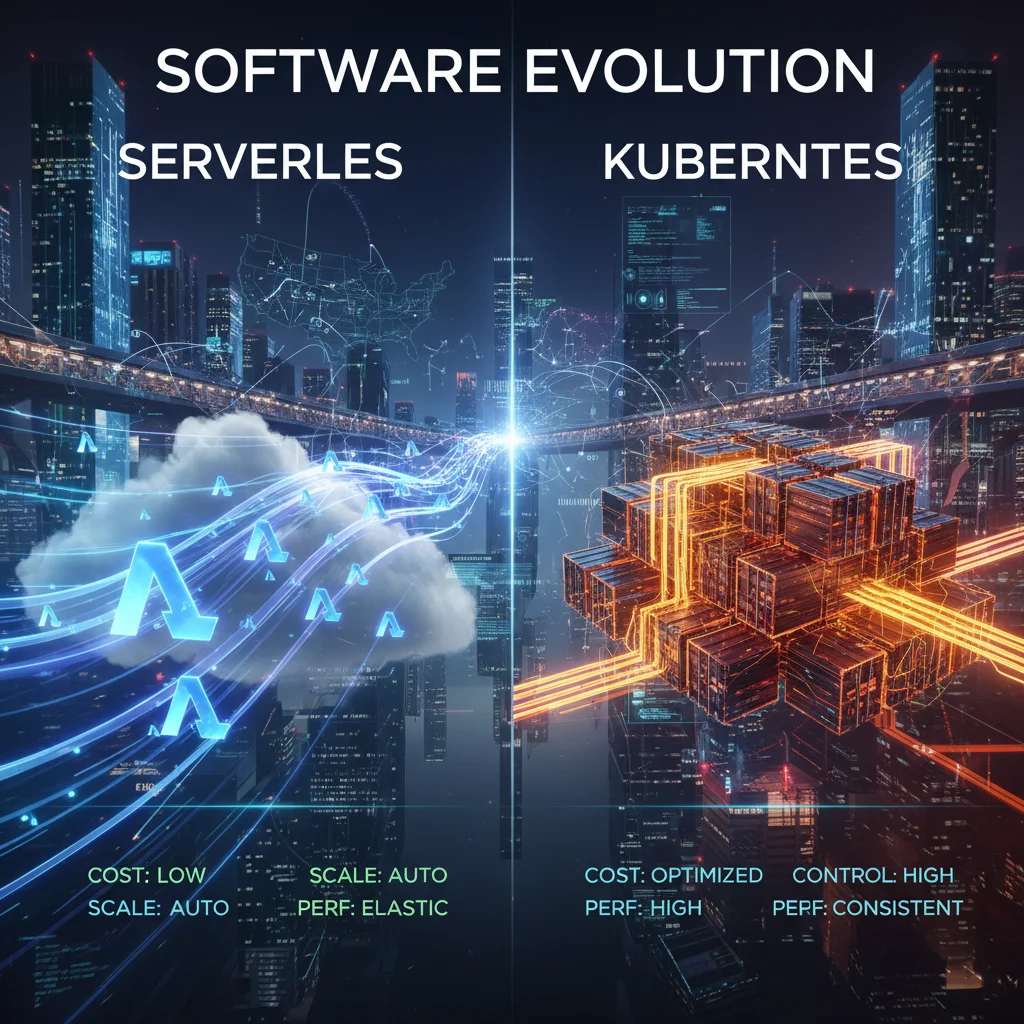
Serverless vs. Kubernetes: A 2026 Performance and Cost Analysis for US Software Development
In the rapidly evolving landscape of US software development, choosing the right infrastructure for deploying and managing applications is paramount. As we look towards 2026, two titans continue to dominate the conversation: Serverless computing and Kubernetes. Both offer compelling advantages, but their suitability heavily depends on specific project requirements, team expertise, and long-term strategic goals. This comprehensive analysis will delve into the nuances of Serverless Kubernetes Comparison, examining their performance characteristics, cost implications, scalability, and operational overhead, to equip US developers and architects with the insights needed to make informed decisions.
The decision between Serverless and Kubernetes is rarely black and white. It involves a deep understanding of application workload patterns, desired levels of control, and the financial models that best align with business objectives. As cloud adoption matures and technologies like AI and machine learning become more prevalent, the demands on our infrastructure are only increasing. Understanding the future trajectory of these platforms is crucial for staying competitive.
Understanding Serverless Architecture in 2026
Serverless computing, often synonymous with Function-as-a-Service (FaaS), has matured significantly since its inception. By 2026, its promise of abstracting away server management and paying only for execution time has become a compelling proposition for many US software development teams. Providers like AWS Lambda, Azure Functions, and Google Cloud Functions have continued to enhance their offerings, providing deeper integrations, broader language support, and more robust tooling.
Key Characteristics of Serverless in 2026:
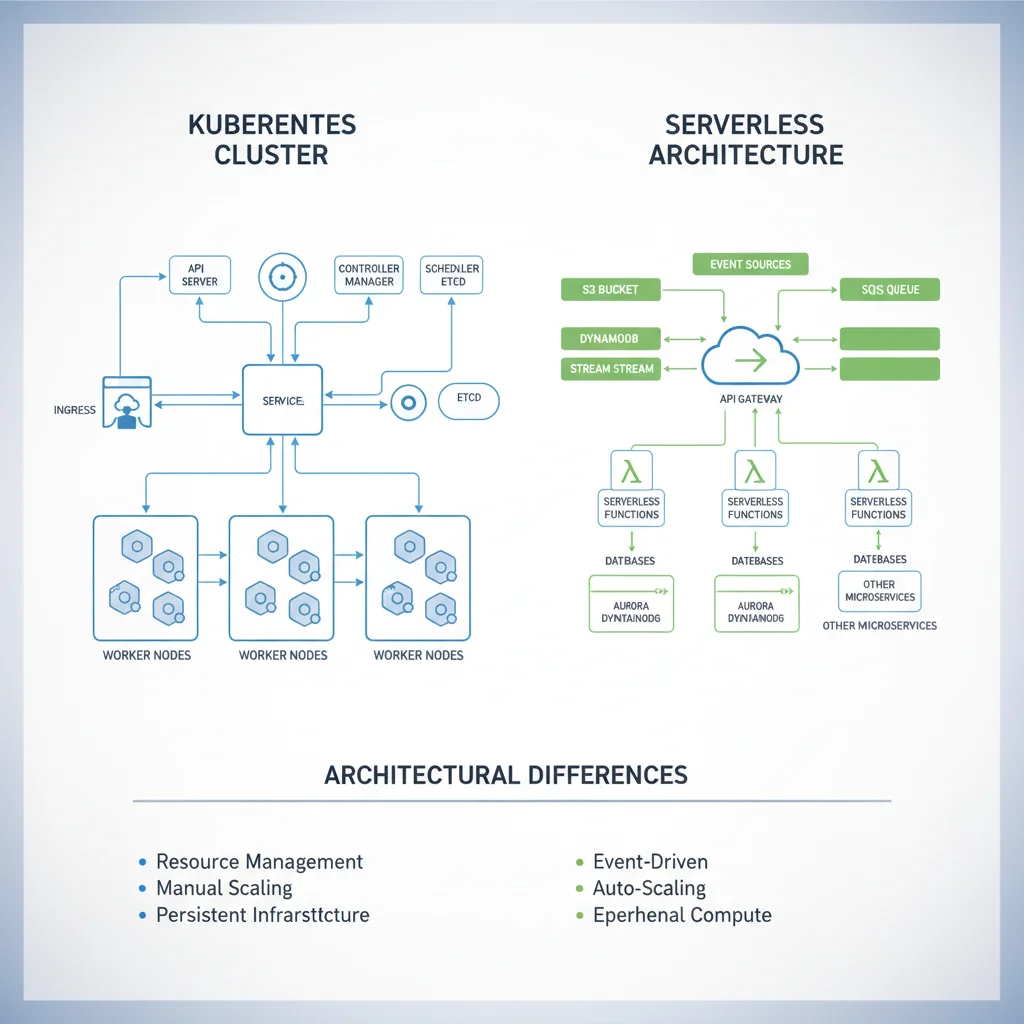
- Event-Driven Nature: Serverless thrives on event-driven architectures. Functions are invoked in response to specific events, such as HTTP requests, database changes, file uploads, or messages in a queue. This paradigm is ideal for applications that can be broken down into discrete, independent tasks.
- Automatic Scaling: One of the most significant advantages of serverless is its inherent auto-scaling capabilities. The cloud provider automatically scales the compute resources up or down based on demand, without any manual intervention. This eliminates the need for developers to provision or manage servers, allowing them to focus purely on code.
- Pay-Per-Execution Cost Model: Serverless billing is typically based on the number of requests, execution duration, and memory consumption. This can lead to significant cost savings for workloads with infrequent or spiky traffic patterns, as you don’t pay for idle resources.
- Reduced Operational Overhead: With serverless, the cloud provider handles all infrastructure management, including patching, security updates, and scaling. This drastically reduces the operational burden on development teams, freeing them to innovate faster.
- Cold Starts: While significantly improved, cold starts remain a consideration for serverless functions, especially for less frequently invoked ones. By 2026, cloud providers have introduced various optimizations, such as provisioned concurrency and faster runtime environments, to mitigate this effect, but it’s still a factor for latency-sensitive applications.
Performance Considerations for Serverless in 2026:
Performance in a serverless environment is often measured by latency and throughput. Cold starts, as mentioned, can introduce initial latency. However, for active functions, the execution speed is generally very high, benefiting from optimized cloud infrastructure. The inherent parallelization of serverless functions allows for massive throughput, as each invocation can run independently.
- Optimized Runtimes: Cloud providers continuously optimize their underlying runtimes and infrastructure, leading to faster function execution and reduced cold start times.
- Concurrency Management: Advanced concurrency controls allow developers to fine-tune how many instances of a function can run simultaneously, preventing resource exhaustion and optimizing performance.
- Integration with Managed Services: Serverless functions often integrate seamlessly with other managed services (databases, message queues, storage), which are themselves highly optimized for performance and scalability. This can offload complex operational tasks and improve overall system performance.
Exploring Kubernetes in 2026
Kubernetes, an open-source container orchestration platform, has cemented its position as the de facto standard for managing containerized workloads. By 2026, its ecosystem has matured immensely, offering unparalleled control, flexibility, and portability for US software development teams deploying complex, distributed applications.
Key Characteristics of Kubernetes in 2026:
- Container Orchestration: Kubernetes excels at automating the deployment, scaling, and management of containerized applications. It provides a robust framework for declarative configuration, ensuring applications run as expected.
- High Control and Flexibility: Developers and operations teams have granular control over every aspect of their application’s infrastructure, from resource allocation to networking and storage. This level of control is invaluable for complex applications with specific requirements.
- Portability: Kubernetes allows applications to run consistently across various environments – on-premises, public clouds (AWS EKS, Azure AKS, Google GKE), and hybrid clouds. This portability helps avoid vendor lock-in and provides flexibility in infrastructure choices.
- Robust Ecosystem: The Kubernetes ecosystem is vast and continually growing, with a wealth of tools, extensions, and community support for monitoring, logging, security, and CI/CD.
- Increased Operational Complexity: While powerful, Kubernetes introduces a significant operational overhead. Managing a Kubernetes cluster requires specialized knowledge in areas like networking, security, storage, and cluster upgrades. This often necessitates dedicated DevOps or platform engineering teams.
Performance Considerations for Kubernetes in 2026:
Kubernetes performance is highly configurable and depends heavily on the underlying infrastructure, cluster configuration, and application design. It offers consistent performance for long-running processes and can handle high-throughput workloads effectively.
- Resource Allocation: Fine-grained control over CPU, memory, and network resources allows for precise performance tuning at the pod level.
- Horizontal Pod Autoscaling (HPA): Kubernetes can automatically scale the number of pods based on CPU utilization or custom metrics, ensuring applications can handle fluctuating loads.
- Load Balancing and Service Discovery: Built-in load balancing and service discovery mechanisms ensure efficient distribution of traffic and reliable communication between services.
- Network Latency: Network performance within a Kubernetes cluster can be optimized using various CNI (Container Network Interface) plugins, offering different trade-offs between performance and features.
Cost Analysis: Serverless vs. Kubernetes in 2026 for US Software Development
Cost is a critical factor for any US software development project. The economic models of Serverless and Kubernetes differ significantly, impacting budgeting and financial planning.
Serverless Cost Model:
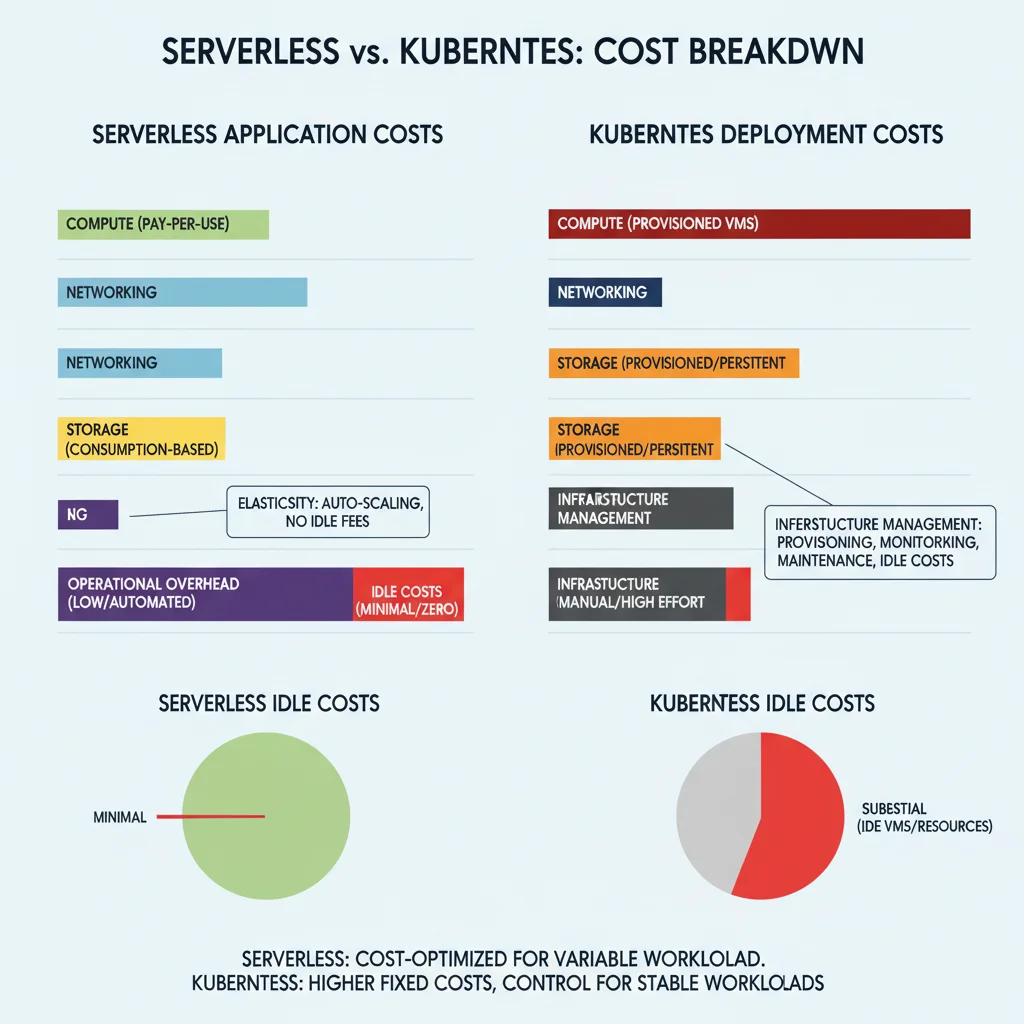
The pay-per-execution model of serverless can be incredibly cost-effective for certain workloads. You pay for:
- Invocations: The number of times your function is triggered.
- Execution Duration: The time your function runs, often billed in millisecond increments.
- Memory Consumption: The amount of memory allocated to your function during execution.
- Data Transfer: Egress data transfer costs, though often minimal for most applications.
Advantages:
- Elimination of Idle Costs: You don’t pay for resources when your functions are not running, which is a massive advantage for applications with unpredictable or infrequent usage.
- Reduced Operational Costs: The significant reduction in operational overhead translates directly into lower labor costs, as fewer engineers are needed for infrastructure management.
- Predictable Costs for Event-Driven Workloads: For well-defined event-driven patterns, costs can be highly predictable and scale linearly with usage.
Disadvantages:
- Potential for High Costs with Constant Load: For applications with consistently high and sustained traffic, the per-invocation cost can accumulate, potentially exceeding the cost of provisioned resources.
- Vendor Lock-in: While not absolute, migrating serverless functions between cloud providers can involve refactoring due to proprietary APIs and service integrations.
- Observability Costs: Extensive logging and monitoring in serverless environments can sometimes incur significant costs if not managed carefully.
Kubernetes Cost Model:
Kubernetes costs are more aligned with traditional infrastructure provisioning, but with added layers of abstraction and orchestration.
- Underlying Infrastructure: You pay for the virtual machines (nodes), storage, and networking resources that make up your cluster. This is typically an hourly or per-second rate.
- Managed Kubernetes Service Fees: If using a managed service (EKS, AKS, GKE), there might be a control plane fee in addition to the node costs.
- Operational Costs: This is a significant factor. The cost of hiring and retaining skilled DevOps or platform engineers to manage and maintain the cluster can be substantial.
- Data Transfer: Standard cloud data transfer costs apply.
Advantages:
- Cost Predictability for Stable Workloads: For applications with consistent resource demands, Kubernetes can offer predictable costs based on the provisioned infrastructure.
- Resource Utilization: Kubernetes allows for high resource utilization by efficiently packing multiple containers onto fewer nodes, potentially reducing infrastructure costs compared to individually provisioned VMs.
- Long-Term Cost Efficiency for Large-Scale Deployments: For very large, complex applications with consistent high traffic, the per-unit cost of compute on Kubernetes can become more economical than serverless.
- Open Source & Portability: The open-source nature and portability of Kubernetes can reduce long-term vendor lock-in costs.
Disadvantages:
- High Initial Setup Costs: Setting up and configuring a Kubernetes cluster, especially self-managed ones, requires significant upfront investment in time and expertise.
- Idle Costs: You pay for the underlying infrastructure even when applications are not actively processing requests, leading to idle costs during low traffic periods.
- Significant Operational Expenditures (OpEx): The need for specialized personnel to manage the cluster is a major ongoing cost.
- Complexity Can Lead to Over-Provisioning: Without careful management, it’s easy to over-provision resources in Kubernetes, leading to unnecessary costs.
Scalability: A US Software Development Perspective
Both Serverless and Kubernetes are designed for scalability, but they achieve it through different mechanisms and offer varying degrees of control.
Serverless Scalability:
Serverless offers unparalleled automatic scalability. When an event triggers a function, the cloud provider instantly provisions the necessary resources to handle that invocation. If more events arrive concurrently, more instances of the function are spun up in parallel. This ‘elasticity’ is a core tenet of serverless.
- Instantaneous Scaling: Functions can scale from zero to thousands of concurrent executions in seconds, making them ideal for handling sudden spikes in traffic.
- No Manual Intervention: Developers do not need to configure or manage scaling policies; it’s handled entirely by the cloud provider.
- Limits: While highly scalable, there are often soft and hard limits on the number of concurrent function invocations per account or region. These can usually be increased upon request.
Kubernetes Scalability:
Kubernetes offers robust and configurable scaling capabilities, providing more control than serverless.
- Horizontal Pod Autoscaling (HPA): Automatically scales the number of pods in a deployment or replica set based on observed CPU utilization or custom metrics.
- Cluster Autoscaler: Dynamically adjusts the number of nodes in your cluster (adding or removing VMs) based on pod scheduling needs. This ensures that there are always enough resources for your applications.
- Vertical Pod Autoscaling (VPA): Recommends or automatically sets resource requests and limits for containers based on historical usage, optimizing resource allocation.
- Manual Scaling: Developers can manually scale deployments up or down as needed.
- Configuration Complexity: While powerful, configuring and fine-tuning Kubernetes autoscaling mechanisms requires careful planning and monitoring to achieve optimal results.
Operational Overhead and Management in 2026
The operational burden associated with each technology is a critical differentiator, especially for US software development teams facing talent shortages and pressure to accelerate delivery.
Serverless Operational Overhead:
The primary appeal of serverless is the drastic reduction in operational overhead. The cloud provider assumes responsibility for:
- Server provisioning and maintenance
- Operating system patching and updates
- Runtime environment management
- Underlying infrastructure security
- Automatic scaling
This means development teams can focus almost exclusively on writing business logic, leading to faster development cycles and reduced time-to-market. However, serverless introduces its own set of operational challenges:
- Distributed Tracing and Debugging: Debugging issues across multiple independent functions and integrating services can be complex.
- Monitoring and Observability: While providers offer tools, comprehensive monitoring across an entire serverless application architecture requires careful setup.
- Local Development and Testing: Replicating the exact cloud environment locally for testing can be challenging.
Kubernetes Operational Overhead:
Kubernetes, while offering immense power, comes with a significant operational footprint. Even with managed Kubernetes services, teams are still responsible for:
- Cluster Configuration and Management: Setting up networking, storage, authentication, and authorization.
- Application Deployment and Management: Writing and maintaining Helm charts, Kubernetes YAML manifests, and CI/CD pipelines.
- Monitoring and Alerting: Implementing and managing robust monitoring solutions (e.g., Prometheus, Grafana) for the cluster and applications.
- Security: Implementing network policies, managing secrets, and ensuring compliance.
- Upgrades and Maintenance: Planning and executing cluster upgrades and patching.
This often necessitates a dedicated team of Kubernetes specialists or DevOps engineers. For smaller US development teams, this can be a significant barrier to entry or a drain on resources.
When to Choose Serverless in 2026
For US software development teams, Serverless is often the superior choice for:
- Event-Driven Architectures: Microservices that respond to specific events (API calls, database changes, IoT data).
- APIs and Microservices: Building highly scalable, stateless APIs or individual microservices.
- Data Processing Workloads: Batch processing, stream processing, and ETL jobs that can be broken into discrete functions.
- Webhooks and Integrations: Handling external system notifications and integrating with third-party services.
- Infrequent or Spiky Workloads: Applications with highly variable traffic where paying for idle resources would be uneconomical.
- Rapid Prototyping and MVPs: Quickly deploying and iterating on new ideas without infrastructure concerns.
- Teams with Limited DevOps Expertise: When infrastructure management is a bottleneck.
When to Choose Kubernetes in 2026
Kubernetes shines in scenarios where control, consistency, and complex orchestration are paramount:
- Long-Running Statefull Applications: Applications that require persistent connections, complex state management, or specific network configurations.
- Monolithic or Legacy Applications: Containerizing and orchestrating existing applications that are difficult to refactor into small, independent functions.
- Hybrid Cloud or Multi-Cloud Strategies: When portability across different cloud providers or on-premises environments is a key requirement.
- High-Performance Computing (HPC): Workloads requiring fine-grained control over resource allocation and scheduling.
- Teams with Strong DevOps Capabilities: Organizations that have the expertise and resources to manage complex infrastructure.
- Custom Runtimes or Niche Technologies: When applications require highly specific or custom runtime environments that are not easily supported by serverless platforms.
- Predictable, Consistent High Traffic: For applications with constant, high-volume traffic where the cost of always-on infrastructure becomes more economical than per-invocation pricing.
Hybrid Approaches and the Future of Cloud Native in 2026
It’s important to note that Serverless and Kubernetes are not mutually exclusive. Many organizations, particularly in the US software development landscape, are adopting hybrid approaches. This involves using Kubernetes for core, long-running services that require granular control and consistent performance, while leveraging serverless functions for event-driven tasks, asynchronous processing, and highly variable workloads.
Tools and platforms are also emerging that aim to bridge the gap, such as Knative, which brings serverless capabilities to Kubernetes. This allows developers to deploy serverless-like workloads on a Kubernetes cluster, combining the best of both worlds: the operational simplicity of serverless with the control and portability of Kubernetes.
By 2026, the trend towards platform engineering will likely accelerate. Organizations will invest in building internal developer platforms that abstract away the underlying infrastructure complexities, whether it’s Kubernetes or serverless, providing developers with a streamlined experience for deploying and managing applications. This will further blur the lines between these two technologies, with the focus shifting to developer experience and business value.
Conclusion: Making the Right Choice for Your US Development Project
The choice between Serverless and Kubernetes in 2026 for US software development is a strategic one, with significant implications for performance, cost, and operational efficiency. There is no one-size-fits-all answer. The optimal solution depends on a thorough evaluation of your application’s characteristics, your team’s expertise, and your business objectives.
For applications that are event-driven, stateless, and experience highly variable traffic, Serverless offers unmatched agility, cost efficiency (by eliminating idle costs), and reduced operational burden. It’s an excellent choice for teams looking to accelerate development and minimize infrastructure management.
Conversely, for complex, stateful applications requiring granular control over infrastructure, consistent performance for long-running processes, and portability across environments, Kubernetes remains the powerful choice. It demands a higher operational investment but delivers unparalleled flexibility and scalability for intricate systems.
As the cloud-native ecosystem continues to evolve, understanding the strengths and weaknesses of both Serverless and Kubernetes will empower US developers and architects to design resilient, performant, and cost-effective solutions that drive innovation and competitive advantage well into the future.
Consider a balanced approach, leveraging the strengths of each technology where they make the most sense. A well-architected solution in 2026 might very well involve a combination of both, harmoniously working together to deliver exceptional user experiences and business value.