IoT Smart US Infrastructure: 4-Step Project Success Guide 2026

The United States stands at the precipice of a monumental transformation in its foundational systems. From crumbling bridges and aging power grids to inefficient traffic management and water distribution, the need for modernization is urgent and undeniable. Enter the Internet of Things (IoT) – a paradigm-shifting technology offering unprecedented opportunities to create truly smart infrastructure. By embracing IoT, the US can move beyond reactive maintenance to proactive, predictive management, fostering resilience, efficiency, and sustainability across its urban and rural landscapes. This comprehensive guide outlines a practical, 4-step framework for successfully implementing IoT in US infrastructure projects, with a keen eye on achieving significant milestones by 2026.
The vision of IoT Smart Infrastructure isn’t merely about technological adoption; it’s about reimagining how our cities and communities function. It’s about leveraging connected devices, sensors, data analytics, and artificial intelligence to create self-monitoring, self-optimizing systems that enhance public safety, reduce operational costs, and improve the quality of life for citizens. From smart streetlights that adjust illumination based on real-time conditions to intelligent transportation systems that alleviate congestion, the potential applications are vast and transformative.
However, the path to widespread IoT integration is fraught with challenges, including complex regulatory environments, significant upfront investment, cybersecurity concerns, and the need for skilled personnel. This guide aims to demystify the process, breaking down the journey into manageable, actionable steps that project managers, urban planners, government officials, and technology providers can follow to ensure successful outcomes for IoT Smart Infrastructure initiatives.
Understanding the Landscape: Why IoT for US Infrastructure Now?
The current state of US infrastructure presents both a challenge and an immense opportunity. The American Society of Civil Engineers (ASCE) consistently gives the nation’s infrastructure poor grades, highlighting critical deficiencies across nearly all sectors. This degradation leads to economic losses, environmental strain, and a diminished quality of life. The time for incremental fixes has passed; a holistic, technologically advanced approach is required.
IoT offers a compelling solution by providing real-time data and actionable insights that were previously unavailable. Imagine bridges fitted with sensors that detect structural fatigue before it becomes critical, or water pipes that report leaks instantly, preventing millions of gallons of waste. Consider energy grids that dynamically balance supply and demand, or waste management systems that optimize collection routes based on bin fill levels. These are not futuristic fantasies but achievable realities with current IoT capabilities.
The drivers for adopting IoT Smart Infrastructure are multi-faceted:
- Economic Efficiency: Reduced operational costs through predictive maintenance, optimized resource allocation, and energy savings.
- Enhanced Safety and Security: Real-time monitoring of critical infrastructure, early warning systems for hazards, and improved public safety.
- Environmental Sustainability: Lower energy consumption, reduced waste, improved air and water quality monitoring.
- Improved Quality of Life: Reduced traffic congestion, better public services, and more responsive urban environments.
- Resilience: Ability to withstand and recover from natural disasters and cyber-attacks through agile and data-driven management.
The window of opportunity to modernize is now, with increasing federal and state funding initiatives, coupled with rapid advancements in IoT technology. By 2026, many pilot projects and early deployments are expected to mature, setting precedents for broader adoption. This guide will help stakeholders navigate this critical period effectively.
Step 1: Strategic Planning and Needs Assessment (Laying the Foundation for IoT Smart Infrastructure)
The first and most crucial step in any successful IoT Smart Infrastructure project is meticulous strategic planning and a thorough needs assessment. Without a clear vision, defined objectives, and a comprehensive understanding of the existing infrastructure’s pain points, even the most advanced technology will fail to deliver its full potential. This phase sets the stage for everything that follows.
1.1 Define Clear Objectives and Key Performance Indicators (KPIs)
What specific problems are you trying to solve? Is it reducing traffic congestion by 20%? Decreasing water loss by 15%? Improving public safety response times? Each objective must be SMART (Specific, Measurable, Achievable, Relevant, Time-bound). For each objective, establish clear KPIs that will be used to measure success. For instance, for traffic congestion, KPIs might include average travel time, vehicle throughput, or incident response time. For water loss, it could be cubic meters saved per month. These KPIs will guide technology selection and provide benchmarks for evaluation.
1.2 Conduct a Comprehensive Infrastructure Audit
Before implementing new technology, understand what you already have. This involves a detailed audit of existing infrastructure assets (roads, bridges, pipes, grids, buildings), their condition, current monitoring systems (if any), and operational processes. Identify areas of inefficiency, high maintenance costs, safety risks, and environmental impact. This audit will highlight the most pressing needs where IoT can deliver the greatest impact.
1.3 Stakeholder Engagement and Collaboration
IoT Smart Infrastructure projects are inherently complex and involve multiple stakeholders. This includes city planners, public works departments, utility companies, emergency services, environmental agencies, community groups, and even private businesses. Early and continuous engagement is vital to gather diverse perspectives, build consensus, identify potential roadblocks, and secure necessary buy-in. Foster a collaborative environment where information is shared, and concerns are addressed transparently.
1.4 Regulatory and Policy Review
Navigating the regulatory landscape is critical. Research local, state, and federal regulations related to data privacy, cybersecurity, spectrum usage, environmental impact, and public procurement. Identify any policy gaps or outdated regulations that might hinder IoT deployment and proactively work towards addressing them. Consider the long-term policy implications of widespread data collection and autonomous systems.
1.5 Budgeting and Funding Strategy
IoT deployments can be capital-intensive. Develop a realistic budget that accounts for hardware, software, connectivity, installation, maintenance, cybersecurity, and personnel training. Explore various funding avenues, including federal grants (e.g., Infrastructure Investment and Jobs Act), state programs, public-private partnerships, and innovative financing models. A robust financial plan is essential for sustained project success.
1.6 Risk Assessment and Mitigation
Identify potential risks, including technical failures, cybersecurity breaches, data privacy concerns, public resistance, budget overruns, and vendor lock-in. Develop comprehensive mitigation strategies for each identified risk. Cybersecurity, in particular, requires a proactive and multi-layered approach from the outset.
Step 2: Technology Selection and Architecture Design (Building the Digital Backbone)
Once the strategic plan is in place, the next step focuses on selecting the right technologies and designing a robust, scalable architecture for your IoT Smart Infrastructure. This phase translates the strategic vision into technical specifications and a deployable system.
2.1 IoT Device and Sensor Selection
Based on your defined objectives and needs assessment, select appropriate IoT devices and sensors. Consider factors such as:
- Type of Data: What kind of data needs to be collected (e.g., temperature, pressure, vibration, light, flow, presence)?
- Environment: Will the sensors operate in harsh conditions (extreme temperatures, moisture, dust)? Durability and IP ratings are crucial.
- Power Source: Battery life, solar power, or wired connections.
- Accuracy and Calibration: Required precision of measurements.
- Cost: Total cost of ownership, including device, installation, and maintenance.
- Security Features: Built-in encryption, secure boot, tamper detection.
- Interoperability: Ability to integrate with other systems and platforms.
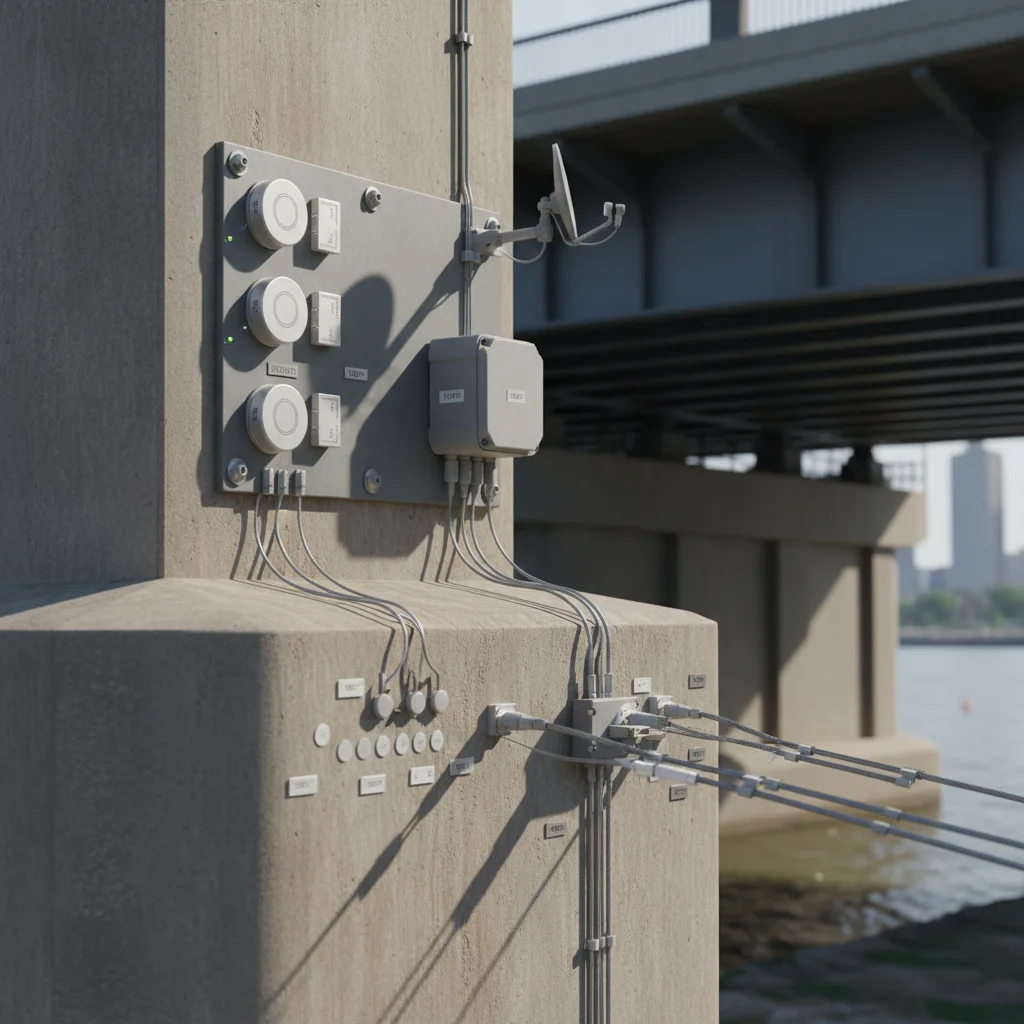
Examples include accelerometers for bridge monitoring, flow sensors for water pipes, environmental sensors for air quality, and cameras for traffic management.
2.2 Connectivity Solutions
The choice of connectivity directly impacts data transmission, latency, and power consumption. Options include:
- Cellular (5G/4G LTE): High bandwidth, wide coverage, suitable for high-volume data or video.
- LPWAN (LoRaWAN, NB-IoT): Low power, long range, ideal for small data packets from numerous sensors.
- Wi-Fi: Good for localized, high-bandwidth applications within a specific area.
- Ethernet: Reliable, high-bandwidth for fixed installations.
- Satellite: For remote areas with no terrestrial network coverage.
A hybrid approach, utilizing different technologies for different applications, is often the most effective for comprehensive IoT Smart Infrastructure.
2.3 Data Platform and Analytics
A robust data platform is the brain of your IoT Smart Infrastructure. It needs to ingest, store, process, and analyze vast amounts of data from diverse sources. Key considerations:
- Cloud vs. Edge Computing: Determine what data processing occurs at the edge (closer to the sensors for real-time action) versus in the cloud (for long-term storage and complex analytics).
- Scalability: The platform must be able to handle increasing data volumes and connected devices as the project expands.
- Security: Data encryption, access controls, and compliance with data privacy regulations (e.g., GDPR, CCPA if applicable to data origin).
- Analytics Capabilities: Machine learning and AI for predictive maintenance, anomaly detection, and optimization algorithms.
- Visualization Tools: Intuitive dashboards and reporting tools for stakeholders to monitor KPIs and gain insights.
2.4 Cybersecurity Framework
Given the critical nature of infrastructure, cybersecurity is paramount. Develop a comprehensive framework that includes:
- Device Security: Secure boot, firmware updates, device authentication.
- Network Security: VPNs, firewalls, intrusion detection systems.
- Data Security: Encryption at rest and in transit, access controls, data anonymization where possible.
- Threat Monitoring: Continuous monitoring for vulnerabilities and attacks.
- Incident Response Plan: A clear plan for how to react to and recover from a cyber incident.
This framework should adhere to industry best practices and relevant government standards.
2.5 Interoperability and Integration
Ensure that chosen technologies can integrate with existing legacy systems and future platforms. Open standards and APIs are critical for preventing vendor lock-in and fostering a flexible, future-proof ecosystem. Plan for data exchange protocols and common data models.
Step 3: Deployment and Implementation (Bringing IoT Smart Infrastructure to Life)
With the strategic plan and technological architecture defined, Step 3 focuses on the physical deployment and implementation of your IoT Smart Infrastructure solutions. This phase requires meticulous project management, skilled execution, and rigorous testing.
3.1 Phased Rollout Strategy
Avoid a ‘big bang’ approach. Instead, opt for a phased rollout. Start with pilot projects in controlled environments or specific, high-priority areas. This allows for testing, learning, and refining processes before scaling up. A phased approach minimizes risk, helps manage costs, and provides valuable feedback for subsequent stages.
3.2 Installation and Configuration
This involves the physical installation of sensors, gateways, and communication infrastructure. Ensure that installation teams are well-trained and follow best practices for safety, equipment placement, and environmental considerations. Proper configuration of devices and network settings is crucial for optimal performance and data accuracy.
3.3 Data Ingestion and Integration
Once devices are installed, establish robust data ingestion pipelines to feed information into your chosen data platform. This includes setting up APIs, message queues, and data connectors. Integrate the new IoT data streams with existing operational technology (OT) systems and information technology (IT) systems to create a unified view of your infrastructure.
3.4 Testing and Validation
Thorough testing is non-negotiable. This includes:
- Device Functionality Testing: Ensuring sensors are collecting accurate data and transmitting it reliably.
- Connectivity Testing: Verifying network reliability and data flow.
- Platform Functionality Testing: Checking data storage, processing, and analytics capabilities.
- Security Testing: Penetration testing, vulnerability assessments, and stress testing.
- End-to-End System Testing: Validating that the entire system, from sensor to dashboard, operates as intended and meets the defined KPIs.
Address any issues identified during testing before moving to broader deployment.
3.5 Training and Capacity Building
The success of IoT Smart Infrastructure relies heavily on the people managing and operating it. Provide comprehensive training for staff on new technologies, data platforms, analytics tools, and operational procedures. This includes training for field technicians, IT personnel, data analysts, and decision-makers. Foster a culture of continuous learning and adaptation.
3.6 Public Communication and Awareness
Keep the public informed about the benefits and progress of IoT Smart Infrastructure projects. Address privacy concerns transparently and explain how data is collected, used, and protected. Public acceptance and understanding are vital for long-term success and support.
Step 4: Optimize and Scale (Ensuring Long-Term Value and Growth)
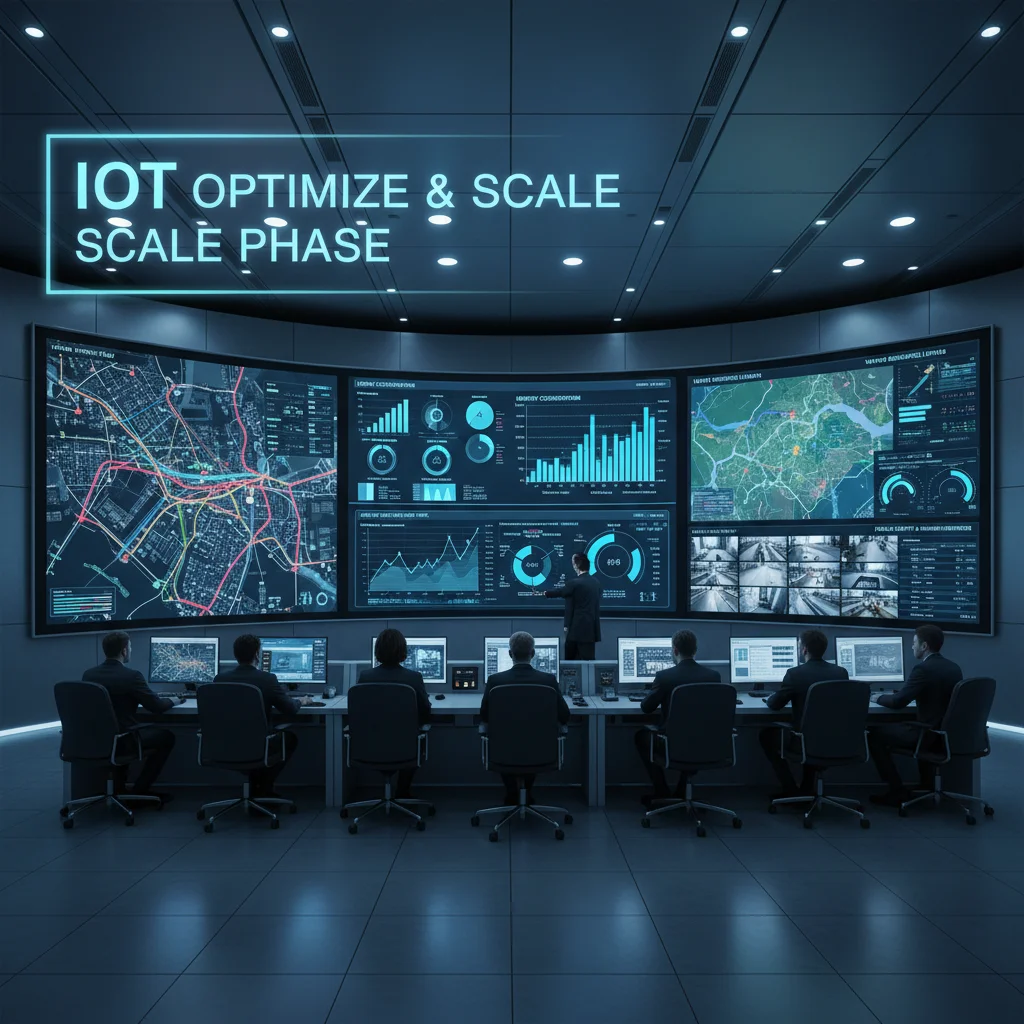
Deployment is not the end; it’s the beginning of continuous optimization and scaling. Step 4 focuses on leveraging the deployed IoT Smart Infrastructure to deliver ongoing value, adapt to new challenges, and expand its reach.
4.1 Continuous Monitoring and Performance Evaluation
Once operational, continuously monitor the performance of your IoT systems against the established KPIs. Utilize dashboards and reporting tools to track data trends, identify anomalies, and assess the impact of IoT solutions. Regularly review whether the project is meeting its objectives and delivering the expected return on investment (ROI).
4.2 Data Analysis and Actionable Insights
The true power of IoT lies in the insights derived from data. Employ advanced analytics, machine learning, and AI to uncover patterns, predict failures, optimize operations, and identify new opportunities for improvement. Translate these insights into actionable strategies for maintenance, resource allocation, and policy adjustments. For example, predictive maintenance algorithms can schedule repairs on a bridge before a component fails, saving significant costs and preventing disruptions.
4.3 Iterative Improvement and Optimization
IoT Smart Infrastructure is not a static solution. It requires continuous refinement. Based on performance data and insights, identify areas for improvement in sensor deployment, data collection, analytical models, and operational processes. Implement changes iteratively, measure their impact, and further optimize the system. This agile approach ensures the system remains relevant and effective.
4.4 Security Audits and Updates
The cybersecurity landscape is constantly evolving. Conduct regular security audits, penetration tests, and vulnerability assessments. Keep all software, firmware, and security protocols updated to defend against emerging threats. Establish a dedicated security operations center (SOC) or partner with a cybersecurity firm for continuous monitoring and incident response.
4.5 Scalability and Expansion Planning
As initial projects prove successful, plan for scaling up. Identify new infrastructure assets or geographic areas where IoT can be beneficial. Leverage the lessons learned from early deployments to streamline future expansions. This includes developing standardized deployment procedures, procurement frameworks, and interoperability guidelines to ensure seamless growth of your IoT Smart Infrastructure ecosystem.
4.6 Long-Term Maintenance and Lifecycle Management
Establish a robust plan for the long-term maintenance of IoT devices, networks, and software platforms. This includes routine checks, calibration, battery replacements, and software updates. Plan for the eventual decommissioning and replacement of older technologies to ensure the sustainability and modernity of your IoT Smart Infrastructure.
Challenges and Considerations for IoT Smart Infrastructure in the US
While the 4-step guide provides a clear roadmap, it’s essential to acknowledge and prepare for common challenges:
- Interoperability Standards: The lack of universal standards can create silos. Advocating for and adopting open standards is crucial.
- Cybersecurity Threats: Critical infrastructure is a prime target. Continuous investment in advanced cybersecurity measures is non-negotiable.
- Data Privacy and Governance: Managing vast amounts of data, especially public data, requires strict governance frameworks and transparent policies.
- Funding and ROI Justification: Demonstrating clear ROI can be challenging initially but is vital for securing continued investment.
- Legacy System Integration: Integrating new IoT solutions with decades-old legacy infrastructure can be complex and costly.
- Talent Gap: A shortage of skilled professionals in IoT development, data science, and cybersecurity can hinder progress.
- Public Acceptance: Addressing public concerns about surveillance, data usage, and the impact on jobs is essential for community buy-in.
- Regulatory Complexity: Navigating various federal, state, and local regulations requires significant effort and coordination.
Addressing these challenges proactively through careful planning, stakeholder collaboration, and a commitment to best practices will significantly increase the likelihood of success for IoT Smart Infrastructure projects.
The Future of US Infrastructure: A Smart, Connected Tomorrow by 2026 and Beyond
By systematically following these four steps – Strategic Planning, Technology Selection, Deployment, and Optimization – the United States can effectively harness the power of IoT to build a resilient, efficient, and sustainable infrastructure for the 21st century. The year 2026 serves as a crucial benchmark, a point by which significant strides can and should be made in transforming our essential services.
The journey towards comprehensive IoT Smart Infrastructure is not a sprint but a marathon. It requires sustained commitment, innovative thinking, and collaborative efforts across government, industry, academia, and communities. The benefits, however, are profound: safer cities, cleaner environments, more efficient services, and a stronger economy. Embracing IoT is not just about upgrading technology; it’s about building a smarter, more responsive, and more livable future for all Americans.
The time to act is now. By strategically investing in and implementing IoT Smart Infrastructure, the US can solidify its position as a global leader in technological innovation and urban development, ensuring that its foundational systems are not just restored but reinvented for generations to come.