
Quantum Computing Platforms 2026: A Deep Dive for U.S. Tech Innovators
The dawn of quantum computing is no longer a distant dream; it is a tangible reality rapidly shaping the technological landscape. For U.S. tech innovators, understanding the nuances of various quantum computing platforms in 2026 is not just an advantage, but a necessity for staying competitive. As we stand on the cusp of a new computational era, the choices made today regarding quantum infrastructure will profoundly impact future innovation, research, and market leadership. This comprehensive analysis aims to dissect the leading platforms, offering insights into their architecture, capabilities, and strategic implications for American enterprises.
Quantum computing promises to revolutionize industries ranging from pharmaceuticals and finance to logistics and artificial intelligence. Unlike classical computers that store information as bits (0s or 1s), quantum computers leverage quantum-mechanical phenomena like superposition and entanglement to process information in fundamentally new ways. This enables them to tackle problems that are intractable for even the most powerful supercomputers. However, the path to harnessing this power is complex, requiring careful consideration of the underlying hardware, software, and ecosystem support offered by different quantum computing platforms.
In 2026, the quantum computing landscape is characterized by increasing maturity, albeit still in its early stages. Major players have solidified their offerings, and the competition to attract developers, researchers, and enterprise clients is intensifying. This article will provide a detailed comparison of the most prominent quantum computing platforms, evaluating them based on key criteria such as qubit technology, ecosystem robustness, accessibility, and potential for scalability. Our goal is to equip U.S. tech innovators with the knowledge needed to make informed decisions and strategically integrate quantum capabilities into their future roadmaps.
The Evolving Landscape of Quantum Computing Platforms
Before diving into specific platforms, it’s crucial to understand the diverse approaches to building quantum computers. The core of any quantum computing platform lies in its qubit technology. Different physical implementations of qubits come with their own strengths and challenges, influencing error rates, coherence times, and scalability. In 2026, superconducting qubits, trapped ions, and photonic qubits remain the frontrunners, with advancements also being made in topological qubits and neutral atoms.
Superconducting Qubits: The IBM and Google Approach
Superconducting qubits, primarily developed by giants like IBM and Google, operate at extremely low temperatures, just a fraction of a degree above absolute zero. These platforms leverage superconducting circuits to create and manipulate qubits. Their primary advantages include relatively fast gate operations and the potential for integration into large-scale quantum processors. However, they demand stringent cryogenic environments, making them complex and expensive to maintain.
IBM Quantum has been a pioneer in making quantum computing accessible through its cloud-based platform. By 2026, IBM has significantly advanced its roadmap, offering a range of processors with increasing qubit counts and improved performance metrics. Their Qiskit open-source framework has become a de facto standard for quantum programming, fostering a large and active developer community. IBM’s strategy focuses on delivering practical quantum advantage through iterative hardware improvements and a robust software stack.
Google’s Sycamore processor, famous for demonstrating quantum supremacy in 2019, continues to be a formidable player. Google’s approach often emphasizes pushing the boundaries of quantum hardware performance and exploring fault-tolerant quantum computing. While not as broadly accessible as IBM’s public cloud offerings, Google’s quantum efforts are critical for driving fundamental research and development in the field. Their platform caters to academic institutions and select enterprise partners, focusing on high-performance applications.
Trapped Ions: A Precision-Driven Alternative
Trapped-ion quantum computing platforms, championed by companies like IonQ and Quantinuum (a merger of Honeywell Quantum Solutions and Cambridge Quantum), offer a different paradigm. These systems use electromagnetic fields to suspend individual ions in a vacuum, with each ion serving as a qubit. Lasers are then used to manipulate the quantum states of these ions. Trapped ions boast exceptionally high-fidelity gate operations and long coherence times, making them highly attractive for certain quantum algorithms.
IonQ, for instance, has made significant strides in increasing qubit connectivity and reducing error rates. Their cloud-accessible platforms provide a compelling alternative for applications requiring high precision. Quantinuum, with its H-series processors, has also demonstrated impressive capabilities, emphasizing a full-stack approach from hardware to application development. The modularity and reconfigurability of trapped-ion systems offer promising avenues for scaling, although the complexity of laser control and ion trapping presents its own set of engineering challenges.
Photonic Quantum Computing: Light-Based Solutions
Photonic quantum computing platforms, advanced by companies like PsiQuantum and Xanadu, utilize photons (particles of light) as qubits. This approach has the advantage of operating at room temperature and leveraging existing silicon photonics manufacturing techniques, potentially leading to highly scalable and cost-effective solutions in the long run. The challenge lies in creating and manipulating single photons efficiently and reliably, as well as achieving strong entanglement between them.
PsiQuantum is pursuing a fault-tolerant approach, aiming for millions of physical qubits to achieve a truly error-corrected quantum computer. Xanadu, on the other hand, focuses on continuous-variable quantum computing, which offers a different computational model. While photonic platforms are still in earlier stages of commercial deployment compared to superconducting and trapped-ion systems, their potential for scalability and integration with classical optical networks makes them a vital area of research and development for U.S. tech innovators looking towards the distant future.
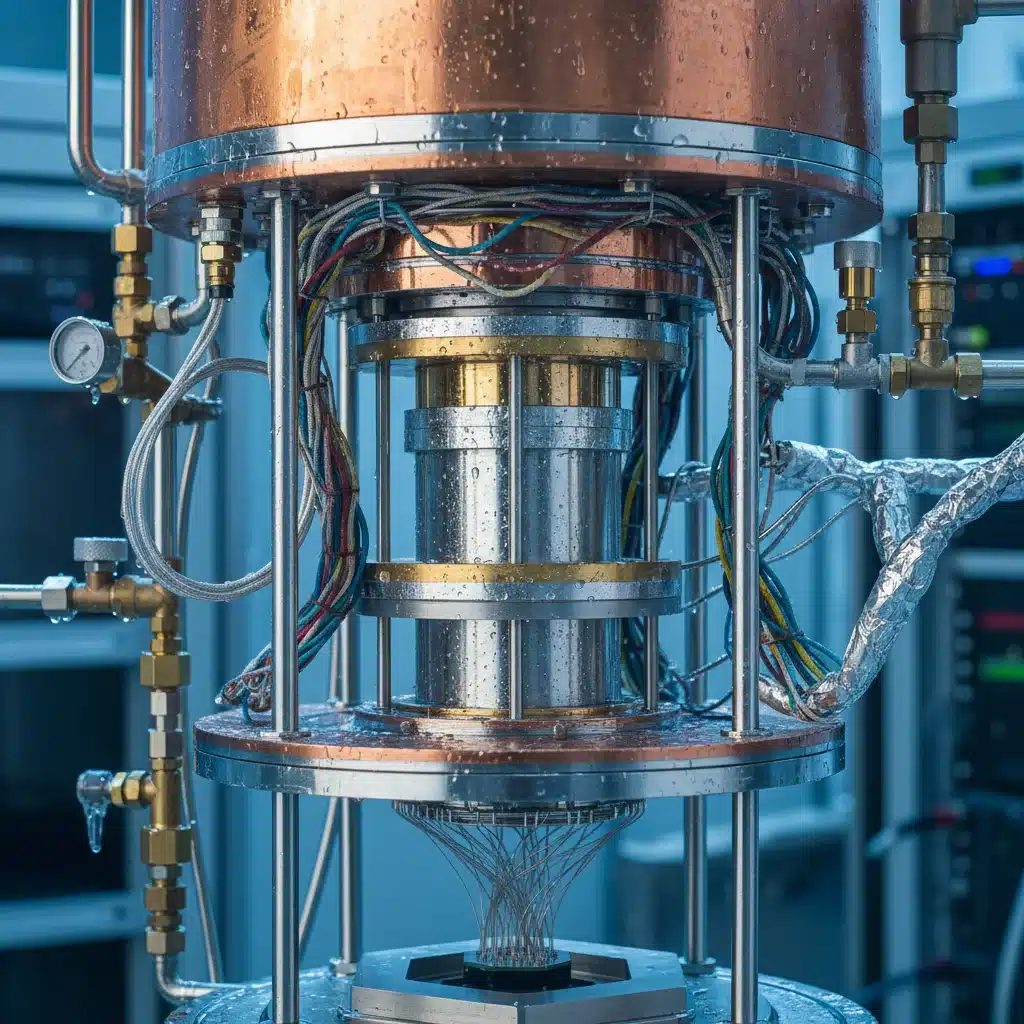
Key Quantum Computing Platforms for U.S. Tech Innovators in 2026
Let’s delve deeper into the specific offerings from the leading providers of quantum computing platforms that U.S. tech innovators should consider in 2026.
IBM Quantum
- Qubit Technology: Superconducting Transmon Qubits.
- Hardware Status (2026): IBM continues to push the boundaries of qubit count and quality. Their roadmap likely features processors with hundreds of stable, high-fidelity qubits, moving towards error-mitigated and early fault-tolerant capabilities. Expect improved coherence times and lower error rates, making their systems more robust for complex algorithms.
- Software & Ecosystem: Qiskit remains the cornerstone of the IBM Quantum ecosystem. Its extensive libraries, tutorials, and active community make it highly accessible for both beginners and advanced researchers. IBM provides comprehensive cloud access, allowing users to run circuits on real quantum hardware or powerful simulators. Integrations with classical HPC resources are also becoming more seamless.
- Target Applications: Quantum chemistry, materials science, optimization problems, financial modeling, and early exploration of quantum machine learning.
- Advantages for U.S. Innovators: Extensive educational resources, mature development environment, broad accessibility, strong community support, and a clear roadmap for scaling. IBM’s emphasis on practical applications aligns well with enterprise innovation needs.
- Considerations: While improving, superconducting qubits still require cryogenic temperatures and face challenges in achieving full fault tolerance.
Google Quantum AI (Sycamore)
- Qubit Technology: Superconducting Transmon Qubits.
- Hardware Status (2026): Google’s focus is often on pushing the frontiers of quantum advantage. Their Sycamore-derived processors will likely feature enhanced qubit connectivity and reduced crosstalk, aiming for even more complex quantum computations. Google is heavily invested in developing error-correction techniques and building towards a fault-tolerant architecture.
- Software & Ecosystem: Google primarily uses Cirq for programming their quantum hardware, alongside OpenFermion for quantum chemistry applications. While not as broadly open as Qiskit, Google’s platform offers powerful tools for specific research and advanced use cases. Access is often through partnerships and select cloud offerings.
- Target Applications: Fundamental quantum algorithm research, quantum chemistry simulations, advanced materials discovery, and exploring the limits of quantum computation.
- Advantages for U.S. Innovators: Access to cutting-edge hardware pushing performance envelopes, opportunities for deep collaboration on transformative research, and a focus on long-term fault-tolerant quantum computing.
- Considerations: Less public accessibility compared to IBM, often geared towards more advanced research and specific partnerships.
AWS Braket (Multi-Platform Access)
- Qubit Technology: AWS Braket is a managed quantum computing service that provides access to multiple types of quantum hardware from different providers. In 2026, this includes superconducting (e.g., from Rigetti), trapped-ion (e.g., from IonQ, Quantinuum), and neutral atom (e.g., from QuEra) platforms.
- Hardware Status (2026): Braket acts as an aggregator, offering access to the latest hardware from its partners. This means U.S. innovators can experiment with a variety of qubit technologies without committing to a single vendor. Expect continuous updates as partner technologies advance.
- Software & Ecosystem: Braket provides a unified interface for submitting quantum jobs and managing resources. It supports popular quantum SDKs like PennyLane, Qiskit, and Cirq, offering flexibility. Its integration with the broader AWS cloud ecosystem (e.g., S3, EC2) is a significant advantage for data management and hybrid classical-quantum workflows.
- Target Applications: Broad range of applications, allowing innovators to test and compare different hardware types for their specific problems, including optimization, simulation, and machine learning.
- Advantages for U.S. Innovators: Vendor agnosticism, flexibility to choose the best hardware for a given problem, seamless integration with existing cloud infrastructure, and a pay-as-you-go model. Ideal for exploration and early-stage development.
- Considerations: Performance and features are dependent on the underlying third-party hardware providers.
IonQ
- Qubit Technology: Trapped Ions.
- Hardware Status (2026): IonQ is expected to offer processors with increasing qubit counts and significantly improved quantum volume, indicating higher overall performance. Their systems are known for high-fidelity gates and all-to-all connectivity, simplifying algorithm design. Focus on modularity for future scaling.
- Software & Ecosystem: IonQ provides its own SDK and integrates with platforms like AWS Braket and Microsoft Azure Quantum. Their emphasis is on user-friendly access and high-performance execution for complex algorithms.
- Target Applications: Quantum chemistry, financial modeling, machine learning, and optimization problems where high fidelity and connectivity are crucial.
- Advantages for U.S. Innovators: High-fidelity operations, inherent all-to-all qubit connectivity, relatively long coherence times, and a clear path towards error correction.
- Considerations: Scaling trapped-ion systems to very large qubit counts involves complex engineering challenges related to laser control and ion manipulation.
Quantinuum (H-Series)
- Qubit Technology: Trapped Ions.
- Hardware Status (2026): Quantinuum’s H-series processors (powered by Honeywell Quantum Solutions hardware) are known for their high quantum volume and modular architecture. By 2026, they will likely offer even more powerful systems with enhanced error mitigation and potentially early error-correction capabilities, building on their reputation for high-quality qubits.
- Software & Ecosystem: Quantinuum offers a full-stack approach, including their TKET quantum SDK, which is designed for hardware-agnostic quantum programming and optimization. They also provide access through cloud partners. Their focus on enterprise solutions and industry-specific applications is strong.
- Target Applications: Optimization, quantum chemistry, cryptography, and complex simulations for various industries.
- Advantages for U.S. Innovators: Industry-leading quantum volume, robust enterprise-focused solutions, strong emphasis on software optimization, and a clear commitment to fault tolerance.
- Considerations: Similar to IonQ, scaling to extremely high qubit counts with trapped ions presents engineering hurdles.
Rigetti Computing
- Qubit Technology: Superconducting Qubits.
- Hardware Status (2026): Rigetti continues to advance its multi-chip processor architecture, aiming for increased qubit counts and improved performance. Their focus on hybrid quantum-classical algorithms and scalable system design is a key differentiator.
- Software & Ecosystem: Rigetti offers the Forest SDK and provides access to their quantum hardware through their own cloud platform and AWS Braket. They have a strong emphasis on practical applications and integrating quantum computing into existing computational workflows.
- Target Applications: Optimization, machine learning, and simulations, especially those benefiting from hybrid quantum-classical approaches.
- Advantages for U.S. Innovators: Focus on hybrid algorithms, multi-chip architecture for potential scalability, and a commitment to accessible quantum computing.
- Considerations: Similar challenges to other superconducting platforms regarding cryogenic requirements and error rates.
Evaluating Quantum Computing Platforms: Key Criteria for U.S. Innovators
Choosing the right quantum computing platform requires a systematic evaluation based on several critical factors:
1. Qubit Count and Quality (Quantum Volume)
While qubit count is important, qubit quality (coherence time, gate fidelity, connectivity) is paramount. Quantum Volume (QV) is a metric that attempts to capture both the number and quality of qubits, indicating the effective computational power of a quantum computer. Higher QV generally means the system can run more complex algorithms. U.S. innovators should look for platforms that consistently demonstrate increasing QV.
2. Error Rates and Error Mitigation/Correction
Current quantum computers are noisy (NISQ – Noisy Intermediate-Scale Quantum). High error rates limit the depth and complexity of quantum circuits that can be executed reliably. Platforms that offer advanced error mitigation techniques (software-based methods to reduce the impact of noise) or are actively pursuing hardware-based quantum error correction (QEC) are more promising for long-term applications. Understanding the roadmap for QEC is vital.
3. Coherence Time
Coherence time refers to how long a qubit can maintain its quantum state before it decoheres and loses its quantum properties. Longer coherence times allow for more complex operations and deeper circuits, which is crucial for running sophisticated quantum algorithms.
4. Connectivity and Architecture
The connectivity between qubits (which qubits can interact directly) affects the complexity of mapping algorithms to hardware. All-to-all connectivity (like in trapped-ion systems) simplifies programming but can be harder to scale. Fixed architectures (common in superconducting systems) require more careful mapping and optimization. Innovators should consider how well a platform’s architecture suits their specific algorithmic needs.
5. Software Development Kit (SDK) and Programming Environment
A robust and user-friendly SDK (e.g., Qiskit, Cirq, TKET, PennyLane) is essential for developing and executing quantum algorithms. Look for platforms with extensive documentation, tutorials, active community support, and seamless integration with classical computing resources. The ability to simulate quantum circuits on classical hardware is also a valuable feature for testing and debugging.
6. Accessibility and Cloud Integration
Most quantum computing platforms are accessed via the cloud. Evaluate the ease of access, pricing models, queue times for hardware access, and integration with existing cloud infrastructure (e.g., AWS, Azure, Google Cloud). This is particularly important for U.S. enterprises looking to integrate quantum capabilities into their existing IT ecosystems.
7. Ecosystem and Partnerships
A thriving ecosystem, including academic collaborations, industry partnerships, and a growing developer community, indicates a platform’s long-term viability and innovation potential. Platforms that foster a collaborative environment often provide more resources and opportunities for learning and development.
8. Roadmap and Scalability
Quantum computing is a rapidly evolving field. Understand each platform’s roadmap for increasing qubit counts, improving qubit quality, achieving fault tolerance, and developing new capabilities. Scalability, both in terms of hardware expansion and the ability to handle more complex problems, is a critical long-term consideration.
Strategic Implications for U.S. Tech Innovators
For U.S. tech innovators, the choice of quantum computing platforms is not merely a technical decision; it’s a strategic imperative. Early engagement with quantum technology can provide a significant first-mover advantage, fostering intellectual property, attracting top talent, and opening new market opportunities.
Hybrid Quantum-Classical Computing
In 2026, many practical applications will rely on hybrid quantum-classical algorithms. These approaches leverage quantum computers for specific, computationally intensive subroutines while classical computers handle the majority of the processing. Platforms that offer seamless integration between quantum hardware and classical HPC resources will be particularly valuable for innovators looking to implement such hybrid solutions.
Talent Development and Workforce Readiness
The scarcity of quantum talent is a significant challenge. U.S. innovators should consider platforms that invest in educational initiatives, provide comprehensive training materials, and foster a strong developer community. Investing in upskilling existing teams or recruiting quantum-savvy professionals will be crucial for maximizing the utility of these advanced platforms.
Security and Data Protection
As quantum computing advances, so does the threat of quantum attacks on current cryptographic standards. Innovators must also consider the security implications of transmitting sensitive data to quantum cloud platforms. Platforms with robust security protocols and a commitment to post-quantum cryptography research will be increasingly important.
Industry-Specific Applications
Different industries will find varying levels of immediate utility from quantum computing. For pharmaceuticals, quantum chemistry simulations could accelerate drug discovery. For finance, complex optimization problems in portfolio management or fraud detection could see breakthroughs. U.S. innovators should evaluate which quantum computing platforms are best suited for their industry-specific challenges and which providers are developing tailored solutions.

The Future Outlook: Towards Fault-Tolerant Quantum Computing
While the current generation of NISQ devices offers exciting possibilities, the ultimate promise of quantum computing lies in fault-tolerant quantum computers (FTQCs). These machines, capable of correcting errors faster than they occur, will unlock truly transformative applications across all sectors. In 2026, most quantum computing platforms are actively working towards this goal, albeit with different timelines and strategies.
The journey to FTQC will require millions of physical qubits to encode and protect logical qubits, demanding unprecedented engineering feats. U.S. tech innovators should monitor the progress of various platforms in this regard, as the first organizations to achieve reliable fault-tolerant quantum computation will likely gain an insurmountable competitive advantage.
The development of quantum software and algorithms will also continue to accelerate. As hardware improves, so too will the complexity and efficiency of quantum algorithms. Innovators should stay abreast of advancements in quantum programming paradigms, quantum machine learning, and quantum optimization techniques to fully leverage the power of these platforms.
Conclusion: Navigating the Quantum Frontier
The landscape of quantum computing platforms in 2026 is dynamic, diverse, and filled with immense potential. For U.S. tech innovators, the opportunity to shape the future of computation is now. By carefully evaluating the strengths and weaknesses of platforms like IBM Quantum, Google’s Sycamore, AWS Braket, IonQ, and Quantinuum, enterprises can strategically invest in the technologies that best align with their research objectives, business goals, and long-term vision.
The key to success will be a combination of early experimentation, strategic partnerships, continuous learning, and a clear understanding of the evolving capabilities of these platforms. While challenges remain, the progress in quantum hardware and software development is undeniable. U.S. tech innovators who embrace this quantum frontier with foresight and determination will be well-positioned to unlock unprecedented computational power and drive the next wave of technological breakthroughs.
The journey into quantum computing is just beginning, and 2026 marks a crucial point where the foundational choices made today will dictate the trajectory of innovation for decades to come. By staying informed and engaged with the leading quantum computing platforms, U.S. innovators can ensure they are at the forefront of this transformative technological revolution.