Integrating Web3 Innovations: Practical US Business Solutions by 2026

The digital landscape is in constant flux, and at the forefront of this evolution is Web3. Far from being a mere buzzword, Web3 represents a paradigm shift, promising a more decentralized, transparent, and user-centric internet. For US businesses, understanding and strategically integrating Web3 innovations isn’t just an option; it’s becoming a necessity to stay competitive and relevant. By mid-2026, the businesses that have successfully navigated this transition will be poised for unprecedented growth and operational efficiency. This comprehensive guide delves into practical Web3 Business Solutions, offering a roadmap for US enterprises to harness the power of blockchain, NFTs, DeFi, and more.
The journey into Web3 can seem daunting, filled with complex terminology and rapidly evolving technologies. However, at its core, Web3 is about empowering individuals and fostering new models of ownership, collaboration, and value exchange. For businesses, this translates into opportunities to enhance customer loyalty, streamline supply chains, create novel revenue streams, and build more resilient and transparent operations. The urgency to explore these avenues is growing, with significant investments pouring into the Web3 ecosystem and early adopters already demonstrating its transformative potential.
Understanding the Core Pillars of Web3 for Business
Before diving into specific Web3 Business Solutions, it’s crucial to grasp the fundamental technologies that underpin this new internet era. These pillars, while interconnected, each offer unique opportunities for business integration:
Blockchain Technology: The Foundation of Trust and Transparency
Blockchain is the distributed ledger technology that forms the backbone of Web3. Its immutable, transparent, and secure nature makes it ideal for a multitude of business applications beyond just cryptocurrencies. For US businesses, blockchain can revolutionize several key areas:
- Supply Chain Management: Tracking goods from origin to consumer with unparalleled transparency, reducing fraud, and improving accountability. Businesses can verify authenticity, monitor conditions, and ensure ethical sourcing, which resonates strongly with modern consumers.
- Data Security and Integrity: Storing critical data on a blockchain can enhance security and prevent tampering, offering a robust defense against cyber threats and ensuring data integrity. This is particularly relevant for industries handling sensitive customer information.
- Digital Identity: Decentralized Identity (DID) solutions powered by blockchain give users control over their personal data, reducing the need for businesses to store vast amounts of sensitive information and simplifying compliance with privacy regulations.
- Voting and Governance: For internal corporate governance or even customer loyalty programs, blockchain can provide a secure and transparent voting mechanism, fostering greater participation and trust.
- Tokenization of Assets: Representing real-world assets (like real estate, art, or commodities) as digital tokens on a blockchain opens up new possibilities for fractional ownership, liquidity, and investment. This can democratize access to previously illiquid assets.
Non-Fungible Tokens (NFTs): Redefining Ownership and Engagement
NFTs have moved beyond digital art and collectibles to become powerful tools for business innovation. Their unique, verifiable digital ownership can be leveraged in numerous ways:
- Customer Loyalty and Rewards: Instead of traditional points systems, businesses can issue NFTs as unique loyalty rewards, offering exclusive access, discounts, or experiences. These NFTs can also be traded, creating a secondary market and enhancing their perceived value.
- Ticketing and Event Management: NFTs can serve as verifiable tickets, eliminating counterfeiting and providing a secure, transparent way to manage access to events. They can also unlock additional experiences before, during, or after an event.
- Brand Storytelling and Community Building: Brands can create compelling NFT collections that tell a story, engage their audience, and build exclusive communities around shared interests. This fosters deeper connections than traditional marketing.
- Digital Rights Management: NFTs can be used to prove ownership and manage rights for digital content, offering creators new ways to monetize their work and protect their intellectual property.
- Gaming and Metaverse Integration: For businesses in the entertainment and gaming sectors, NFTs are central to creating in-game economies, digital collectibles, and interoperable assets within the burgeoning metaverse.
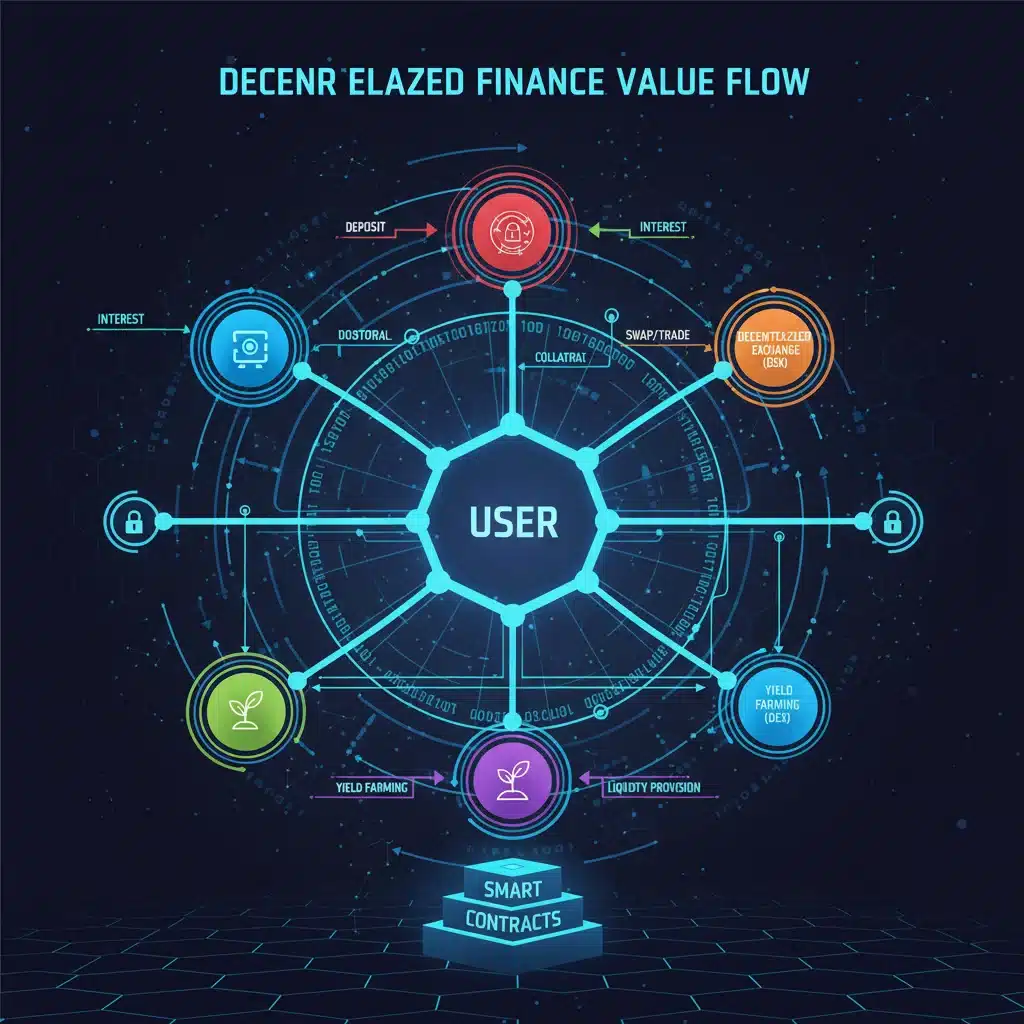
Decentralized Finance (DeFi): Reshaping Financial Services
DeFi aims to recreate traditional financial systems on blockchain, removing intermediaries and offering greater transparency, efficiency, and accessibility. While still nascent, DeFi presents significant opportunities for US businesses:
- Streamlined Payments and Cross-Border Transactions: DeFi protocols can facilitate faster, cheaper, and more transparent international payments, bypassing traditional banking infrastructure and reducing transaction fees.
- Access to Capital and Lending: Businesses can explore decentralized lending platforms for alternative financing options, potentially with lower interest rates and fewer bureaucratic hurdles than traditional banks.
- New Investment Vehicles: Tokenized assets and decentralized exchanges offer new avenues for investment and portfolio diversification for both businesses and their customers.
- Automated Operations with Smart Contracts: Smart contracts, self-executing agreements stored on a blockchain, can automate various financial processes, from escrow services to royalty payments, reducing operational costs and human error.
Practical Web3 Business Solutions for US Enterprises by Mid-2026
The theoretical benefits of Web3 are compelling, but how can US businesses practically integrate these innovations into their existing models within the next few years? Here’s a breakdown of actionable strategies:
Phase 1: Education and Exploration (Now – Early 2024)
The first step for any business considering Web3 integration is to invest in education. This isn’t just for the tech team; leadership, marketing, legal, and finance departments all need a foundational understanding.
- Internal Workshops and Training: Conduct regular sessions to demystify Web3 concepts. Bring in experts to explain blockchain fundamentals, NFT use cases, and DeFi principles in plain language relevant to your industry.
- Identify Key Stakeholders: Form an internal Web3 task force comprising representatives from different departments. Their role will be to research potential applications and assess risks.
- Competitive Analysis: Research how competitors, both direct and indirect, are exploring or implementing Web3. Look for case studies and emerging trends in your sector.
- Pilot Programs and Proofs of Concept (POCs): Start small. Identify a low-risk area where a Web3 solution could offer a tangible improvement. This could be a simple NFT loyalty program, a blockchain-based supply chain tracker for a specific product, or exploring stablecoin payments.
- Legal and Regulatory Scrutiny: Engage with legal counsel specializing in blockchain and digital assets to understand the evolving regulatory landscape in the US. Compliance is paramount.

Phase 2: Strategic Integration and Development (Mid-2024 – Early 2025)
Once a foundational understanding is in place and successful POCs have demonstrated viability, businesses can move towards more strategic integration.
Leveraging Blockchain for Operational Efficiency:
- Supply Chain Optimization: Implement a blockchain-based traceability system for a critical product line. This can involve partnering with a blockchain-as-a-service (BaaS) provider to track provenance, ensure quality, and manage inventory more effectively. This will be a key differentiator in consumer trust.
- Secure Data Management: Explore decentralized data storage solutions for non-sensitive data or for creating verifiable audit trails for sensitive information. This can enhance data governance and reduce reliance on centralized servers.
- Internal Process Automation: Utilize smart contracts to automate repetitive administrative tasks, such as invoice processing, contract management, or inter-departmental approvals, reducing manual errors and speeding up workflows.
Enhancing Customer Engagement with NFTs:
- Tiered Loyalty Programs: Launch an NFT-based loyalty program where different tiers of NFTs grant access to exclusive benefits, early product releases, or personalized services. This creates a sense of community and ownership among your most loyal customers.
- Experiential Marketing: Use NFTs to provide unique, verifiable access to events, virtual experiences, or exclusive content. Imagine an NFT that grants backstage access to a concert or a private virtual meeting with a company CEO.
- Digital Collectibles and Merchandise: For brands with strong recognition, creating limited-edition digital collectibles or tokenized merchandise can generate new revenue streams and engage a younger, digitally native audience.
Exploring DeFi for Financial Agility:
- Stablecoin Integration for Payments: For businesses with significant international transactions, integrating stablecoins can offer a faster, cheaper alternative to traditional wire transfers, reducing foreign exchange volatility and fees.
- Decentralized Treasury Management: Larger enterprises might explore allocating a small portion of their treasury to decentralized protocols for yield generation, though this requires careful risk assessment and regulatory compliance.
- Tokenized Invoicing and Payments: Implement smart contracts for automated invoicing and payment processing, especially with frequent B2B transactions, ensuring timely settlements and reducing administrative overhead.
Phase 3: Scaling and Innovation (Mid-2025 – Mid-2026)
By this stage, businesses should have several successful Web3 implementations and be ready to scale their efforts and explore more advanced innovations.
Building Decentralized Autonomous Organizations (DAOs):
- Community Governance: For businesses with strong customer communities, consider establishing a DAO to allow token holders to vote on product features, marketing campaigns, or even strategic decisions. This fosters extreme customer loyalty and co-creation.
- Internal Collaboration: Explore DAOs for specific projects or departments within a larger organization, enabling more agile and transparent decision-making processes.
Metaverse Opportunities:
- Virtual Storefronts and Experiences: Establish a presence in popular metaverse platforms, offering virtual products, services, or immersive brand experiences. This can open up new demographics and revenue streams.
- Interoperable Digital Assets: Develop digital assets that can be used across various metaverse environments, enhancing their utility and value for customers.
Advanced Tokenization Strategies:
- Fractional Ownership of Assets: Tokenize illiquid assets (e.g., real estate, intellectual property) to allow for fractional ownership, attracting a wider range of investors and increasing liquidity.
- Employee Incentive Tokens: Explore using tokens as a form of employee incentive or recognition, potentially linked to performance or company milestones, fostering a sense of shared ownership.
Challenges and Considerations for US Businesses
While the potential of Web3 Business Solutions is immense, US businesses must navigate several challenges:
Regulatory Uncertainty:
The regulatory landscape for Web3 technologies in the US is still evolving. Businesses must stay informed about new legislation, SEC guidelines, and IRS rulings concerning digital assets, cryptocurrencies, and NFTs. This requires ongoing legal consultation and a flexible approach.
Technological Complexity and Scalability:
Implementing Web3 solutions often requires specialized technical expertise. Businesses may need to invest in training existing staff, hiring new talent, or partnering with experienced Web3 development firms. Scalability of blockchain networks can also be a concern for high-volume transactions, though layer-2 solutions are addressing this.
Security Risks:
While blockchain is inherently secure, smart contract vulnerabilities, phishing attacks, and wallet compromises remain risks. Robust security audits, best practices for key management, and user education are essential.
User Experience (UX) and Adoption:
Many Web3 applications still suffer from complex user interfaces and a steep learning curve. For mass adoption, businesses need to prioritize intuitive UX and seamless integration with existing systems to onboard users unfamiliar with crypto wallets and blockchain transactions.
Environmental Concerns:
The energy consumption of certain blockchain networks (e.g., Proof-of-Work) has raised environmental concerns. Businesses should consider using more energy-efficient networks (e.g., Proof-of-Stake) or explore carbon offsetting initiatives if sustainability is a core value.
Building a Web3-Ready Workforce
The success of integrating Web3 Business Solutions hinges significantly on having a knowledgeable and adaptable workforce. This involves:
- Talent Acquisition: Actively recruit individuals with expertise in blockchain development, smart contract auditing, decentralized finance, and community management for Web3 projects.
- Upskilling Existing Employees: Provide comprehensive training programs for current employees, particularly those in IT, marketing, legal, and finance, to familiarize them with Web3 concepts and tools.
- Fostering an Innovative Culture: Encourage experimentation and learning. Create an environment where employees feel comfortable exploring new technologies and proposing Web3-driven solutions without fear of failure.
- Partnerships and Collaborations: Collaborate with Web3 startups, universities, and industry consortiums to gain access to expertise, share knowledge, and develop innovative solutions together.
The Future is Decentralized: Preparing for Mid-2026 and Beyond
By mid-2026, the landscape of US business will undoubtedly be shaped by Web3 innovations. Early adopters who have strategically invested in understanding and implementing practical Web3 Business Solutions will have a significant competitive advantage. They will have built more resilient supply chains, fostered deeper customer loyalty through novel engagement models, unlocked new revenue streams, and operated with greater transparency and efficiency.
The transition to Web3 is not a sprint but a marathon. It requires a long-term vision, continuous learning, and a willingness to adapt. Businesses that embrace this challenge proactively, focusing on solving real-world problems with Web3 technologies rather than chasing hype, will be the ones that thrive in the decentralized future.
The time to act is now. Start with education, identify specific use cases relevant to your business, run pilot programs, and build a team capable of navigating this exciting new frontier. The rewards for successful Web3 integration – from enhanced operational efficiency to unparalleled customer engagement – are too significant for US businesses to ignore.
Embrace the decentralized revolution, and position your business at the forefront of innovation for the years to come. The practical application of Web3 is not just a technological upgrade; it’s a strategic imperative for sustainable growth and competitive differentiation in the modern economy.