VR/AR in US Education: A Comparative Study of 2026’s Top 3 Platforms
VR/AR in US Education: A Comparative Study of 2026’s Top 3 Platforms
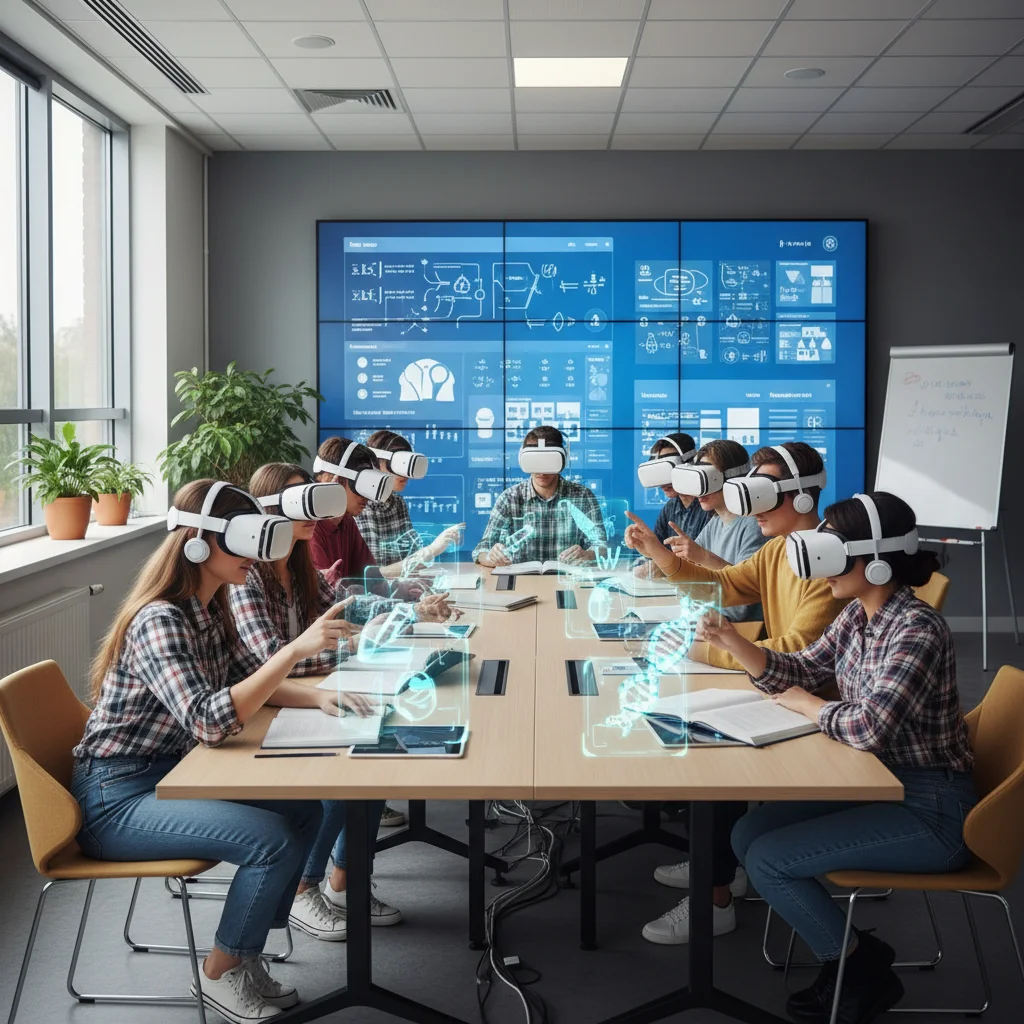
The landscape of education is in constant flux, driven by technological advancements that promise to reshape how we learn, teach, and interact with knowledge. In 2026, two technologies stand out as particularly transformative: Virtual Reality (VR) and Augmented Reality (AR). These immersive technologies are no longer confined to the realms of gaming and entertainment; they are rapidly gaining traction in educational institutions across the United States, offering unprecedented opportunities for engagement, experiential learning, and accessibility. This comprehensive comparative study delves into the top three VR/AR platforms poised to dominate US education in 2026, examining their features, benefits, challenges, and overall impact on the learning ecosystem.
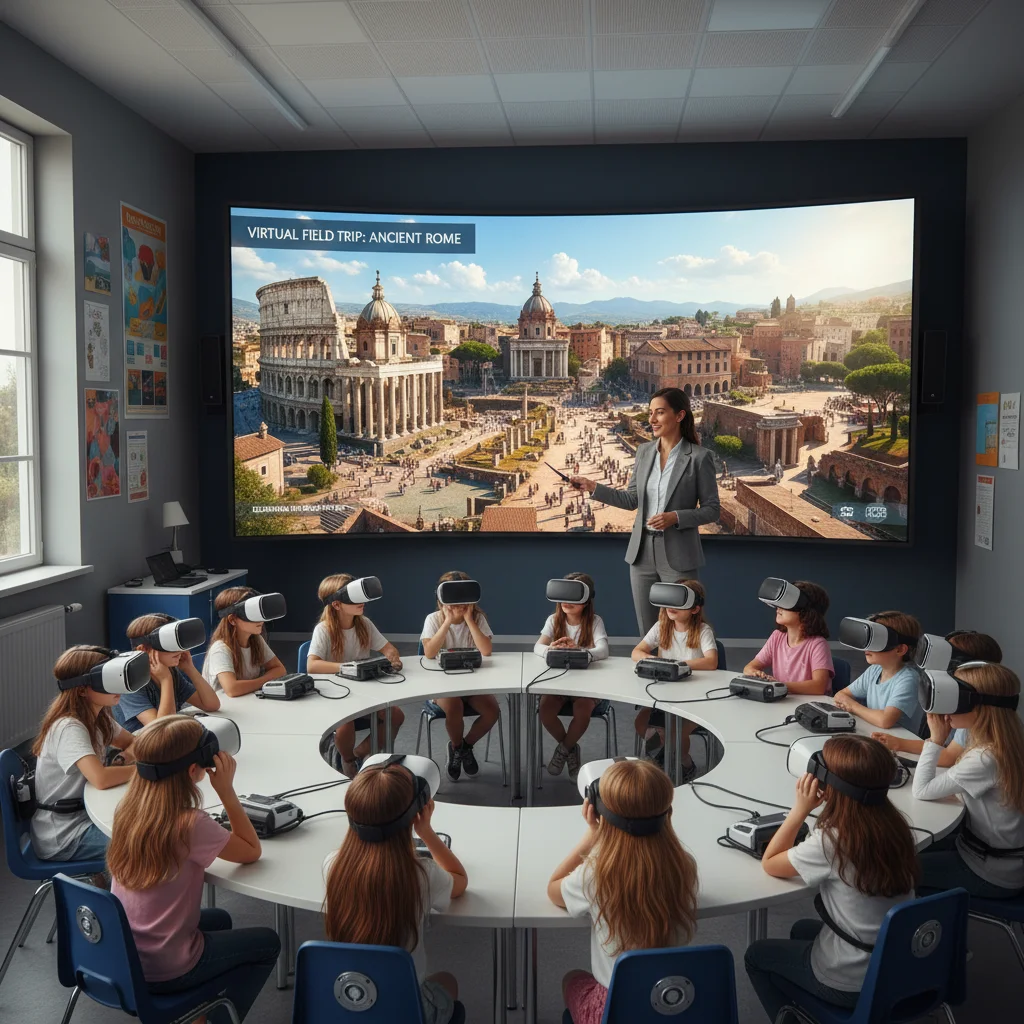
The integration of VR AR Education US represents a paradigm shift from traditional, passive learning to active, immersive experiences. Imagine dissecting a virtual frog without harming an actual animal, exploring ancient civilizations from your classroom, or conducting complex scientific experiments in a risk-free digital environment. These scenarios are no longer futuristic fantasies but present realities thanks to the evolving capabilities of VR and AR platforms. As educators seek innovative ways to captivate students’ attention, foster critical thinking, and cater to diverse learning styles, VR and AR emerge as powerful allies.
This article aims to provide a detailed analysis for educators, administrators, and policymakers considering the adoption of VR/AR technologies. We will not only compare the leading platforms but also discuss the pedagogical implications, technical requirements, and potential return on investment. Understanding the nuances of each platform is crucial for making informed decisions that will shape the future of learning for millions of students across the US.
The Rise of Immersive Learning: Why VR and AR Matter in US Education
Before diving into specific platforms, it’s essential to understand the fundamental appeal of VR and AR in education. Traditional teaching methods, while foundational, often struggle to convey complex concepts or provide real-world context effectively. Immersive technologies bridge this gap by offering:
- Enhanced Engagement: VR and AR inherently capture student attention through novelty and interactivity, making learning more enjoyable and memorable.
- Experiential Learning: Students can ‘do’ rather than just ‘read’ or ‘watch,’ leading to deeper understanding and skill acquisition. This is particularly valuable in subjects like science, history, and vocational training.
- Accessibility and Equity: These technologies can provide experiences that might otherwise be inaccessible due to cost, danger, or geographical limitations. They can also be adapted to support various learning needs, offering personalized experiences.
- Development of 21st-Century Skills: Working with VR/AR often involves problem-solving, collaboration, digital literacy, and critical thinking – skills vital for success in the modern world.
- Increased Retention: The vivid and interactive nature of immersive experiences often leads to better information retention compared to traditional methods.
The VR AR Education US market is projected for significant growth, driven by decreasing hardware costs, more robust educational content, and a growing body of research demonstrating positive learning outcomes. As we move further into 2026, the question is no longer if these technologies will be adopted, but which platforms will lead the charge and how effectively they will be integrated into the existing educational framework.
Platform 1: Meta Quest for Education (Formerly Oculus for Education)
Overview
Meta, a dominant player in the VR space, has made significant inroads into education with its Meta Quest line of headsets. The ‘for Education’ initiative focuses on providing a robust, scalable, and manageable solution for K-12 and higher education institutions. Leveraging the standalone nature of Quest headsets, it eliminates the need for expensive PCs, making it a more accessible entry point for many schools.
Key Features and Benefits
- Standalone Operation: Quest headsets are all-in-one devices, meaning no external computer or sensors are required, simplifying setup and deployment. This is a major advantage for schools with limited IT resources.
- Extensive Content Library: A vast and growing ecosystem of educational VR applications covers a wide range of subjects, from virtual field trips and historical reconstructions to scientific simulations and language learning. Developers are actively creating content tailored for education.
- Manageability Tools: Meta offers specific tools for deploying and managing multiple headsets within a classroom or institution, allowing educators to control content, monitor usage, and ensure a secure learning environment. This includes features for bulk provisioning and content distribution.
- Relatively Affordable Hardware: Compared to PC-tethered VR systems, Quest headsets offer a lower barrier to entry in terms of hardware cost, making it feasible for more schools to invest in VR AR Education US initiatives.
- User-Friendly Interface: The Quest interface is designed for ease of use, even for those new to VR, reducing the learning curve for both students and educators.
Challenges and Considerations
- Screen Time and Eye Strain: Prolonged VR use can lead to eye strain or motion sickness for some users, requiring careful consideration of session length and breaks.
- Content Curation: While the content library is extensive, educators need to carefully curate applications to ensure they align with curriculum goals and pedagogical best practices.
- Hardware Maintenance: Like any electronic device, headsets require charging, cleaning, and occasional troubleshooting, adding to the workload of IT staff or educators.
- Data Privacy Concerns: Being a Meta product, schools must carefully review data privacy policies and ensure compliance with educational regulations like COPPA and FERPA.
- Network Infrastructure: While standalone, downloading large VR applications and managing updates still requires robust Wi-Fi infrastructure.
Platform 2: Microsoft Mesh (Integrating HoloLens and Mixed Reality)
Overview
Microsoft Mesh represents a significant leap towards collaborative mixed reality experiences. While HoloLens 2 is the primary hardware for Mesh, the platform is designed to be hardware-agnostic, eventually supporting a range of VR and AR devices. Mesh focuses on enabling shared holographic experiences, allowing users in different physical locations to interact with the same digital content in a shared virtual space. This is particularly powerful for higher education, vocational training, and specialized K-12 applications.
Key Features and Benefits
- Mixed Reality Focus: Unlike pure VR, HoloLens and Mesh blend digital content seamlessly with the real world, allowing for contextualized learning experiences. Students can see their physical environment while interacting with holograms.
- Collaborative Learning: Mesh excels in enabling collaborative learning. Students and educators can co-create, problem-solve, and explore together in shared holographic environments, fostering teamwork and communication skills regardless of physical proximity.
- Enterprise-Grade Security and Management: As a Microsoft product, Mesh benefits from enterprise-level security, compliance, and management tools, making it particularly attractive to institutions with stringent IT requirements.
- Integration with Microsoft Ecosystem: Seamless integration with other Microsoft tools like Teams, Azure, and Dynamics 365 offers a comprehensive solution for institutions already invested in the Microsoft ecosystem.
- Precision and Detail: HoloLens 2 offers high-fidelity visuals and precise hand-tracking, allowing for detailed interaction with complex 3D models and simulations, crucial for fields like medicine, engineering, and architecture.

Challenges and Considerations
- High Hardware Cost: HoloLens 2 devices are significantly more expensive than standalone VR headsets, limiting their widespread adoption, especially in K-12. This makes it more suitable for specialized labs or higher education programs.
- Development Complexity: Creating content for Mesh and HoloLens can be more complex and costly than developing for VR, often requiring specialized expertise.
- Limited Field of View: While advanced, the HoloLens’s field of view for holograms is still somewhat limited compared to VR, which can break immersion for some users.
- Requires Robust Infrastructure: While a powerful tool, effective deployment of Mesh and HoloLens requires robust network infrastructure and potentially dedicated IT support.
- Specific Use Cases: While versatile, its strengths truly shine in specific use cases that benefit from mixed reality and collaboration, rather than as a general-purpose classroom tool.
Platform 3: ClassVR (Designed Specifically for Education)
Overview
ClassVR is a dedicated VR/AR solution built from the ground up specifically for the classroom environment. It offers a complete package including headsets, a comprehensive curriculum-aligned content portal, and intuitive management software. Its focus is on ease of use for educators, even those with no prior VR experience, making it a strong contender for widespread adoption in K-12 VR AR Education US.
Key Features and Benefits
- Education-Specific Design: ClassVR headsets are designed for classroom use, featuring robust construction, easy cleaning, and simplified controls. The entire ecosystem is tailored to educational needs.
- Curriculum-Aligned Content: ClassVR boasts an extensive library of pre-made, curriculum-aligned VR and AR experiences, covering subjects from science and history to art and geography. This significantly reduces the content development burden on schools.
- Intuitive Management Portal: The ClassVR Portal allows educators to easily manage multiple headsets, launch experiences simultaneously across a class, monitor student progress, and even create their own simple AR content.
- Offline Capabilities: Many ClassVR experiences can be downloaded and used offline, making it suitable for schools with inconsistent internet access.
- Integrated AR Capabilities: Beyond VR, ClassVR also supports augmented reality experiences using its headsets, often through printed ‘trigger’ cards that bring 3D models to life on students’ desks.
- Teacher Training and Support: ClassVR often comes with dedicated training and support for educators, ensuring they are comfortable and confident in integrating the technology into their lessons.
Challenges and Considerations
- Proprietary Ecosystem: While offering a curated experience, ClassVR is a more closed ecosystem compared to Meta Quest, meaning schools are largely reliant on ClassVR’s content library and development roadmap.
- Hardware Specifications: While purpose-built, the hardware specifications of ClassVR headsets might not be as bleeding-edge as some consumer VR devices, which could limit the complexity of experiences over time.
- Subscription Model: Access to the full content library and management features often requires an ongoing subscription, which is an additional cost for schools to consider.
- Scalability for Higher Ed: While excellent for K-12, its curated content approach might be less flexible for the highly specialized needs of some higher education programs.
- Limited Customization: While user-friendly for content delivery, advanced customization or development of unique applications might be more challenging within the ClassVR framework.
Comparative Analysis: Meta Quest vs. Microsoft Mesh vs. ClassVR
To provide a clearer picture, let’s compare these three leading VR AR Education US platforms across several key dimensions:
Target Audience and Pedagogical Approach
- Meta Quest for Education: Broad appeal across K-12 and higher education, focusing on immersive individual or small group exploration and experiential learning. Its open ecosystem encourages content diversity.
- Microsoft Mesh (HoloLens): Predominantly higher education, vocational training, and specialized K-12 programs. Emphasizes collaborative mixed reality, precise interaction, and integration with professional workflows. Ideal for complex simulations and design.
- ClassVR: Primarily K-12, with a strong focus on ease of use for general classroom integration. Offers structured, curriculum-aligned content for guided learning experiences.
Hardware and Cost
- Meta Quest for Education: Affordable standalone VR headsets (e.g., Quest 2, Quest 3). Lower upfront hardware cost, but content often purchased individually or through subscriptions.
- Microsoft Mesh (HoloLens): High-cost mixed reality headsets (HoloLens 2). Significant upfront investment, often justified for specialized programs with specific needs.
- ClassVR: Moderately priced standalone VR/AR headsets. Often sold as complete classroom kits with bundled content subscriptions, offering a predictable cost structure.
Content Ecosystem and Development
- Meta Quest for Education: Large, diverse content library from independent developers. Offers flexibility but requires careful curation by educators. SDKs available for custom development.
- Microsoft Mesh (HoloLens): Growing content library, often enterprise-focused. Strong tools for custom development and integration with existing 3D models and data. More complex development process.
- ClassVR: Curated, curriculum-aligned content library designed for specific educational outcomes. Easier for educators to deploy existing content but less flexibility for bespoke creations without specific tools.
Management and Deployment
- Meta Quest for Education: Dedicated management tools for bulk deployment and content control, but requires some IT expertise for initial setup and ongoing maintenance.
- Microsoft Mesh (HoloLens): Enterprise-grade management through Microsoft Endpoint Manager and Azure. Requires significant IT infrastructure and expertise.
- ClassVR: User-friendly web-based portal for easy content deployment and classroom management. Designed for educators with minimal technical background.
Implementation Strategies and Best Practices
Regardless of the chosen platform, successful integration of VR AR Education US requires thoughtful planning and execution. Here are some key strategies:
1. Define Clear Learning Objectives
Before adopting any technology, schools must identify specific learning objectives that VR/AR can uniquely address. What knowledge or skills can these tools help students acquire more effectively than traditional methods? A clear purpose ensures that VR/AR is not just a novelty but a powerful pedagogical tool.
2. Start Small, Scale Smart
Begin with pilot programs in specific classrooms or subjects. This allows educators to gain experience, gather feedback, and fine-tune implementation strategies before a wider rollout. Learning from initial experiences is crucial for long-term success.
3. Invest in Teacher Training
The most sophisticated VR/AR platform is only as effective as the educators using it. Comprehensive professional development is essential, covering not only the technical aspects of the hardware and software but also pedagogical strategies for integrating immersive experiences into lesson plans.
4. Curate Content Thoughtfully
Whether leveraging a proprietary library or an open ecosystem, content curation is key. Educators should evaluate VR/AR experiences for educational accuracy, age appropriateness, engagement potential, and alignment with curriculum standards.
5. Address Technical Infrastructure
Ensure that the school’s Wi-Fi network, charging stations, and storage solutions can support the chosen VR/AR platform. Adequate IT support for troubleshooting and maintenance is also vital.
6. Monitor and Evaluate Progress
Regularly assess the impact of VR/AR on student engagement, learning outcomes, and teacher satisfaction. Use data to make informed decisions about future investments and adjustments to the program.
7. Foster Collaboration and Sharing
Encourage educators to share their VR/AR successes, challenges, and best practices. Building a community of practice can accelerate adoption and innovation within the institution.
The Future of VR/AR in US Education Beyond 2026
Looking beyond 2026, the trajectory for VR/AR in US education is one of continued innovation and integration. We can anticipate:
- Increased Accessibility: Hardware will become even more affordable, lighter, and more comfortable, making widespread adoption more feasible.
- AI-Powered Adaptive Learning: VR/AR experiences will increasingly integrate artificial intelligence to personalize learning paths, provide real-time feedback, and adapt to individual student needs and progress.
- Haptic Feedback and Multi-Sensory Experiences: More sophisticated haptic technologies will enhance the sense of touch, making virtual interactions even more realistic, particularly for vocational training and scientific simulations.
- Ubiquitous AR: Augmented reality, integrated into everyday devices like smartphones and potentially smart glasses, will offer on-demand learning overlays in real-world environments.
- Creator Tools for Students: Easier-to-use tools will empower students to become creators of VR/AR content, fostering digital literacy and creative problem-solving.
- Global Collaboration: Immersive platforms will facilitate seamless collaboration between students and educators across geographical boundaries, enabling truly global learning communities.
The journey of VR/AR in US education is still in its relatively early stages, but the rapid advancements and growing interest indicate a transformative future. The platforms discussed – Meta Quest for Education, Microsoft Mesh, and ClassVR – each offer unique strengths and cater to different educational needs and budgets. The key to success lies not just in the technology itself, but in how educators and institutions strategically implement these tools to create richer, more engaging, and more effective learning environments for the next generation.
Conclusion
The year 2026 marks a pivotal moment for VR AR Education US. The comparative study of Meta Quest for Education, Microsoft Mesh, and ClassVR reveals a diverse landscape of powerful tools, each with the potential to revolutionize learning. While Meta Quest offers broad accessibility and a vast content library, Microsoft Mesh excels in collaborative mixed reality for specialized applications, and ClassVR provides a highly curated, user-friendly experience for K-12. The choice of platform will depend on an institution’s specific goals, budget, existing infrastructure, and pedagogical philosophy.
Ultimately, the true power of VR and AR in education lies in their ability to move beyond passive consumption of information to active, experiential engagement. By carefully selecting platforms, investing in teacher training, and aligning technology use with clear learning objectives, US educational institutions can harness these immersive technologies to create richer, more engaging, and more effective learning environments for the next generation. The immersive classroom of tomorrow is not a distant dream; it is rapidly becoming a tangible reality, and these platforms are at the forefront of this exciting educational revolution.