Quantum-Safe Cryptography 2026: US Enterprise Urgency

The Urgent Need for Quantum-Safe Cryptography in US Enterprise by 2026: What You Must Know Now (TIME-SENSITIVE)
The digital landscape is constantly evolving, and with it, the threats to our most sensitive data. While today’s encryption methods are robust against classical computing attacks, a paradigm shift is on the horizon: the advent of fault-tolerant quantum computers. These powerful machines, once fully realized, will be capable of breaking many of the cryptographic algorithms that currently secure our communications, financial transactions, and national infrastructure. For US enterprises, this isn’t a distant problem; it’s an urgent, time-sensitive challenge that demands immediate attention. The year 2026 stands as a critical benchmark, a deadline by which organizations must have a clear strategy and significant progress in implementing quantum-safe cryptography.
Understanding the Quantum Threat: Why 2026 is Not an Option
The term ‘quantum threat’ refers to the potential for large-scale quantum computers to render current public-key cryptography algorithms obsolete. Algorithms like RSA and Elliptic Curve Cryptography (ECC), which form the backbone of modern secure communications, rely on the computational difficulty of certain mathematical problems. Quantum algorithms, such as Shor’s algorithm, can solve these problems exponentially faster, effectively breaking these encryption schemes. This is not mere speculation; it’s a scientifically validated threat.
While fully capable quantum computers are still in development, the critical factor is the ‘Harvest Now, Decrypt Later’ (HNDL) threat. Adversaries are already collecting encrypted data today, knowing that they can store it and decrypt it once quantum computers become powerful enough. This means that data encrypted today, even if seemingly secure, could be vulnerable to future quantum attacks. For information with a long shelf-life, such as intellectual property, government secrets, financial records, and healthcare data, this represents an existential risk.
The 2026 deadline, while not a hard-and-fast universal mandate from a single entity, represents a growing consensus among cybersecurity experts and government bodies, including the National Institute of Standards and Technology (NIST) and the National Security Agency (NSA), that enterprises need to begin their transition to quantum-safe cryptography now. This timeline accounts for the complexity of migrating vast IT infrastructures, the time needed for algorithm standardization, and the predicted timeline for quantum computer development.
NIST’s Role and the Path to Standardization for Quantum-Safe Cryptography
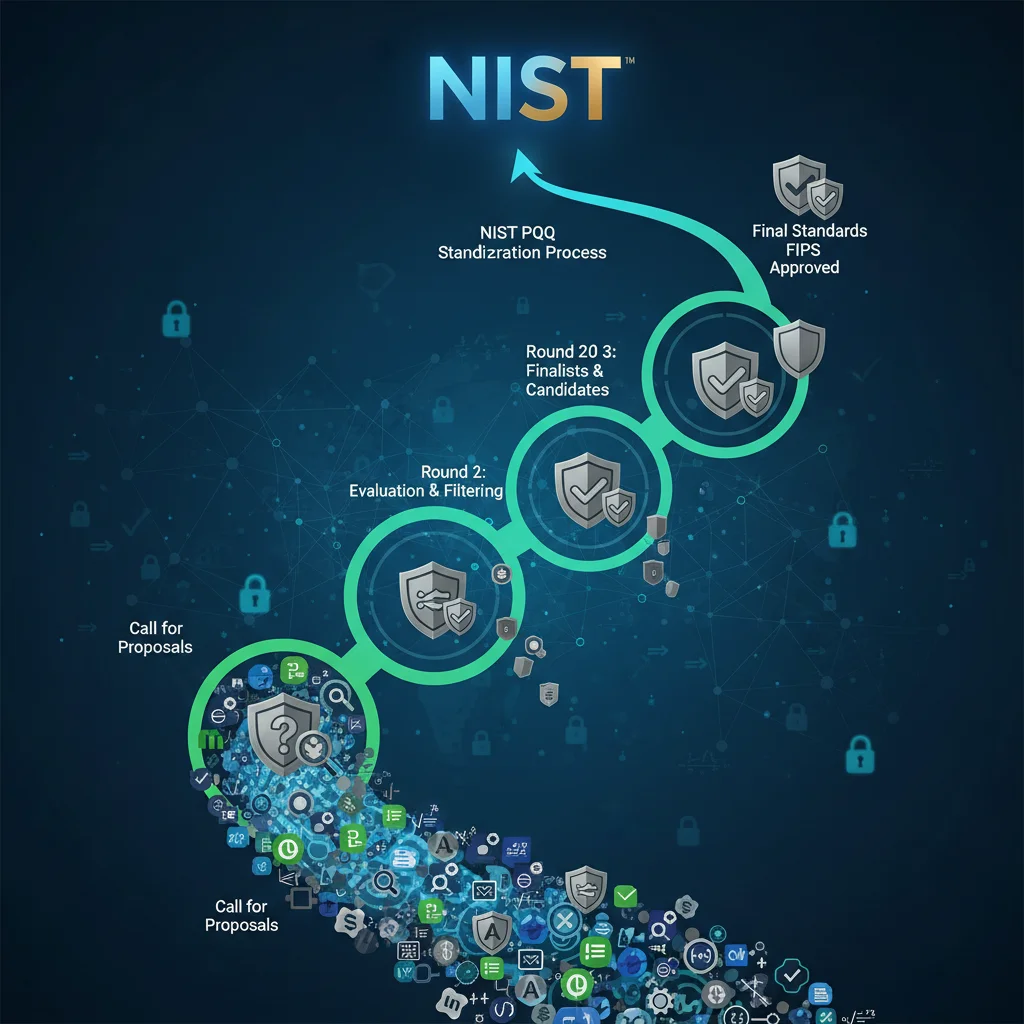
Recognizing the impending crisis, NIST launched its Post-Quantum Cryptography (PQC) standardization process in 2016. This multi-year, rigorous process has involved cryptographic experts worldwide submitting and evaluating new algorithms designed to be resistant to quantum attacks. The goal is to identify and standardize a suite of algorithms that can replace current vulnerable ones.
As of late 2022 and early 2023, NIST announced the first set of algorithms selected for standardization:
- CRYSTALS-Kyber: A key-encapsulation mechanism (KEM) suitable for establishing shared secrets.
- CRYSTALS-Dilithium: A digital signature algorithm.
- Falcon: Another digital signature algorithm.
- SPHINCS+: A hash-based digital signature scheme, offering a different security paradigm.
These selections mark a crucial turning point. With initial algorithms identified, software and hardware vendors can begin integrating them into their products, and enterprises can start planning their adoption strategies. However, the standardization process is ongoing, with more algorithms expected to be selected for various use cases and as backups. This means organizations must stay abreast of NIST’s updates and prepare for a multi-faceted approach to quantum-safe cryptography.
The Stakes for US Enterprises: Data Integrity, National Security, and Compliance
The failure to adopt quantum-safe cryptography by 2026 carries severe implications for US enterprises:
1. Data Breaches and Compromised Confidentiality
The most direct threat is the compromise of sensitive data. Companies holding vast amounts of personally identifiable information (PII), financial data, healthcare records (PHI), or intellectual property (IP) could see their encrypted archives rendered useless. The reputational damage, financial penalties, and loss of competitive advantage from such breaches would be catastrophic.
2. Supply Chain Vulnerability
Modern enterprises operate within complex supply chains. A weak link in any part of this chain – a vendor, a partner, or a critical infrastructure provider – can expose the entire ecosystem to quantum attacks. Securing the supply chain will require a collaborative effort to transition to quantum-safe cryptography across all interconnected entities.
3. National Security Implications
Many US enterprises, particularly those in critical infrastructure sectors (energy, water, communications, finance) or defense contractors, handle data vital to national security. A successful quantum attack on these systems could cripple essential services, disrupt economic stability, and undermine national defense capabilities. The US government is acutely aware of this and is pushing for rapid adoption.
4. Regulatory and Compliance Risks
While specific mandates for PQC are still emerging, it’s highly probable that regulatory bodies will soon require the use of quantum-safe cryptography for certain types of data or industries. Non-compliance could lead to significant fines and legal repercussions. Proactive adoption will position enterprises favorably against future regulatory changes.
5. Long-Term Trust and Customer Confidence
In an increasingly digital world, trust is paramount. Customers and partners expect their data to be secure. Enterprises that demonstrate foresight and proactively secure their systems against future threats will build stronger trust and maintain a competitive edge.
A Five-Step Action Plan for US Enterprises to Implement Quantum-Safe Cryptography
The transition to quantum-safe cryptography is a marathon, not a sprint. It requires careful planning, resource allocation, and a phased approach. Here’s a five-step action plan to guide US enterprises:
Step 1: Inventory and Cryptographic Discovery (Now – 2024)
Before you can protect your systems, you need to know what you have. This critical first step involves a comprehensive audit of all cryptographic assets within your organization. This includes:
- Identifying all systems, applications, and data stores that rely on cryptography.
- Cataloging cryptographic algorithms: Which systems use RSA? Which use ECC? What key lengths are employed?
- Locating cryptographic keys: Where are keys stored? How are they managed? Who has access?
- Assessing data longevity: For each type of data, how long does it need to remain confidential? This helps prioritize migration efforts based on the ‘Harvest Now, Decrypt Later’ threat.
- Mapping dependencies: Understand how different systems and third-party services interact cryptographically.
This phase is often the most challenging due to the pervasive nature of cryptography and the potential for ‘cryptographic sprawl’ in large organizations. Specialized tools and cryptographic discovery services can greatly assist in this process.
Step 2: Risk Assessment and Prioritization (2024 – 2025)
Once you have a clear picture of your cryptographic landscape, the next step is to assess the risk posed by quantum computers to each identified asset. This involves:
- Quantifying exposure: Which assets are most vulnerable to quantum attacks based on the algorithms used and the sensitivity/longevity of the data?
- Prioritizing migration: Focus on ‘high-value, long-life’ data first. These are the assets most susceptible to the HNDL threat. Critical infrastructure and systems with strict compliance requirements should also be high on the list.
- Developing a risk matrix: Categorize assets by their current cryptographic strength, their exposure to quantum threats, and the potential impact of a breach.
- Aligning with business objectives: Ensure that your quantum-safe strategy supports overall business goals and risk tolerance.
This phase helps allocate resources effectively and ensures that the most critical areas are addressed first in the transition to quantum-safe cryptography.
Step 3: Pilot Programs and Vendor Engagement (2025)
With a prioritized list, it’s time to move from planning to initial execution. This involves:
- Engaging with vendors: Contact your software and hardware providers to understand their PQC roadmaps. Demand PQC-enabled updates and solutions.
- Establishing pilot projects: Implement quantum-safe cryptography in non-critical, isolated environments or for specific, high-priority applications. This allows you to test new algorithms, identify compatibility issues, and train personnel without disrupting core operations.
- Evaluating PQC implementations: Test the performance, security, and interoperability of the new algorithms. Understand the computational overhead and resource requirements.
- Developing an ‘agile crypto’ strategy: Given that NIST’s standardization is ongoing, organizations should plan for cryptographic agility – the ability to easily swap out cryptographic algorithms as new standards emerge or threats evolve.
Pilot programs are essential for gaining practical experience and refining your broader migration strategy for quantum-safe cryptography.

Step 4: Phased Migration and Integration (2025 – 2026)
Based on the insights gained from pilot programs, begin a phased rollout of quantum-safe cryptography across your enterprise. This phase will involve:
- Updating infrastructure: Deploy PQC-enabled hardware and software. This could include new security modules, operating system updates, and application patches.
- Migrating data: Re-encrypt sensitive data using quantum-safe algorithms. For data with extreme longevity, consider hybrid approaches that use both classical and quantum-safe algorithms for an added layer of security.
- Training personnel: Educate IT staff, developers, and security teams on the new cryptographic standards, deployment procedures, and incident response protocols.
- Updating policies and procedures: Revise your cryptographic policies, key management practices, and incident response plans to reflect the adoption of quantum-safe cryptography.
- Securing new deployments: Ensure that all new systems and applications are designed with PQC in mind from day one, following a ‘crypto-agile’ architecture.
This phase requires significant coordination and change management to ensure a smooth transition without compromising current security or business operations.
Step 5: Continuous Monitoring and Future-Proofing (2026 and Beyond)
The journey doesn’t end in 2026. The quantum landscape will continue to evolve, and so too must your security posture. This final, ongoing step includes:
- Monitoring NIST and cryptographic community updates: Stay informed about new algorithm selections, security analyses, and emerging quantum threats.
- Regular security audits: Continuously assess your cryptographic implementations for vulnerabilities and compliance.
- Maintaining cryptographic agility: Ensure your systems are designed to easily update or swap out cryptographic algorithms as standards evolve or new, stronger algorithms become available.
- Investing in research and development: For larger enterprises, consider investing in internal R&D or partnering with quantum security experts to stay at the forefront of the field.
- Participating in industry forums: Share knowledge and best practices with peers to collectively strengthen the defense against quantum threats.
Continuous monitoring ensures that your enterprise remains resilient against future quantum advancements and maintains a robust quantum-safe cryptography posture.
Challenges and Considerations in Adopting Quantum-Safe Cryptography
The transition to quantum-safe cryptography is not without its hurdles:
- Complexity: PQC algorithms can be more complex and computationally intensive than their classical counterparts, potentially impacting performance and resource usage.
- Interoperability: Ensuring that new PQC implementations work seamlessly across diverse systems, platforms, and with various vendors will be a major challenge.
- Legacy Systems: Many enterprises rely on legacy systems that may be difficult or costly to update with new cryptographic standards.
- Talent Gap: There is a shortage of cybersecurity professionals with expertise in quantum computing and PQC.
- Algorithm Stability: While NIST has made selections, the field is still evolving. There’s a small but present risk that selected algorithms might face future attacks or require adjustments.
Addressing these challenges requires strategic planning, investment in talent and technology, and a collaborative approach with industry peers and government bodies.
Conclusion: The Time for Action is Now for Quantum-Safe Cryptography
The year 2026 is rapidly approaching, and for US enterprises, it represents a critical window of opportunity to prepare for the quantum era. The threat is real, the implications are severe, and the time to act is now. By understanding the quantum threat, engaging with NIST standards, and implementing a comprehensive action plan for quantum-safe cryptography, organizations can protect their invaluable data, maintain operational integrity, and safeguard national security in the face of an unprecedented technological shift. Procrastination is not an option; securing the future demands immediate and decisive action.