CIO Digital Transformation: 6 Tips for US CIOs to Boost Efficiency by 20% in 2026

The landscape of enterprise technology is evolving at an unprecedented pace, placing immense pressure on Chief Information Officers (CIOs) across the United States. In an era defined by rapid technological advancements, evolving customer expectations, and the relentless pursuit of operational excellence, the mandate for CIO Digital Transformation is clearer than ever. Achieving significant efficiency gains, particularly an ambitious 20% by 2026, is not merely a desirable outcome but a strategic imperative for businesses aiming to maintain a competitive edge and foster sustainable growth.
This article delves into six expert tips, offering insider knowledge for US CIOs to navigate the complexities of digital transformation, optimize their IT ecosystems, and ultimately drive substantial efficiency improvements. From leveraging cutting-edge technologies to fostering a culture of innovation, these strategies are designed to equip CIOs with the actionable insights needed to transform their organizations and meet their ambitious targets.
The Imperative of CIO Digital Transformation: Why 20% Efficiency by 2026?
In today’s hyper-competitive global market, businesses are constantly seeking ways to do more with less. For CIOs, this translates into a direct responsibility to ensure that technology investments not only support but actively drive business objectives, particularly in the realm of operational efficiency. A 20% efficiency gain by 2026 is a bold, yet achievable, target that signifies a profound shift in how organizations leverage technology. It’s about optimizing processes, reducing waste, enhancing productivity, and ultimately, delivering greater value to customers and stakeholders.
The journey toward this goal is multifaceted, requiring a strategic vision that encompasses technological innovation, organizational alignment, and a deep understanding of market dynamics. CIO Digital Transformation is not a one-time project; it’s a continuous evolution that demands adaptability, foresight, and a willingness to challenge the status quo. The benefits of achieving such a target extend far beyond cost savings, impacting everything from employee satisfaction and customer experience to market responsiveness and long-term profitability.
Understanding the Current Landscape: Challenges and Opportunities for US CIOs
US CIOs face a unique set of challenges and opportunities. On one hand, they operate within a highly dynamic regulatory environment, grappling with issues like data privacy, cybersecurity threats, and compliance. On the other hand, the United States is a hub of technological innovation, offering access to advanced tools, skilled talent, and a mature ecosystem for digital adoption. Navigating this landscape requires a nuanced approach, balancing risk mitigation with aggressive pursuit of innovation.
The opportunities presented by emerging technologies such as Artificial Intelligence (AI), Machine Learning (ML), Robotic Process Automation (RPA), and advanced analytics are immense. These technologies, when strategically implemented, can unlock unprecedented levels of efficiency, automate mundane tasks, provide deeper insights, and enable more agile decision-making. The challenge lies in identifying the right technologies, integrating them effectively into existing systems, and ensuring that the organization is prepared to embrace the change.
Tip 1: Prioritize Cloud-Native Architectures and Serverless Computing
One of the most impactful strategies for accelerating CIO Digital Transformation and achieving significant efficiency gains is a decisive shift towards cloud-native architectures and serverless computing. Traditional IT infrastructures, often characterized by on-premise data centers and monolithic applications, are inherently inefficient. They demand significant capital expenditure, require extensive maintenance, and often lack the agility needed to respond quickly to market changes.
Cloud-native architectures, built on principles of microservices, containers, and APIs, offer unparalleled scalability, resilience, and flexibility. They allow organizations to deploy applications faster, iterate more frequently, and scale resources up or down dynamically based on demand. This inherent agility translates directly into operational efficiencies, reducing infrastructure costs, accelerating time-to-market for new services, and freeing up IT staff to focus on strategic initiatives rather than routine maintenance.
The Power of Serverless Computing
Serverless computing takes this a step further by abstracting away the underlying infrastructure entirely. CIOs no longer need to provision, manage, or scale servers. Instead, they pay only for the compute resources consumed when their code is executed. This model dramatically reduces operational overhead, minimizes idle resource costs, and simplifies deployment pipelines. For tasks that are event-driven or require intermittent processing, serverless computing can deliver substantial cost savings and efficiency improvements.
Actionable Insight: Conduct a comprehensive audit of existing applications and identify candidates for refactoring into cloud-native microservices or migrating to serverless functions. Emphasize a ‘cloud-first’ strategy for all new developments, prioritizing platforms that offer robust serverless capabilities and a strong ecosystem of integrated services. Invest in training for your development and operations teams to master cloud-native principles and serverless deployment models.
Tip 2: Harness the Power of AI and Automation Across the Enterprise
Artificial Intelligence (AI) and automation are no longer futuristic concepts; they are present-day tools that are revolutionizing business operations. For US CIOs, strategically deploying AI and automation is critical for achieving that 20% efficiency target. This involves identifying repetitive, rule-based tasks across various departments—from customer service and finance to HR and IT operations—and automating them using technologies like Robotic Process Automation (RPA), intelligent process automation (IPA), and machine learning (ML).
RPA bots can mimic human actions to automate data entry, report generation, and system integrations, drastically reducing manual effort and errors. IPA combines RPA with AI capabilities like natural language processing (NLP) and computer vision to automate more complex, unstructured processes. Machine learning, on the other hand, can be used for predictive analytics, anomaly detection, and optimizing operational parameters, leading to proactive problem-solving and improved resource allocation.
AI-Driven Insights for Better Decision Making
Beyond automating tasks, AI can provide invaluable insights by analyzing vast datasets that would be impossible for humans to process. This enables data-driven decision-making, allowing CIOs and other business leaders to identify trends, predict outcomes, and optimize strategies with greater accuracy. From optimizing supply chains to personalizing customer experiences, AI’s analytical capabilities are a cornerstone of modern CIO Digital Transformation.
Actionable Insight: Establish an enterprise-wide automation center of excellence (CoE) to identify automation opportunities, standardize best practices, and manage the lifecycle of automated processes. Start with high-impact, low-complexity processes to demonstrate quick wins and build momentum. Invest in AI platforms that integrate seamlessly with existing data sources and provide accessible tools for data scientists and business analysts alike.
Tip 3: Implement a Robust Data Strategy and Analytics Framework
Data is the lifeblood of modern organizations, and a well-defined data strategy is paramount for successful CIO Digital Transformation. Without clean, accessible, and actionable data, even the most advanced AI and automation initiatives will fall short. Achieving 20% efficiency requires CIOs to move beyond simply collecting data to actively transforming it into a strategic asset that informs every business decision.
A robust data strategy encompasses several key components: data governance, data quality management, data integration, and advanced analytics. Data governance ensures that data is managed effectively throughout its lifecycle, adhering to regulatory requirements and internal policies. Data quality management focuses on ensuring accuracy, completeness, and consistency. Data integration breaks down silos, allowing various systems to share and leverage data seamlessly.
Advanced Analytics for Predictive Power
The true power lies in advanced analytics. Moving beyond descriptive analytics (what happened) to predictive (what will happen) and prescriptive (what should we do) analytics enables organizations to anticipate challenges, identify opportunities, and optimize operations proactively. This includes leveraging tools for big data processing, real-time analytics, and business intelligence dashboards that provide stakeholders with a clear, unified view of performance.
Actionable Insight: Develop a comprehensive data governance framework outlining data ownership, access controls, and quality standards. Invest in a modern data platform (e.g., data lakes, data warehouses, data fabric) that can handle diverse data types and scales. Empower business users with self-service analytics tools, while also investing in specialized data science teams to uncover deeper insights and build predictive models.
Tip 4: Embrace Agile Methodologies and DevOps Practices
Traditional IT development and operations models often create bottlenecks, slow down innovation, and lead to inefficiencies. To achieve significant efficiency gains, US CIOs must champion the adoption of agile methodologies and DevOps practices across their IT departments and, ideally, extend them to other business units. Agile, with its iterative development cycles and focus on continuous feedback, enables faster delivery of value and greater responsiveness to changing requirements.
DevOps, a cultural and technical movement, bridges the gap between development and operations teams. By automating the software delivery pipeline, promoting collaboration, and fostering a shared sense of ownership, DevOps significantly reduces deployment times, minimizes errors, and improves system reliability. This synergy between agile and DevOps creates a highly efficient engine for continuous innovation and improvement, directly contributing to the 20% efficiency target.
Benefits Beyond Speed
The benefits of agile and DevOps extend beyond mere speed. They foster a culture of continuous learning, experimentation, and improvement. Teams become more autonomous and empowered, leading to higher morale and better problem-solving. Furthermore, the focus on automation in DevOps reduces manual toil, allowing IT professionals to engage in more strategic and value-adding activities.
Actionable Insight: Implement cross-functional agile teams. Invest in comprehensive DevOps toolchains for continuous integration (CI), continuous delivery (CD), infrastructure as code (IaC), and automated testing. Provide extensive training and coaching to instill agile principles and DevOps culture. Encourage a blameless post-mortem culture to learn from incidents and continuously improve processes.
Tip 5: Strengthen Cybersecurity and Data Privacy Posture
While often perceived as a cost center, a robust cybersecurity and data privacy posture is, in fact, a critical enabler of efficiency and trust in the context of CIO Digital Transformation. Data breaches and compliance failures can lead to catastrophic financial losses, reputational damage, and operational disruptions that severely undermine any efficiency gains. Proactive cybersecurity measures prevent these costly incidents, allowing businesses to operate smoothly and securely.
For US CIOs, this means adopting a comprehensive, layered security approach that includes advanced threat detection, incident response planning, identity and access management (IAM), and continuous security monitoring. Furthermore, with increasingly stringent regulations like GDPR and various state-level privacy laws, ensuring data privacy by design and default is no longer optional. It builds customer trust, reduces legal risks, and streamlines compliance efforts.
Security as an Enabler, Not a Barrier
By integrating security into every stage of the digital transformation journey—from initial design to deployment and ongoing operations—CIOs can ensure that security becomes an enabler of innovation rather than a bottleneck. Automating security processes, leveraging AI for threat intelligence, and fostering a security-aware culture among all employees are key to building a resilient and efficient digital enterprise.
Actionable Insight: Conduct regular security audits and penetration testing to identify vulnerabilities. Implement a Zero Trust security model, verifying every user and device regardless of location. Invest in employee security awareness training programs. Leverage AI-powered security analytics and Security Information and Event Management (SIEM) systems for proactive threat detection and rapid response.

Tip 6: Foster a Culture of Continuous Learning and Innovation
Technology alone cannot drive CIO Digital Transformation. The most advanced tools are only as effective as the people who wield them. To achieve a 20% efficiency gain by 2026, US CIOs must cultivate a culture of continuous learning, experimentation, and innovation within their IT teams and across the broader organization. This involves investing in upskilling and reskilling programs, encouraging cross-functional collaboration, and creating safe spaces for trying new ideas and learning from failures.
The pace of technological change means that skills quickly become obsolete. CIOs must proactively identify future skill gaps and provide opportunities for their teams to acquire new competencies in areas like AI, cloud computing, data science, and cybersecurity. This not only enhances individual capabilities but also builds an agile workforce capable of adapting to new technologies and business challenges.
Empowering the Workforce for Digital Success
Innovation thrives in environments where employees feel empowered to contribute ideas, challenge existing processes, and experiment with new solutions. CIOs should champion initiatives that encourage internal hackathons, innovation labs, and knowledge-sharing platforms. By fostering such a culture, IT can become a true innovation engine for the entire enterprise, driving both technological advancements and operational efficiencies.
Actionable Insight: Establish a dedicated budget for professional development and training in emerging technologies. Implement mentorship programs and encourage cross-departmental rotations. Create an ‘innovation fund’ or ‘sandbox environment’ where employees can experiment with new tools and ideas without fear of immediate failure. Regularly solicit feedback from employees on process improvements and technological needs.
Measuring Success: KPIs for 20% Efficiency Gains
Achieving a 20% efficiency gain by 2026 through CIO Digital Transformation requires not just strategic implementation but also rigorous measurement. CIOs must define clear Key Performance Indicators (KPIs) to track progress and demonstrate the value of their initiatives. These KPIs should be directly linked to business outcomes and provide a measurable way to assess the impact of digital transformation efforts.
Examples of relevant KPIs include:
- Operational Cost Reduction: Track savings in infrastructure, software licenses, and manual labor.
- Process Cycle Time Reduction: Measure the decrease in time taken to complete key business processes (e.g., order fulfillment, customer onboarding).
- Employee Productivity Gains: Quantify the increase in output or reduction in time spent on repetitive tasks.
- IT Incident Resolution Time (MTTR): Shorten the average time to resolve IT incidents, indicating improved system stability and responsiveness.
- Deployment Frequency and Lead Time: Increase how often new features are deployed and reduce the time from idea to production, reflecting agility.
- Customer Satisfaction (CSAT/NPS): Monitor improvements in customer experience driven by digital enhancements.
- Data-Driven Decision Making Adoption: Track the percentage of business decisions informed by analytics.
Regularly reviewing these KPIs, coupled with clear communication of progress to stakeholders, will ensure accountability and reinforce the value of the ongoing digital transformation journey. It’s not enough to implement new technologies; demonstrating their tangible impact on efficiency is paramount.
The Road Ahead: Sustaining CIO Digital Transformation for Long-Term Success
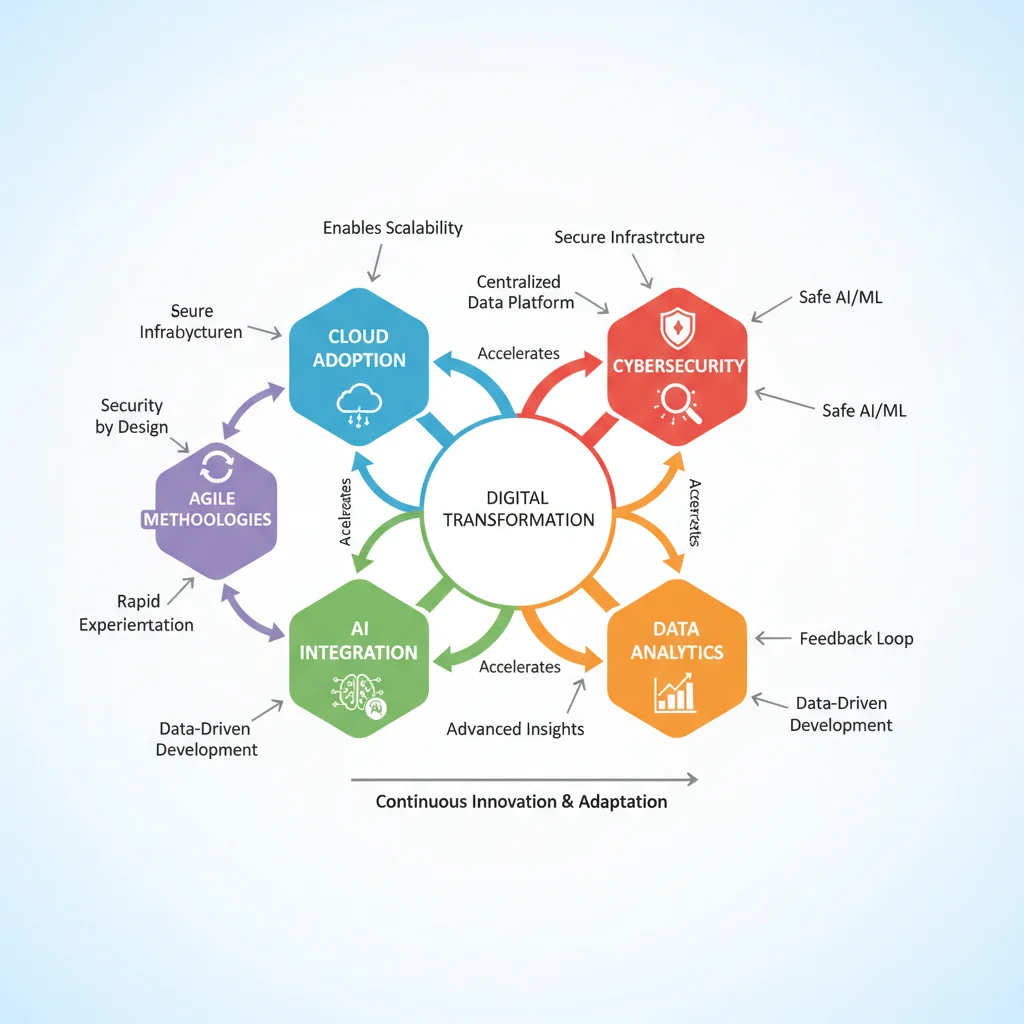
The pursuit of 20% efficiency gains by 2026 is an ambitious but attainable goal for US CIOs. It requires a holistic approach that integrates technology, people, and processes. The six expert tips outlined in this article—prioritizing cloud-native architectures, harnessing AI and automation, implementing a robust data strategy, embracing agile and DevOps, strengthening cybersecurity, and fostering a culture of continuous learning—form a powerful roadmap for success.
However, digital transformation is not a destination but a continuous journey. To sustain these efficiency gains and remain competitive beyond 2026, CIOs must embed these principles into the organizational DNA. This means continuously monitoring technological advancements, adapting strategies to evolving market demands, and nurturing an agile, innovative, and resilient IT organization. The future belongs to those who can effectively leverage technology to drive efficiency and create lasting business value.
By embracing these insider insights, US CIOs can confidently lead their organizations through the complexities of digital change, not only meeting but exceeding their efficiency targets and positioning their businesses for enduring success in the digital age. The time for bold, strategic CIO Digital Transformation is now.