US Space Tech Boom: 5 Investment Insights for 25% ROI by 2027

Inside the US Space Tech Boom: 5 Investment Insights for a 25% ROI by 2027 (INSIDER KNOWLEDGE)
The cosmos is no longer just the stuff of science fiction; it’s the next frontier for groundbreaking investment. The United States is at the epicenter of a monumental space technology boom, driven by innovation, strategic geopolitical interests, and an insatiable demand for space-based services. For astute investors, this isn’t just an exciting development; it’s a golden opportunity for substantial returns. We’re talking about the potential for a 25% Return on Investment (ROI) by 2027 – a target that, while ambitious, is increasingly within reach for those who understand the nuances of this rapidly expanding sector. This article delves into the heart of the US Space Investment landscape, providing five critical insights to guide your portfolio towards unprecedented growth.
The global space economy, currently valued at over $400 billion, is projected to reach well over $1 trillion in the coming decades. The US, with its robust private sector, government support, and pioneering spirit, leads this charge. From reusable rockets to constellations of communication satellites, the innovations emerging from American companies are reshaping industries, creating new markets, and offering fertile ground for investment. But where exactly should you place your bets to capitalize on this extraordinary surge? Let’s explore the key drivers and strategic areas that promise to deliver that coveted 25% ROI by 2027.
1. The Ascendancy of Satellite Constellations: Data is the New Gold in Orbit
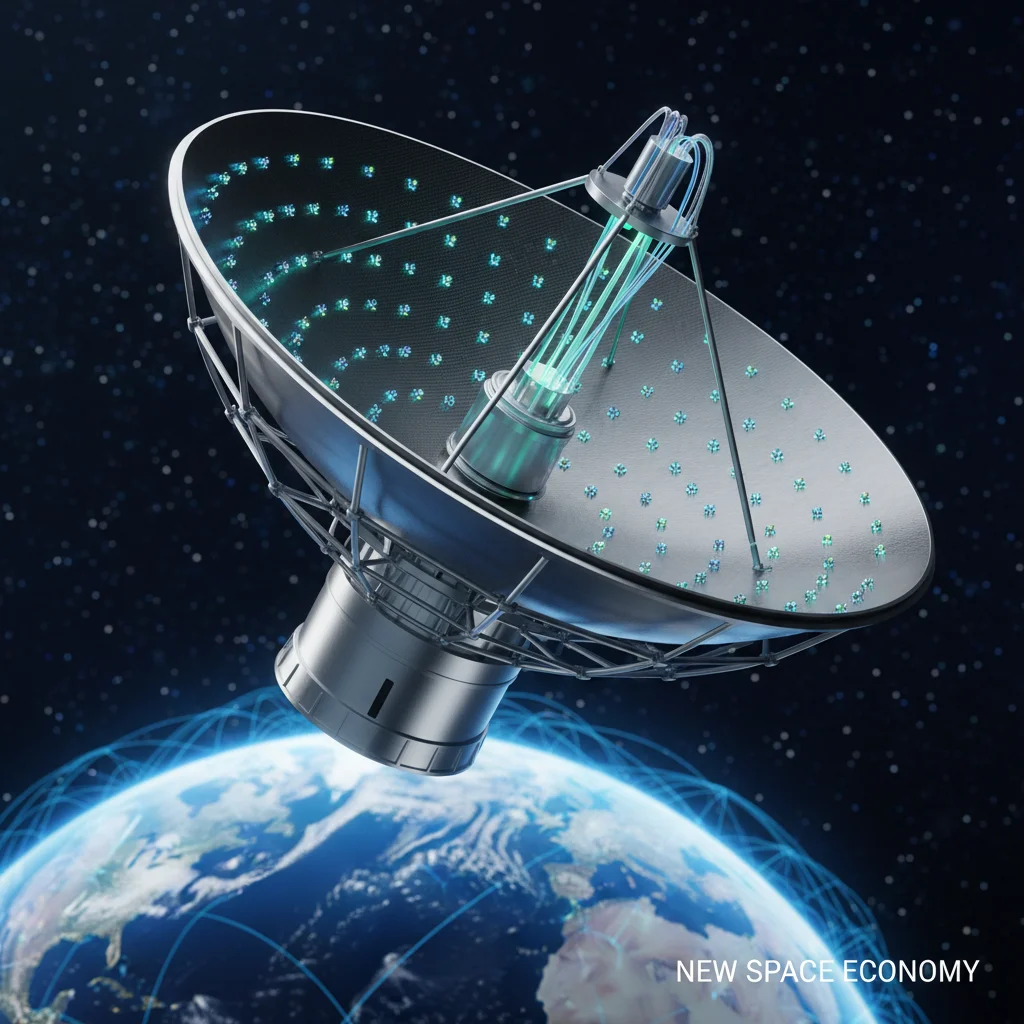
One of the most significant revolutions in the US Space Investment sphere is the proliferation of satellite constellations. Gone are the days of single, monolithic satellites. Today, companies are deploying thousands of smaller, interconnected satellites into low Earth orbit (LEO) to provide global broadband internet, Earth observation data, and advanced communication services. This shift is democratizing access to space-derived information and creating massive commercial opportunities.
Consider the impact of global broadband from space. Regions previously underserved or completely without internet access are now within reach. This not only opens up new markets for telecommunication providers but also fuels economic development and digital inclusion worldwide. Companies like SpaceX’s Starlink, OneWeb, and Amazon’s Project Kuiper are leading this charge, investing billions into infrastructure and technology. Their business models are predicated on recurring revenue from subscriptions and data services, offering a stable and scalable path to profitability.
Beyond internet, Earth observation satellites are providing unprecedented insights into our planet. From tracking climate change and agricultural yields to monitoring urban development and disaster response, the data collected from space is invaluable. Businesses across diverse sectors, including insurance, logistics, and environmental management, are increasingly reliant on this information. Investing in companies that specialize in satellite manufacturing, deployment, data analytics, and ground infrastructure for these constellations is a strategic move. These firms often have strong government contracts in addition to commercial clients, diversifying their revenue streams and mitigating risk. The demand for bandwidth and high-resolution imagery is only going to intensify, making this a cornerstone of any successful US Space Investment strategy.
The economies of scale achieved through mass production of satellites and standardized launch procedures are driving down costs, making these ventures more financially viable than ever before. Furthermore, advancements in miniaturization and propulsion systems mean that satellites are becoming more capable and durable, extending their operational lifespans and enhancing their ROI potential. The sheer volume of data being generated and the subsequent need for sophisticated processing and analysis tools also create a burgeoning market for AI and machine learning applications tailored for space-derived data. This synergistic relationship between hardware and software further solidifies the investment thesis for satellite constellations.
2. The Reusability Revolution: Lowering the Barrier to Entry and Scaling Operations
SpaceX’s pioneering work in reusable rocket technology has fundamentally altered the economics of space access. The ability to land and refly rocket boosters has dramatically reduced launch costs, making space more accessible and fostering an environment ripe for US Space Investment. This ‘reusability revolution’ isn’t just about cost savings; it’s about increasing launch cadence, enabling more frequent deployments of satellites and other payloads, and accelerating the pace of innovation across the entire space ecosystem.
Prior to reusability, each launch was an incredibly expensive, one-time event. Now, with companies like SpaceX regularly reusing their Falcon 9 boosters, the cost per launch has plummeted, opening up opportunities for smaller companies and even academic institutions to participate in the space economy. This has spurred a wave of entrepreneurship in areas such as in-orbit servicing, space debris removal, and even space tourism.
Investing in companies that are either directly involved in developing reusable launch vehicles or those that benefit significantly from lower launch costs is a smart play. This includes not only the established players but also emerging companies focused on next-generation propulsion systems, advanced materials for spacecraft, and orbital transfer vehicles. The competitive landscape for launch services is intensifying, which further drives innovation and efficiency, ultimately benefiting investors.
The long-term vision extends beyond merely launching satellites. Reusable rockets are a stepping stone towards more ambitious goals, such as lunar missions, Mars colonization, and asteroid mining. The infrastructure being built today for rapid, cost-effective access to space will be foundational for these future endeavors. Therefore, a strategic US Space Investment in this sector is not just about the immediate gains but also about positioning oneself for the exponential growth of the human presence in space. Companies that can consistently deliver reliable, affordable, and frequent access to orbit will be indispensable players in the evolving space economy. The continued refinement of reusability, including the development of fully reusable systems, will further unlock unprecedented opportunities and accelerate the timeline for achieving a 25% ROI by 2027.

3. The Growing Nexus of Space and National Security: Defense and Dual-Use Technologies
The strategic importance of space for national security cannot be overstated. From intelligence gathering and surveillance to secure communications and missile defense, space assets are critical for modern military operations. This has led to substantial government investment in space technologies, creating a robust and stable market for companies operating in the defense and dual-use technology sectors within the US Space Investment landscape.
The US Department of Defense and intelligence agencies are increasingly relying on commercial space capabilities to augment their own systems. This means a significant portion of the growth in the space sector is underpinned by long-term government contracts, which provide a degree of stability and predictability often absent in purely commercial ventures. Areas of particular interest include resilient satellite communications, enhanced Earth observation for military intelligence, space-based early warning systems, and technologies for space domain awareness – essentially, tracking objects in orbit to prevent collisions and identify potential threats.
Investing in companies that develop technologies with both commercial and defense applications, known as dual-use technologies, offers a unique advantage. These firms can leverage government funding and contracts to mature their technologies, which can then be adapted for commercial markets, or vice-versa. Examples include advanced propulsion systems, secure data encryption for space-to-ground communications, autonomous rendezvous and docking capabilities, and cybersecurity solutions for space systems.
The geopolitical landscape ensures that spending on space defense and security will continue to be a priority for the US government. This consistent demand, coupled with the rapid pace of technological advancement, creates a compelling investment case. Companies that can innovate in these critical areas, offering solutions that enhance national security while also having commercial viability, are poised for significant growth and can contribute substantially to achieving a 25% ROI by 2027. Understanding the procurement cycles and strategic priorities of government agencies is key to identifying the most promising opportunities in this segment of the US Space Investment market.
4. In-Orbit Servicing, Manufacturing, and Debris Management: The Future of Space Operations
As the number of satellites in orbit continues to skyrocket, so does the need for sophisticated in-orbit services. This emerging sector, central to the future of US Space Investment, encompasses everything from satellite refueling and repair to manufacturing in space and the critical task of space debris removal. These capabilities are essential for the long-term sustainability and economic viability of the space economy.
Imagine a future where satellites can be refueled or repaired in orbit, extending their operational lives by years and saving billions in replacement costs. Companies developing robotic arms, autonomous docking systems, and specialized tools for in-space servicing are at the forefront of this revolution. This not only maximizes the value of existing space assets but also reduces the environmental impact of launching new ones.
Furthermore, in-space manufacturing holds immense promise. Producing components or even entire structures in orbit could eliminate the need to launch everything from Earth, reducing costs and enabling the creation of larger, more complex structures that cannot withstand the forces of launch. This is particularly relevant for future space stations, large telescopes, and even habitats for lunar or Martian outposts.
Finally, space debris management is a growing concern and a significant opportunity. The increasing amount of defunct satellites and rocket stages poses a threat to active spacecraft. Companies developing innovative solutions for tracking, capturing, and deorbiting space junk are addressing a critical need. These technologies are not only environmentally responsible but also commercially essential for protecting valuable orbital assets. Investing in these pioneering companies, which are laying the groundwork for a truly sustainable and expansive space economy, offers a high-growth potential and aligns with the long-term vision for achieving a 25% ROI through strategic US Space Investment. Their success is directly tied to the overall health and growth of the entire space sector.
5. AI, Quantum Computing, and Advanced Materials: Enabling Technologies for the Space Frontier
The space industry, by its very nature, is a hotbed of technological innovation. Beyond the rockets and satellites themselves, the underlying enabling technologies are creating immense value and offering compelling US Space Investment opportunities. Artificial Intelligence (AI), quantum computing, and advanced materials are not just buzzwords; they are foundational to the next generation of space capabilities.
AI is transforming every aspect of space operations, from mission planning and autonomous navigation to data processing and anomaly detection. Machine learning algorithms are sifting through vast amounts of satellite imagery to extract actionable insights, optimizing satellite constellation management, and even guiding robotic exploration missions. Investing in companies specializing in AI solutions for space applications, particularly those addressing big data challenges or autonomous systems, is a forward-looking strategy.
Quantum computing, while still in its nascent stages, promises to revolutionize space communications, encryption, and complex computational modeling for spacecraft design and trajectory. While perhaps a longer-term play, early investments in companies pushing the boundaries of quantum technology with space applications in mind could yield extraordinary returns. The potential for unbreakable encryption and vastly superior data processing capabilities makes quantum a critical area to watch.
Advanced materials are equally crucial. Lighter, stronger, and more radiation-resistant materials are essential for building more efficient rockets, durable satellites, and protective shielding for astronauts. Innovations in composite materials, nanotechnology, and additive manufacturing (3D printing) are reducing weight, increasing performance, and lowering manufacturing costs. Companies developing these cutting-edge materials and manufacturing processes are integral to the ongoing space revolution.
These enabling technologies act as force multipliers across the entire space ecosystem. They enhance the capabilities of satellites, improve the efficiency of launch vehicles, and strengthen the security of space assets. A diversified US Space Investment portfolio that includes companies at the forefront of these technological advancements is well-positioned to capture the significant value being created and achieve the targeted 25% ROI by 2027. The synergy between these technologies means that breakthroughs in one area often unlock new possibilities in another, creating a virtuous cycle of innovation and growth.
Navigating the Investment Landscape: Risks and Rewards of US Space Investment
While the potential for a 25% ROI by 2027 in the US Space Investment sector is compelling, it’s crucial to acknowledge the inherent risks. This is a high-growth, high-tech sector, often characterized by significant capital expenditure, long development cycles, and geopolitical sensitivities. Regulatory changes, technological failures, and intense competition are all factors that investors must consider.
However, the rewards for those who navigate these challenges successfully are substantial. The market is supported by strong fundamentals: increasing global demand for connectivity and data, significant government backing, and a continuous pipeline of innovation. The drive towards commercialization is also diversifying revenue streams beyond traditional government contracts, fostering a more resilient and dynamic industry.
To mitigate risk, a diversified approach is advisable. Rather than putting all your eggs in one basket, consider investing across different segments of the space economy – for example, a mix of satellite operators, launch service providers, ground segment infrastructure companies, and firms specializing in enabling technologies like AI or advanced materials. Venture capital funds and ETFs focused on aerospace and defense or pure-play space companies can also offer diversified exposure.
Furthermore, due diligence is paramount. Understand the specific technologies, competitive advantages, and business models of the companies you’re considering. Look for strong management teams with proven track records and clear pathways to profitability. Evaluate their intellectual property, their customer base (both commercial and government), and their ability to scale operations effectively. The companies that demonstrate robust innovation, strategic partnerships, and a clear vision for long-term growth will be the ones most likely to deliver exceptional returns in this exciting era of US Space Investment.
Conclusion: Charting a Course for 25% ROI in the New Space Economy
The US Space Investment landscape is undergoing a profound transformation, moving from a niche government-dominated sector to a vibrant, commercially driven economy. The five insights discussed – the rise of satellite constellations, the reusability revolution, the nexus of space and national security, in-orbit servicing, and enabling technologies like AI and advanced materials – represent the most promising avenues for investors seeking significant returns. Targeting a 25% ROI by 2027 is an ambitious but achievable goal for those who understand these dynamics and strategically position their capital.
The confluence of technological breakthroughs, decreasing costs, and expanding applications is creating an unprecedented era for space commerce. The United States, with its unparalleled ecosystem of innovators, entrepreneurs, and government support, remains at the forefront of this new space race. By focusing on these key investment areas, conducting thorough research, and adopting a long-term perspective, investors can not only participate in this exciting journey but also reap substantial financial rewards. The future is in space, and the time to invest is now.