Future of Energy: US Renewable Tech for 2026

The Latest in Renewable Energy Innovation: Comparing 3 New US-Developed Technologies for 2026 Deployment
The global race towards a sustainable future is accelerating, and the United States is at the forefront of developing groundbreaking renewable energy solutions. As the urgency to combat climate change intensifies, innovation in clean energy has never been more critical. By 2026, several pioneering US Renewable Technologies are slated for significant deployment, promising to redefine our energy landscape. This article delves into three such transformative technologies: Enhanced Geothermal Systems (EGS), Perovskite Solar Cells with Integrated Storage, and Advanced Oscillating Water Column (OWC) Wave Energy Converters. We will explore their mechanisms, potential impact, and the challenges they face, offering a comprehensive comparison of these vital contributions to a greener tomorrow.
The Imperative for US Renewable Technologies
The transition from fossil fuels to renewable energy sources is not merely an environmental necessity but also an economic opportunity. The United States, with its vast geographical diversity and robust research infrastructure, is uniquely positioned to lead this transition. Investing in US Renewable Technologies fosters energy independence, creates high-tech jobs, and strengthens national security by diversifying energy portfolios. The technologies we will examine represent a significant leap forward, moving beyond conventional solar and wind to harness energy from previously untapped or inefficiently utilized sources.
Why 2026 is a Pivotal Year for Clean Energy
The year 2026 marks a crucial milestone for many of these emerging technologies. Extensive research and development, coupled with pilot projects and increasing government and private sector investment, are culminating in readiness for broader commercial deployment. This period is critical for scaling up production, reducing costs, and integrating these novel solutions into existing energy grids. The success of these early deployments will largely dictate their long-term viability and their role in achieving ambitious decarbonization targets.
1. Enhanced Geothermal Systems (EGS): Unlocking Earth’s Inner Heat
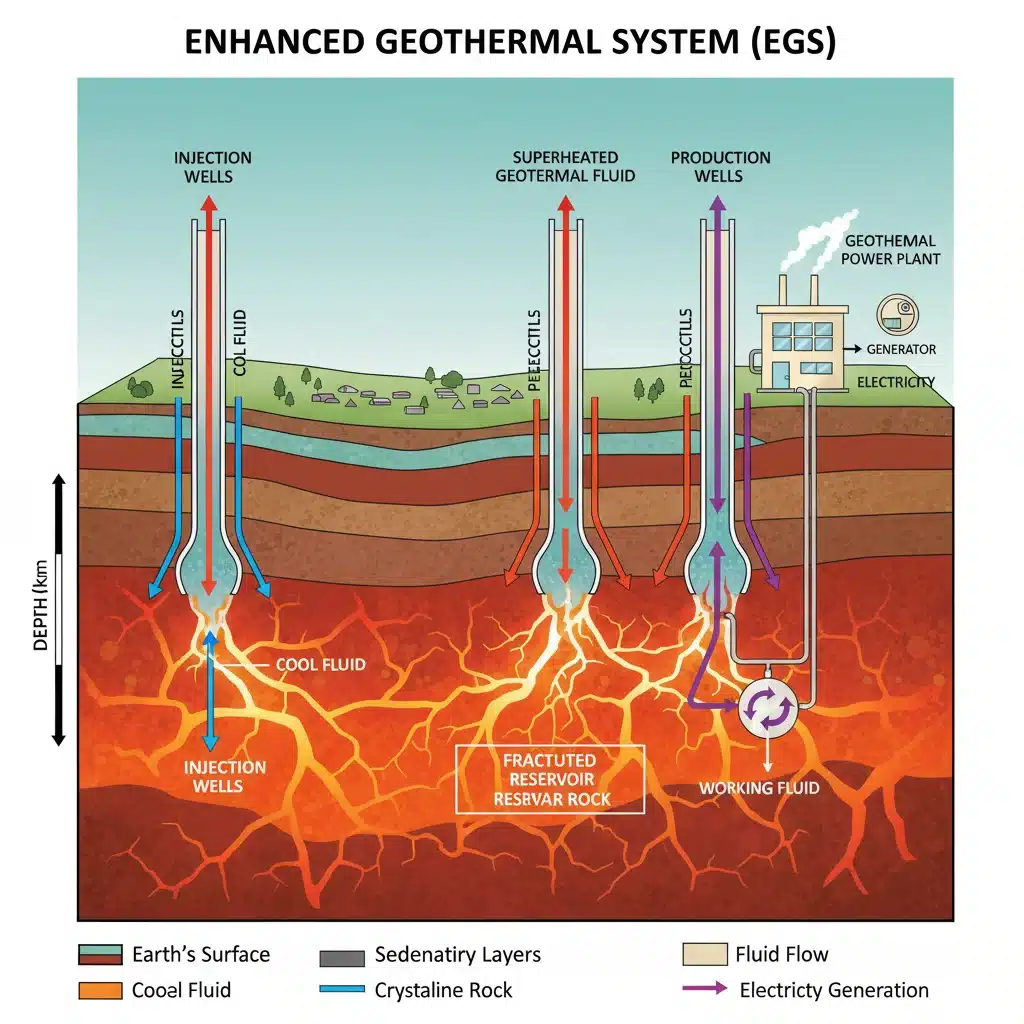
Geothermal energy, derived from the Earth’s internal heat, has long been a stable and reliable source of renewable power. However, its widespread adoption has been limited by geographical constraints, primarily requiring natural hydrothermal reservoirs. Enhanced Geothermal Systems (EGS) are revolutionary US Renewable Technologies that overcome these limitations by artificially creating or improving geothermal reservoirs. This technology involves injecting fluid into hot, dry rock formations deep underground, fracturing the rock to create permeability, and then circulating the fluid through this engineered reservoir to extract heat. The heated fluid is then brought to the surface to generate electricity.
How EGS Works: A Deeper Dive
The process begins with drilling injection wells into deep, hot crystalline basement rock, often several kilometers below the Earth’s surface. Water, or sometimes a supercritical fluid, is then pumped down these wells at high pressure. This pressure creates or enhances fractures in the hot rock, forming a vast network of interconnected pathways. Once the reservoir is established, cold fluid is continuously injected, heats up as it circulates through the hot rock fractures, and is then pumped back to the surface via production wells. At the surface, the superheated fluid (or steam, depending on the system design) drives turbines to generate electricity. The cooled fluid is then reinjected into the Earth, creating a closed-loop system with minimal environmental impact.
Advantages of EGS
- Baseload Power: Unlike solar and wind, EGS provides continuous, 24/7 power, independent of weather conditions or time of day. This makes it an ideal source for baseload electricity generation, offering grid stability.
- Wide Geographic Applicability: EGS can theoretically be deployed in many more locations than traditional geothermal, as it does not rely on naturally occurring hydrothermal systems. This expands the potential for geothermal energy significantly across the US and globally.
- Small Land Footprint: Compared to large-scale solar or wind farms, EGS power plants have a relatively small surface footprint for the amount of energy they produce.
- Low Emissions: EGS plants typically have very low greenhouse gas emissions, especially when operated in a closed-loop system where fluids are reinjected.
Challenges and Outlook for 2026
Despite its immense potential, EGS faces several challenges. The primary hurdles include the high drilling costs associated with deep wells, the technical complexity of reservoir creation and management, and public perception concerns regarding induced seismicity. However, significant research is underway to mitigate these risks. Advanced drilling technologies, improved seismic monitoring, and sophisticated reservoir modeling are making EGS more viable. By 2026, several pilot projects and early commercial deployments are expected to demonstrate the economic feasibility and environmental safety of EGS, paving the way for broader adoption. The Department of Energy’s Enhanced Geothermal Shot initiative aims to reduce EGS costs by 90% by 2035, accelerating its competitiveness.
2. Perovskite Solar Cells with Integrated Storage: Solar’s Next Frontier
Solar photovoltaic (PV) technology has seen remarkable advancements, but traditional silicon-based panels still have limitations in efficiency, flexibility, and cost-effectiveness for certain applications. Perovskite solar cells (PSCs) represent a disruptive US Renewable Technology that promises to overcome these barriers. Perovskites are a class of materials with a specific crystal structure that makes them exceptionally good at absorbing sunlight and converting it into electricity. What makes the 2026 deployment particularly exciting is the integration of these high-efficiency cells with advanced energy storage solutions, creating a more robust and reliable solar power system.
The Science Behind Perovskite Solar Cells
PSCs are composed of a hybrid organic-inorganic lead or tin halide perovskite material that acts as the light-harvesting layer. These materials boast several advantages over silicon: they can be manufactured using low-cost solution-based processes (like printing), they are highly efficient even in low-light conditions, and they can be made flexible and transparent. This opens up possibilities for applications beyond traditional rooftop panels, such as integration into windows, flexible electronics, and portable power devices.
Integrated Storage: Solving Solar’s Intermittency
The main drawback of solar energy has always been its intermittency—it only generates power when the sun shines. The innovation driving 2026 deployment for PSCs involves seamless integration with compact, high-performance energy storage. This could include solid-state batteries, flow batteries, or even supercapacitors directly incorporated into the solar panel module or as a closely coupled system. This integration ensures that electricity generated during peak sunlight hours can be stored and discharged when needed, providing a more consistent and dispatchable power supply. This integration significantly enhances the value proposition of PSCs by making solar power more reliable and less reliant on grid-scale storage solutions.
Advantages of Perovskite Solar Cells with Integrated Storage
- High Efficiency: Perovskite cells have rapidly achieved efficiencies comparable to, and in some cases exceeding, silicon solar cells in laboratory settings, with theoretical efficiencies potentially even higher.
- Low Manufacturing Cost: Solution-processing techniques significantly reduce manufacturing costs compared to the energy-intensive, high-temperature processes required for silicon.
- Flexibility and Transparency: These properties allow for novel applications and architectural integration, making solar power more aesthetically pleasing and versatile.
- Enhanced Reliability: Integrated storage addresses the intermittency issue, making solar power a more consistent and dependable energy source.
Challenges and Outlook for 2026
Despite their promise, PSCs face challenges related to long-term stability and durability, particularly in humid environments. The use of lead in some perovskite formulations also raises environmental concerns, although research into lead-free alternatives is progressing rapidly. Scaling up manufacturing processes for integrated systems while maintaining performance and cost-effectiveness is another hurdle. By 2026, breakthroughs in encapsulation techniques, lead-free materials, and scalable manufacturing methods are expected to bring integrated PSCs to niche markets and early commercial deployments, especially for portable power, building-integrated photovoltaics, and specialized off-grid applications. Continued R&D efforts are crucial for their widespread adoption.
3. Advanced Oscillating Water Column (OWC) Wave Energy Converters: Harnessing Ocean Power
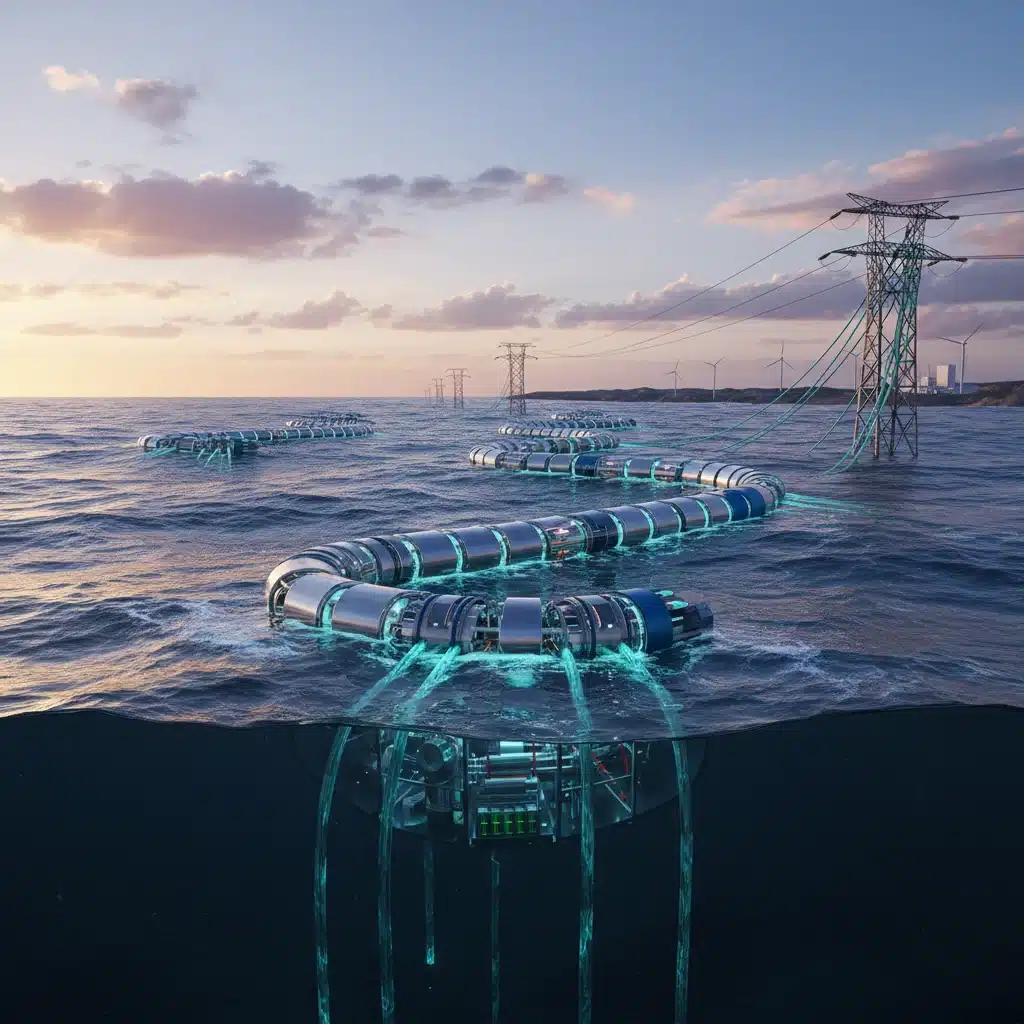
The oceans represent an enormous, largely untapped reservoir of renewable energy. Wave energy, in particular, offers high energy density and predictability compared to wind and solar. Advanced Oscillating Water Column (OWC) Wave Energy Converters are among the most promising US Renewable Technologies for harnessing this power. OWC devices capture the energy of ocean waves by allowing water to enter a partially submerged chamber. As waves rise and fall, the water column inside the chamber moves up and down, compressing and decompressing the air above it. This oscillating airflow drives a bi-directional turbine, which in turn generates electricity.
Innovations in OWC Technology for 2026
While the basic principle of OWC has been around for some time, the ‘advanced’ aspect for 2026 deployment refers to significant improvements in efficiency, survivability in harsh ocean environments, and cost-effectiveness. These innovations include:
- Optimized Chamber Design: New designs minimize energy losses and maximize the capture efficiency of wave energy across a broader range of wave conditions.
- Advanced Turbine Technology: Development of more efficient, robust, and maintenance-friendly turbines that can operate effectively with bi-directional airflow.
- Smart Control Systems: Integration of AI and machine learning to optimize power output based on real-time wave conditions, enhancing overall performance and grid integration.
- Modular and Scalable Designs: Facilitating easier manufacturing, deployment, and maintenance, reducing the overall levelized cost of energy.
- Improved Mooring and Structural Integrity: Ensuring the devices can withstand extreme weather events and operate reliably for decades.
Advantages of Advanced OWC Converters
- High Energy Density: Ocean waves carry significantly more energy per square meter than wind or solar, meaning fewer devices can produce substantial amounts of power.
- Predictability: Wave patterns are more predictable than wind or solar irradiance, allowing for better forecasting and grid management.
- Consistent Power Output: Waves are generally present 24/7, offering a more consistent power source than intermittent renewables.
- Environmental Benefits: OWC devices are typically less visually intrusive than offshore wind farms and have a minimal impact on marine ecosystems when designed carefully.
Challenges and Outlook for 2026
The primary challenges for wave energy converters, including OWC, include the harsh operating environment (corrosion, biofouling, extreme storms), high capital costs for deployment and maintenance, and the complexities of grid connection from offshore locations. Permitting and environmental impact assessments also add to the development timeline. However, ongoing research and development, supported by agencies like the Department of Energy’s Water Power Technologies Office, are addressing these issues. By 2026, several demonstration projects and early commercial arrays of advanced OWC devices are expected to be operational along US coastlines, particularly in regions with high wave energy potential. These deployments will provide critical data on long-term performance, reliability, and cost reduction strategies, moving wave energy closer to mainstream adoption.
Comparative Analysis of US Renewable Technologies for 2026
Let’s compare these three US Renewable Technologies based on several key metrics:
Baseload vs. Intermittent Power
- EGS: Provides reliable baseload power, operating continuously regardless of weather, making it a critical component for grid stability.
- Perovskite Solar Cells with Integrated Storage: While solar inherently produces intermittent power, the integrated storage significantly mitigates this, moving it closer to a dispatchable energy source, though still dependent on solar cycles.
- Advanced OWC: Offers relatively consistent and predictable power, as waves are less intermittent than wind or direct sunlight, making it a strong contender for contributing to baseload capacity.
Geographic Applicability and Resource Potential
- EGS: Broad applicability across the US, especially with advancements in drilling and reservoir engineering, unlocking vast deep-seated heat resources.
- Perovskite Solar Cells with Integrated Storage: Highly versatile and can be deployed almost anywhere there is sunlight, from deserts to urban environments, and even in novel applications like building-integrated photovoltaics.
- Advanced OWC: Best suited for coastal regions with strong, consistent wave climates, limiting its direct applicability to specific geographical areas but tapping into a massive global energy resource.
Environmental Impact
- EGS: Low greenhouse gas emissions, minimal land footprint. Potential for induced seismicity is a concern but is being actively managed through advanced monitoring and operational protocols.
- Perovskite Solar Cells with Integrated Storage: Low operational emissions. Concerns exist regarding the use of lead (though alternatives are being developed) and the environmental impact of manufacturing processes and end-of-life disposal, which are being addressed through material science and recycling initiatives.
- Advanced OWC: Minimal visual impact (often submerged or low-profile), low operational emissions. Potential concerns include noise pollution, impact on marine life, and changes to sediment transport, all of which are carefully studied and mitigated during project development.
Technological Maturity and Cost Reduction Trajectory
- EGS: Currently in advanced R&D and early demonstration phases. High upfront drilling costs are a major barrier, but significant cost reductions are anticipated with technological advancements and economies of scale.
- Perovskite Solar Cells with Integrated Storage: Rapidly maturing, with lab efficiencies nearing silicon. Manufacturing processes are being scaled, and integrated storage solutions are becoming more viable. Cost reductions are expected to be steep as production scales.
- Advanced OWC: Several prototypes and pilot projects exist globally. The technology is progressing from demonstration to pre-commercialization. Cost reduction is a key focus, driven by modular design, improved reliability, and optimized operations and maintenance.
The Broader Impact of These Innovations
The successful deployment of these US Renewable Technologies by 2026 will have far-reaching implications. It will not only accelerate the decarbonization of the US energy grid but also set a precedent for global energy transitions. These innovations represent a diversified approach to renewable energy, reducing reliance on a single source and enhancing grid resilience. Furthermore, the development and export of these technologies can bolster the US economy, creating new industries and jobs in engineering, manufacturing, and operations.
Policy and Investment Landscape
Government policies, incentives, and sustained research funding are crucial for the successful transition of these technologies from research labs to commercial viability. The US Department of Energy (DOE) plays a pivotal role through various initiatives, grants, and national laboratories dedicated to advancing clean energy. Private sector investment, driven by environmental, social, and governance (ESG) goals and the increasing competitiveness of renewables, is also accelerating the pace of development and deployment. Continued collaboration between academia, industry, and government will be essential to overcome remaining hurdles and fully realize the potential of these US Renewable Technologies.
Conclusion: A Brighter, Sustainable Future Powered by US Innovation
The year 2026 is shaping up to be a landmark period for renewable energy, with Enhanced Geothermal Systems, Perovskite Solar Cells with Integrated Storage, and Advanced Oscillating Water Column Wave Energy Converters leading the charge among US Renewable Technologies. Each offers unique advantages and addresses different facets of the energy challenge, from providing baseload power to enhancing solar reliability and harnessing the vast power of the oceans. While challenges remain in terms of cost reduction, scalability, and long-term performance, the rapid pace of innovation and the growing commitment to a sustainable future paint an optimistic picture.
These technologies are not just about generating electricity; they are about building a more resilient, secure, and environmentally responsible energy infrastructure. As they move from demonstration to widespread deployment, they will contribute significantly to the global effort to mitigate climate change and ensure a sustainable energy future for generations to come. The United States’ leadership in developing these cutting-edge solutions underscores its commitment to innovation and its pivotal role in shaping the next era of clean energy.